LIQUIDS
SOLIDS
GASES & PLASMA
VISCOSITY
NON-NEWTONIAN FLUID
Scientific Reports
100
What liquid does every teacher need in the morning?
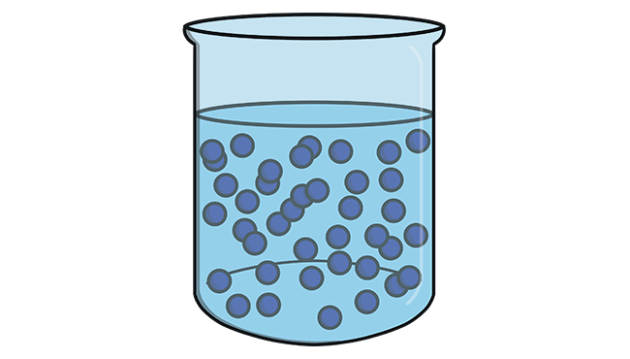
coffee!
100
At what point in the second experiment (non-Newtonian fluids), was the substance MOST solid?
with zero spoons of water and/or when we added force, e.g. punched it!
100
What is carbon dioxide's molecule composed of?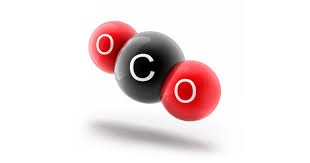
one atom of carbon
two atoms of oxygen
100
What are the names of these 3 pieces of equipment that we used for our experiment?

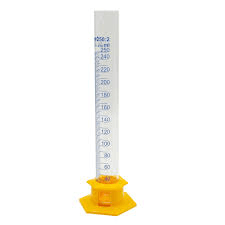
marble / marbles
cylinder / cylinders
stopwatch / stopwatches
100
What did we add to the corn flour for it to liquify? And how did we measure it?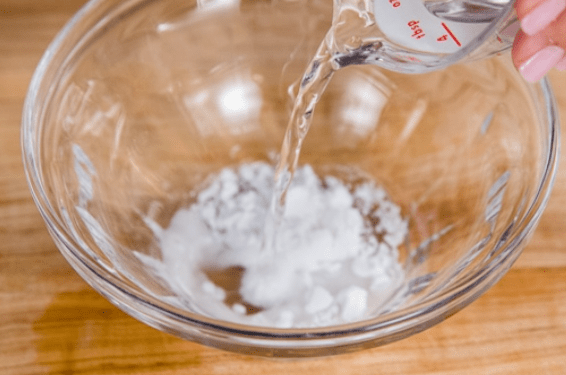
water, we measured it with table spoons
100
What were the titles of our two experiments?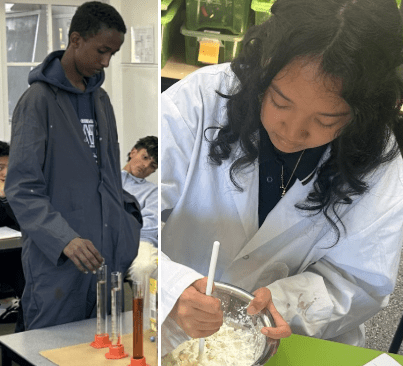
(Investigating) Viscosity of Liquids
(Investigating) Non-Newtonian Fluids
200
Describe the atoms in a liquid.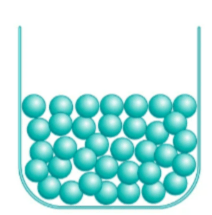
less fixed than a solid, but less free than a gas
200
How can a solid's atoms change?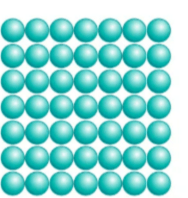
By using force like temperature, e.g. heating and cooling and by applying pressure
200
How do the atoms in a gas move?
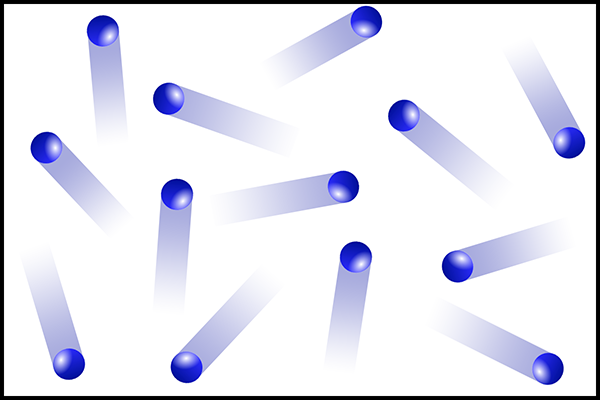
freely and in different directions
200
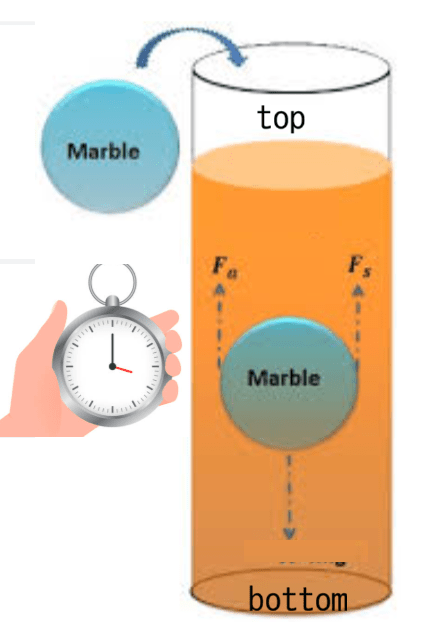 What were two challenges of measuring viscosity?
- different times
- difficult to see the marble at the bottom
- difficult to hear the marble hit the bottom
200
What happened to the atoms in the fluid when we used force?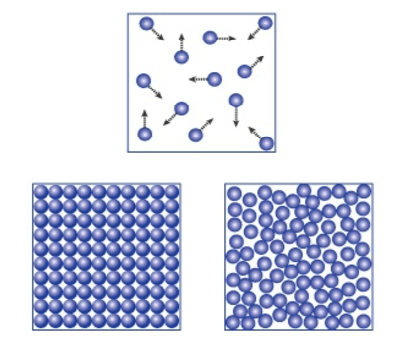
They went closer together, became more fixed and didn't flow like a liquid.
200
What verb tenses do we use for the discussion in a scientific report?
past tenses
300
Explain how and why the fluid behaved like a liquid during the experiment?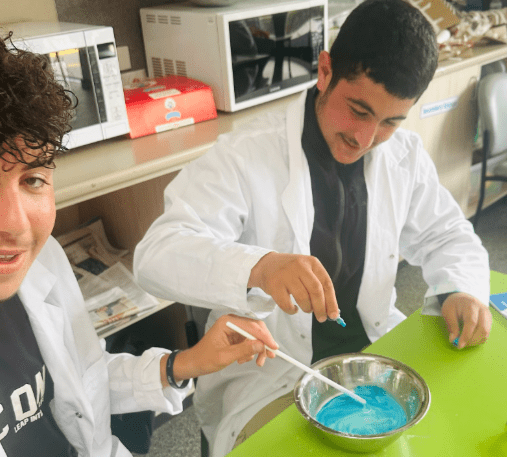
After adding tablespoons of water, the atoms changed and moved more freely. They were no longer fixed and rigid and they began to flow.
300
What are the 3 properties of a solid?
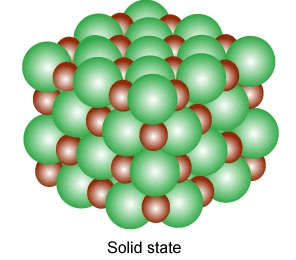
- has a definite shape
- has a definite volume
- has a definite mass
300
How can we make plasma?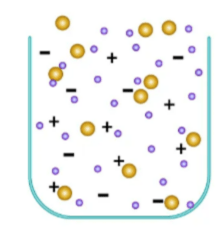
Heat a gas to a high temperature.
300
What was the purpose of using marbles in our first experiment? How did we use them?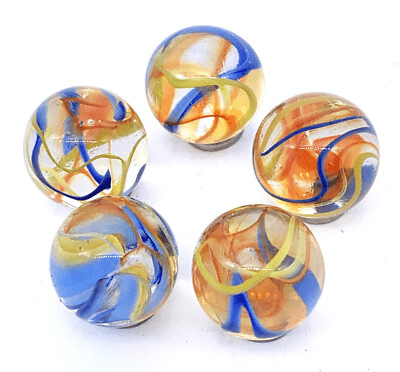
To measure how long they would travel from the top to bottom, in order to determine level of viscosity.
300
What were 2 aims of the Non-newtonian fluid experiment?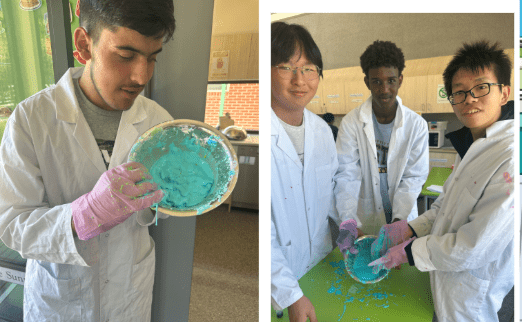
1. To investigate the properties of a liquid
2. To observe changes to matter
3. To test how force can change atoms
4. To observe differences in the structures of liquids and solids
300
What is another (more scientific) word for prediction?
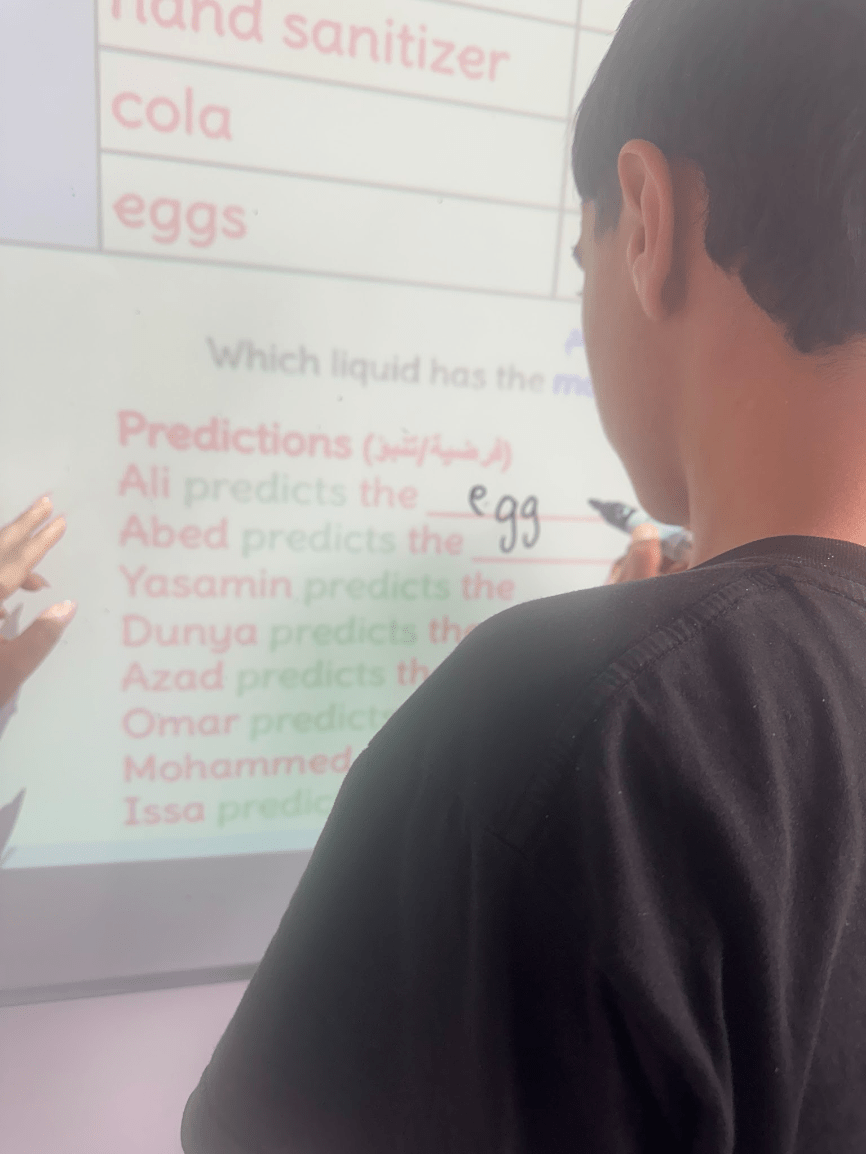
hypothesis
400
How does a liquid and its atoms behave in a container?
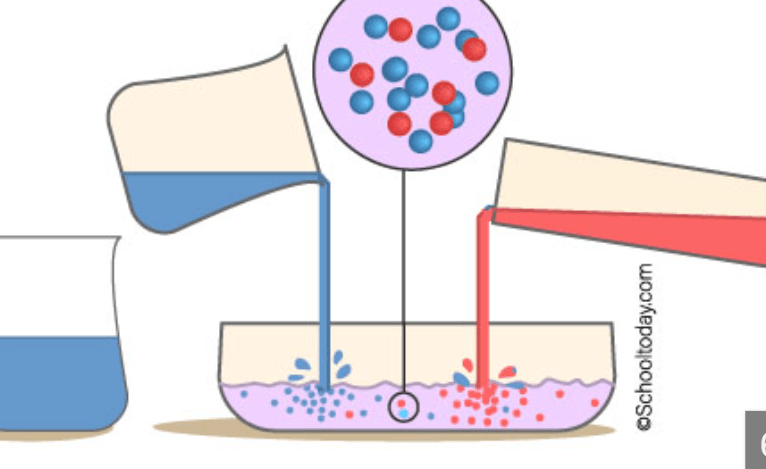
They take the shape of the container because they have volume. They can move around and slide past each other. The atoms of some liquids can mix together and become solutions.
400
Density is how compact something is and how much of something is in an area or space. Describe the density of a solid and compare to a liquid and gas.
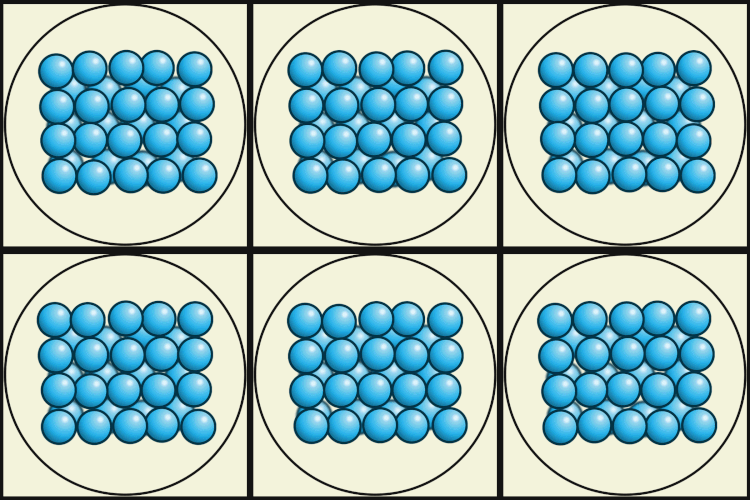
Solids have a higher density compared to liquids and gases because their atoms are close together and tightly packed.
400
What are 2 properities of a gas are NOT definite?
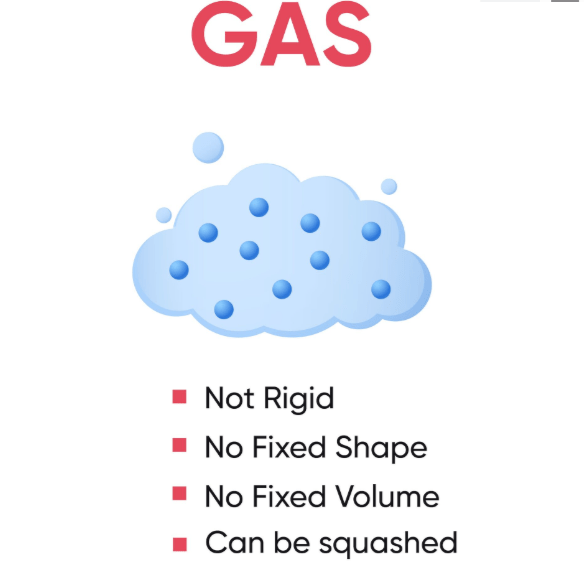
400
What were the 5 liquids 28 and 36 tested?
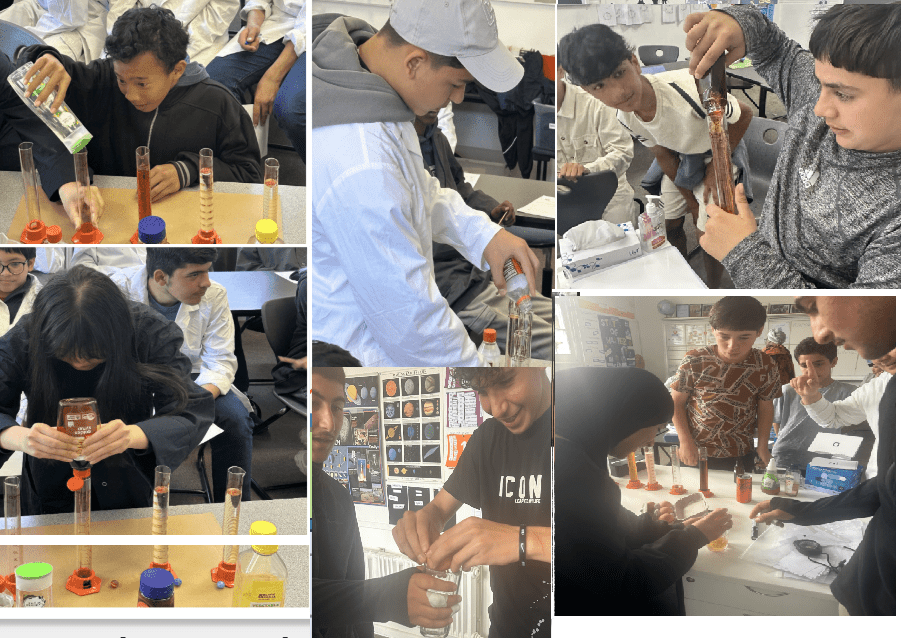
water, golden syrup, shampoo, glycerine and oil
400
How is it possible for a non-Newtonian fluid to behave like a solid?
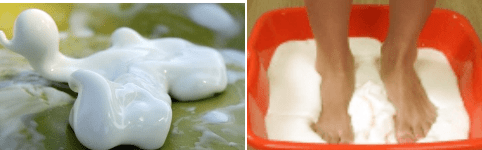
A non-Newtonian fluid can behave like a solid when pressure/force is applied. This is because the atoms are pushed together and become fixed.
400
What is the purpose of a diagram in a scientific report and how does it help a reader?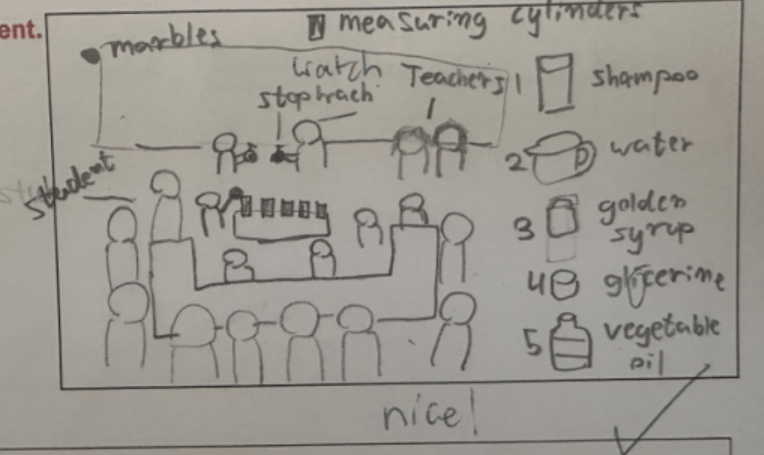
To show the steps, process and / or data in an experiment. This helps readers to understand the experiment and scientific ideas.
500
Name 2 solids that are soluble (join the and become one with the liquid and disappear) when you put them in water. Then explain why this is possible.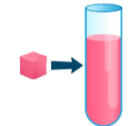
Salt, sugar, soap, vinegar, baking soda etc. The atoms spread out evenly, changing the solid's physical state to join the liquid.
500
Name the three types of particles in a solid and describe their position and space.
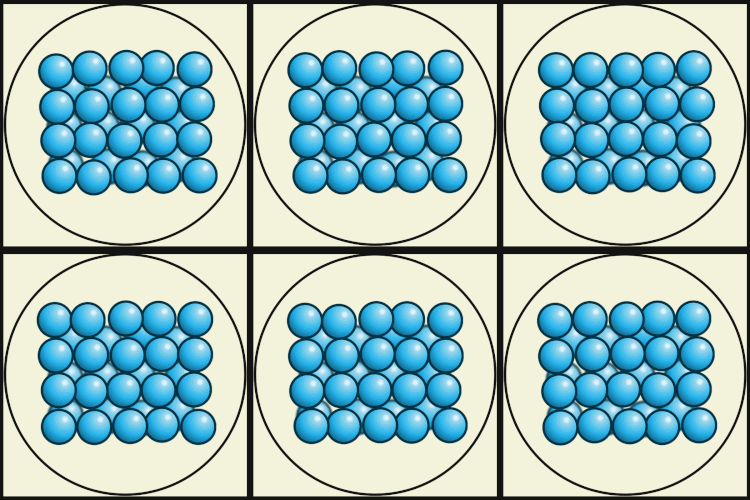
atoms, molecules and ions -packed closely together with very little free space between
500
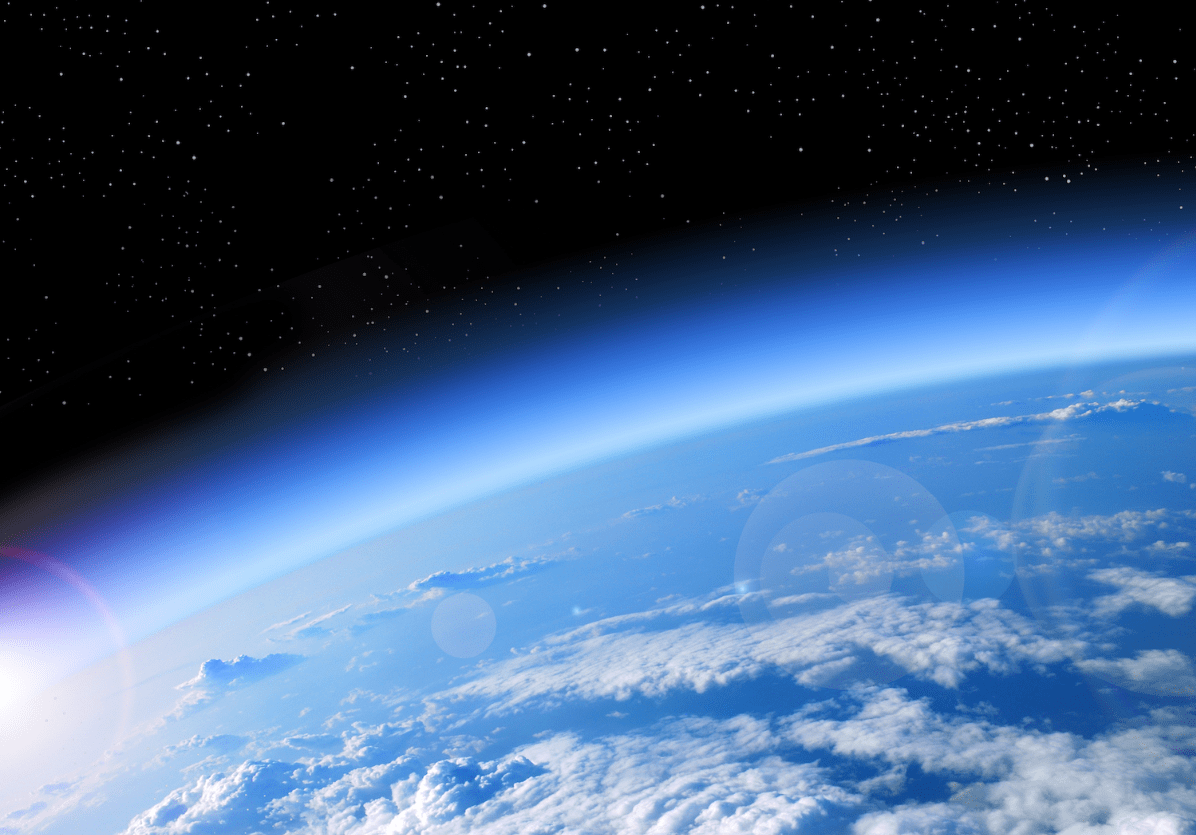 Name the 4 main gases in Earth's atmosphere.
nitrogen, oxygen, argon and carbon dioxide
500
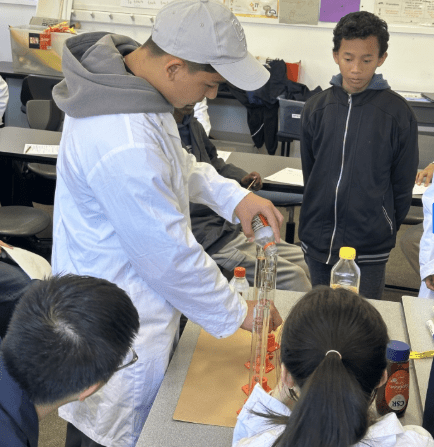
What was Youssef doing in this picture? Use progressive past tense and PPPC grammar structure.
Youssef was pouring glycerine into the measuring cylinder.
500
What are all 8 materials (equipment and substances) we used for the Non-newtonian fluid experiment?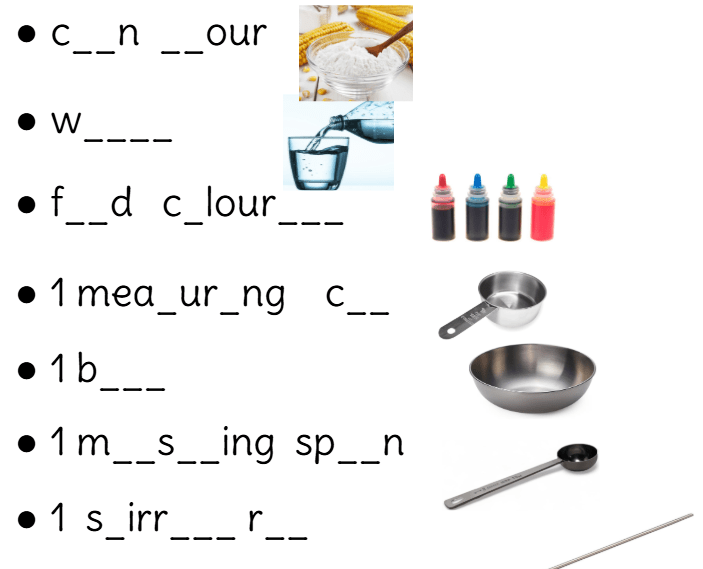
corn flour, water, food colouring, measuring cup, bowl, measuring spoon, stirring rod and beaker
500
Name 8 features of a scientific report.
title, aim, hypothesis, materials, diagram, results, method, discussion