FA 1
FA 1
FA 2
FA 2
1
What is a benefit of emerging medical technologies?
A. They are readily accessible for all patients.
B. They are inexpensive for public and private hospitals.
C. They can provide a means of early detection.
D. They decrease the need for Medicare and the Pharmaceuticals Benefits Scheme.
C is correct: New technologies enable earlier disease detection and diagnosis.
1
What is the PRIMARY role of Australia's healthcare system in achieving better health outcomes for the
population?
A. To provide emergency medical treatment only when people become seriously ill
B. To prevent illness, treat disease, and promote health across the entire population
C. To ensure private healthcare companies generate maximum profits
D. To focus exclusively on treating chronic diseases in elderly populations
B is correct: Healthcare system’s comprehensive role includes prevention, treatment, and
health promotion.
1
Compared to an untrained person, a trained endurance athlete is likely to have a
A. lower resting heart rate.
B. higher resting heart rate.
C. increased fast-twitch fibre concentration.
D. decreased fast-twitch fibre concentration.
A is correct: Endurance training strengthens the heart, reducing resting heart rate.
1
How does health screening benefit both exercise professionals and clients?
A. It increases the chances of client success in higher competition
B. It allows for individualised and safer training programs
C. It guarantees injury prevention for participants
D. It reduces the need for allied health professional advice
B is correct: Screening identifies risks and goals, enabling professionals to design safe,
individualised programs.
1
Which of the following best describes healthy ageing?
A. Ageing at a healthy rate and trying to look younger
B. Increasing the proportion of people who consume healthy foods throughout their life
C. Reducing the risk of illness and disease when growing older by maintaining physical, dietary and
mental health
D. Reducing the number of people who die at a young age from illnesses related to hereditary and
genetic factors
C is correct: Healthy ageing involves maintaining wellness across all health dimensions.
1
Which group is most at risk of developing breast cancer?
A. Women who take the contraceptive pill and exercise regularly
B. Women over the age of 50 with high levels of circulating oestrogen
C. Women who have given birth to multiple children and breastfed them
D. Women with early onset menopause and using hormone replacement therapies
B is correct: Age over 50 and high oestrogen levels are major breast cancer risk factors.
1
When lifting a heavy box from the ground, which technique demonstrates correct biomechanical
principles?
A. Keeping legs straight and bending at the waist
B. Lifting with a narrow foot stance
C. Bending at the hips with a straight back
D. Using primarily arm muscles to lift
C is correct: This technique protects the spine while allowing leg muscles to generate
force, demonstrating proper application of biomechanical principles for safe and efficient
lifting.
1
A basketball player has a competition game in the afternoon.
Which row of the table describes the appropriate dietary considerations of the athlete for this game?
A is correct: Carbohydrate-loading 2-3 hours before allows digestion; hydration during
game; carbs and protein aid recovery
1
Which of the following is a non-modifiable risk factor for breast cancer?
A. Age
B. Obesity
C. High-fat diet
D. Physical inactivity
A is correct: Age cannot be changed and increases breast cancer risk.
1
Which of the following identifies the two types of cardiovascular disease with the highest rates of
mortality in Australia?
A. Stroke and angina
B. Stroke and coronary heart disease
C. Peripheral vascular disease and angina
D. Peripheral vascular disease and coronary heart disease
B is correct: Stroke and coronary heart disease cause the highest cardiovascular mortality
rates.
1
Which situation would most likely require supplement use for high-performance athletes according to
sports nutrition guidelines?
A. Athletes wanting to gain a competitive advantage over opponents
B. Athletes with demanding training schedules who cannot consume adequate whole foods
C. Athletes seeking to reduce their overall food costs and meal preparation time
D. Athletes following popular trends promoted by social media influencers
B is correct: High-performance athletes with demanding training and competition
schedules may require supplement intake when whole food consumption is inadequate.
1
Which of the following best describes the role of virtual reality (VR) in athlete training?
A. Monitors heart rate and breathing patterns during exercise
B. Creates simulated environments for practising skills and tactics
C. Records movement data for post-training analysis
D. Provides feedback on muscle activation patterns
B is correct: VR creates simulated environments where athletes can practise skills and
tactics, enhancing decision-making and performance in realistic conditions without
physical strain.
1
According to Australia's Health 2024 data, which health indicator shows Australia performing BELOW
the OECD average?
A. Life expectancy at birth
B. Daily tobacco smoking rates
C. Overweight and obesity prevalence
D. Cardiovascular disease mortality rates
C is correct: Australia’s obesity rate exceeds OECD average indicating below-average
performance.
1
A local hospital sees a sudden rise in asthma cases. AI detects this trend and directs more asthma
medication to that area. Which benefit of AI is shown?
A. Predicting disease outbreaks to improve resource distribution
B. Personalising treatment plans based on genetic data
C. Forecasting hospital demand to improve service delivery
D. Helping treatments reach patients more quickly
D is correct. The scenario shows AI being used to quickly allocate medicines where they
are needed, ensuring faster access to treatment.
1
A recreational client wants to improve cardiovascular fitness but expresses strong dislike for running.
Based on exercise assessment principles, which approach would be most appropriate for program
development?
A. Start with short running intervals to gradually build tolerance and positive associations with the
activity
B. Program alternative activities like cycling and swimming to achieve cardiovascular goals while
respecting preferences
C. Include running as a minor component alongside preferred activities to ensure comprehensive
cardiovascular development
D. Focus on high-intensity interval training using bodyweight exercises to maximise cardiovascular
benefits efficiently
B is correct: Personalisation principles involve using preferred activities to achieve fitness
goals, enhancing motivation and program adherence.
1
What is the primary difference between strategies and tactics in sport?
A. Strategies focus on individual skills while tactics address team coordination
B. Strategies are the overall method to achieve a goal while tactics gain advantage over opposition
C. Strategies are used during competition while tactics are only for training sessions
D. Strategies involve physical preparation while tactics involve mental preparation
B is correct: A strategy is the overall method used to achieve a goal and tactics are about
how you implement the strategy and gain an advantage over the opposition.
1
Which of the following is most likely to be contributing to the growing demand for carers and volunteers
in Australia?
A. An increase in life expectancy
B. A decrease in chronic diseases
C. An increase in government funding
D. A decrease in the ageing population
A is correct: Increased life expectancy directly contributes to the growing demand for
carers and volunteers as more people are living longer, often with chronic conditions that
require care.
1
Big data contributes to improved management of chronic diseases by:
A. Reducing the need for regular medical check-ups
B. Standardising treatment plans for all patients
C. Subsidising the use of wearable technologies for health monitoring
D. Analysing patient lifestyle data to tailor treatments
D is correct: Big data supports chronic disease management by analysing lifestyle data
alongside medical history to deliver personalised treatment.
1
Which of the following fitness tests would best reflect the demands of an elite soccer midfielder?
A. Wingate anaerobic test
B. Vertical jump test
C. Yo-yo intermittent recovery test
D. Rockport 1.6 km walk test
C is correct: The Yo-yo intermittent recovery test best for an elite soccer midfielder, as it
measures aerobic power through repeated high-intensity efforts with short recovery,
mirroring game conditions.
1
An athlete trains by running 4 km in 20 minutes without stopping. For 30 seconds in each minute the
athlete increases the intensity significantly before returning to the normal intensity.
Which row in the table indicates the type of training and the method that is being used?
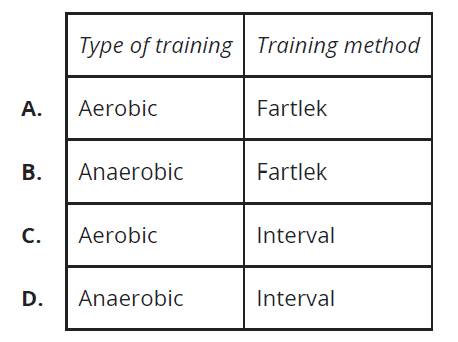
A is correct: 20-minute continuous run with varied intensity describes aerobic fartlek
training.
1
What is the most appropriate advice to give people who are making a decision about an alternative
health care service or product?
A. Investigate the credibility of the service, product and practitioner
B. Cease the conventional medication and medical advice they have been receiving
C. Combine alternative health care services with complementary health care products
D. Seek recommendations from friends and family who have experienced success with alternative
health care services and products
A is correct: Critical evaluation of credibility ensures safe healthcare decisions.
Other
1
Based on Australia's Health 2024 OECD ranking data, which statement BEST describes the pattern of
Australia's health performance across different indicators?
A. Australia consistently ranks in the top 5 for all major health indicators
B. Australia performs well in some areas but faces significant challenges in others
C. Australia ranks below average for all lifestyle-related health measures
D. Australia's rankings show no clear pattern across different health indicators
B is correct: Strong tobacco control but challenges with alcohol and obesity rankings.
1
An endurance athlete is planning their nutrition and hydration for a competition in hot, humid
conditions. Which planning strategy would be most effective?
A. Increase water intake only and maintain normal meal timing
B. Plan sports drinks with carbohydrates and electrolytes plus increased fluid intake
C. Reduce meal portions to prevent digestive issues during competition
D. Focus on protein supplements and minimise carbohydrate consumption
B is correct: Hot conditions require planning increased water intake and sports drinks with
carbohydrates and electrolytes.
1
A client indicates on their pre-exercise questionnaire that they have a family history of heart disease, are
currently inactive, and occasionally experience chest pain when walking up stairs.
What is the most appropriate action for the fitness professional?
A. Begin a low-intensity walking program and monitor the client's symptoms
B. Conduct a fitness test to establish a baseline before designing a program
C. Design a program that avoids high-intensity exercise
D. Refer the client to a medical practitioner for clearance before starting exercise
D is correct: Unexplained chest pain during physical activity is a warning sign of a possible
heart condition. Combined with the family history, this requires medical clearance before
any exercise begins.
1
What could be an advantage for an individual who has private health insurance
A. The Medicare Safety Net is decreased.
B. The Medicare Levy Surcharge needs to be paid.
C. The cost of some ancillary health services is reduced.
D. The recovery time after elective surgery in a private hospital is decreased.
C is correct: Private insurance reduces costs for ancillary services such as dental and
optical services.
1
When comparing health information from different sources, which combination of factors provides the
MOST reliable basis for evaluating credibility?
A. Author credentials, peer review, funding disclosure and publication date.
B. Author credentials, peer review, technical terminology and cited references.
C. Publication date, cited references, author credentials and positive reviews.
D. Peer review, publication date, funding disclosure and search engine ranking.
A is correct: Each factor tests credibility: expertise, independent scrutiny, conflicts of
interest and currency.
1
A rugby coach observes that the opposing team has powerful forwards but weak defensive
communication in the backline.
Which strategic approach would most effectively exploit this weakness?
A. Attack through the forwards to compete directly with the opposition's strongest players
B. Spread the ball quickly across the backline so defenders must constantly communicate to cover
attackers
C. Use powerful individual runs to beat defenders one-on-one
D. Slow the game down with short, controlled plays to reduce handling errors
B is correct: Spreading the ball quickly forces backline defenders to keep deciding who
covers which attacker. This directly exposes their weak communication and creates gaps.
1
A golfer's biomechanics analysis reveals inconsistent hip rotation during their swing. How would this
technology best contribute to performance improvement?
A. By identifying the swing inefficiency and enabling targeted technique corrections
B. By strengthening core muscles through resistance feedback during the swing
C. By comparing swing speed data to professional golfers' averages
D. By measuring energy expenditure to optimize training intensity
A is correct: Biomechanics analysis identifies inefficiencies such as inconsistent hip
rotation, allowing targeted corrections to technique that directly improve movement
efficiency and performance.
1
Which Sustainable Development Goal (SDG) has a specific aim to reduce child and maternal mortality?
A. SDG 4
B. SDG 10
C. SDG 11
D. SDG 3
D is correct. SDG 3 represents Good Health and Wellbeing that aims to reduce child and
maternal mortality, among many other goals.
1
Rural and remote communities in Australia face unique healthcare challenges. Which emerging
opportunity could significantly improve healthcare access for these populations?
A. Requiring all rural residents to relocate to major cities for medical treatment
B. Expanding telehealth services and mobile healthcare units with specialist support
C. Reducing healthcare funding to remote areas to concentrate resources in cities
D. Limiting healthcare services to basic first aid training for local community members
B is correct: Telehealth expansion and mobile services represent key opportunities for
rural healthcare access.
1
The following graph represents aerobic and anaerobic threshold training zones.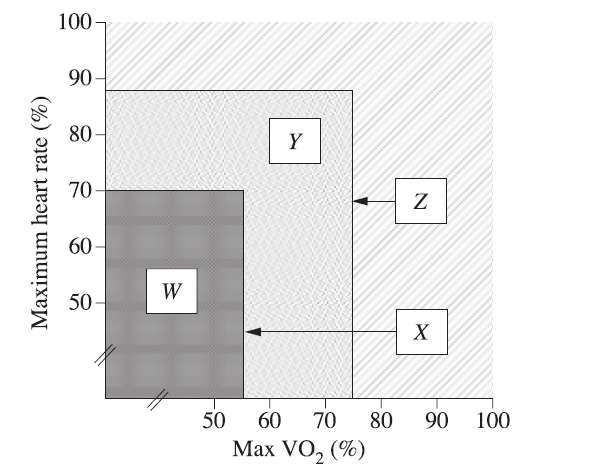
Which letter on the graph represents the minimum intensity for an athlete to train to produce a
physiological improvement in performance?
A. W
B. X
C. Y
D. Z
B is correct: Position X represents the aerobic threshold, the
minimum intensity required for physiological adaptations.
1
Coach evaluation following training sessions typically includes analysis of which combination of factors?
A. Fitness testing results, skills testing results and game performance review
B. Equipment costs and facility availability for future sessions
C. Athlete attendance rates and punctuality throughout the training period
D. Weather conditions and environmental factors affecting training quality
A is correct: Coach evaluation includes analysis of fitness testing and skills testing results
and a review of game performance as preparation for future sessions.
1
Which health condition could be monitored using a smart contact lens?
A. Blood glucose levels
B. Blood clotting
C. Sleep quality
D. Lung function
A is correct. A smart contact lens can be used to monitor blood glucose levels.
1
Which of the following two strategies aim to reduce the impact of a growing and ageing population on
the health care system in Australia?
A. Introducing the Medicare Safety Net and increasing the number of volunteers
B. Increasing the retirement age and introducing Lifetime Health Cover loading
C. Increasing the number of carers and providing greater access to physical activity options to meet
specific needs
D. Increasing the private health insurance rebate and providing access to the Pharmaceutical
Benefits Scheme
C is correct: More carers and age-appropriate physical activity
directly address ageing population needs.
1
A soccer player is kicked in the lower leg during a tackle. During assessment, the player reports hearing
a crack. There is swelling but no obvious deformity, and touching the shin causes sharp pain at one
point on the bone.
What should the sports trainer do next?
A. Proceed to active movement to see whether the player can bear weight
B. Stop the assessment, immobilise the leg and refer the player for medical attention
C. Proceed to passive movement, as it places less stress on the injury than active movement
D. Apply ice and complete a skill test once the pain settles
B is correct: The crack and sharp pain at one point on the bone suggest a possible
fracture. TOTAPS should stop once a serious injury is suspected, because further
movement could worsen the damage.
1
A sprinter undergoes testing that reveals exceptional top-end speed but weak acceleration in the first
30 metres. Based on this assessment data, which program development approach would be most
appropriate?
A. Further develop top-end speed as the athlete's greatest strength using flying sprints over 30–60
metres
B. Implement explosive start drills and plyometric exercises to specifically target the identified
acceleration weakness
C. Develop a balanced program addressing all sprint components equally to ensure comprehensive
speed development
D. Prioritise aerobic base building to improve overall conditioning before addressing specific sprint
weaknesses
B is correct: Targeted training addresses the specific weakness identified through
assessment while maintaining existing strengths for optimal performance improvement.
1
Despite Australia's strong overall health performance among OECD countries, Australia faces challenges
with obesity rates ranking 8th highest. Which factor BEST explains why this particular health issue
persists?
A. Australia has no public health campaigns addressing diet and physical activity
B. Medicare does not cover any obesity-related health services
C. Cultural norms around food consumption and lifestyle habits contribute to obesity prevalence
D. Australia has banned all forms of physical activity promotion
C is correct: Cultural attitudes towards diet and lifestyle contribute to obesity challenges.
1
Healthcare privatisation in Australia aims to balance public and private sector roles. Which outcome
best demonstrates successful privatisation?
A. Expanded private hospital capacity, with specialists moving from public to private practice.
B. Reduced government health spending, as more services require out-of-pocket payments.
C. Shorter elective surgery waits for insured patients, while public waiting lists lengthe.
D. Increased patient choice whilst maintaining public hospital access for those without insurance.
D is correct: Successful privatisation increases choice and capacity without reducing
access to public healthcare for uninsured Australians.
1
A basketball coach has identified that their team possesses excellent aerobic fitness but limited height
compared to opponents. During the final quarter when opponents typically tire, which strategic
combination would best utilise their fitness advantage?
A. Increase defensive pressure and transition speed to exploit opponent fatigue while avoiding
height disadvantages
B. Focus on inside post play and rebounding to directly challenge the opponent's height advantage
C. Reduce game tempo to conserve energy and minimise the impact of their height disadvantage
D. Substitute taller players more frequently to match opponent height while maintaining fresh legs
A is correct: Increasing pressure and tempo exploits superior fitness while avoiding direct
height confrontations where they’re disadvantaged.
1
An athlete participated in an 8-week training program.
The table shows the physiological adaptations for the athlete at the completion of the training program.
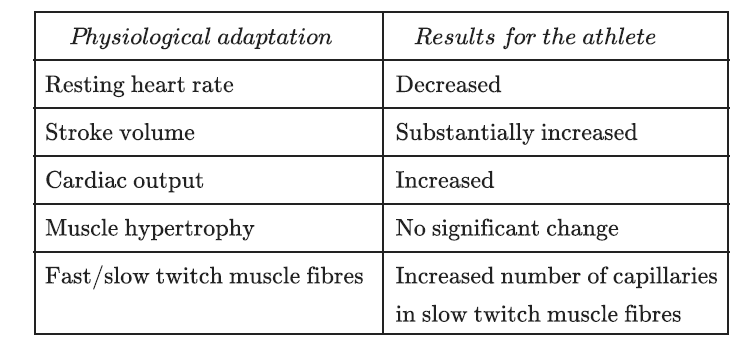
Which of the following shows the most likely features of the training program?
B is correct: Aerobic adaptations indicate continuous training at
moderate-high intensity with progression.