Enlightenment and the Atlantic Revolutions
Industrialization Begins and Spreads
Rationales for Imperialism
State Expansion
Indigenous Responses
Industry: The Government and the Economy
Economics
Reactions, Society, and the Industrial Age
Migrations
100
The Enlightenment emphasizes the idea of a reciprocal relationship between rights and duties. Some argue that if individuals, particularly women, are denied certain rights, such as the right to vote, they should not be subjected to the obligation of paying taxes. This notion aligns with Enlightenment principles that advocated for a ____________, wherein individuals agree to be governed in exchange for protection of their ______________, fundamental, inherent rights that are considered to be inherent to human beings by virtue of their existence. These rights are often thought to be universal, inalienable, and not contingent on government or societal recognition. The argument reflects the Enlightenment belief that there should be a just and reciprocal relationship between citizens and the government, with the recognition of rights and corresponding responsibilities.
social contract
natural rights
100
In the early industrial revolution, there was a dynamic shift in manufacturing. Shipbuilding, textiles, and iron supply prior to 1750 were supplied by this country, but shifted to Britain as the "British Miracle" allowed the Brits to undercut the global market. For many reasons, this country would go through a process called de-industrialization. De-industrialization in this country referred to the decline in the relative contribution of the industrial sector to the economy, marked by a reduced share of manufacturing in GDP and employment. This trend is influenced by factors such as the growth of the services sector, challenges in traditional industries, and global economic dynamics.
India
100
The spread of European and U.S. imperial power was used as evidence of the biological superiority of white people in an adaptation of a biological theory to human society, creating this theory, known as...
Social Darwinism
100
This state would be the site of 10 million deaths (half its population) as a result of the rubber trade. The state was owned directly by the state's King, who would profit $1.1 billion dollars as laborers were forced to meet a quota. Failure to meet those quotas were subject to countless atrocities.
Congo or the Congo Free State or Belgian Congo
100
In the northwest of the United States, this late 1800s response to imperialism by many indigenous peoples would see its end in 1890 at the "Battle of" Would Knee (it was a massacre, not a battle), marking the end of the Indian Wars. Its practice would be an attempt to reunite the living with spirits of the dead, bring the spirits to fight on their behalf, end American westward expansion, and bring peace, prosperity, and unity to Native American peoples throughout the region.
Ghost Dance
100
The shift from mercantilism to free-market trade policies didn't just effect states, but regular people, too. Mass culture developed a culture of _________________ as well as leisure time among the working and middle classes of society. For some, standards of living rose. Producers began to advertise heavily to the middle class, whose members had disposable income, money that can be spent on nonessential goods.
Consumerism
100
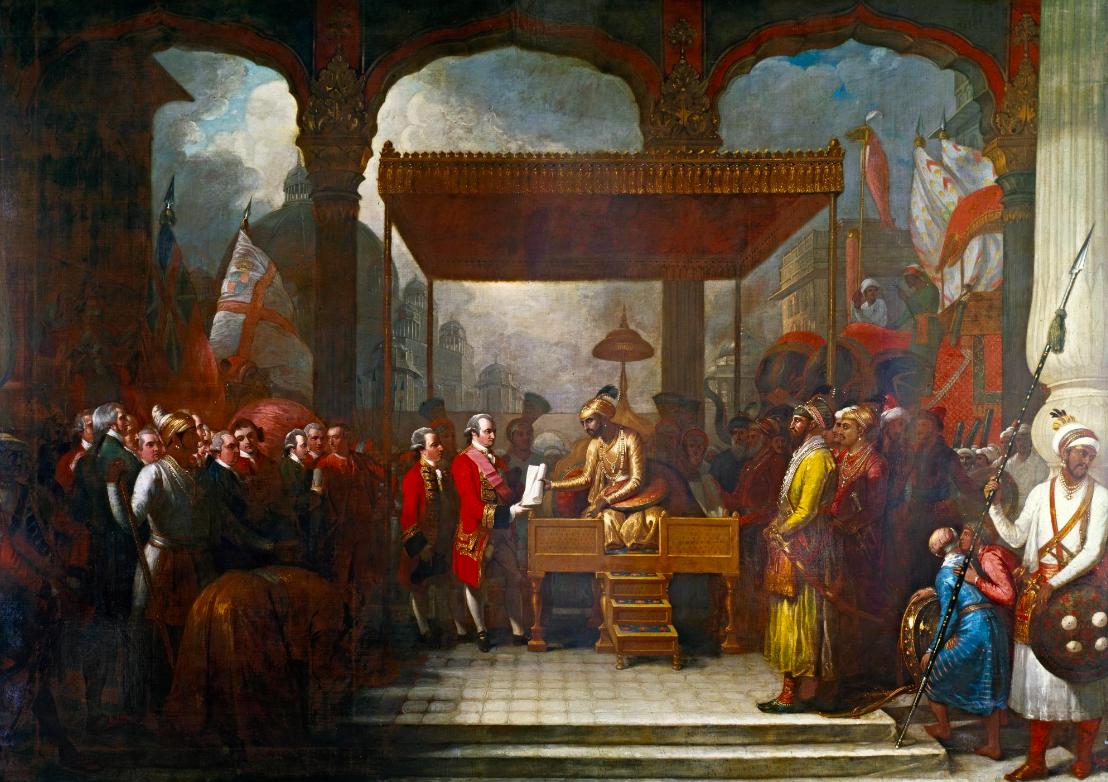
As a commercial enterprise, this company, hoped to allow Britain to expand its exports of Indian raw materials to Europe and its imports of European finished goods to the the rest of the world. It would eventually establish the British raj, importing many British businessmen and officers to the subcontinent before full British occupation after 1857. British imperial policy would reverse hundreds of years of the development of Indian textile manufacturing to advance their own industrial development.
British East India Company
100
Of the many profound changes from the Industrial Revolution, THIS made good cheaper, more abundant, and more easily accessible to a greater number of people than every before. This is a good thing, because workers in industrial society were - for the most part - low wage earners.
Mass Production
100
This era was defined by states having a desire for low wage labor to exploit natural resources. While slavery was gradually being abolished, the demand for labor increased on the plantations. People who worked for a set number of years before becoming free - called THIS - were often used in this role.
indentured servants
200
Societal norms often assigned women lower status than the status of men throughout much of the world. However, women throughout the 18th and 19th century would strive for this _____________ (the right to vote in political elections).
This landmark event in the history, held in New York in 1848 was the first women's rights event in the United States. Organized by prominent revolutionary women, including Elizabeth Cady Stanton and Lucretia Mott, this event aimed to address issues of women's rights, including their lack of legal and social status. The attendees, both women and men, discussed and adopted the Declaration of Sentiments, a document modeled after the Declaration of Independence, which outlined the need for equal rights for women, including (the right addressed in the blank above). It is considered a catalyst for the women's movement in the United States. This would later provide greater educational opportunities to increase women’s economic independence.
suffrage
Seneca Falls Convention.
200
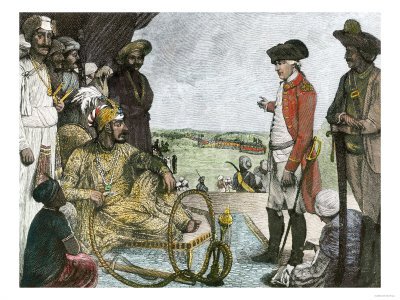
This term refers to the period during which the British East India Company, a trading company, exerted significant control over large parts of the Indian subcontinent. This era began in the mid-18th century, following the Battle of Plassey in 1757, and continued until the Indian (Sepoy) Rebellion of 1857. During this time, the East India Company gradually transformed from a commercial enterprise into a quasi-governmental entity, administering territories, collecting revenue, and maintaining its own military forces. The company's rule was marked by economic exploitation, cultural changes, and the imposition of British legal and administrative systems, laying the foundation for the later direct rule by the British Crown in India.
Company Rule
200
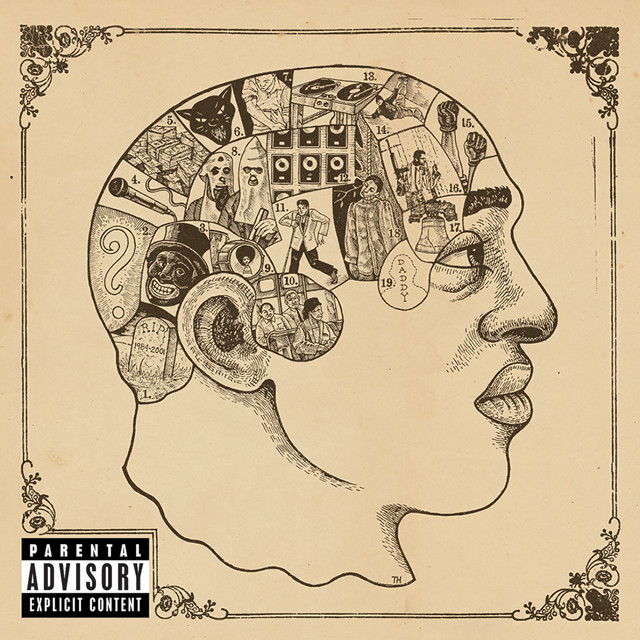
This field of study used skull sizes, shapes, and the contours of human skulls to prove a perceived intellectual differences between Africans, Indigenous Americans, Asians, and Whites. It was hugely popular in the 1800s despite being debunked by the mid-1800s. However, it was not truly put to the test until 2018 when researchers at Oxford researchers would use MRI technology to formally debunk the belief.
Phrenology.
200
This event was a turning point in British occupation of the Indian subcontinent. Prior to it, the British East India company would employ Hindu and Muslim peoples as their security force. However, they would turn on the British when it was discovered the British were using the fats from pigs and cattle to grease the weapons of their security force, were upset over the disparity in pay between them and similar British forces, as well as a protest against the British sending them overseas.
Sepoy Rebellion or Sepoy Mutiny or Indian Rebellion of 1857.
200
This island nation in Asia was a long time colony of Spain would fight for their independence for over 40 years against two different imperial powers. It would remain a possession of the United States until after World War II.
Phillipines
200
The relationship between industry and centralized government was key to modernization in Japan, private investment from overseas also became important. In Japan, when new industries were flourishing, they were sold to these powerful Japanese family business organizations. These are similar to conglomerates in the United States. These would attract investors encouraging innovation in technology. Examples of these that still exist today are Toyota, Mitsubishi, Seiko, and others. These are another example of the adoption of innovative practices in banking and finance that allowed for states to industrialize.
zaibatsu
200
In the wake of the Opium Wars, this treaty required to China to open up ports to foreigners, cede the island of Hong Kong the British, and pay damages for the war. Japan, France, Germany, Russia, and later the United States would want the same privileges that Britain attained. These exclusive trading rights in areas were known as spheres of influence.
Treaty of Nanking
200

According to this political cartoon, what are the effects of industrialization? There are two, maybe three answers.
Pollution (sewage and industrial run off in the river)
Spread of diseases (Cholera, tuberculosis, typhoid)
Also, poverty.
200
Immigrants would join these cluters or neighborhoods of people from the same country. Often, these appeared throughout major cities around the world. In these areas inhabitants spoke the language, ate foods from back home, and pursued a similar way of life. These places would influence local cultures and they would absorb some of the local traditions as well.
Ethnic enclaves
300
"We are not European; we are not Indian; we are but a mixed species of aborigines and Spainards. Americans by birth and Europeans by law, we find ourselves engaged in a dual conflict: we are disputing with the natives for titles of ownership, and at the same time we are struggling to maintain ourselves in the country that gave us birth against the opposition of the invaders."
-Simon Bolivar, speech to the Council of Angostura, 1819.
Who was Bolivar's intended audience?
Creoles (aka Criollos), people of European ancestry who were born in Latin America. Bolivar is also a creole. He is trying to rally fellow Creoles to stand up against the peninsulares class for rights in Latin America.
300

Depicted above, the SS Savannah was the first ship of its kind to cross the Atlantic Ocean with one of THESE.
steam engine
300
Critics of imperialism charged that these people supported imperial efforts by persuading people to give up their traditional beliefs and adopt beliefs of Europeans. They were often the first step of state expansion by setting up schools, hospitals, and humanitarian efforts (example: ending slavery)...justifying colonial practices before states and businesses were established.
Missionaries
300
This term is used to describe American Imperialism of the West.
Manifest Destiny
300

Seen here, the haka is a type of ancient war dance used by these people...traditionally used on the battlefield, as well as when groups came together in peace. It shows a fierce display of a tribe's pride, strength and unity. These people resisted British rule for nearly 60 years.
Maori
300
Suffering from problems of overexpansion and failure to modernize, the Ottoman Empire underwent attempted coups, declining economic power, and weak leaders throughout the 1800s. In an attempt to modernize, this state of the Ottoman Empire introduced state-sponsored industrial projects such as textile mills, arms factories, and infrastructure development like the construction of canals. It also introduced land reforms to increase agricultural productivity, providing resources for industrialization. While these measures did contribute to some economic growth and modernization, they also resulted in increased state control, heavy taxation, and forced labor, causing social and economic challenges for to this state as British influence would continue to impact attempts at economic independence.
Egypt
300
Foreign investors often used their governments to act as "strong men" to help them achieve the better financial ends. For example, the United Fruit Company, an American corporation allied itself with landowners to pressure governments to maintain favorable conditions for the business. This term was used to describe the economic power these businesses had over these - usually - unstable states that were economically dependent on these exports.
banana republics
300
The new labor patterns of the 18th and 19th centuries that emerged saw the development of new class identities. At the bottom rungs of the social hierarchy were those who labored in factories and coal mines. Though they helped construct goods rapidly, these workers needed fewer skills, so managers viewed them as easily replaceable. They are known as THIS new term.
Working class (or the working poor)
300
Native-born residences - in some cases - resented immigration. In the United States and Australia, governments institutionalized discrimination against - for example - China. Name these two policies from the U.S. and Australia.
Chinese Exclusion Act (U.S.)
Chinese Immigration Act or The White Australia Policy (Australia)
400
After the Congress of Vienna, nationalist movements strengthened as a result. The revolutions that followed were based on nationalism and liberalism. This state, whose leader favored a concept called "realpolitik" - political philosophy or approach that prioritizes practical and realistic considerations, often at the expense of moral or ideological principles - used nationalist feelings to engineer three wars to unify.
translates to "realistic politics" in English. Realpolitik emphasizes the pursuit of practical and concrete goals, such as power and national interest, rather than being driven by idealistic or ethical considerations.
Historically, realpolitik has been associated with pragmatic and often ruthless statecraft, where leaders make decisions based on a cold analysis of power dynamics, strategic interests, and geopolitical realities. It is often contrasted with idealism in foreign policy, which might prioritize moral principles or ideology over practical considerations.
Notable practitioners of realpolitik include political figures such as a key architect of [what is outlined above] in the 19th century, and Henry Kissinger, who served as the U.S. Secretary of State in the 20th century.
German Unification
400
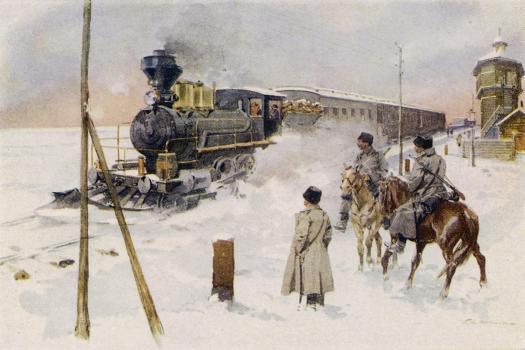
By 1900, Russia would have more than 36,000 miles of railroad connecting its commercial and industrial areas. This railroad stretched from Moscow to the Pacific Ocean allowing Russia to trade easily with countries in East Asia like China and Japan. Russian coal, iron, and steel helped support its development. Despite this progress, Russia's economy remained mostly agricultural until the Communists seized power in 1917. Nevertheless, it serves as an illustration of the significance of the state's active involvement in industrialization for certain nations.
Trans-Siberian Railroad
400
In western Europe, revolutions and the creation of nation-states characterized much of the 1800s creating a strong sense of identity and loyalty to the state. Building an overseas empire greatly enhanced national identity in the a global arena leading to an increase in this political justification for imperialism.
Nationalism
400
This event made it easier for foreign countries to dominate the economic affairs of China. In 1850, a failed civil servant, a Christian, Hong Xiuquan and his peasant followers launched the bloodiest civil war on record, with upwards of 70 million people dead. In comparison, the American Civil War (which began right after the end of this rebellion) saw the death of "only" 620,000 people.
Taiping Rebellion
400
Interethnic conflicts in Africa led to political fragmentation and ultimately limited Africans’ ability to resist imperialism. However, in attempts preserve traditional political structures threatened by direct European territorial expansion, there were attempts at state creation that used religion to unite Africans. This response, led by Usman dan Fodio, used Islam and the slave trade (as a means for economic growth during a time Britain was trying to end the practice). It would last for nearly 100 years before the British would fold it into their colony of Nigeria.
Sokoto Caliphate
400
TEAM CHALLENGE
The market competition was distorted and consumers suffered due to the monopolistic practices employed by government-chartered joint-stock companies like the British South Africa Company.
Some corporations became so powerful that they could form a monopoly. Some became transnational companies - corporations that operate across national boundaries.
There are 5 of these monopolies/corporations listed in Topic 5.7. Team that names the most wins the points.
Standard Oil (Oil - USA - Rockefeller)
Krupp AG (Steel - Germany - Krupp)
DeBeers (Diamonds - Britain - Rhodes)
Hong Kong and Shanghai Banking Corporation (Finance and Investment - Britain/Hong Kong)
Unilever (household goods - Britain/Dutch)
400
After the Berlin Conference and subsequent "Scramble for Africa" Africa was becoming a source of important raw materials for Europe’s industrializing economies. Name 4 of the export economies that drove European imperialism in Africa.
Rubber, Palm Oil, Ivory, Copper, Gold, Tin, Diamonds.
400
A series of reforms in the 19th Century, that included a government modeled after France including a new criminal law code based on the Napoleonic Code, creating secular laws to supersede shari'a courts, free trade, replaced devshirme with a military modeled on the Prussian system (the United States' was, too), public school modeled off the British that bypassed traditional Islamic schooling (which was done by clerics), a single empire wide tax collection agency that looks similar to the IRS replacing tax farmers, and guarantees of life, liberty, and propery...sounds great, right?
But, according to historian James L. Gelvin, these Imperial Edicts was written out verbatim by British ambassador Stratford Cutting and handed to Ottoman officials with instructions to translate it and proclaim it publicly.
To many Ottoman Muslims, these reforms smelled less like reforms and more like fresh evidence of alien power taking over their lives.
But not all Muslims did. Some believed that to beat the Europeans, they needed to play their game...which meant adopting these European "inspired" reforms were necessary.
Tanzimat Reforms
400
By the late 19th Century, the United States surpassed THIS state in the number of immigrants attracted. This state encouraged European immigration in its constitution, guaranteeing foreigners the same civil rights enjoyed by its citizens. By the 20th century, Italians made up almost half of the immigrants to this state. As a result, Italians had an enormous influence on the local cultures. This same policy would leave to the immigration of Germans post-World War II, continuing the European influence in this state to this very day.
Argentina
500

This is a painting by Panagoitis Zografos and shows the Ottoman seige of the Acropolis. Aided by British, French, and Russian forces this ethnic group won their independence by 1832 after being under Ottoman control for over 350 years as a result of increased contact with the west - aka Enlightenment ideas.
Greek Independence
500
TEAM CHALLENGE
Britain had many environmental and geographic advantages as well as political and social advantages that made it a leader in industrialization.
Name as many as you can. Winning team wins the points.
Access to water and seaways
Abundant Rivers
Mineral resources - Coal and iron
Empire - colonies that acted as sources of food, natural resources, raw materials, cheap labor, and markets.
Strong Navy (dominance on the seas = dominance in trade)
Laissez Faire Government
Patent Laws and Private Property Laws
Population of skilled workers in textiles
500
European nation-states were not the only states to assert its nationalist pride through empire building. This war - won by Japan over the Qing Dynasty - would give it control over Korea and Taiwan, beginning its territorial expansion that would not end until World War II as another power rising in the Pacific, the United States would end their expansion. The Japanese, too, would justify their expansion through their belief of their superiority over other East Asian peoples.
Sino-Japanese War
500
The result of this war saw the British driving out other European settlers - known as Afrikaners - as well as indigenous Africans out of South Africa. Known as The Great Trek, this forced movement created many refugees, and as a result the British would force many to settlements known as concentration camps that would be segregated by race. Conditions in both were poor, but much worse for those in black concentration camps, setting the stage for what would become known as Apartheid in South Africa - an era of racial segregation that would last until the early 1990s.
Boer War
500
There was a low probability that armed resistance would be successful in Africa because of the military advantages of Europeans. That did not stop them from trying. Name the FOUR (yes, all FOUR) illustrative examples of armed African response to imperialism.
Anglo-Zulu War
Samory Toure's War
Yaa Ashantewaa and the War of the Golden Stool
Mahdist Revolt
500
The Group in Last Place gets 500 points.
(if there is a tie, it goes to both)
Congrats for being in last place as of this question. Hopefully you're not in last anymore.
500
A major consequence of commercial extraction, farmers were allowed in many colonies to raise only cash crops, such as sugar, cocoa, or groundnuts at the expense of other agricultural products. This use of land led to the development of this...or a lack of agricultural diversity, particularly in developing nations. Famine was the most devastating effect of these.
monocultures
500
In the aftermath of the signing of the unequal treaties, the Qing Emperor, feeling pressure to modernize in the 19th century. It developed as a way for the government to face the internal and external problems confronting China. They would advance their military technology, by training Chinese artisans to manufacture items for the military as well as streamlining its tax collection internally as well as making a governmental branch to improve tariff collection. These reforms were met with mixed reviews, including by a future Empress, Cixi, who wanted to protect traditional Chinese society and government. This is an example of the conflict many state's felt as they tried to balance embracing the new realities brought to the world by Industrialization and Westernization while trying to maintain their unique state identity.
Self-Strengthening Movement
500
The term diaspora is often applied to mass emigrations from a country or region that may take place over many years. While some - like the African slave trade - were involuntary...most were the result of poverty, political conditions, or famine. Name the three illustrative examples on the topic of migration in the face of challenges.
India (famine, economic conditions - many became indentured servants)
China (economic, political)
Ireland (famine)