Molecules (Water/ Nucleic Acids)
Cells
Carbs, Lipids, & Proteins
Membranes/ Transport/ Organelles
Random Stuff
100
Three differences between DNA and RNA
Nitrogen Bases (Thymine vs Uracil)
Pentose Sugar (Deoxyribose vs Ribose)
DNA is usually double stranded while RNA is usually single stranded
100
Three structures common to cells in all living organisms
DNA
Cytoplasm
Plasma Membrane
100
The type of reaction that builds macromolecules, such as polysaccharides, polypeptides and nucleic acids
What is Condensation Reaction?
100
The term for how O2 and CO2 passively move across the plasma membrane without the use of energy/ ATP
Diffusion
100
5 Kilometers is this many miles
3.1 miles
200
The type of bond between Cytosine and Thymine
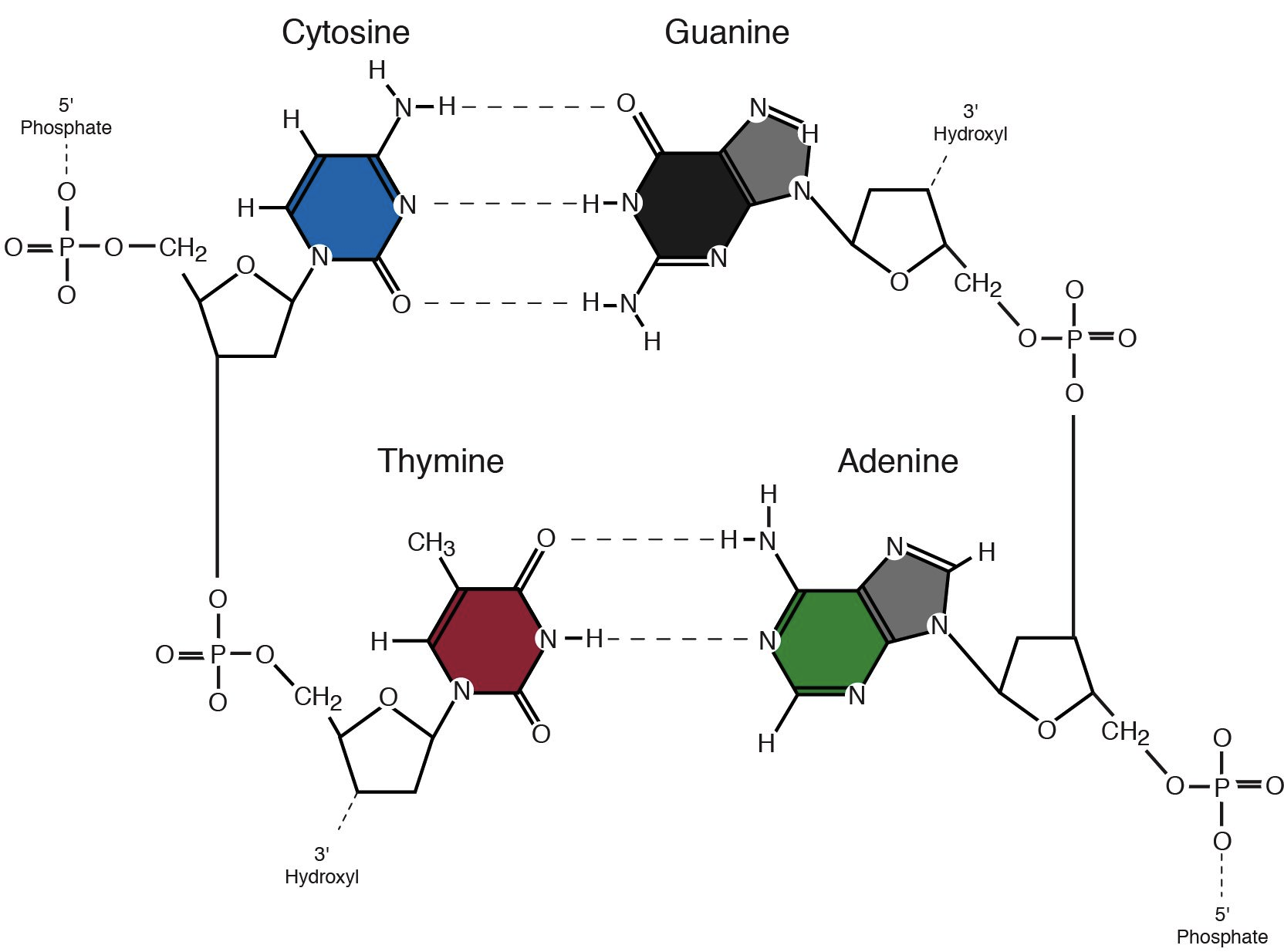
Covalent Bond
200
I can predict a newly discovered living organism will consist of 1 or more cells due to this
Cell Theory states that all living things are made up of cells
200
Cell communication and recognition, including blood typing, is achieved using this membrane molecule
What is glycoprotein?
200
Pump proteins used in active transport move molecules which way in relation to the concentration gradient
Against the gradient; or from a low concentration to a high concentration
200
The most expensive type of food in the world
A certain Caviar: $34,500 Per Kilogram
One kilogram of this particular type of caviar will cost you the same price as some brand new cars.
The cost is down to the limited number of eggs that the albino sturgeon produce, as they usually only deliver eggs once every 100 years!
300
Provides evidence of universal common ancestry
Conservation of genetic code across all form of life - Every organism has DNA; DNA that codes the same in all organisms, for the same proteins. Certain base code sequences are present in almost all organisms.
300
The specific name and function of the structure labeled "B"

70s Ribosome. Makes proteins.
300
The "parts" or molecule groups that make up every amino acid. (in other words, what are the parts every amino acid has)
You can list or draw and label the parts
-NH2 Amine Group
-COOH Carboxyl Group
-C- Central Carbon
-H Hydrogen
R Group
300
There are several common cell structures that are not technically organelles. Name 2.
Cytoplasm, Cytoskeleton, Cell Wall
300
Artist with the most monthly listeners on Spotify as of Jan 14 2026
The Weeknd
400
This makes water a good solvent. ALSO, explain why this is important for living things
Water is a good solvent because it is polar. This makes it able to dissolve, carry, and make use of many molecules and enzymes necessary for life.
400
Name structure "A". Justify your answer (why do you think it is that organelle), and give its function.

Mitochondria - Size (smaller than nucleus), shaped kind like a bean or oval, and many folds inside. Creates ATP for cell energy
400
Lipid Molecule that influences cell membrane function at abnormally high and low temperatures
What is cholesterol?
400
The reason having a nuclear membrane is beneficial for eukaryotic cells
post-transcriptional DNA modification; after the DNA is transcribed it can be edited and modified before interacting with a ribosome for translation. In prokaryotes, with no nucleus, transcribed DNA might interact with a ribosome almost immediately
400
Highest Grossing Movie of 2025 in US (not worldwide)
1. Minecraft
2. Lilo & Stitch
3. Superman
500
The heat capacity of water compared to air, and an adaptation or behavior aquatic living things use to cope with the difference.
The heat capacity of water is higher, meaning it takes more energy to heat it. This means organisms that live in water won't lose heat quickly.
500
Electron microscopes have higher magnification and resolution than light microscopes. This is (at least) one advantage of light microscopes.
Light microscopes can be used with living specimen and can view images in color.
500
Two reasons there are an infinite possible number of proteins we can make from the different amino acids
* Must have both answers
1. 20 different amino acids: can be put together in a lot of different orders (2.43E+18 combinations for this alone)
2. Chains of different lengths: amino acids can be combined in chains of different lengths
500
2 advantages of compartmentalization from organelles in cells
concentration of metabolites and enzymes
(e.g. Phagocytic vacuoles - contain food particles and enzymes in a small volume inside the vacuole which increases the rate of digestion)
the separation of incompatible biochemical processes.
(e.g. lysosomes separate their hydrolytic enzymes from the cytoplasm because if not, they would digest the cell).
Membranes control entry and exit of substances to an organelle.
500
two months of the year are named for mortal men
July & August