Indefinite Integrals I
Indefinite Integrals II
Definite Integrals
(FTOC I)
(FTOC I)
FTOC I & II
Miscellaneous
100
int (1/3sinx-1/4cosx)dx
-1/3 cosx-1/4 sinx +C
100
int csc(t)cot(t)dt
-csc t+C
100
int_1^3r^-4 dr
[-1/3(3)^-3]-[-1/3(1)^-3]=26/81
100
Find the explicit area function represented by the following integral:
int_0^x2e^(3t)dt
A(x)=2/3e^(3x)
100
Estimate R3 and L3 over [0,1.5] for the function seen here.
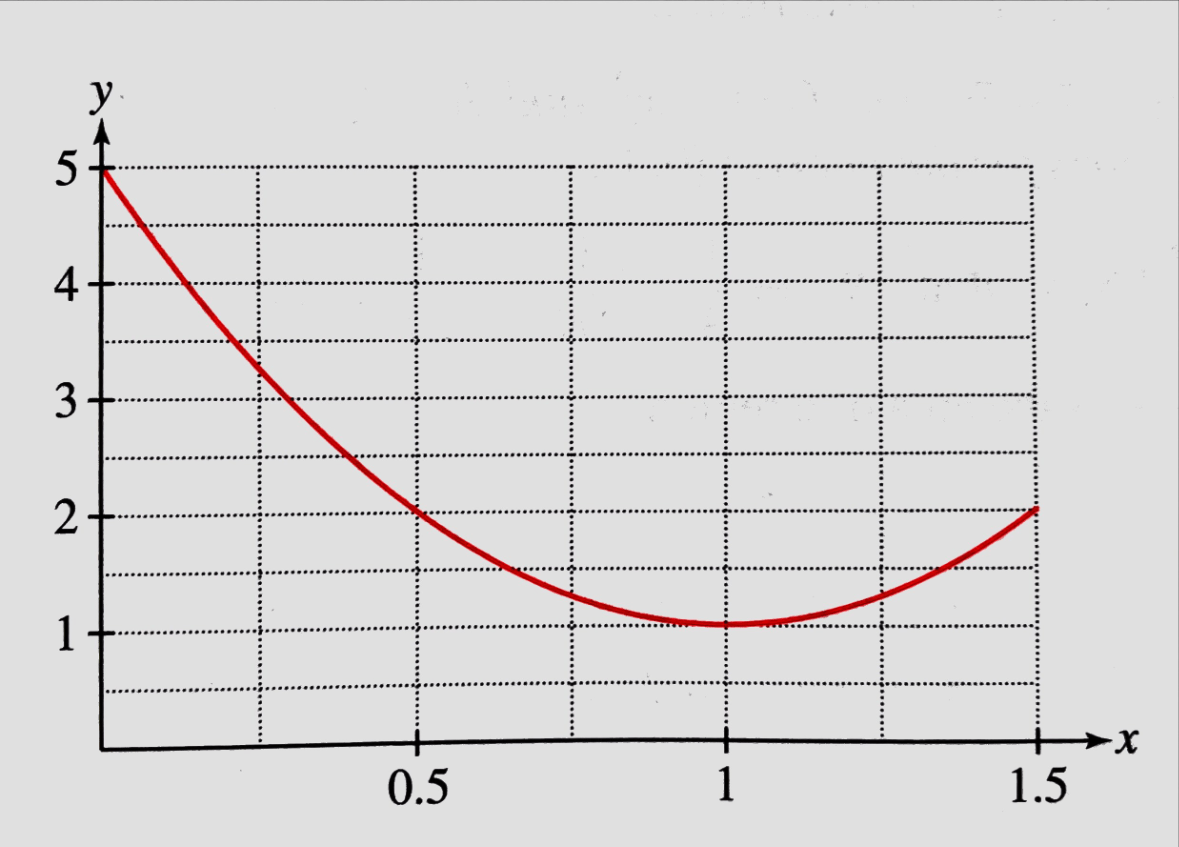
L_3=0.5(5+2+1)
R_3=0.5(2+1+2)
200
int x^2 e^(x^3) dx
1/3e^(x^3)+C
200
int e^(9-2x)dx
-1/2e^(9-2x)+C
200
int_1^elnx/xdx
1/2
200
d/dx int_0^x(t^5-9t^3)dt
x^5-9x^3
200
Estimate distance traveled using R6 and M3 with the table below.
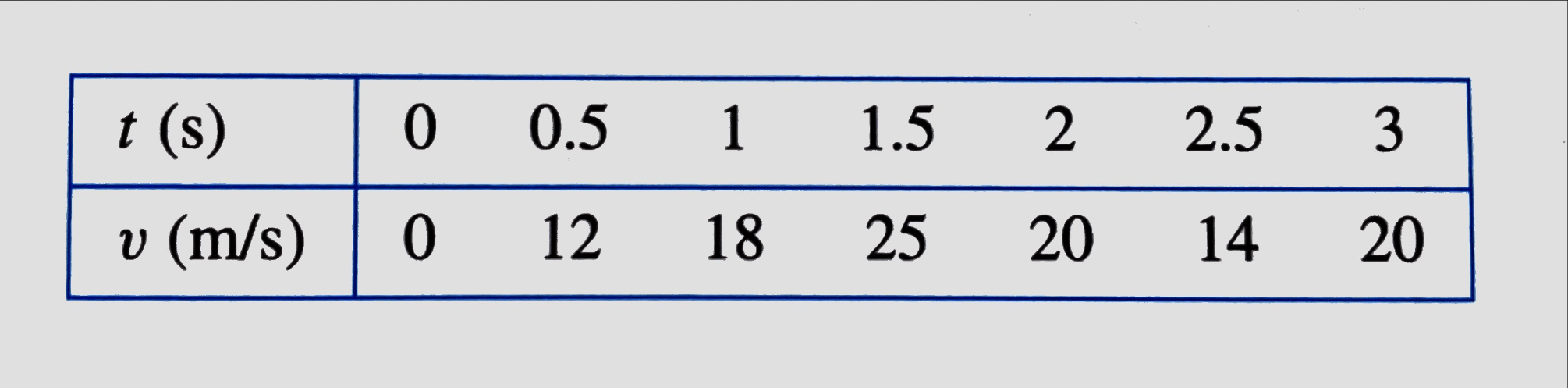
R_6=0.5(12+18+25+20+14+20)
M_3=1(12+25+14)
300
int 9^x sin(9^x) dx
-cos(9^x)/ln9
300
int t^2 sec^2(9t^3+1) dt
1/27 tan(9t^3+1)+C
300
int_0^3 dx/(x^2+9)
1/3(pi/4)-1/3(0)=pi/12
300
Let
A(x)=int_0^x f(t) dt
for f(x) seen in the image. Calculate A(2), A(3), A'(2), A'(3)
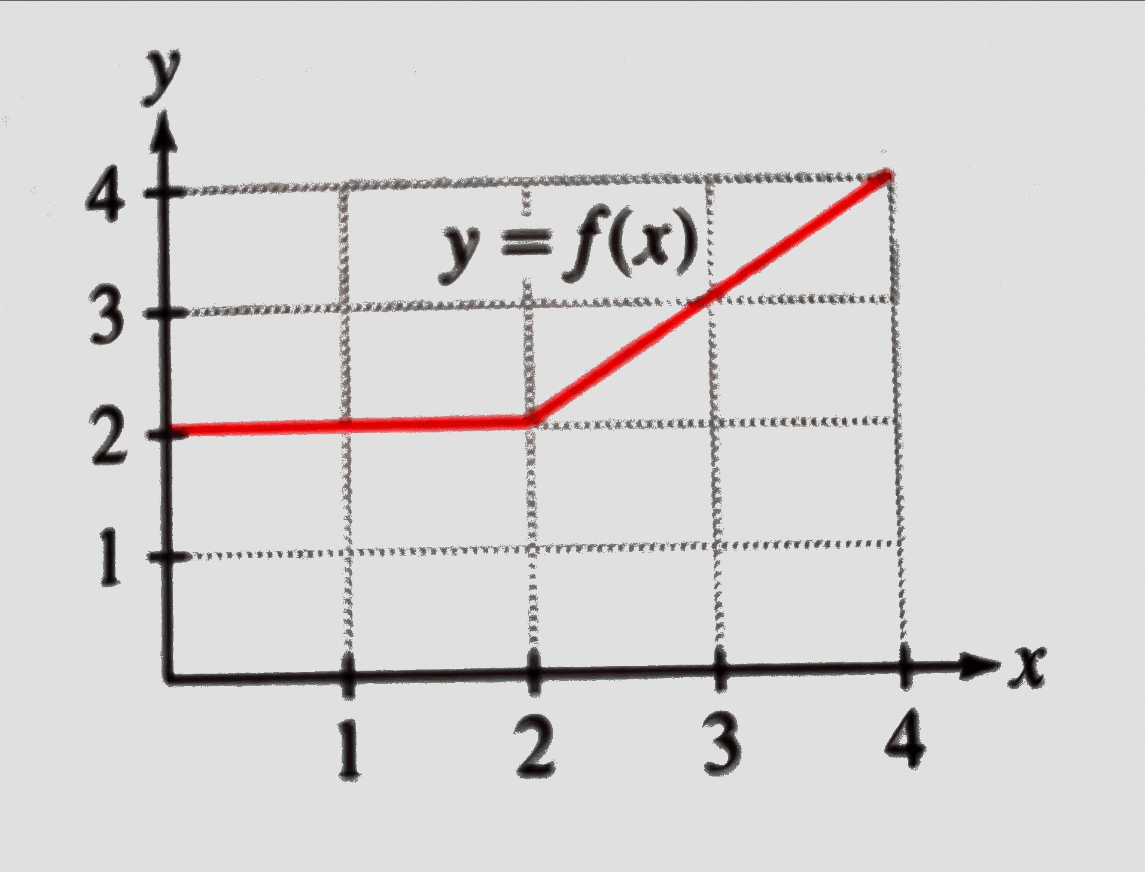
A(2)=4
A(3)=6.5
A'(2)=2
A'(3)=3
300
Solve the differential equation with the given initial condition:
dy/dt=3t^2+cos(t), y(0)=12
y=t^3+sin(t)+12
400
int dx/(xsqrt(ln(x))
2sqrt(ln x)+C
400
int 4^x-1/(x+1)dx
4^x/ln 4-ln|x+1|+C
400
int_1^sqrt(3) dx/(tan^-1(x)(1+x^2))
ln|pi/3|-ln|pi/4|
400
d/dx int_0^(x^2) (t dt)/(t + 1)
x^2/(x^2+1) * 2x
400
A population of insects increases at a rate of 200+10t+0.25t^2 insects per day (t is in days). Find the insect population after 3 days, assuming that there are 50 insects at t = 0.
697 insects
(not 698 b/c you must round down when dealing with population)
500
int (x dx)/sqrt(1-x^4)
1/2arcsin(x^2)+C
500
int sin(theta)cos(theta)e^(cos^2(theta) + 1) d theta
-1/2e^(cos^2(theta)+1)+C
500
int_(-1/2)^0((x+1)dx)/sqrt(1-x^2)
1-sqrt3/2+pi/6
500
Let
A(x)=int_0^x f(x) dx
where f(x) is depicted below. Identify the location of the local extrema, points of inflection of A(x), and intervals of increasing, decreasing, CC up, CC down. Also, identify the location of the absolute maximum of A(x).
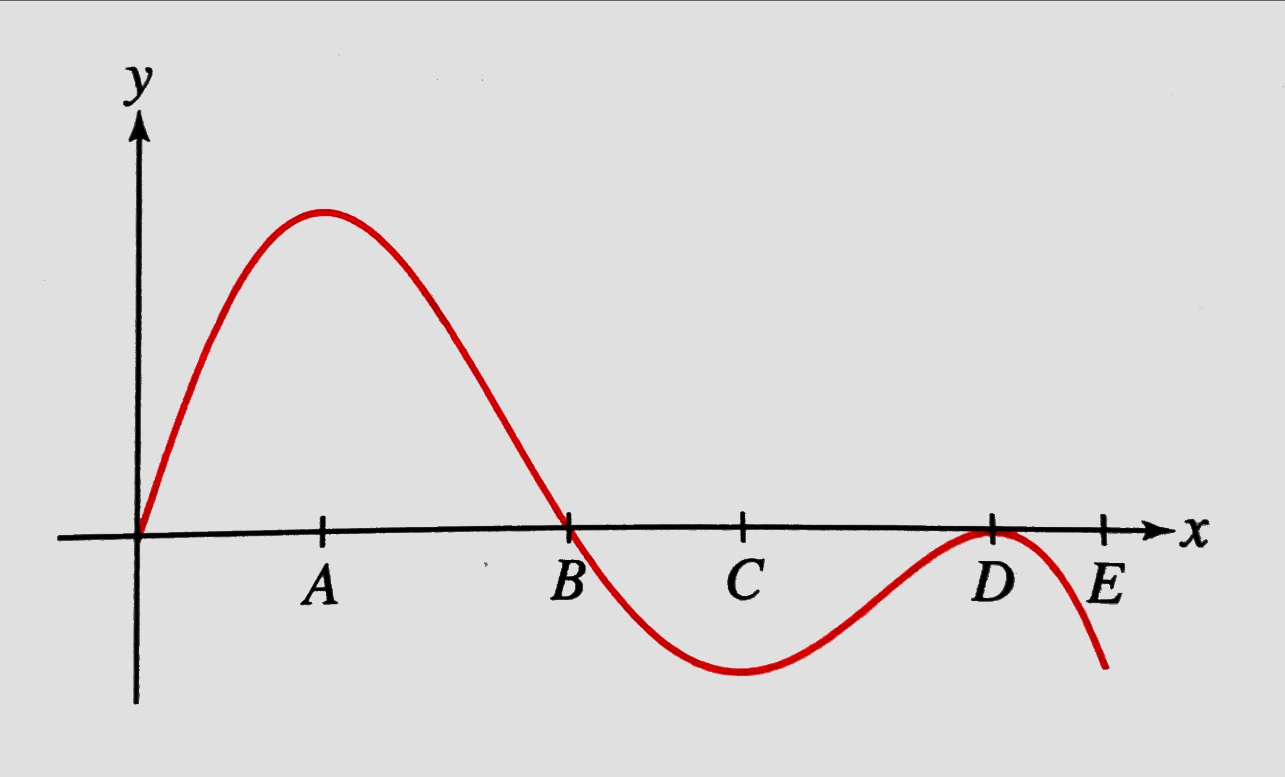
Local max @ B
POI @ A, C, D
Abs. max @ B
INC: (0,B)
DEC: (B,D) and (D,E)
CC up: (0,A) and (C,D)
CC down: (A,C) and (D,E)
500
A particle moves in a straight line with velocity v(t)=12-4t (in m/s). Find the displacement and distance traveled over the time interval [0,5].
displacement = 10 meters
distance = 26 meters