Parts of an Atom
Periodic Table Trends
Metals, Nonmetals, Metalloids
Types of Bonds
Ionic and Covalent Molecules
Moles & Stoich
100
This positive part of an atom gives the atom its identity its atomic number; for example, Carbon is element 6 because it has 6 of these
What is a proton?
100
When the amount of charges (positive and negative) increases or the distance between two charges decreases, this happens to the force between them
What is it increases or gets stronger?
100
These types of elements are shiny, bendable, and conduct electricity well
What are metals?
100
These bonds form when electrons flow between two or more atoms
What are metallic bonds
100
Lithium and Chlorine will bond to make this ionic compound (formula)
What is LiCl?
100
This number of atoms are found in a mole
What is 6.022 x 10²³ , or Avagadro's number?
200
This part of the atom is neutral, but adds to the weight of the atom
What is a neutron?
200
Atomic radius, the distance between the electron cloud and nucleus, is smallest at this area of the periodic table
What is the top-right corner / nonmetals / fluorine?
200
These types of elements are dull, break easily, and do not conduct electricity well
What are nonmetals?
200
These bonds form when electrons are transferred between a metal and nonmetal, developing a charge on both atoms
What are ionic bonds?
200
Magnesium and Phosphorous will bond to make this type of ionic compound (formula)
What is Mg3P2 ?
200
I can determine the molar mass of an atom or molecule by looking up this characteristic of an element and rewriting in in grams
What is the atomic mass?
300
This negative part of the atom is so small that it is nearly weightless, and it is involved in bonding
What is an electron?
300
Electronegativity, or how aggressively an atom attracts new electrons, is weakest on this area of the periodic table
What is the bottom-left corner / alkali metals?
300
These types of elements are shiny, break easily, and are semiconductors of electricity
What are metalloids?
300
These bonds form when electrons are shared between two or more nonmetal atoms
What are covalent bonds?
300
Sulfur has _ many valence electrons, and can make up to _ covalent bonds
What are 6 valence electrons and 2 covalent bonds?
300
I have 45 grams of Sodium (Na) metal, which is this amount of moles
What is 1.95 moles?
400
In order to get the weight of an atom, you add together the number of these two particles
What are protons and neutrons?
400
Ionization energy, or how much energy it requires to remove the outermost electron, is highest on what area of the period table?
What is the top-right corner / nonmetals / fluorine?
400
The highest electronegativities are found in these types of elements
What are nonmetals / Fluorine?
400
Ionically bonded compounds are also called this, which can be used to season foods
What are salts?
400
In a molecule of CO2, each oxygen molecule is shares this many bonded electron pairs with carbon
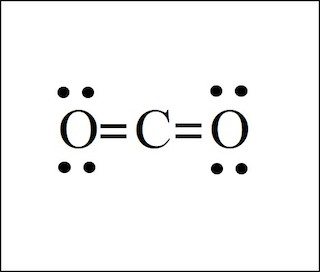
What are two pairs of bonded electrons OR four bonded electrons?
400
N2 + 3 H2 --> 2 NH3
With 100 grams of nitrogen gas, this mass of grams of ammonia (NH3) will be produced
What are 121.64 grams of NH3?
500
In order to get the charge of an atom, you calculate if you have the same number of OR a surplus of one of these two particles
What are protons and electrons?
500
As atomic radius increases, this happens to an atom's electronegativity and ionization energy
What is decreases?
500
The lowest ionization energies are found in these types of elements
What are metals?
500
Covalently bonded compounds are given this name
What are molecules?
500
Double and triple covalent bonds are stronger than single-covalent bonds because this part of each atom overlaps
What are the energy levels or electron clouds?
500
Zn + 2 HCl --> ZnCl2 + H2
With 100 grams of HCl, this many molecules of zinc chloride (ZnCl2) will be produced
What are 8.260631×10²³ molecules of Zinc Chloride?
2500
FINAL JEOPARDY
This scientist first expressed in 1785 the concept that, as a distance between two charges decreases, their attraction increases exponentially
Who is Charles-Augustin de Coulomb / Coulomb's Law?