6.12A Depend and Compete
6.12 B Animal Relationships
6.12 C Ecosystem Organization
100
Students researched facts about various populations in a rain forest ecosystem. Based on the information in the table, select the statement that is true.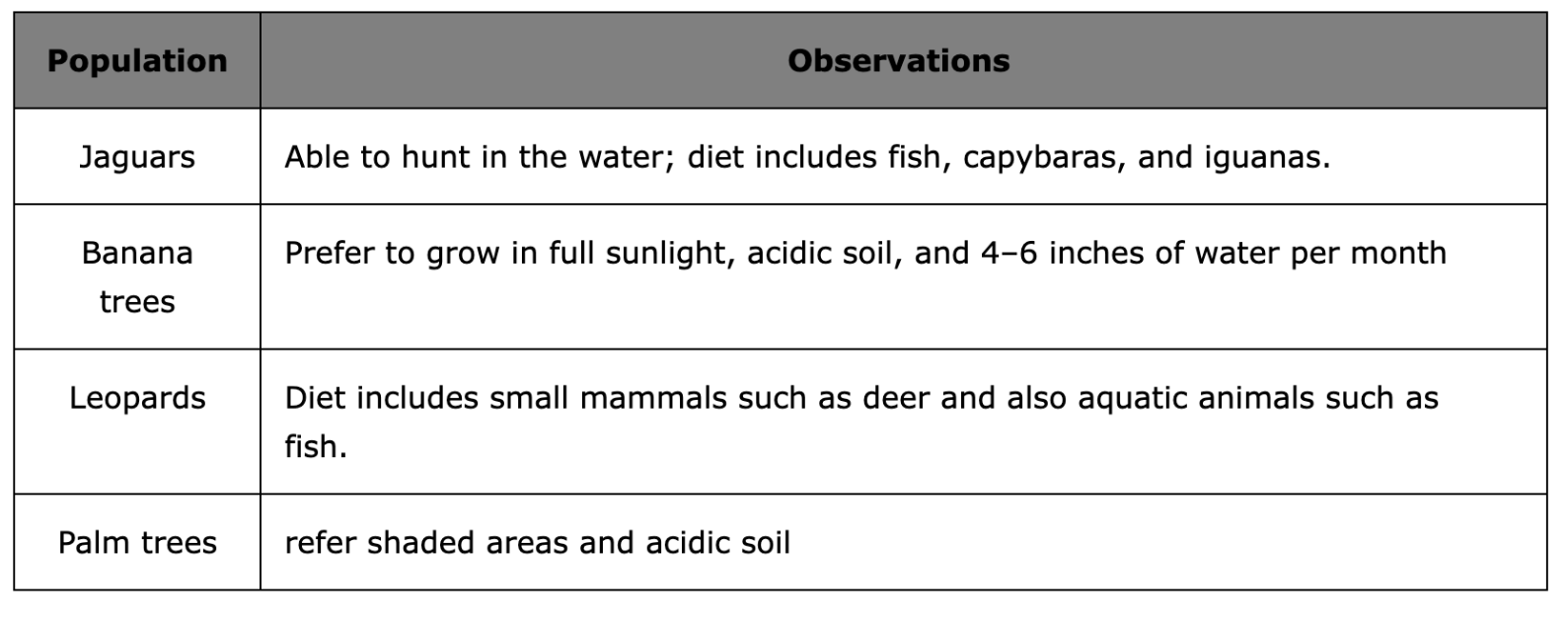
A. The banana trees and jaguars compete for food, sunlight, and soil.
B. The banana trees and palm trees compete for food, sunlight, and soil.
C. The jaguars and leopards compete for sunlight, food, and soil.
D. The jaguars and leopards compete for food.
What is the jaguars and leopards compete for food?
100
Observe the graph below. Describe the relationship between the population of rabbits and the population of wolves.
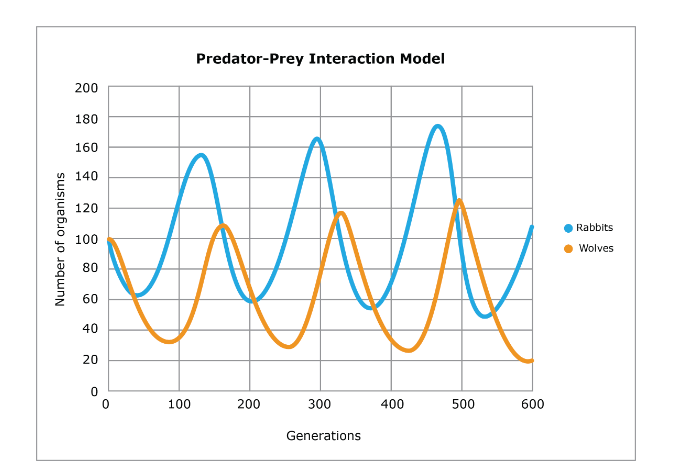
A. As the population of wolves decreases, the rabbit population decreases.
B. Both populations rise and fall simultaneously.
C. As the population of rabbits decreases, the population of wolves begins to decrease.
D. As the population of rabbits begins to increase, the population of wolves begins to decrease.
What is as the population of rabbits decreases, population of wolves begins to decrease?
100
Tomas was creating a Venn diagram that shows the similarities and differences between an organism and a population. Tomas placed this fact incorrectly.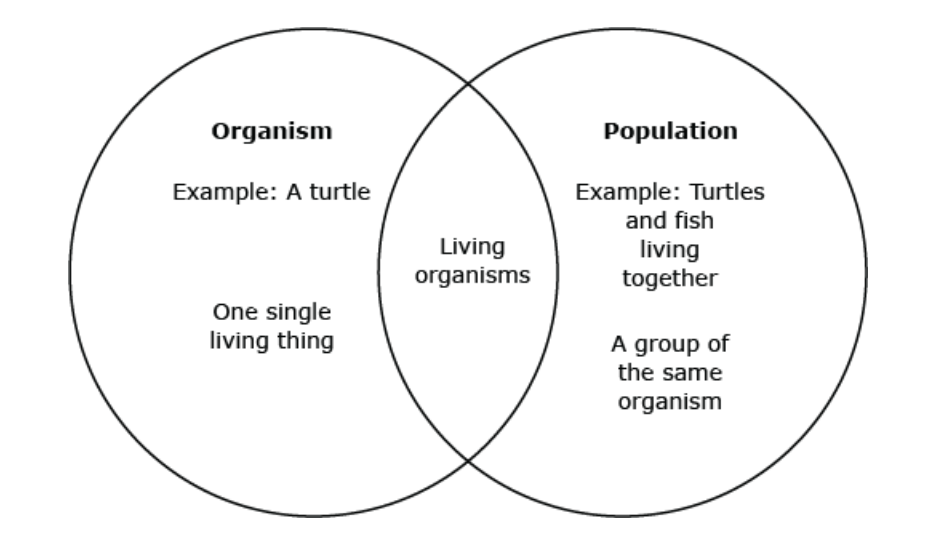
What is turtles and fish living together does not describe a population?
200
Refer to the tables provided. These populations of plants depend on and may compete for sandy soil in zone 9.
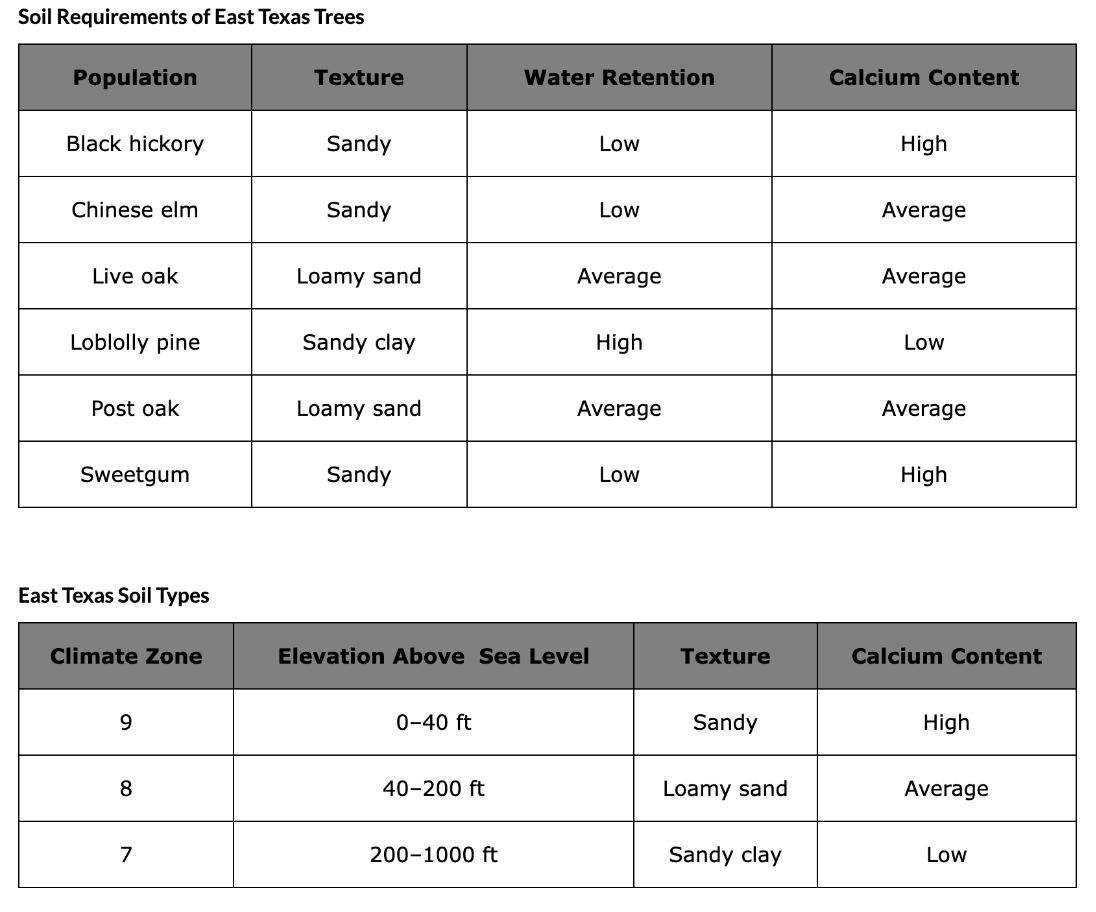
A. Black hickory and sweetgum
B. Live oak and post oak
C. Loblolly pine and black hickory
D. Post oak and Chinese elm
What is black hickory and sweetgum?
200
A scientist conducted an investigation and noted her results below. Select the statement that is supported by the data in the table.
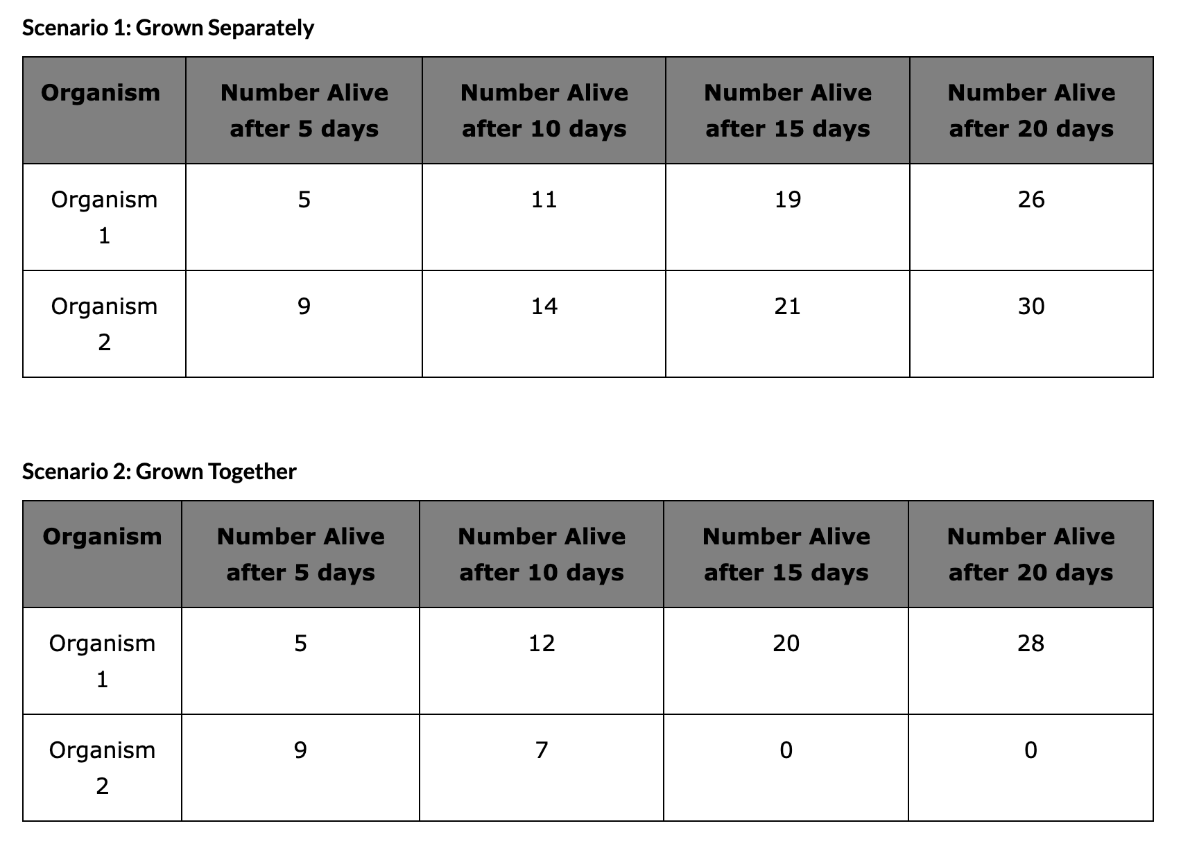
A. Organism 1 is in a parasitic relationship with organism 2.
B. Organism 1 is in a competitive relationship with organism 2.
C. Organism 1 is in a commensal relationship with organism 2.
D. Organism 1 is in a mutualistic relationship with organism 2.
What is Organism 1 is in a competitive relationship with organism 2?
200
The following correctly lists the levels of organization from the least complex to the most complex.
A. Ecosystem, community, population, organism
B. Organism, population, community, ecosystem
C. Population, organism, community, ecosystem
D. Community, population, ecosystem, organism
What is organism, population, community, ecosystem?
300
Trees have certain parts that allow them to grow. Their roots absorb water and transport it throughout the organism. The leaves are able to perform photosynthesis, which is the process of converting sunlight and carbon dioxide into water and oxygen.
The image provided shows two organisms (trees) growing in a forest. Based on this image, these three statements are correct.
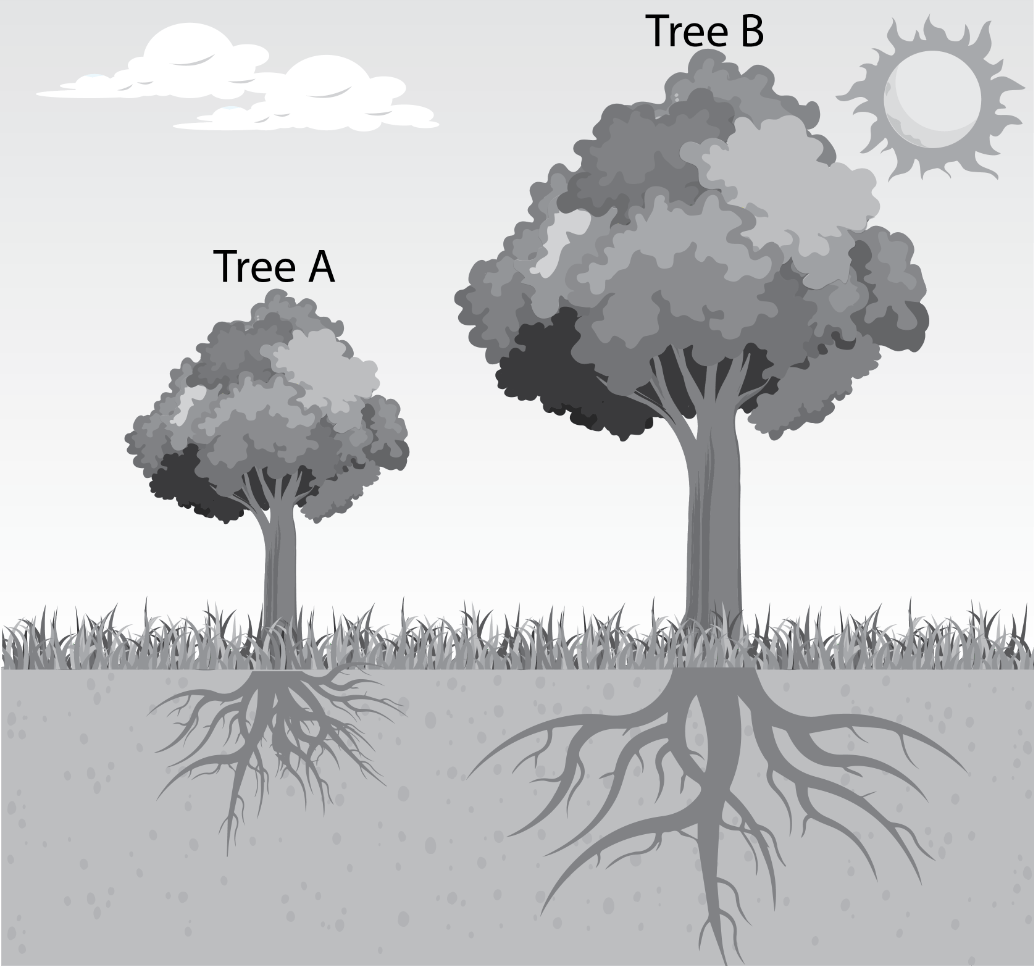
Select the three correct answers.
A. Both organisms are competing for quantity of light.
B. Both organisms are competing for water.
C. Both organisms are competing for oxygen.
D. Both organisms are competing for soil.
E. Both organisms are competing for grass.
What are both organisms are competing for quality of light, both organisms are competing for water, and both organisms are competing for soil?
300
This type of symbiotic relationship is shown in the image below.
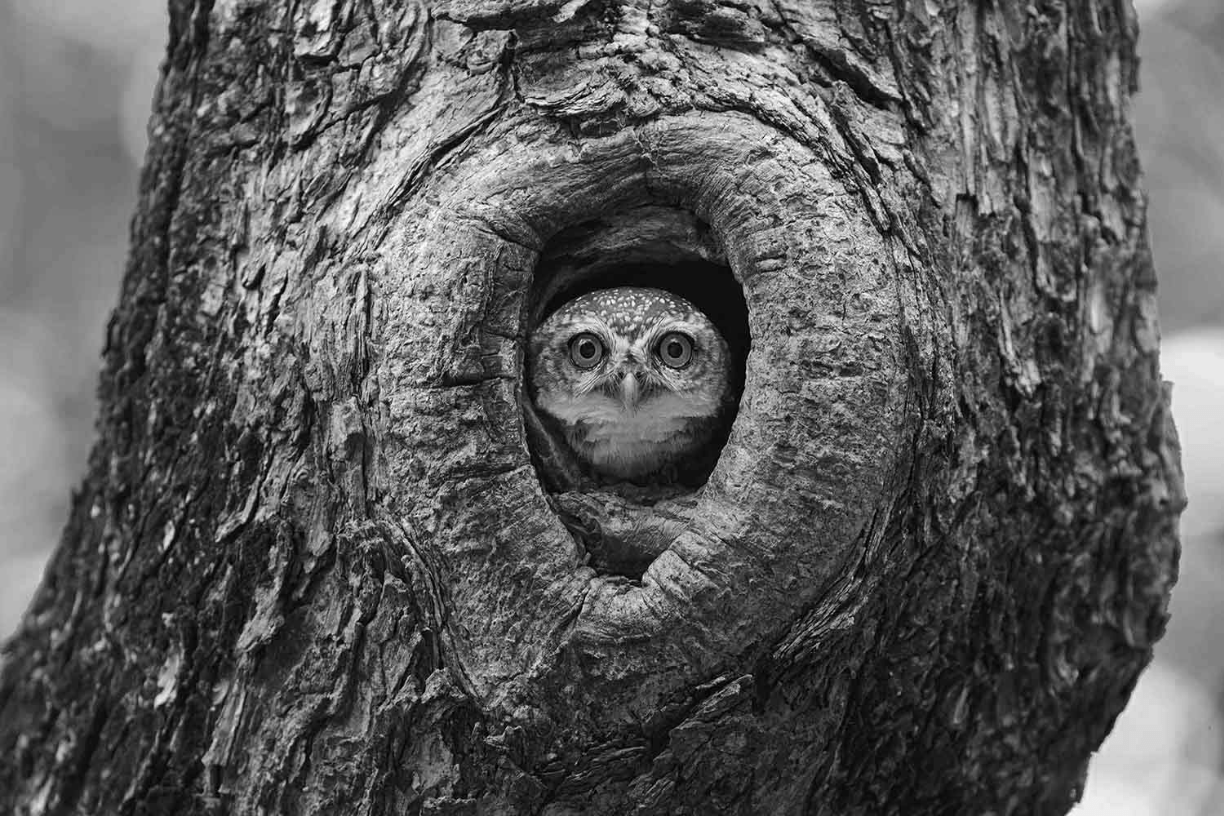
What is commensalism, because the owl benefits from the relationship while the tree neither benefits nor is harmed?
300
Jenni turned in her homework after learning about ecosystems. This fact did Jenni incorrectly wrote on her homework.
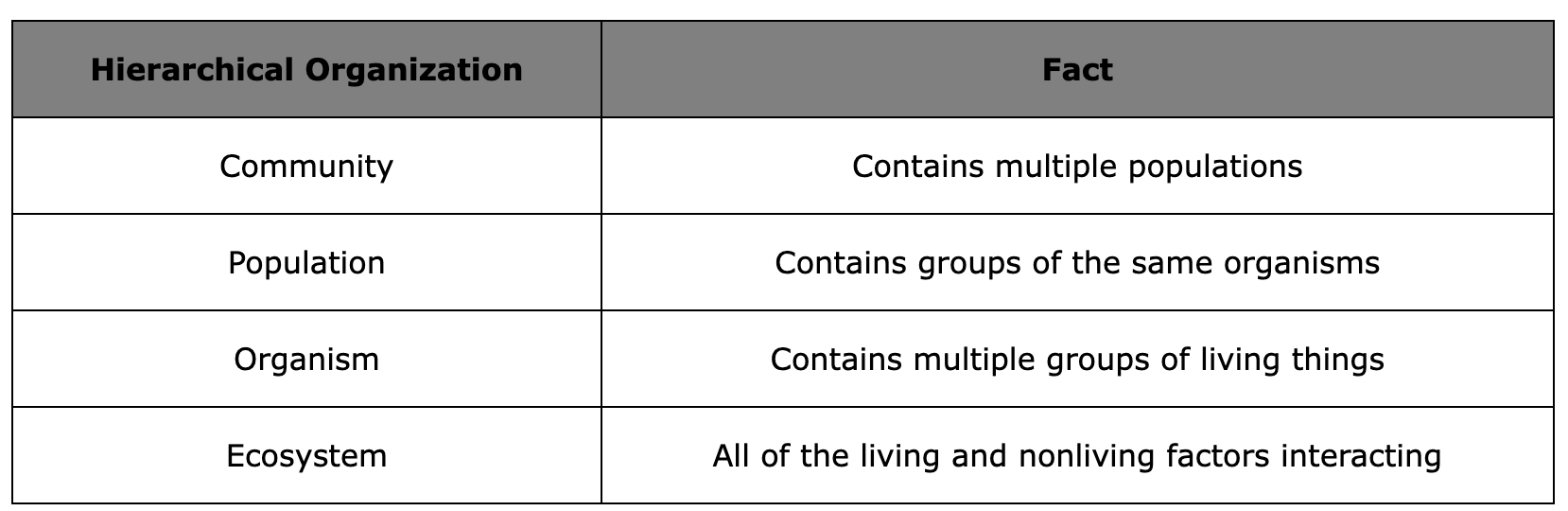
What is an organism does not contain multiple groups of living things?
400
The image provided here shows a raccoon’s ecosystem. This numbered item shows a biotic factor that the raccoon may compete for with another organism.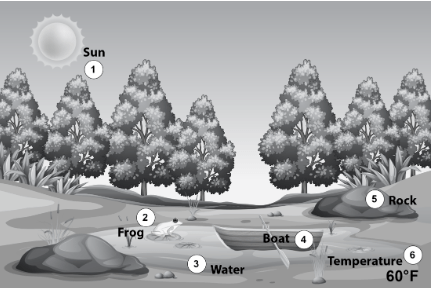
What is number 2 the frog?
400
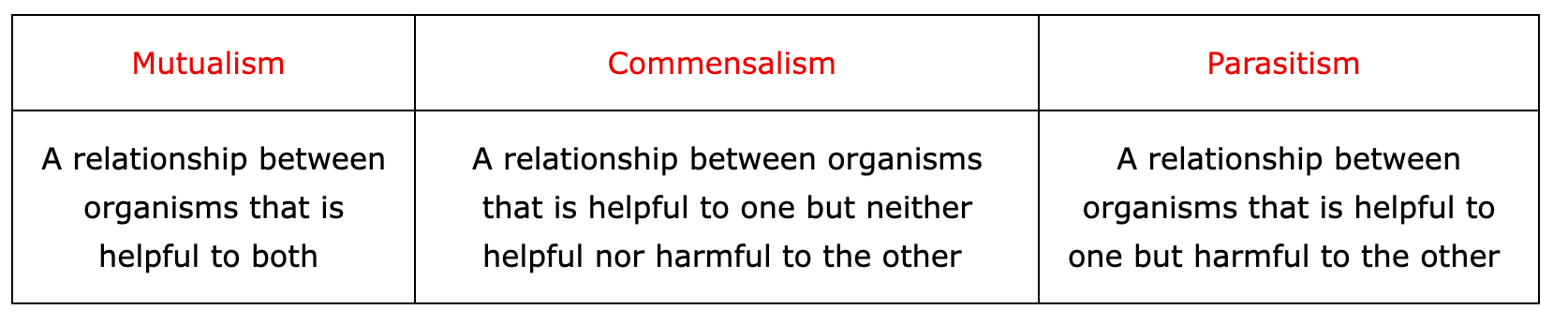
The table below lists the three types of symbiotic relationships between organisms. Identify which type of relationship is being described in each column.
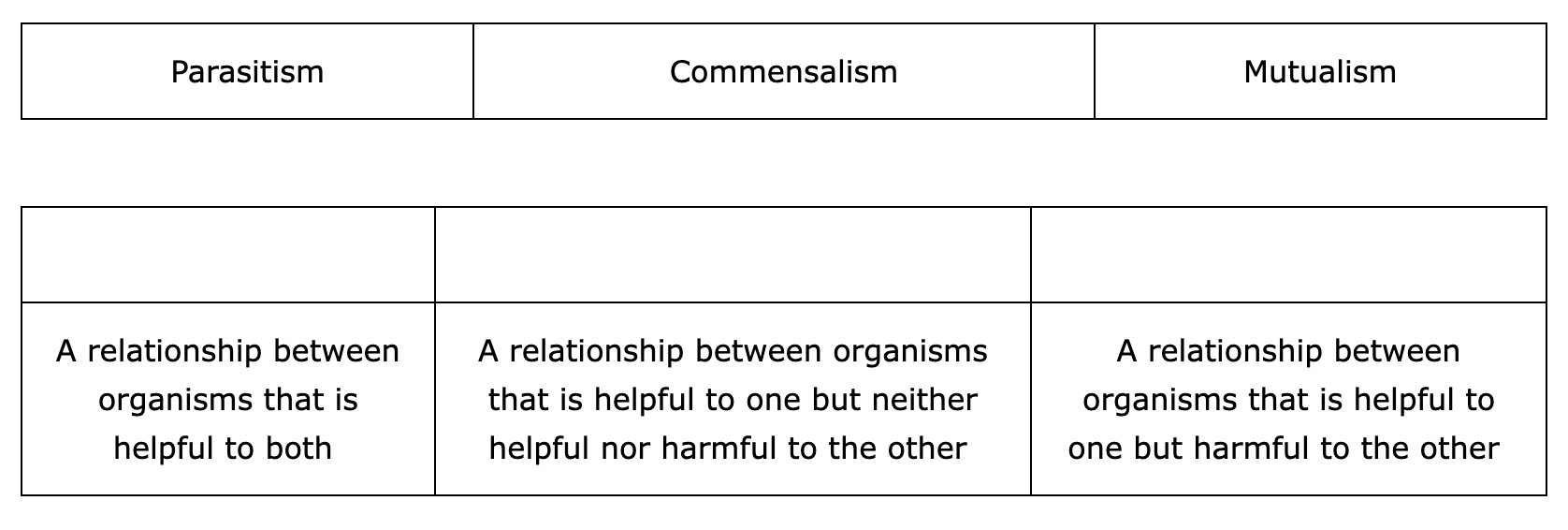
What is
400
Jack drew images of living things around his community. The following answer choices correctly describes Jack’s drawings.
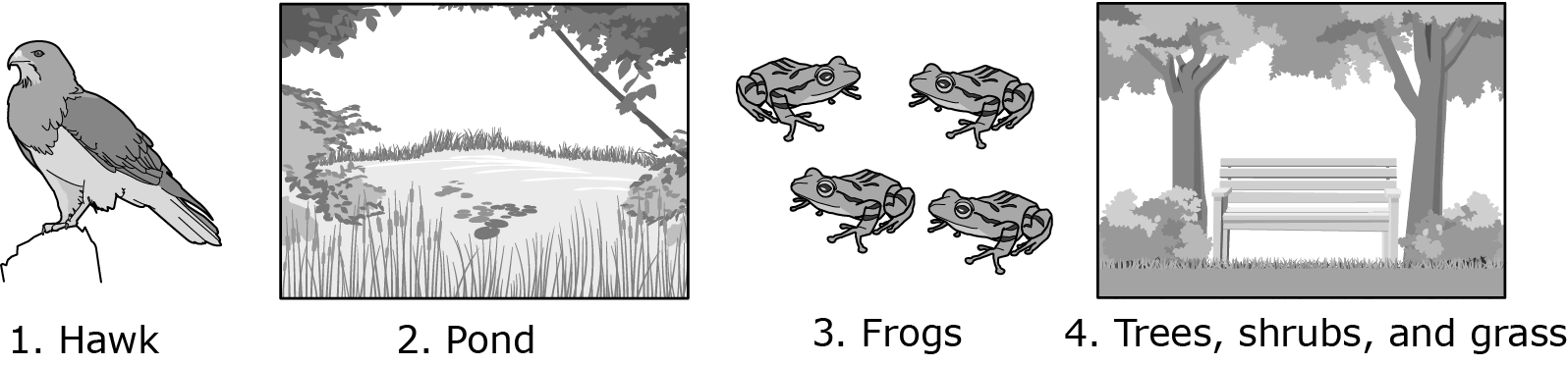
A. The frogs represent a community.
B. The hawk represents a population.
C. The frogs represent a population.
D. The hawk represents a community.
What is the frogs represent a population?
500
Some biotic and abiotic factors that populations compete for in an ecosystem are listed in the table below.
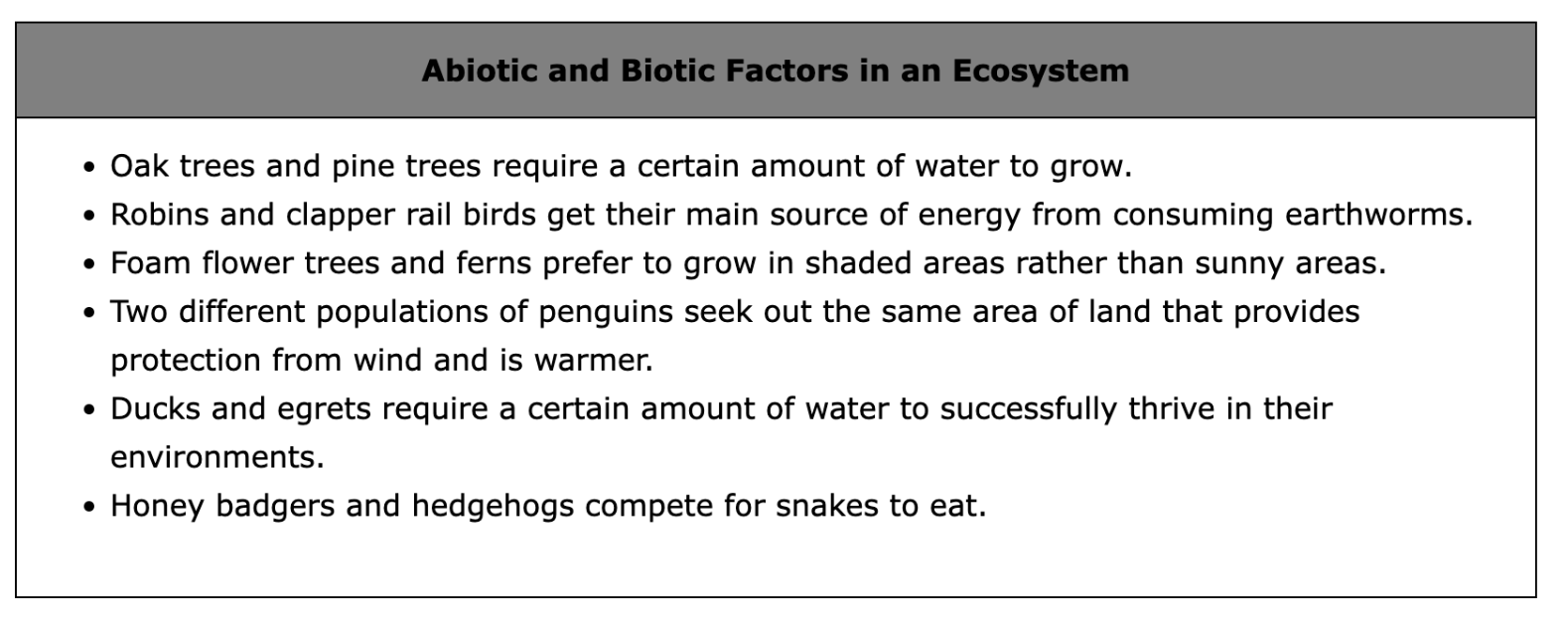
This number of the factors listed are abiotic.
What is four?
500
Explain how organisms and populations in an ecosystem depend on and compete for biotic and abiotic factors. In your answer, be sure to explain how organisms and populations depend on and compete for abiotic and biotic factors and include examples to support your explanation.
What is
Answers will vary. A possible student response could include the following:
Organisms and populations depend on and compete for biotic factors such as food. For example, two different populations of birds rely on food and may compete for the same food to survive. Abiotic factors are any nonliving things that organisms and populations require to thrive. For example, two different organisms, such as trees, depend on and may compete for water, range of temperatures, quantity of light, and soil composition.
500
A picture of a jungle is shown below.
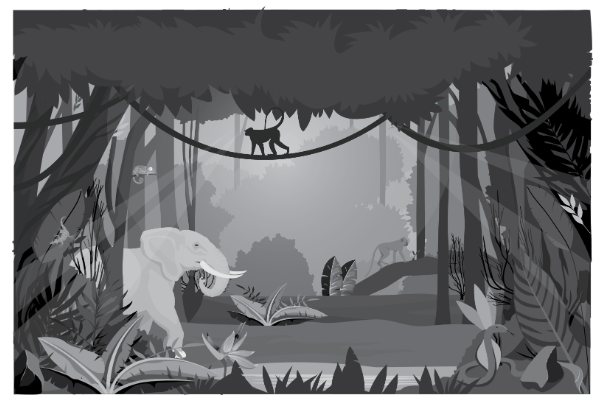
Describe the hierarchical organization that could be found in a jungle. Be sure to include the following:
The definition of organism, population, community, and ecosystem
An example of each hierarchical organization
What is the jungle is an ecosystem of all biotic and abiotic factors and interactions among them. The jungle ecosystem pictured has many organisms that live in it. An organism can be defined as one single living thing. You can find an elephant, a zebra, or a lion in a jungle. A population is a group of the same organisms living together. An example in the jungle would be a pride of lions or a flock of birds. A community is all of the populations together. For example, the pride of lions, the flock of birds, the plants, the elephants, and the zebras make a community.