May the (intermolecular) force be with you
What IMFs do these compounds have?
Phase Diagrams and vocab
What has a higher BP?
What has a lower vapor pressure at room temperature?
100
An intermolecular force caused by differences in electronegativity between atoms in a molecule.
What is dipole-dipole interaction?
100

What is hydrogen bonding, dipole-dipole, and London dispersion forces?
100
The name for the transition labeled 2.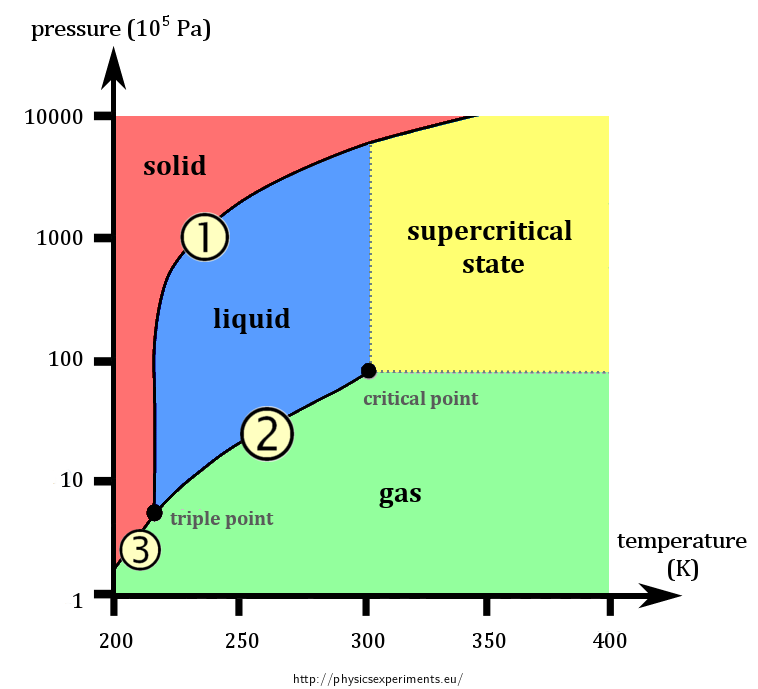
What is evaporation?
100
Either water (H2O) or carbon dioxide (CO2) have a higher boiling point.
What is water?
100
HF or HCl
HF
200
Atoms, that when bonded with H, form molecules that can hydrogen bond
What is F, O, and N?
200
What force(s) do molecules of CH2CH2 have?
What is London dispersion forces?
200
The specific pressure and temperature where all three states of matter of a substance exist in equilibrium.
What is triple point?
200
CH3OCH2CH3 or (CH3)2CHCH3
CH3OCH2CH3
200
(CH3)2SO or H2O
H2O
300
An intermolecular force caused by a short-lived, spontaneous dipole moment.
What is London dispersion force?
300
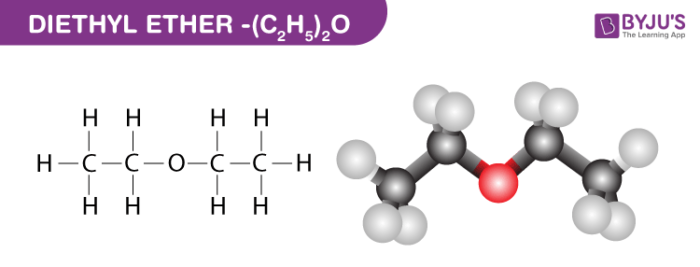 All of the intermolecular forces that diethyl ether can participate in.
What are dipole-dipole interactions, and London dispersion forces?
300
Changing from a solid to a gas.
What is sublimation?
300
CH3OCH2CH3 or CH3CH2CH2OH
CH3CH2CH2OH
300
CF4 or (CH3)2CHCH2CH3
(CH3)2CHCH2CH3
400
Rank the intermolecular forces from weakest to strongest.
What is London dispersion forces, dipole-dipole interactions, hydrogen bonding?
400
All of the intermolecular interactions experienced in a mixture of ammonia (NH3) and water (H2O).
What are hydrogen bonding, dipole-dipole interactions, and London dispersion forces.
400
How is vapor pressure impacted by temperature?
As temperature increase, vapor pressure increases
400
CH2F2 or CH2Cl2
CH2F2
400
CH3CH2SH or CH3CH2NH2
CH3CH2NH2
500
A very uncommon type of intermolecular force that involves a polar molecule interacting with a non-polar molecule.
What is induced dipole-dipole?
500

What is dipole-dipole and London dispersion forces?
500
What happens when the applied pressure of the environment is equal to the vapor pressure of a compound?
The substance boils, it is at its boiling point.
500
Arrange the following molecules in increasing boiling point:
H2O, Xe, H2S, MgCl2, N2
What is N2, Xe, H2S, H2O, MgCl2
500
C4H9OH or C2H5OH
C4H9OH