Metalanguage
Eras of English
Texts
100
Define syntax
the arrangement of words and phrases to create well-formed sentences in a language.
100
Which group of speakers began the evolution of the English language?
Angles, Saxons (Jutes and Frisians)
100
What is this?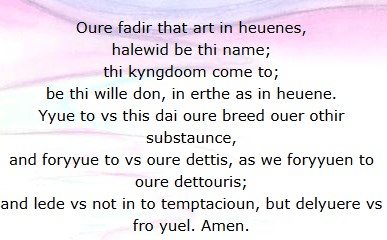
The Lord's Prayer (Middle English)
200
Explain what "archaic" means in linguistics with an example
Something that is no longer in use
e.g.: we no longer say "ahoy-hoy" when answering the phone
200
Why did the Old English period end?
The Norman Conquest introduced French into English. This fundamentally changed the language
200
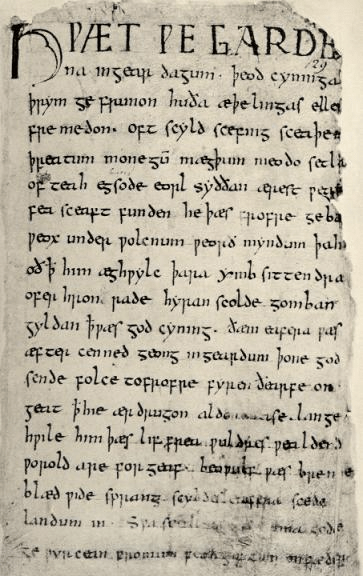
What is this?
Beowulf (Old English)
300
What language family is Latin in?
Romance
i.e: The Romans spoke Latin
300
What happened in 1440 that changed language forever
The printing press was invented
This led to the wide-spread accessibility of books and a spike in literacy levels across Europe
300
What is this?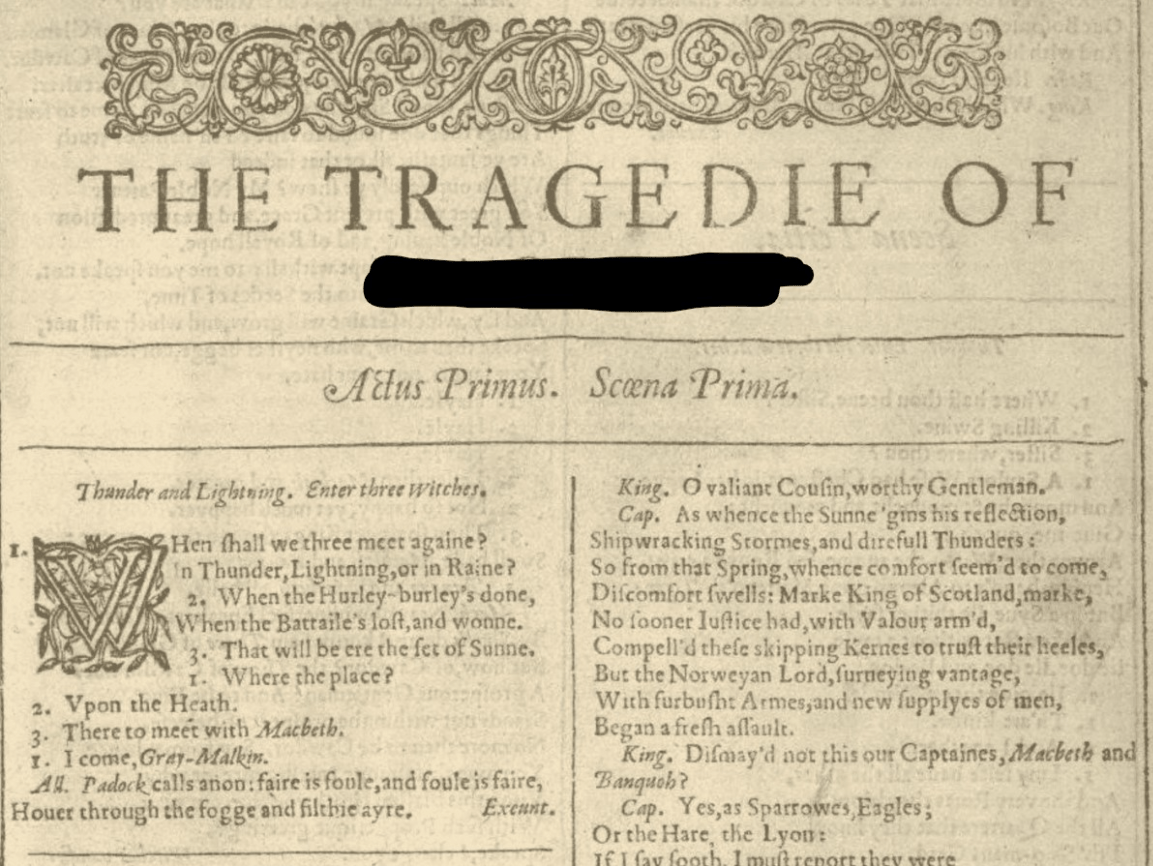
Shakespeare's Macbeth (Early Modern English)
400
What is lexicology?
the study of the form, meaning, and behaviour of words.
400
Which era of English saw the influx of Old Norse from the arrival of the Vikings
Old English
(The first raid in 793CE on Lindisfarne monastery)
400
What is this? 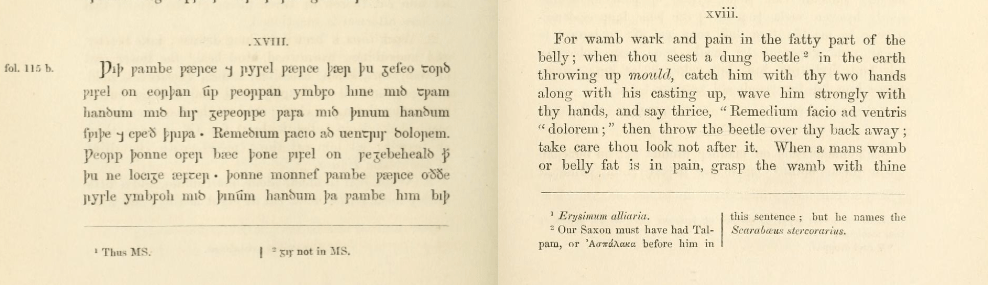
A medical text from Bald's Leechbook
A cure for a stomach ache
500
What is the difference between these two types of morphemes?
Type 1: -ed
Type 2: un-
Type 1: changes the form of the word, but not the definition (e.g.: jump -> jumped)
Type 2: changes the form of the word and the meaning (e.g.: happy -> unhappy
500
When and why did Latin and Greek re-enter the English language?
During the Renaissance (15th- 16th century /1400s-1500s)
There were so many new discoveries at this time and people needed words to explain their new view of the world.
Why not German? It now felt too removed from England's history
Why not French? There were poor relationships between England and France
Why Latin? It sounded more academic, historic and authentic (especially in religious contexts)
Why Greek? It sounded more academic, carried prestige of learning and philosophy as well as art and history