Regenerative Medicine
Regenerative Biology
Stem Cells
Nervous System
Case Study
200000
What is the purpose of regenerative medicine?
To repair, replace, or regenerate damaged tissues using medical treatments.
200000
Define endogenous
something that originates, grows, or is produced from within a system, organism, or body
200000
Name the 3 types of stem cells we've learned
Induced pluripotent stem cells, mesenchymal stem cells, embryonic stem cells
200000
What brain structure is only 10% of the mass, but holds 50-80% of the brain's neurons
The cerebellum
200000
While watching France lose to Spain, God Gamer Arjun Dubey says he wants to take stem cells from Kylian Mbappé and transplant them in his own body. Which term describes this?
Allogenic
400000
A treatment is designed to help the body heal after an injury by introducing cells grown in a laboratory.
Why is this considered regenerative medicine rather than regenerative biology?
Because it uses an external (exogenous) treatment to help the body heal
400000
What is the difference between Autologus and Allogenic?
autologous uses the patient's own cells, while allogeneic uses cells from a matching healthy donor.
400000
Name and define the two characteristics of stem cells
self renewing and differentiating
400000
What is the area between a sending axon and a recieving dendrite called?
synapse/synaptic junction/synaptic cleft
400000
After staying up all night studying worms, Neil Sai Vijayan Krishman accidentally forgets what pluripotent means. What's the correct definition?
Can become almost any cell type
600000
A scientist can choose between using embryonic stem cells or iPSCs to create heart cells for a patient. Both are pluripotent. Why might iPSCs be preferred?
Because they can be made from the patient's own cells, reducing immune rejection and avoiding ethical concerns.
600000
A gecko regrows its tail after it is lost, while a human heals the same type of injury by forming scar tissue.
Which organism demonstrates regeneration, and what does this tell scientists about regenerative biology?
The gecko. It shows that regenerative biology studies an organism's natural ability to replace lost tissues or organs, rather than simply repairing them.
600000
Name the sources of each 3 stem cells
Embryonic stem cell: early embryo (blastocyst)
Mesenchymal Stem cell: bone marrow, fat, umbilical cord
Induced pluripotent stem cell: reprogrammed aduct cells
600000
What are these brain lobes?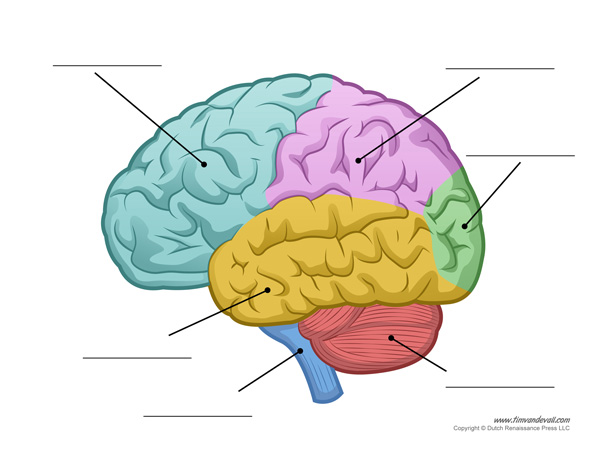
Frontal lobe, parietal lobe, occcipital lobe, temporal lobe, brain stem, cerebellum
600000
Ami receives a transplant of undifferentiated pluripotent stem cells to repair damaged tissue. Several months later, doctors discover that the cells have divided uncontrollably and formed a tumor containing multiple tissue types, including hair, cartilage, and muscle.
What type of tumor most likely developed?
What is a Teratoma?
800000
A treatment works perfectly in cultured human cells but fails when tested in mice.
What stage of the translational pathway did the treatment fail to pass?
In vivo (preclinical animal testing)
800000
What is the difference between regeneration and tissue repair
Regeneration: The process of regrowing a lost or damaged tissue so that it functions exactly as it did before the injury. (Example: A salamander regrowing a whole leg).
Repair: The process of patching a wound with scar tissue, which helps prevent infection but does not restore the original tissue structure or function. (Example: A deep cut on human skin)
800000
What are Yamanaka factors? What do they allow?
a group of four proteins (Oct4, Sox2, Klf4, and c-Myc) that can "rewind" specialized adult cells, like skin cells, back into an embryonic-like state. Allows scientists to generate induced pluripotent stem cells (iPSCs) capable of growing into any cell type
800000
A patient remembers childhood events but cannot form new memories after an injury to a specific region of the brain. Which part of the CNS is likely damaged, and why?
Hippocampus because it stores long term memories
800000
Prisha is a 15-year-old who loves riding BMX bikes. During a jump, she crashed and severely injured her lower back, damaging her spinal cord. Because of the injury, the nerve signals can't get through, and Prisha can no longer move or feel her legs.
Doctors decide to transplant stem cells into Prishaa's spinal cord. Once inserted, these stem cells are given chemical signals that tell them to turn into: new neurons and helper cells.
Within a few months of physical therapy and cell growth, Prisha starts to feel a tingling sensation in her feet. The stem cells successfully bridged the gap, and her brain's signals are starting to reach her legs again.
Why did doctors choose to transplant stem cells into Prisha's injured spinal cord instead of just using regular, fully-grown skin or muscle cells?
Stem cells can become a variety of cells. Skin and muscle cells can only become more skin and muscle
1500000
A therapy successfully repairs damaged tissue in mice and appears safe. Scientists now want to determine the correct dosage and identify major side effects before testing whether it actually treats disease.
Which clinical trial phase should occur next, and why?
Answer:
Phase 1, because its primary goal is to determine safety and dosage.
1500000
A scientist spends years studying how salamanders regrow limbs but never develops a treatment. Has the scientist contributed to regenerative medicine, regenerative biology, or both?
Regenerative biology only. The work advances our understanding of natural regeneration but does not involve creating or applying a therapy.
1500000
A researcher needs stem cells that can become liver, nerve, or heart cells. Another researcher only needs cells that can become bone, cartilage, or fat.
Which researcher needs pluripotent stem cells, and which could use mesenchymal stem cells? Explain?
The first researcher needs pluripotent stem cells because they can become almost any body cell. The second researcher can use mesenchymal stem cells because they are multipotent and are limited to related tissues like bone, cartilage, and fat.
1500000
Name and give the function of 4 of 5 neuroglia.
Ependymal: makes cerebrospinal fluid
Astrocyte: forms blood brain barrier + regulates environment
Microglia: immune defense
Oligodendrocyte: myelin sheath in CNS
Schwann Cells: Myelin sheath in PNS
1500000
Kam, a 87-year-old highschool super senior, developed Parkinson-like symptoms after the loss of dopamine-producing neurons in a specific region of the brain. Researchers are using induced pluripotent stem cells derived from Kam's own skin cells. The cells are reprogrammed, differentiated, and transplanted into the affected area in hopes of restoring function.
Identify the field of medicine this treatment belongs to, the type of stem cells being used, and explain one advantage of using these cells instead of embryonic stem cells.
Identify the field of medicine this treatment belongs to, the type of stem cells being used, and explain one advantage of using these cells instead of embryonic stem cells.