Quantitative Vs Qualitative
OBSERVATION VS INFERENCE
Working Scientifically
Cause and effect
Combined knowledge
100
Which type of data uses measurements and numbers?
What is Quantitative data
100
What is an observation?
Information gathered using senses or measuring tools.
100
What is the independent variable?
The variable deliberately changed.
100
What is secondary-sourced data?
Data collected by another person.
100
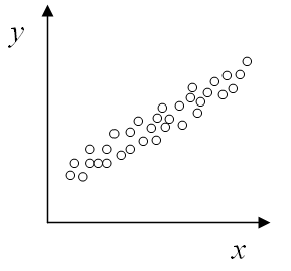
What type of correlation is this
200
Determine whether the following is qualitative or quantitative:
'The solution became purple'
Qualitative.
200
“The liquid is bubbling.”
Observation or inference?
Observation.
200
What is the dependent variable?
The variable measured or observed.
200
What is the difference between primary and secondary data?
Primary data is collected firsthand, while secondary data is collected by another person.
200
When a rollercoaster moves down a hill, what energy transformation occurs?
Gravitational potential energy → kinetic energy.
300
Determine whether the following is qualitative or quantitative:
“The temperature increased from 22°C to 35°C.”
Quantitative.
300
“The liquid is boiling because heat energy was added.”
Observation or inference?
Inference
300
What is a controlled variable?
A variable kept constant to ensure a fair test.
300
“The plant grew taller because fertiliser was added.”
Which part is the inference?
“because fertiliser was added.”
300
Explain how plants demonstrate the Law of Conservation of Energy during photosynthesis.
Plants transform light energy into chemical energy stored in glucose.
400
State ONE advantage of quantitative data.
- Precise
- Can be graphed
- Easier to compare
- More objective
400
Rewrite the following inference as an observation:
“The plant died because it lacked sunlight.”
“The plant turned brown and wilted.”
400
How can reliability be improved in an investigation?
- Repeat trials
- Increase sample size
- Use consistent methods
400
A student investigates plant growth using only one plant.
Which aspect of the investigation should be improved?
Reliability.
400
A toaster converts electrical energy into thermal energy.
Explain why this process supports the Law of Conservation of Energy.
The electrical energy is not destroyed; it is transformed into heat energy to toast the bread.
500
A student recorded:
- “The metal became shiny”
- “The mass changed from 15 g to 18 g”
Identify the qualitative and quantitative observations.
Qualitative = shiny
Quantitative = 15 g to 18 g
500
A student states:
“The battery overheated and therefore stopped working.”
Identify the observation and the inference.
Observation = battery overheated
Inference = overheating caused it to stop working
500
A student only tested one plant in an investigation.
Explain why this decreases reliability.
One result may be inaccurate or anomalous and cannot show consistency.
500
What is a control in a scientific investigation?
A control is the standard used for comparison to determine whether the independent variable caused the observed results.
500
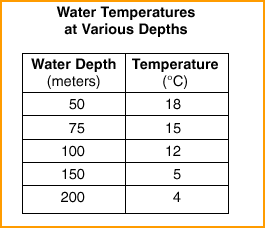
What is the independent and dependent variable in this set of data
Water depth- Independent
Temperature- Dependent