Facts
Claim
Challenge
Text Features
Graphic Features
100
Which sentence is a fact?
a.) Dogs are the best pets!
b.) Dogs have four legs.
c.) Dogs are more fun compared to cats.
b.) Dogs have four legs.
100
Which sentence is a claim?
a.) The moon orbits Earth.
b.) Chocolate ice cream tastes the best.
c.) Bees make honey.
b.) Chocolate ice cream tastes the best.
100
True or False:
A caption helps explain what is happening in a picture.
True
100
Which text feature tells the name of a section in a nonfiction book?
a.) Heading
b.) Caption
c.) Glossary
a.) Heading
100
Which graphic feature shows information in a picture with labels?
a.) Illustration
b.) Timeline
c.) Diagram
c.) Diagram
200
Which sentence can be proven true?
a.) Recess is the best part of the day.
b.) Pizza is one of the most delicious foods.
c.) The Earth orbits the sun.
c.) The Earth orbits the sun.
200
A claim is...
a.) Something everyone can prove.
b.) A statement someone believes.
c.) A math problem.
b.) A statement someone believes.
200
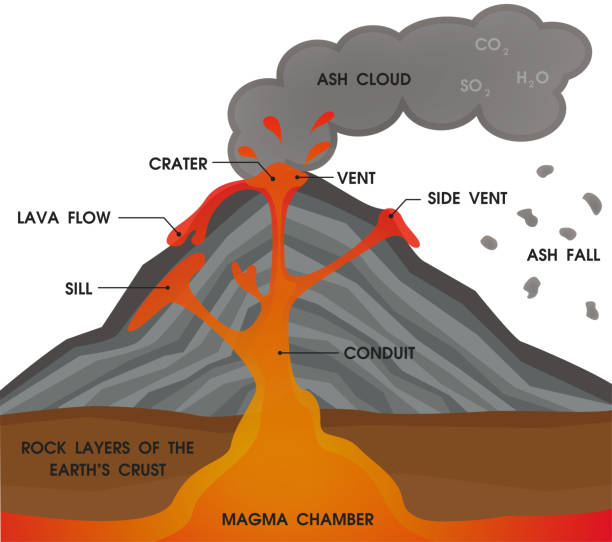
What graphic feature is helping you understand the parts?
Diagram with labels.
200
What text feature explains a picture?
a.) Caption
b.) Table of contents
c.) Heading
a.) Caption
200
Which graphic feature shows numbers and information in rows and columns?
a.) Chart/Table
b.) Maps
c.) Graph
a.) Chart/Table
300
A fact is something that...
a.) Can be proven true with evidence.
b.) Shows someone's beliefs about a topic.
c.) Includes the phrases: "I believe", or "it seems to be..."
a.) Can be proven true with evidence.
300
Which sentence cannot be proven true?
a.) Penguins live in cold places.
b.) Penguins eat fish.
c.) Penguins are the cutest animals.
c.) Penguins are the cutest animals.
300

Which text feature would help you quickly know what the section is about?
Heading/Title
300
Which text feature helps you find the page number of a topic?
a.) Labels
b.) Index
c.) Bold words
b.) Index
300
Which graphic feature helps readers see where places are located?
a.) Caption
b.) Maps
c.) Photographs
b.) Maps
400
Is the following statement a fact? True or False
Many libraries allow people to borrow books for free.
True
400
Which statement sounds like a claim?
a.) Tigers are amazing animals.
b.) Tigers have stripes.
c.) Tigers live in forests.
a.) Tigers are amazing animals.
400
Which of these is both a fact and helps support a claim?
a.) Trees are the prettiest part of nature.
b.) Trees are boring and not useful.
c.) Trees provide oxygen for people to breathe.
c.) Trees provide oxygen for people to breathe.
400
Which text feature shows important vocabulary words?
a.) Diagram
b.) Bold words
c.) Table
b.) Bold words
400

What does this graphic feature help readers do?
a.) Find the author.
b.) Read a story.
c.) Compare parts of a whole.
c.) Compare parts of a whole.
500
Could this statement be proven true? Why? True or False
This school has three flights of stairs. It is not handicap-accessible.
True. This statement could be proven true because if we were to go to the school that was being talked about, we could see the three flights of stairs. It can also be proven true through eyewitnesses who may go to that school.
500
Why does an author include their claim when writing a text?
a.) To explain the meaning of the text.
b.) To persuade an audience to believe what they believe.
c.) To list every fact about the topic.
b.) To persuade an audience to believe what they believe.
500
An author writes a nonfiction article about penguins. The page includes a heading, a labeled diagram of a penguin, and a caption under a photo.
Which is the main reason the author included these features?
a.) To show their favorite animals.
b.) To help readers understand the main idea and details more easily.
c.) To make the story longer.
b.) To help readers understand the main idea and details more easily.
500
Why does an author include text features in a nonfiction text?
a.) To make the story more exciting.
b.) To make the pages longer.
c.) To help readers find and understand important information.
c.) To help readers find and understand important information.
500
Why might an author include graphic features in a text?
a.) To help readers understand information by showing it visually.
b.) To make the page look colorful.
c.) To take away from the words on the page.
a.) To help readers understand information by showing it visually.