Bored Style Questions
Pulmonary Fun-ction
I miss Dr. Larson and Dr. Alekseev
I Can't Breath
You ruled out Asthma and COPD
100
A 16-year-old patient develops episodic cough, chest tightness, and wheezing after exposure to cats. Between episodes, pulmonary examination and spirometry may be normal.
Asthma
100
This spirometric measurement represents the maximum volume of air that can be forcefully exhaled after maximal inspiration.
Forced Vital Capacity (FVC)
100
An arterial blood gas demonstrating PaCO2>45 mmHg and pH<7.35 defines this primary acid-base disturbance resulting from alveolar hypoventilation.
Respiratory Acidosis
100
In addition to continuous long-term supplemental oxygen for severe resting hypoxemia, this non-pharmacological action is the ONLY intervention proven to improve survival in COPD.
Smoking cessation
100
Cystic fibrosis, an autosomal recessive genetic disorder, leads to abnormally thick, viscous secretions in the lungs and pancreas due to a defect in this channel.
CTFR (cystic fibrosis transmembrane conductance regulator) protein/ion channel
200
While reviewing the current medications of a 29-year old female who presents to the ED with a pulmonary embolism, you look for what category of drugs as a possible etiology?
Oral contraceptives/Estrogen-containing hormonal agents
200
On post-bronchodilator spirometry, an FEV1/FVC ratio below this threshold confirms the presence of persistent airflow obstruction.
FEV1/FVC < 0.70
200
This advanced imaging modality is currently considered the gold standard for diagnosing a pulmonary embolism.
CT pulmonary angiography (CTPA)
200
This key feature distinguishes asthma from COPD.
Reversibility of airflow obstruction/limitation.
200
This high-pitched sound, heard predominantly during inspiration, indicates upper airway obstruction at the level of the larynx or extrathoracic trachea.
Stridor
300
A 51 year-old man comes to your office with a chief complaint of hemoptysis. While tuberculosis is the most common cause of hemoptysis worldwide, this condition is the most common cause of hemoptysis in the US.
Bronchitis
300
In a restrictive lung disease (like pulmonary fibrosis), both FVC and FEV1 are reduced, but this specific metric characteristically remains normal or is even increased.
FEV1/FVC ratio
300
This imaging modality is the diagnostic gold standard for confirming bronchiectasis and interstitial lung diseases.
High-resolution CT (HRCT) of the chest (a noncontrast, thin-section (≤1 mm) CT)
300
This genetic deficiency of this protective enzyme leads to early-onset panacinar emphysema, often involving the lower lobes.
Alpha-1 antitrypsin (AAT) deficiency
300
A travel history through the American Southwest should raise suspicion for this pulmonary infection.
Coccidioidomycosis
400
A 67-year old man with a recently diagnosed peripheral lung tumor complains of grip weakness and muscle loss in his hand. These symptoms suggest what pathological process?
Tumor infiltration of the lower brachial plexus/Pancoast syndrome.
400
This pulmonary function parameter measures the lung's ability to transfer gas to the blood; it is typically decreased in emphysema but normal or increased in asthma.
DLCO (Diffusing capacity of the lungs for carbon monoxide)
400
This physiological cause of hypoxemia is characterized by a failure of PaO2 to significantly increase despite administration of 100% supplemental oxygen.
Right-to-Left shunt
400
This pharmacological test is indicated when asthma is suspected but baseline spirometry is normal; a 20% drop in FEV1 confirms bronchial hyperreactivity.
Methacholine Challenge Test
400
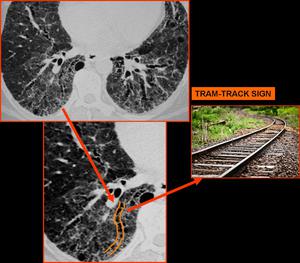
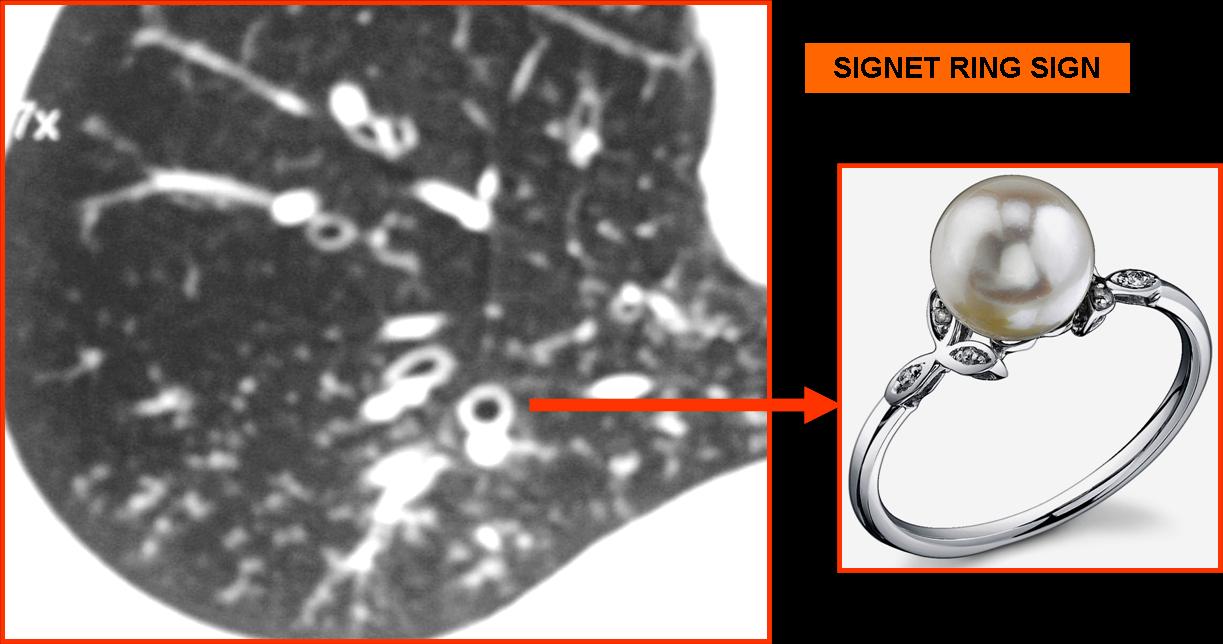
A chest CT of a patient with bronchiectasis will reveal one or both of these two signs which are defining radiographic hallmarks of this chronic airway disease.
"Tram-track" lines and "signet ring" signs
500
A 34 year-old female is brought into the ED after a car accident. Pathognomonic of a pneumomediastinium and heard upon heart auscultation, this sign is described as a crunching sound that is synchronous with the heartbeat.
Hamman's sign/Hamman's crunch
500
A positive bronchodilator response on spirometry requires an increase in FEV1 or FVC by at least this percentage AND this absolute volume in milliliters.
12% and 200 mL
500
On ultrasound of the diaphragm, this minimum percentage of inspiratory thickening is considered necessary to indicate normal diaphragm function.
35%
500
Consider this pharmacological therapy in patients with severe asthma despite frequent systemic corticosteroids.
Monoclonal Antibody therapy/biologics (Ex. omalizumab, mepolizumab, dupilumab, etc.)
500
The most common genetic mutation responsible for Cystic Fibrosis is the deletion of this specific amino acid at position Delta F508.
Phenylalanine