Preventative Pediatrics
ENT
Emergency Medicine
Metabolic
Genetics
100
What is the only live vaccine given before 12 months of age?
Rotavirus Vaccine
All other vaccines given before 12 months of age are either killed or recombinant
100
A 5 y/o boy presents with fever, rhinitis, and throat pain. On exam the pharynx is bright red with petechiae and erythema of the tonsils. Exudates are noted on the posterior pillars. What is the most likely etiology of his sore throat?
Viral infection!
Do not go for group A streptococcus (GAS) because of petechiae and exudates. These are very non-specific. The clue that this is VIRAL is the Rhinitis. Viral pharyngitis is accompanied by URI symptoms like conjunctivitis, rhinitis, rough, hoarseness, coryza, ulcerative lesions or viral rashes.
100
What agents are the most common cause of anaphylaxis seen in US emergency rooms?
FOOD! Peanuts, tree nuts (almond or hazel nuts), and seafood.
All twice as common as bee stings.
Risk factors for fatal anaphylactic reaction are history of asthma, delayed diagnosis and delayed administration of epinephrine.
100
A 2-week old with noticeably fair hair and skin was completely normal at birth at home with no postnatal testing for inborn errors of metabolism. She now has vomiting, irritability, a “mousy” musty odor and an eczematoid rash. What is the most likely diagnosis?
Phenylketonuria
PKU is AR in which phenylalanine cannot be converted to tyrosine.
Enzyme defect is phenylalanine hydroxylase. Those untreated develop severe ID (IQ<30), with irreversible damage by 8 weeks of age.
PKU was the first metabolic condition on newborn screening.
100
You are given a pedigree with the following characteristics: Only females can transmit the disease to their sons. No male-to-male transmission. If a generation has only females, the disease will appear to “skip” a generation. An affected father transmits the disease to all of his daughters (daughters are obligate carriers but typically are not affected). What is the Mendelian inheritance pattern?
X-linked recessive
Generally affects males only. Hemophilia A and Duchenne MD and Becker muscular dystrophy are classic examples.
200
A child comes in for his routine immunizations. You learn that the mother is pregnant, and the child is still breast feeding. What vaccines are contraindicated in this child today?
None
There are no contraindications to immunizing a child whose mother is pregnant and or breast feeding. All routine vaccines may be given to the child today.
Anaphylaxis, age of child, immunodeficiency are some common contraindications.
200
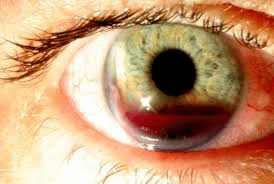 A 10 y/o boy presents after being hit in the
eye with a baseball. He is sleepy, nauseated and has eye pain. You see a layer
of blood obscuring the lower third of the iris, but the pupil looks normal.
What is the most likely diagnosis?
A 10 y/o boy presents after being hit in the
eye with a baseball. He is sleepy, nauseated and has eye pain. You see a layer
of blood obscuring the lower third of the iris, but the pupil looks normal.
What is the most likely diagnosis?
Hyphema
Blood in the anterior portion of the eye.
Protect the eye with a rigid eye shield, control pain and nausea, consult ophthalmology. Complications include glaucoma and re-bleeding.
200
List 4 fractures/ types of fractures concerning for abuse/ Non-accidental trauma.
Any fracture can be the result of NAT
Fractures with higher likelihood of abuse: rib fractures (posteriomedially). Fractures of the scapula, spinous process, sternum, long bone metaphyseal (requiring shearing forces – shaking twisting jerking forces).
Suspicious fractures for children less <18 months: humeral shaft fractures, complex or bilateral skull fractures, femoral fracture in a non-ambulatory child
Multiple fractures or fractures that are at different ages or stages of healing
200
An infant is normal at birth, but 3-5 DOL she has feeding difficulties, irregular respirations, and loss of the Moro reflex. She has a severe seizure, and is brought in, where you notice a “sweet” smell from the child. What is the most likely diagnosis?
Maple Syrup Urine Disease
MSUD presents with CNS disease in early infancy. Symptoms appear at 3-5 DOL with rapid progression to death at 2-4 weeks without treatment.
Urine, hair and skin, smells like maple syrup.
Children with MSUD cannot catabolize branched chain amino acids (valine, leucine and isoleucine). Finding alloisoleucine, an abnormal amino acid, is diagnostic.
200
Name 4 characteristics commonly observed in children born with trisomy 21.
Hypotonia, small ears, brachydactyly, high arched palate, microcephaly, up-slanting palpebral fissures, epicanthal folds, single transverse palmer crease, speckled irises, hypoplasia of the middle phalanx of the 5th finger.
300
A preterm girl is born at 26 weeks gestation and is now 2 months of chronologic age and remains in the NICU. List the vaccines she may receive prior to discharge from the NICU.
Hep B, DTaP, PCV13, Hib, IPV
Defer rotavirus vaccine until NICU discharge to prevent nosocomial spread of the vaccine virus.
If decreased muscle mass/ limited injection sites, administer 3-4 injections at 2 week intervals to avoid superimposing local reactions.
300
What is the origin of bleeding in most cases of epistaxis? (structure)
The Kiesselbach Plexus
Located in the anterior portion of the nasal
septum where 4 arteries converge. Often caused by nose picking in children. 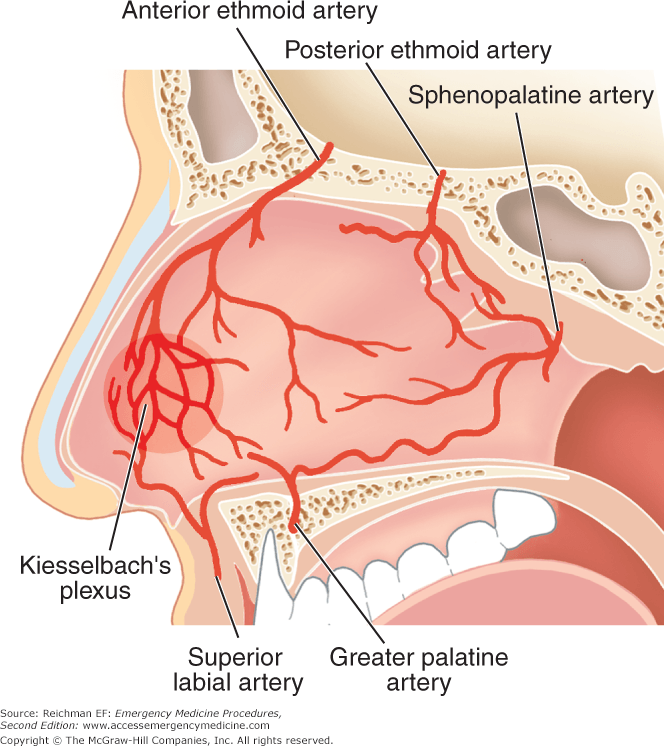
300
What causes the radiographic “Lead Lines” of
chronic lead exposure?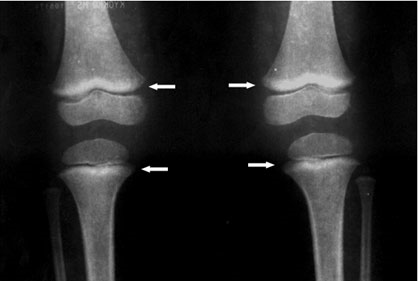
Increased calcium deposit! Not lead.
Transverse metaphyseal bands, most prominent at the end of longer tubular bones. Excessive lead interferes with bone metabolism increasing osteoblast activity causing exuberant calcium deposition resulting in dense metaphyseal bands.
300
The parents of a two-week-old child are concerned due the diapers having a dark brown or black pigment. What is the most likely diagnosis?
Alkaptonuria
Deficiency of homogentisate 1,2 dioxygenase (3rd step in tyrosine metabolism).
Fresh urine is normal, but as it sits, it alkalinizes. The oxygenation of homogentisic acid precedes the dark brown, black pigment formation.
They are otherwise asymptomatic, but in their 30s they pigment is deposited in their ears and sclera called “Onchronosis.”
300
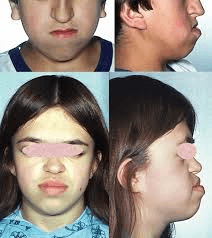
A 4 y/o presents with jerky ataxic movements, hypotonia, fair hair, midface hypoplasia, prognathism (large chin and mandible), inappropriate bouts of laughter, severe intellectual disability. What is the most likely diagnosis?
Angelman syndrome (maternally derived 15q11-13 microdeletion)
400
What are 3 vaccines that are subcutaneously administered?
MMR, Varicella, MMRV, IPV, PPSV23
(Rotavirus is given orally)
(IPV, PPSV23 are given either IM or subcutaneously)
Vaccines containing adjuvants (a component that enhances the antigenic response) are administered IM to avoid irritation, induration, skin discoloration, inflammation, and granuloma formation if injected into subcutaneous tissue
400
What is the most common cause of visual loss in children? (And adults < 45 years of age?)
Amblyopia
Amblyopia can result from childhood refractive disorders, strabismus, cataracts, corneal opacities, or an unequal refractive error (anisometropia).
It is not correctable with glasses or contacts, but patching the eye is recommended. The earlier treatment is started, the better the outcome.
400
A playful 20-month old is at a petting zoo and is bitten by a duck, scratched by a rabbit resulting in a laceration, spit on by a camel and licked on the face by a horse. Is rabies prophylaxis indicated for this extremely unlucky child?
No
Immediate rabies vaccination and rabies immune globulin are recommended for bites or scratches from bats, skunks, racoons, foxes, and other carnivores when skin is broken. Cat and dog bites generally do not require routine prophylaxis, if the animal is healthy and observed for 10 days.
400
Name the metabolic disease that can cause subdural hematomas and retinal hemorrhages, which can be mistaken for child abuse.
Glutaric Aciduria Type 1
It is an AR enzyme defect (lack of glutaryl-CoA dehydrogenase) in the catabolic pathway of lysine, hydroxylysine, and tryptophan.
400
A child has a disease with AD inheritance, bile duct paucity
with cholestasis, pulmonary valve stenosis & peripheral artery stenosis, posterior
embryotoxon (prominent white ring of Schwalbe and iris strands), butterfly
vertebrae, a triangular face with a pointed chin, and a long nose that is broad
mid-nose. What is the most likely diagnosis?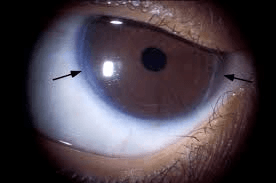
Alagille syndrome 20p12 deletion.
An absence or mutation of the JAG1 gene.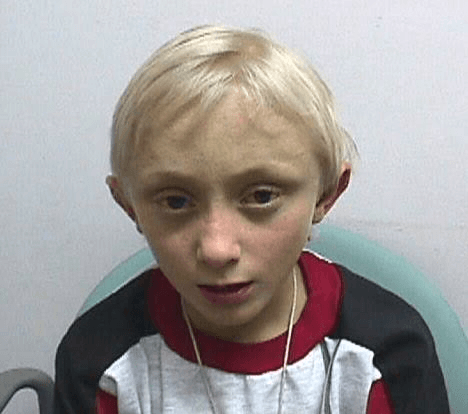
500
A 15 y/o male with cochlear implants presents for evaluation. You note he received PCV7 and PPSV23 three years ago. What pneumococcal vaccine, if any, should he receive today?
PCV 13
A single dose of PCV13 should be given to children 6-18 years of age who have not received PCV13 previously and are at increased risk of invasive pneumococcal disease due to asplenia, Hb-SS, HIV or cochlear implant.
(regardless of prior PCV7/ PPSV23)
Administer >8 weeks after most recent PPSV23.
PPSV23 should be given 5 years after the first dose if the child remains at high risk.
500
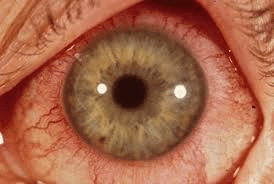
What is a Ciliary Flush?
Cicumcorneal hyperemia in which conjunctival
redness is concentrated in the area adjacent to the cornea (limbus). It is
worrisome for significant ocular pathology, such as keratitis, anterior uveitis,
acute angle-closure glaucoma. Urgent referral to ophthalmology is required. 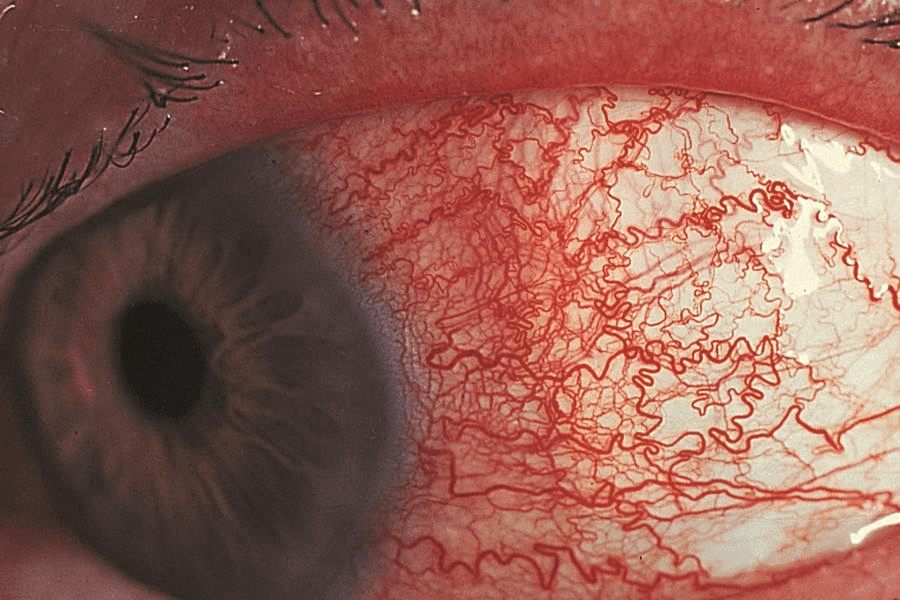
500
What metal intoxication can mimic Kawasaki Disease?
Mercury
Acrodynia – mercury salt intoxication with Calomel/ mercurous chloride (in teeth whitening powders).
Symptoms complex is swelling and redness of the hands and feet, skin rash, diaphoresis, tachycardia, hypertension, photophobia, intense irritability.
Infants are limp with weakness of hip and shoulder girdle muscles, often observed in a froglike position.
Symptoms have also been described in broken fluorescent lightbulbs or diapers rinsed in mercury chloride.
500
An infant presents with encephalopathy and you notice the odor of “sweaty feet.” What is the most likely diagnosis?
Isovaleric Acidemia (IVA)
AR, localized to chromosome 15 and is due to a defect in isovaleryl-CoA dehydrogenase.
It can present in the newborn period with acute severe metabolic acidosis and moderate ketosis with vomiting, which leads to coma and death.
It more commonly present in infancy or childhood and is precipitated by infection or increased protein intake.
500
A newborn presents with microcephaly, atretic ear canals, “froglike” position – (legs flexed, externally rotated, and in hyperabduction), depressed midface, protruding mandible, deep set eyes, and a “carp-like” mouth, with a everted lower lip. What is the most likely diagnosis?
De Grouchy Syndrome (18q deletion)
Due to deletion of the long arm of chr 18.