Earthquakes
Plate Tectonics
Pressure
Gases and Liquids
Solids
Challenge
100
What type of tectonic plate boundary creates the most earthquakes?
transform boundaries
100
The three types of tectonic plate boundaries (you must name all three).
What are convergent, divergent, and transform?
100
Pressure is force dived by ___________.
What is area?
100
This gas makes up about 78% of Earth’s atmosphere.
What is nitrogen (N)?
100
This element is the basic building block of all living things and is one of the most common solid elements on Earth.
What is carbon (C)?
100
This strong acid is found in car batteries and can burn skin.
What is sulfuric acid (H₂SO₄)?
200
Which type of tectonic plate boundary creates the strongest earthquakes?
convergent boundaries
200
The type of tectonic plate boundary that created the earthquake earlier this year in Thailand.
What a transform boundary (the Saigang Fault)?
200
The SI units of pressure.
What are pascals?
200
This clear, flammable liquid is used as fuel in stoves, in cleaning solutions, and is the active ingredient in alcoholic drinks.
What is ethanol (C₂H₅OH)?
200
This molecular solid is used to flavor food and is made up of sodium chemically bonded with another element.
What is salt (sodium chloride - NaCl)?
200
The type of compound shown here.
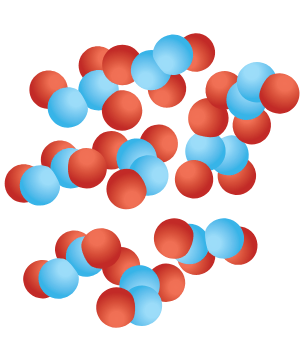
What is a polar covalent compound?
300
What is the name for the effect where an earthquakes causes the soil to behave more like water than dirt, causing buildings to collapse even the shaking wasn't strong enough to make them fall?
soil liquefaction
300
The type of tectonic plate boundary that caused the 2011 Tōhoku earthquake and tsunami.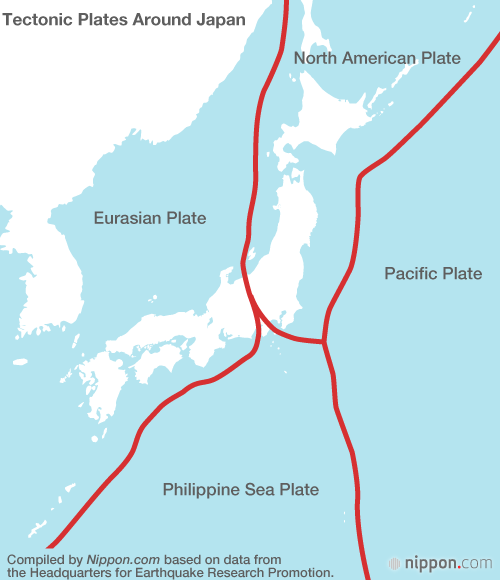
What is a convergent boundary?
300
Where will pressure be the highest in this picture?
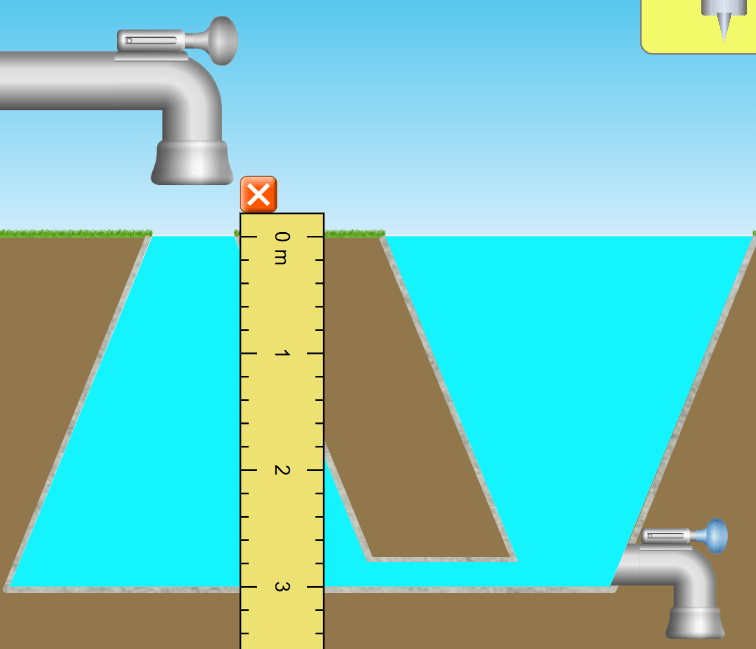
At the maximum depth.
300
This liquid element is very dense, toxic, and used to be found in thermometers.
What is mercury (Hg)?
300
This white, brittle solid is part calcium, is used to make chalk and makes up the shell of many animals.
What is calcium carbonate (CaCO₃)?
300
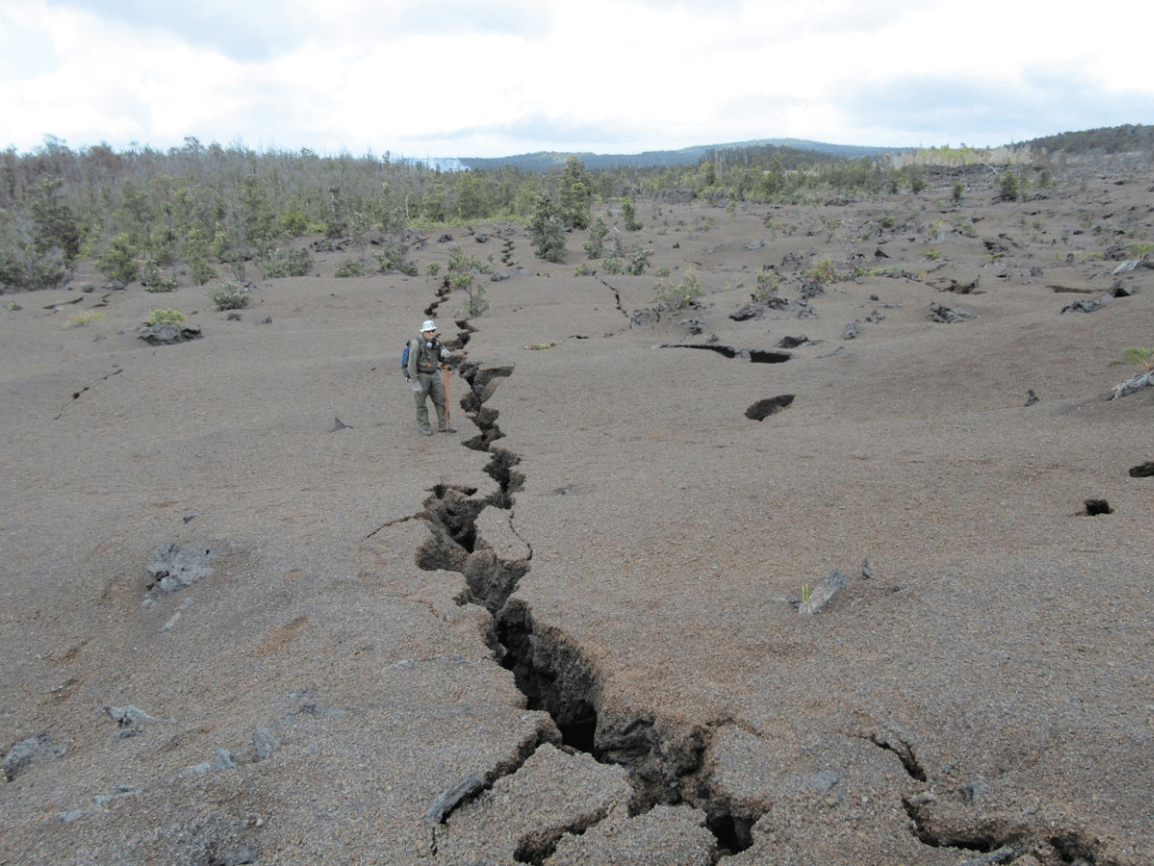 The feature shown in the image below is caused by strong earthquakes in some places. It is a crack in the surface of the Earth, not just below ground. What is this called?
It's called a fissure.
400
If the earthquake in Thailand earlier this year was a magnitude of 5.1 before it reached Chiang Mai and Bangkok, how much stronger was the 9.1 magnitude 2004 Indian ocean earthquake and tsunami?
It was 10,000x stronger!
400
When an oceanic tectonic plate converges with a continental tectonic plate, which plate subducts?
The oceanic plate subducts under the continental plate.
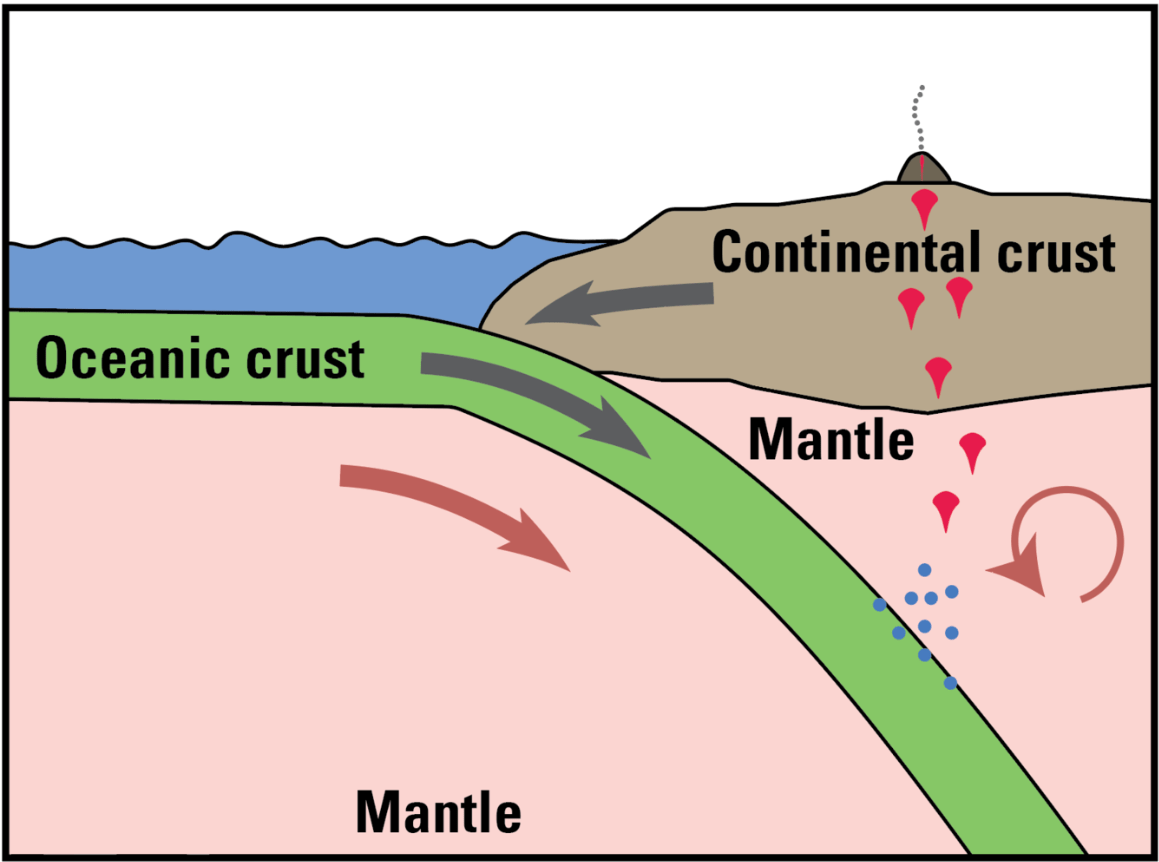
400
Where will pressure be the highest in this picture?
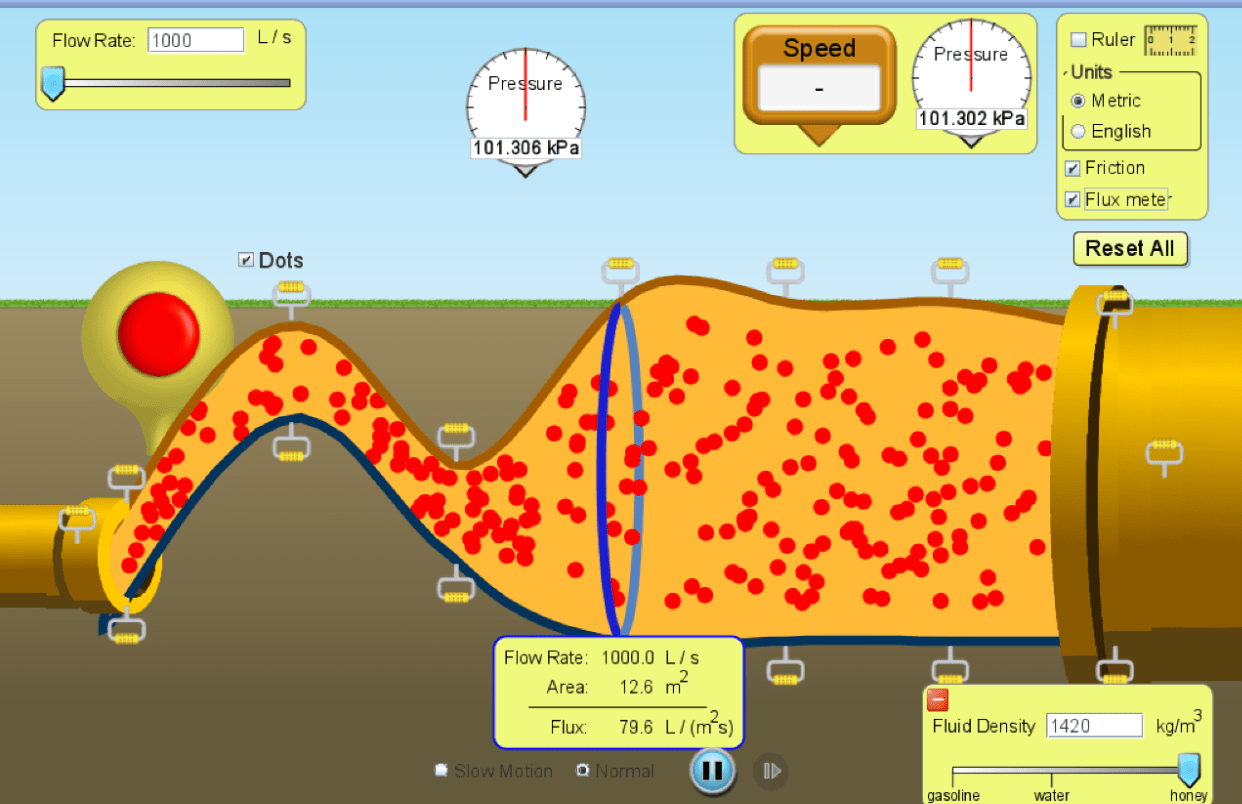
At the bottom of the wide part.
400
This flammable gas has a bad smell and is the main ingredient in natural gas.
What is methane (CH₄)?
400
This lightweight, non-magnetic metal is the main ingredient in most cans and is used in the frames of high-end bicycles and cars.
What is aluminum (Al)?
400
This gas is a greenhouse gas and the product of burning fossil fuels.
What is carbon dioxide (CO₂)?
500
The giant ball in shown in the picture below is installed in the Taipei 101 building in Taipei, Taiwan. Its purpose is to help the tall building resist swaying from earthquakes.
Complete the name of this type of device "mass _________".
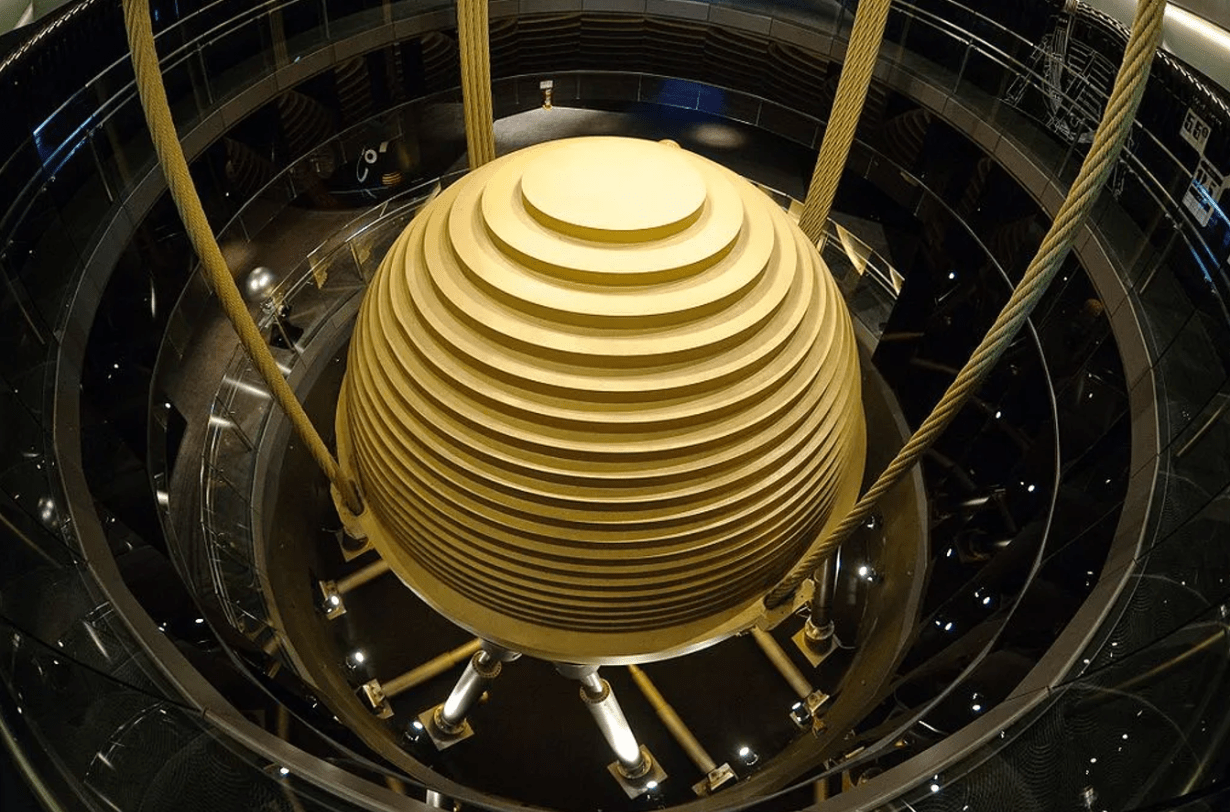
It's called a mass damper.
500
The picture below uses colors to show the age of the seafloor. What is the name for this type of map?
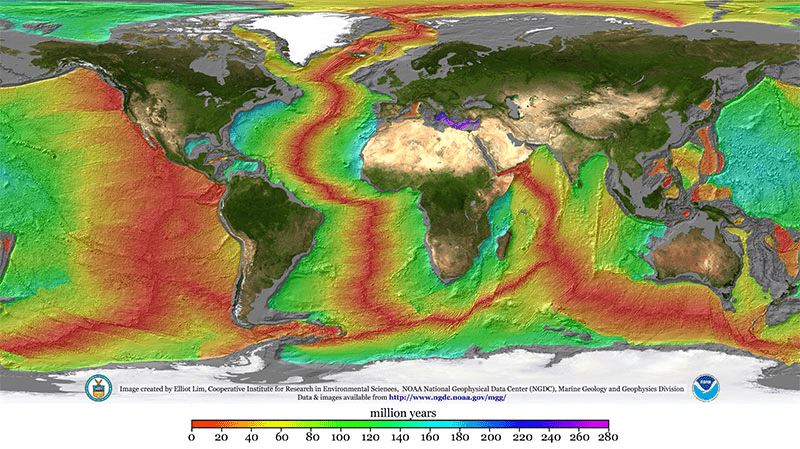
It's called an isochrome map.
500
The amount of force that Earth's atmosphere exerts on 1 square meter on the surface of Earth.
What is 101,325 Newtons?
500
This reddish-brown element is one of only two liquid elements at room temperature, and it is so reactive that it’s usually found in salts instead of by itself.
What is bromine (Br)?
500
This molecular solid is the main component of wood and is made of long chains of glucose molecules.
What is cellulose (C₆H₁₀O₅)?
500
The two types of chemical bonds.
What are ionic and covalent?