medications
Pacemaker/ICD
valvular disorders
Rhythms
Angina
Mixed Bag
100
A client with atrial fibrillation has been ordered atenolol 50 mg daily. The nurse understands that this medication is ordered for which purpose?
a. prevent embolus formation
b. decrease heart rate
c. blood pressure control
b. decrease heart rate
atenolol is a beta blocker that is ordered for atrial fibrillation to control the HR and to try to keep it under 80 bpm.
100
The nurse is educating a client with a newly inserted implantable cardioverter-defibrillator (ICD). Which statement(s) from the client indicate(s) that teaching has been effective? Select all that apply:
A. When I feel a shock, my family should immediately start chest compressions
B. The ICD will give me a shock if my heart goes into ventricular tachycardia again
c. I may feel like I have been kicked in the chest if my ICD delivers a shock
D. I can resume heavy lifting and driving immediately after discharge
Answer :B and C
100
Your patient arrives in the ER and is complaining of dizziness, and DOE. On ausculatation your hear a diastolic murmur. What tests do you anticpate the provider ordering?
a. CT scan
b. Heart MRI
c. echocardiography
d. Chest xray
c. Echo to check on heart valves
100
what is the normal PR interval?
0.12-0.20
100
What following responsibilities must the nurse assess on their client after their catherization procedure?
Select all that apply:
a. Observe cath site for bleeding
b. Evaluate temp, cap refill of the affected leg
c. Instruct client to report chest pain
D.encourage activity within 1 hour of procedure
A,B,C
Maintain activity restriction for 2-6 hrs after procedure
100
You have just given your client morphine for 8/10 chest pain. After your client receives this medication you know you need to observes for the following possible adverse side effects
a. respiratory depression
b. seizures
c. vomiting
d.hypotension
a. respiratory depression and constipation are the 2 most common side effects of morphine
200
Which of the following medications would you use for, asystole ,v-fib, v-tach?
a. epinephrine
b. adenosine
c. atropine
d. atenolol
a. epinephrine
200
What following tests can be contraindicated in your client with a implantable cardio-defibrillator (ICD)?
a. Cardiac enzymes
b. Cardiac MRI
c. Cardiac catherization
d. CT scan
B. Cardiac MRI. ICDs should avoid large magnetic fields
200
The valve disorder usually caused by rheumatic endocarditis?
Mitral Stenosis
Rheumatic heart disease may result in mitral stenosis, prevention is aimed at decreasing the risk of contracting and providing early tx of bacterial infections
200
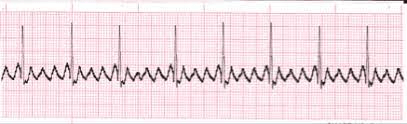
A. atrial fibrillation
B. atrial flutter
c sinus tachycardia
supraventricular tachycardia
what is atrial flutter
200
What important information must the nurse assess on her patient prior to sending her client for a heart cateherization?
A. check for allergies
b. provide a warm blanket
c. pain control
D ensure client is hydrated
A. check for allergies
(Allergies to contrast dye)
200
which of the following findings would indicate cardiac arrest? Select all that apply
a. no pulse
b. hypotension
c. nonresposive
d. cyanosis
e. not breathing
f. pinpoint pupils
a,c,d,e
a.no pulse, c. nonresponsive, d. cyanosis e. not breathing
300
The following medications can be used to treat angina. Select all that apply
a. Nitrogylcerin
b. beta blockers
c. ASA
d. Oxygen
A,b,c.d
a. Nitro: vasodilates and improves blood flow to the heart muscle and relieves pain
b. Beta blockers reduces myocardial oxygen consumption by blocking the beta adrenergic sympathetic stimulation to the heart
c. ASA prevents plt aggregation and reduces incidence of MI and death in patients with CAD
d. oxygen- given when initially having chest pain in an attempt to increase the amount of oxygen delivered to the myocardium and to decrease pain
Calcium channel blockers_ decrease the SA node automaticity and a-v node conduction, resulting in a slower HR, which decraeses the workload of the heart
300
Your are getting ready to discharge your client who recently had a pacemaker insertion to home and are reviewing discharge instructions with them and the family.
Select all the statements that apply to their instructions:
a. Leave incision uncovered and observe daily for redness
b. Avoid wearing tight restrictive clothing over insertion site
c. Avoid heavy lifting for 2 weeks
d. Restrict movement of arm until incision heals
e. check pulse daily
All answers apply
300
when the cardiologist reviews the echocardiogram on your client and sees left ventricular hypertrophy, he suspects your client has?
a. aortic valve stenosis
b. mitral valve stenosis
c. aortic regurg
d. Mitral regurg
a. aortic valve stenosis
Aortic valve stenosis is narrowing of the orifice between the left ventricle and aorta
300
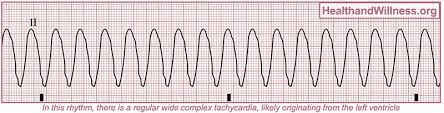 A. sinus tachycardia
b. ventricular fibrillation
c. ventricular tachycardia
d. atrial fibrillation
C. what is ventricular tachycardia?
300
Your client arrives to the ER with cool clammy skin, 7/10 chest pain, nausea, an anxiety. In the squad they received 3 tablets of sublingual nitroglycerin without any pain relief. What do you suspect is going on with your client?
a. Stable Angina
b. Acute coronary syndrome
c. Mitral valve prolapse
d.Ventricular tachycardia
b. ACS-is an emergent situation charecterized by acute onset of myocardial ischemia. Despite medication(nitro) and rest the pain continues. See chart 23-6 in Hinkle book for more symptoms
300
An adult oncology client has a diagnosis of bladder cancer with metastasis and the client has asked the nurse about the possibility of hospice care. Which principle is central to a hospice setting?
A. The client and family should be viewed as a single unit of care.
B. Persistent symptoms of terminal illness should not be treated.
C. Each member of the interdisciplinary team should develop an individual plan of care.
D. Terminally ill clients should die in the hospital whenever possible.
ANS: A
Rationale: Hospice care requires that the client and family be viewed as a single unit of care. The other listed principles are wholly inconsistent with the principles of hospice care.
400
Your client is being prescribed lisinopril. In your patient teaching you want to alert your client for possible adverse effects to look for when taking this medications. Select all that apply:
a. angioedema
b. persistent cough
c. Hypokalemia
d. hypertension
A,b, Can have hyperkalemia and acute hypotension
400
The following Complications can occur from insertion of a pacemaker. Select all that apply
a. infection at site
b. Pneumothorax
c.Dislocation of the lead placement
d. atrial fibrillation
a,b, and c. Ventricular ectopy and tachycardia from irritation of the ventricle wall can occur
400
Your client arrives on your unit with the symptoms of dyspnea on exertion and fatigue. When you do you auscultation you hear a low pitched, rumbling diastolic murmur in the left 5 th ICS mid clavicular. Which valve disorder do you think these findings are consistent with?
a. Mitral valve prolapse
b. aortic stenosis
c. Aortic valve regurg
d. mitral valve stenosis
d. Mitral valve stenosis
400
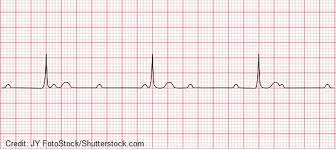
third degree heart block
400
What diagnostic tests would you anticipate to be ordered on this client with ACS? Select all that apply:
A.12 lead EKG
B. Troponin
C. echocardiogram
D. .9 Normal saline
Answer a and B
12 lead ECG
B. Lab tests: cardiac biomarkers Troponin ,CK-MB or myoglobin.
Troponin-a protein found in myocardial cells. An increase in these levels are seen within a few hours of an acute MI
400
What should you do before defibrillation a client who is in VFIB?
A. shout all clear
B. Draw cardiac labs
C. Administer oxygen per ambu bag
d. assess capillary refill
A. shout all clear before shocking
499
what medication would you use to treat this rhythm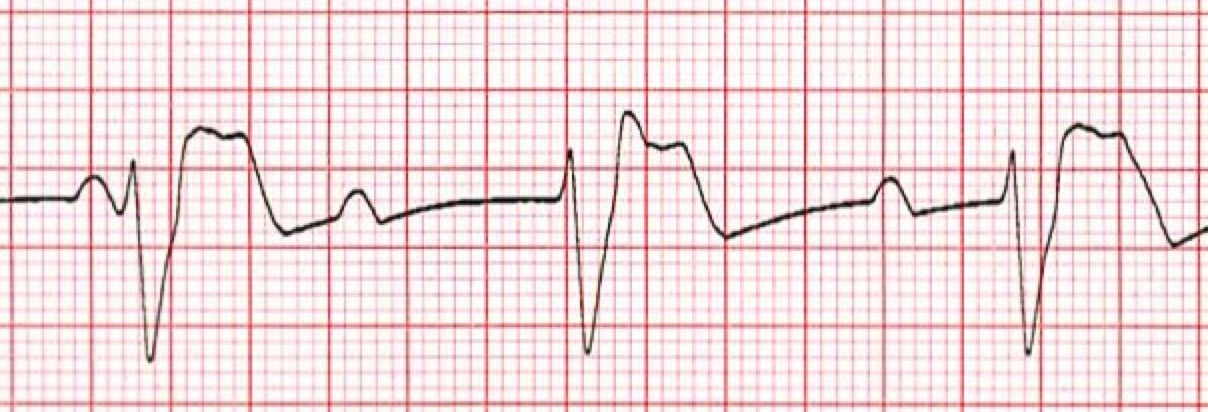
what medication would you use to treat this Rythm?
Atropine
Bonus: what else can you use to treat this? what is the HR?
499
Can you perform CPR on someone that has an ICD?
Yes you can. An ICD is used when a shockable rhythm is detected.The ICD is programed to detect V-tach or V-fib. CPR can be started if the if the client does not come out of the rhythm or in nonresponsive. Clients describe it as a kick in the chest, when they get a shock
499
On auscultation of your client your hear a systolic click.
This may indicate the following:
a. mitral valve prolapse
b. mitral regurgitation
c. aortic regurgitation
d. mitral stenosis
a. Mitral valve prolapse
the first and only sign of mitral valve prolapse, is an extra heart sound, referred to as a mitral click. Valve leaflet is ballooning into the left atrium
499
13. A client on a telemetry unit is showing changes in their cardiac tracing. The nurse notes flattening of the T wave and appearance of a prominent U wave. What condition would the nurse suspect with this presentation?
A. Hypokalemia
B. Hyperkalemia
C. Hypocalcemia
D. Hypercalcemia
ans: A
feedback: general: Rationale: Flattened T waves and presence of U waves indicate hypokalemia.
499
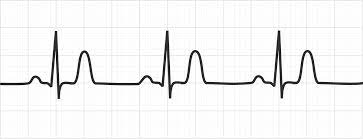
A. sinus bradycardia
b. third degree av block
c. ST elevation from an acute MI
d.Normal sinus rythym
ST elevation form an acute MI, an elevation of more than 1 mm indicative of an acute MI. This would be confirmed by a 12 lead ECG.
499
Your patients has undergone CABG surgery. You are assessing for the following complications. Select all that apply:
a. hypovolemia
b. Persistent bleeding
c. cardiac tamponade
d. fluid overload
e. Tachyarrhythmias
a,,b,c,d,e Chart 23-4 in book