POV: You're Moving Air
Oxygen Has Entered the Chat
It's Giving... Epithelium
Cell-ebrities
Caught in 4k
100
The conducting portion begins with the nasal cavity and ends with this structure.
Terminal bronchiole(s)
100
This structure marks the beginning of the respiratory portion.
Respiratory bronchiole
100
Respiratory epithelium is this type of epithelium.
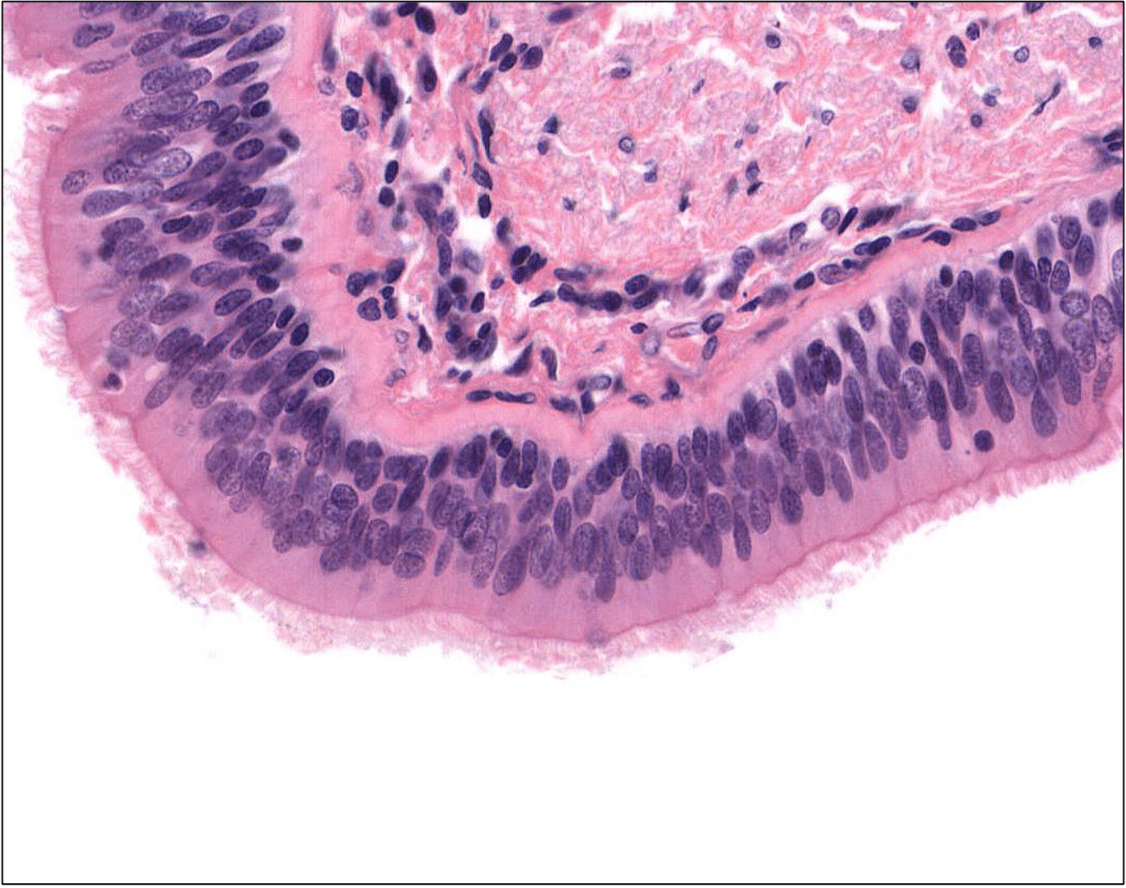
Ciliated pseudostratified columnar epithelium
100
These cells, indicated by the arrows, serve as progenitor cells for the other cell types.
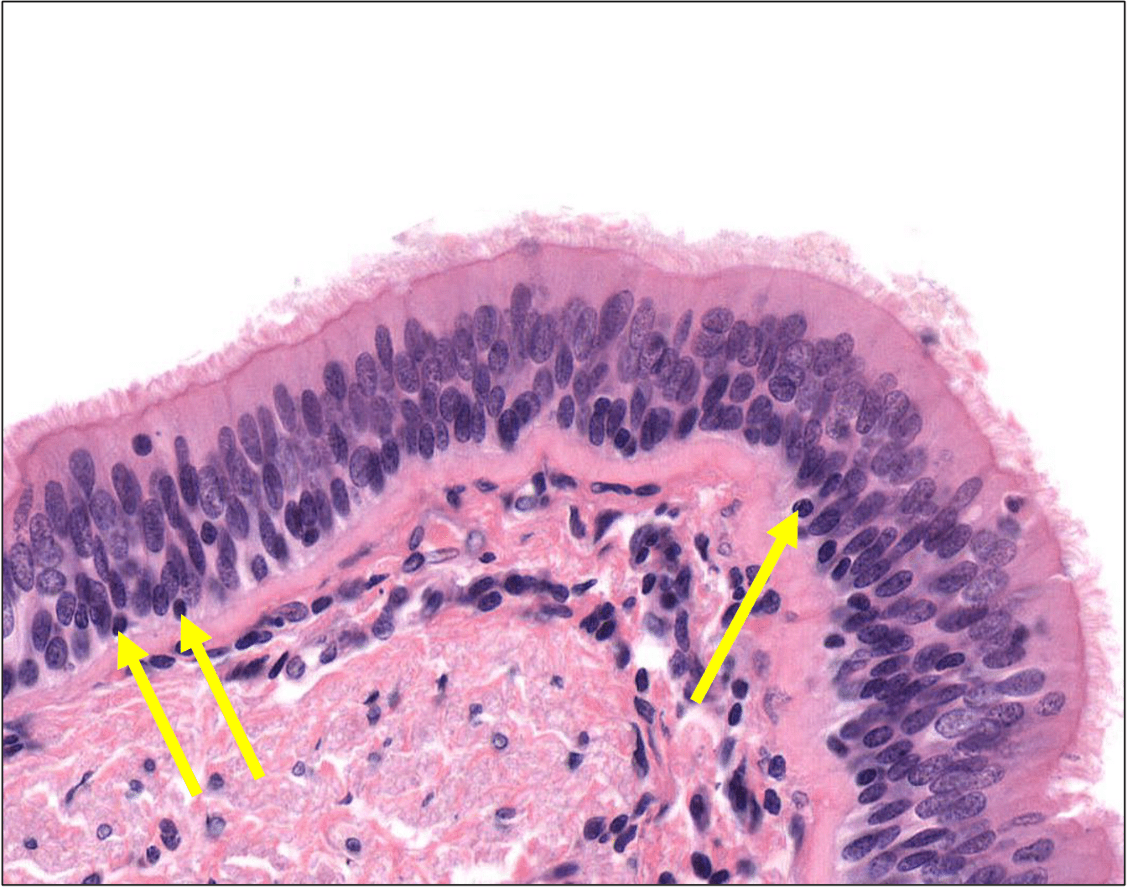
Basal cells
100
This feature, indicated by the oval, contribute to the escalator that helps to move mucus toward the mouth.
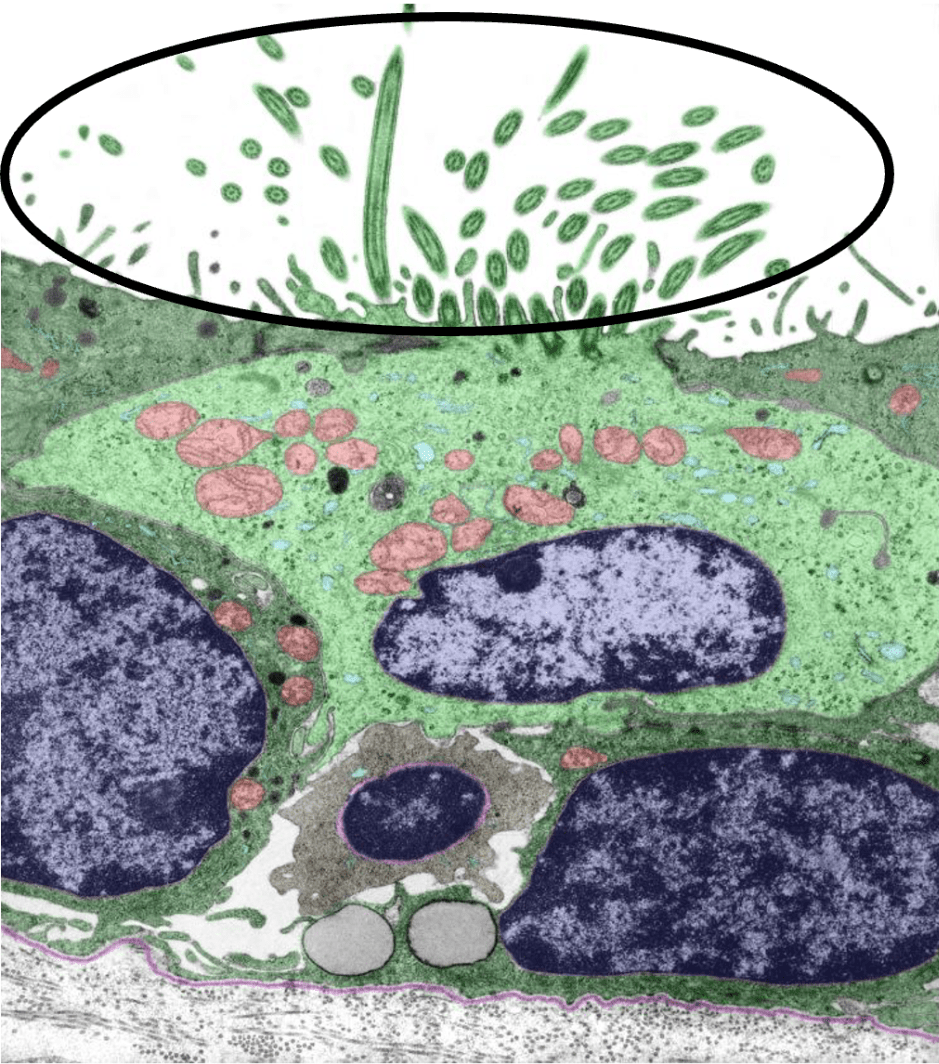
Cilia
200
This feature of the nasal vestibule, indicated by the arrow below, is responsible for catching large pollutants before they enter the respiratory system.
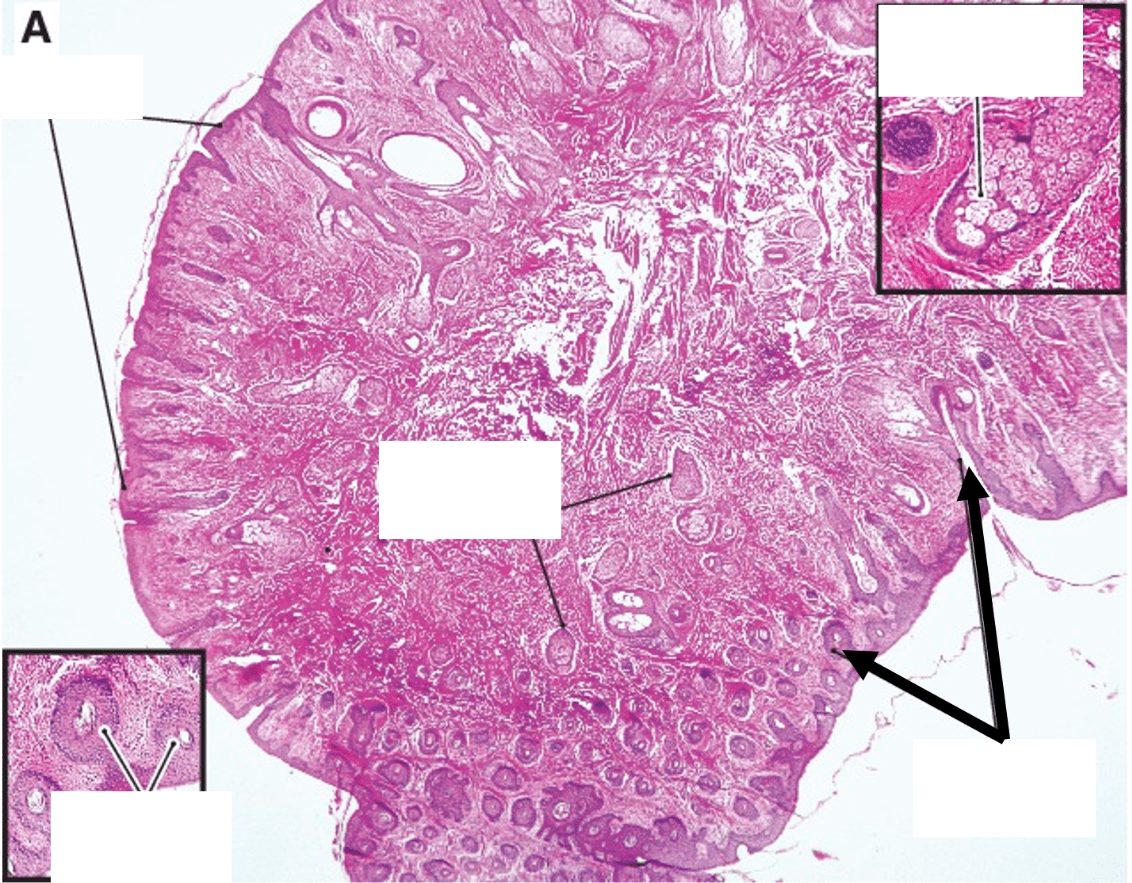
vibrissae/vibrissal follicles (nasal hairs)
200
This structure's presence & function is what differentiates the respiratory portion from the conducting portion.
**BONUS 100 POINTS**
What cell types line these structures?
Alveoli.
Bonus: Type I pneumocytes (primarily) & Type II pneumocytes
200
In this location in the conducting portion of the respiratory tract, you observe ciliated pseudostratified columnar epithelium without goblet cells.
Olfactory mucosa in the roof of the nasal cavity
200
These dome-shaped cells, indicated by the black arrowheads, line the bronchioles.
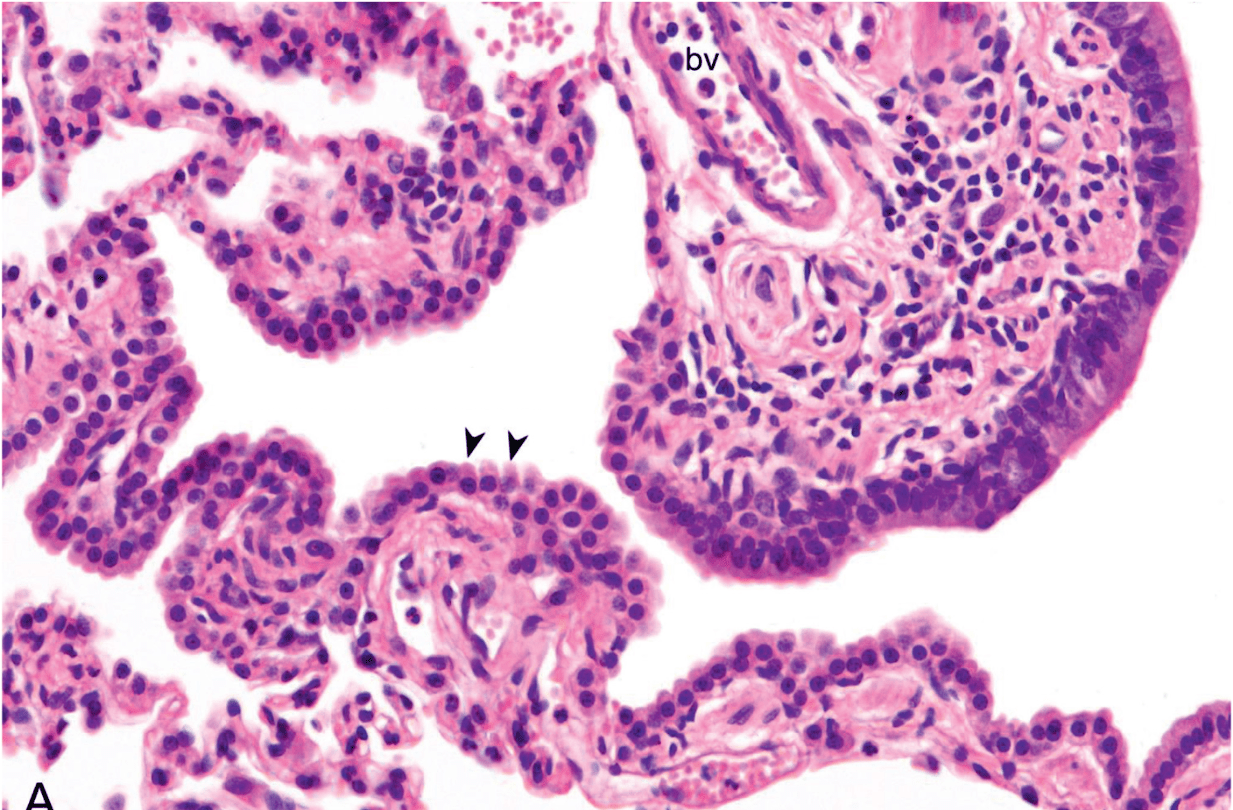
Clara (club) cells
[immune functions & progenitor cells for the epithelium]
200
This cell, indicated by the arrow, is the vacuum cleaner of the lung.
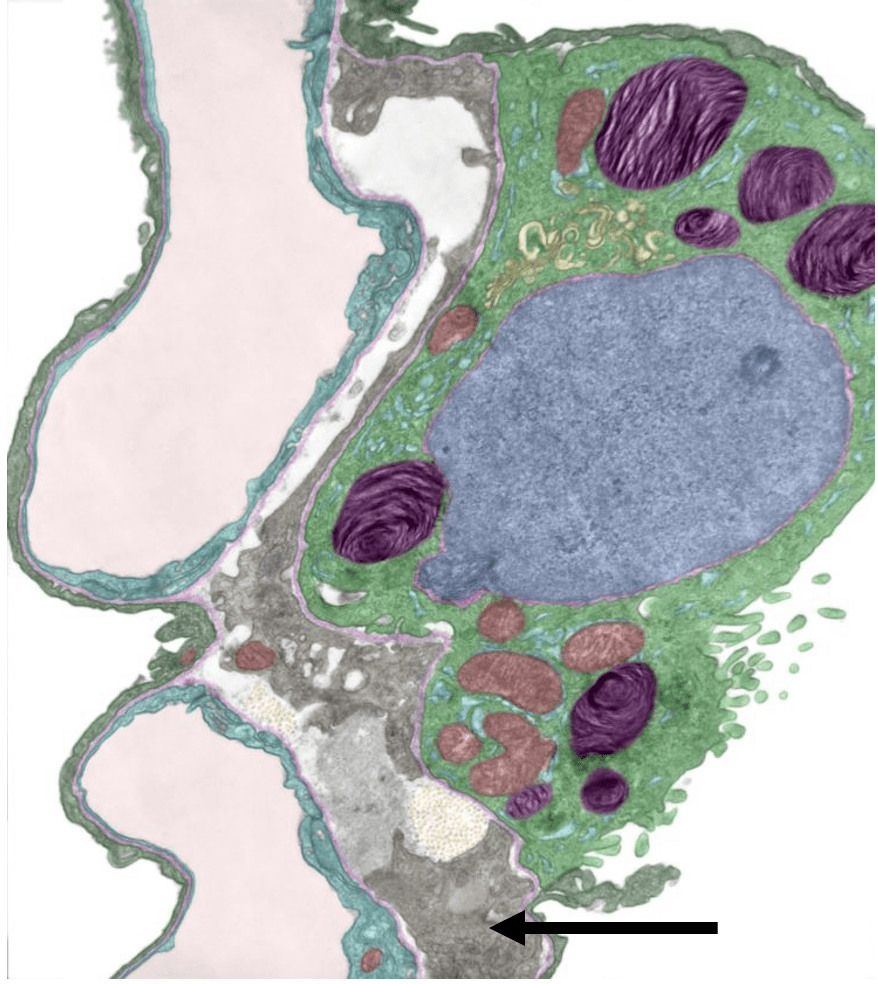
Alveolar Macophage
300
The larynx gets its structural support from this type of tissue. Be specific.
Hyaline and elastic cartilage.
300
While a respiratory bronchiole doesn’t have any cartilaginous support, it still has this tissue indicated by the arrows.
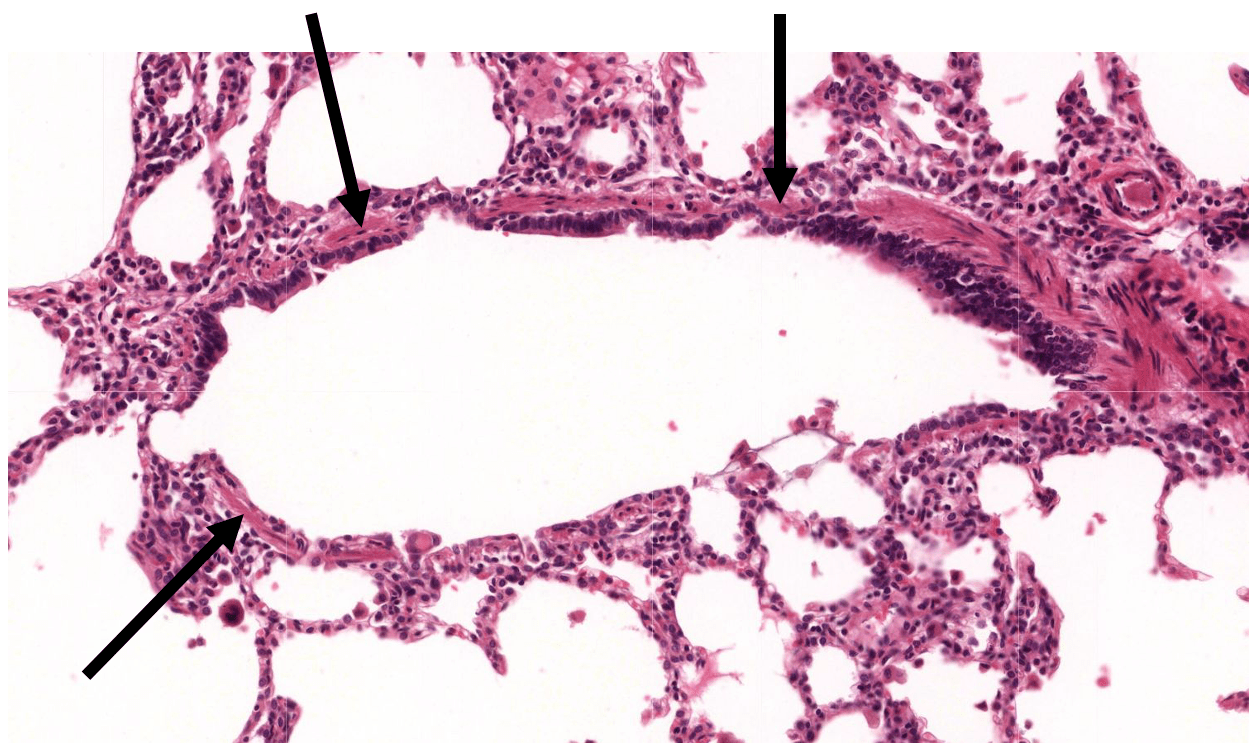
Smooth muscle
300
The function of this epithelial lining found in the oropharynx, laryngopharynx, and some parts of the larynx differs from the secretion & transportation functions of respiratory epithelium.
**BONUS 100 POINTS**
Explain the function of this epithelium in the context of the respiratory system.
non-keratinized stratified squamous epithelium
Bonus: places where substances besides air (food/water) are going to make contact or places susceptible to drying out or friction need protection, which is a function of stratified squamous epithelium
300
Type II pneumocytes produce this secretion which is paramount to respiratory function.
**BONUS 100 POINTS**
What purpose does this secretion serve?
pulmonary surfactant
BONUS: It reduces surface tension within the alveoli making it easier for alveoli to inflate when inhaling air, and prevents collapse of the alveoli when air is exhaled
300
These green cells fused to the capillary (light red lumen) form the majority of the lining of the alveoli.
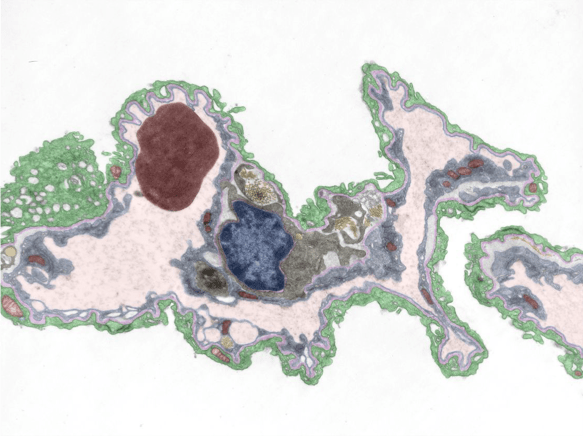
Type I pneumocytes
400
Compare these two structures found within the lung. Identify structures A & B based on their characteristics.
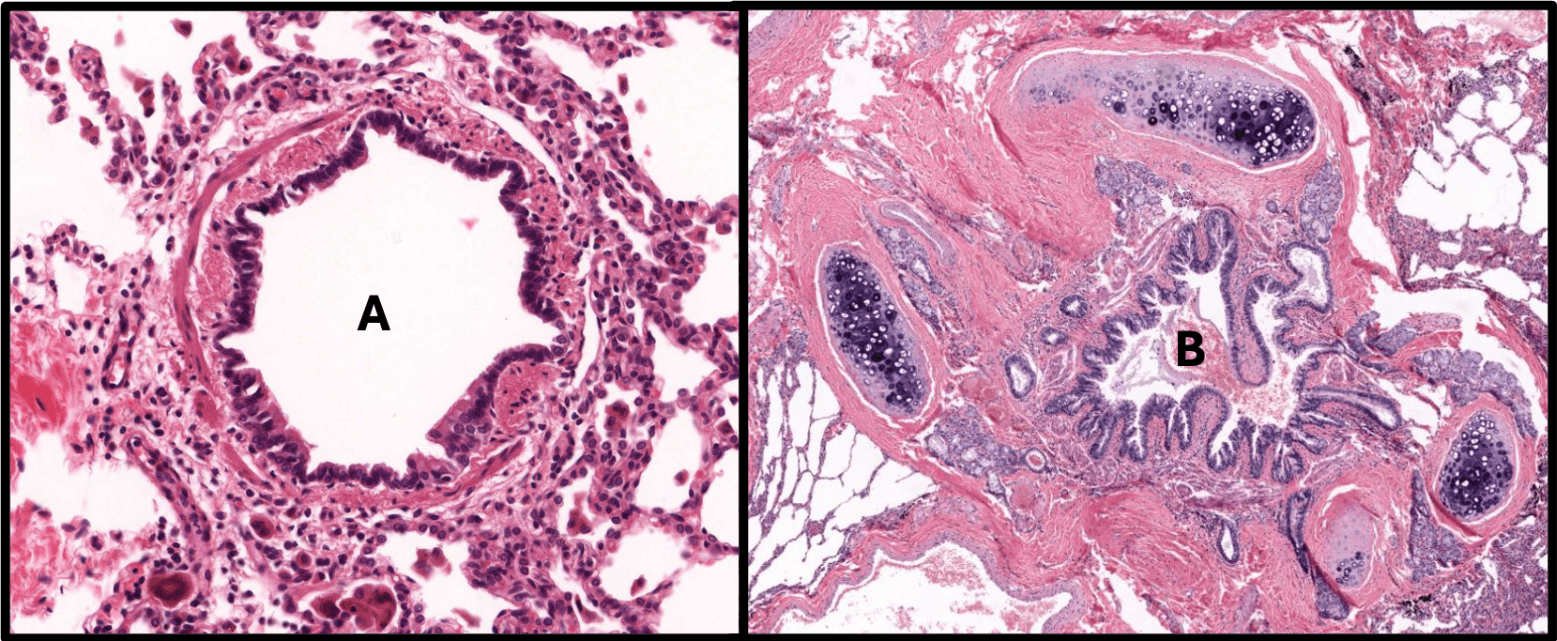
(a) Terminal bronchiole
(b) Intrapulmonary (primary) bronchi
400
Compare the following images. Identify the terminal and respiratory bronchioles.
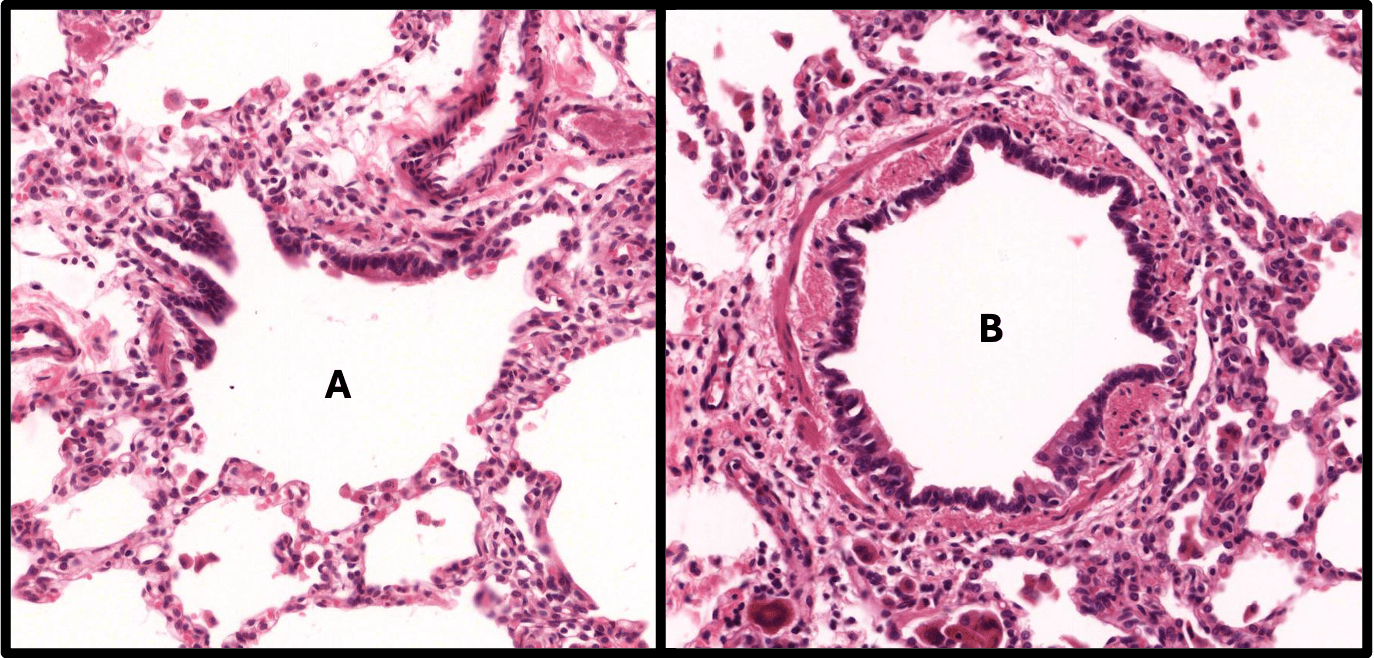
A = respiratory bronchiole (has alveoli)
B = terminal bronchiole (more smooth muscle, no alveoli, clara cells)
400
This type of epithelium lines this structure within the lung.
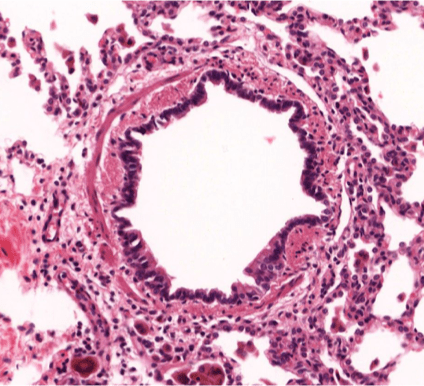
Simple columnar to cuboidal epithelium (terminal bronchiole)
400
These cells' basement membranes fuse to form the blood-air barrier.
endothelial cells and type I pneumocytes
400
The arrows point to the lumen of this structure, an important component of the blood-air barrier.
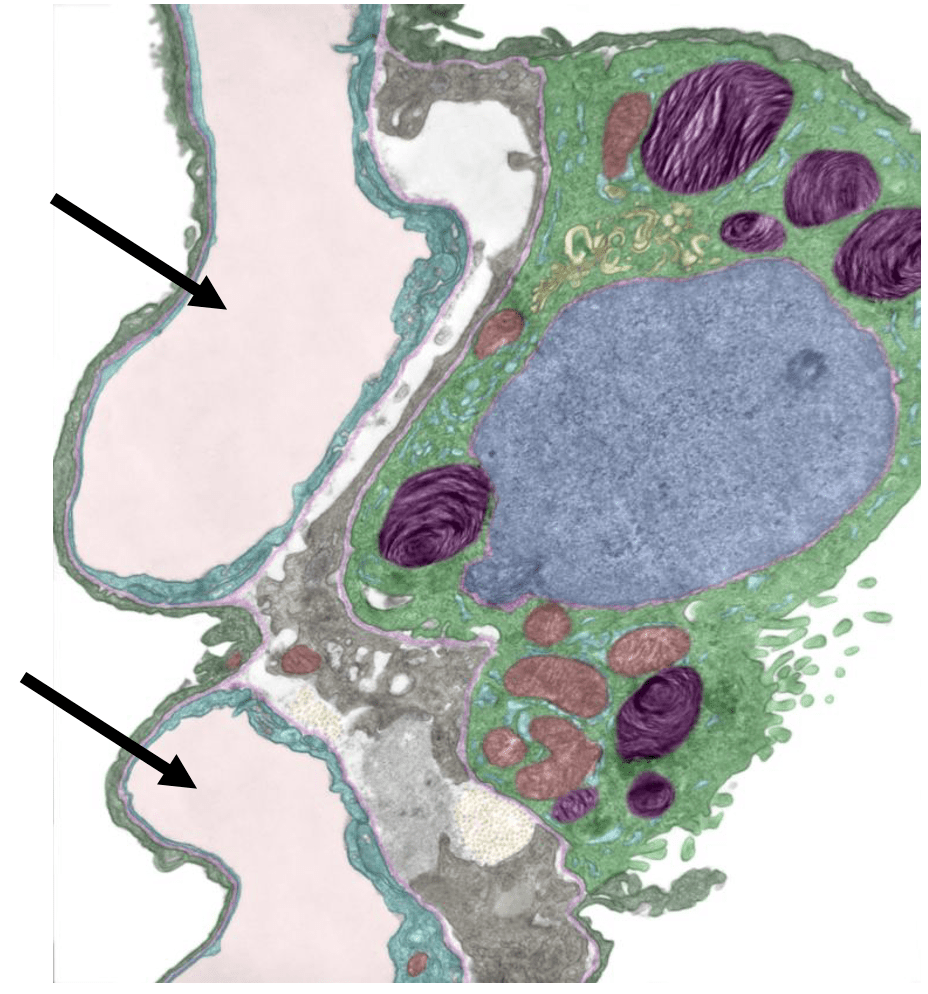
Capillaries
500
The presentation of this common condition is caused in part by contraction of the smooth muscle surrounding the terminal bronchiole (bronchoconstriction).
Asthma
500
If the epithelium of the alveoli is damaged, these cells can act as progenitor cells in this region.
Type II pneumocytes
500
Squamous metaplasia is often observed on the epiglottis. This condition, caused by exposure to toxins, changes the respiratory epithelium into this type of epithelium.
non-keratinized stratified squamous epithelium
500
High incidence of the cells indicated by the arrows, stained with iron stain, may indicate this medical condition.
**Bonus 100 Points**
What are these cells derived from?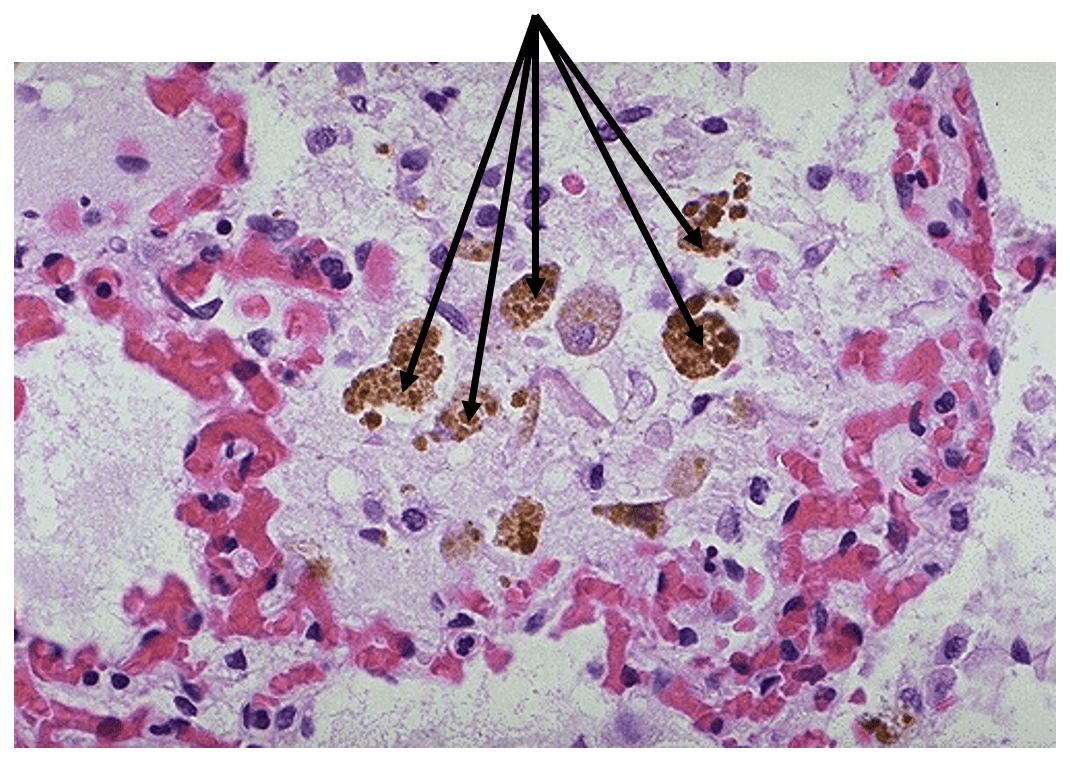
Heart failure
(alveolar macrophages/dust cells)
Bonus: blood monocytes
500
The structures indicated by the arrows contain a substance that is crucial for being able to breathe. A lack of this substance can cause this condition in infants.
**Bonus 100 Points**
Name the cell and the substance
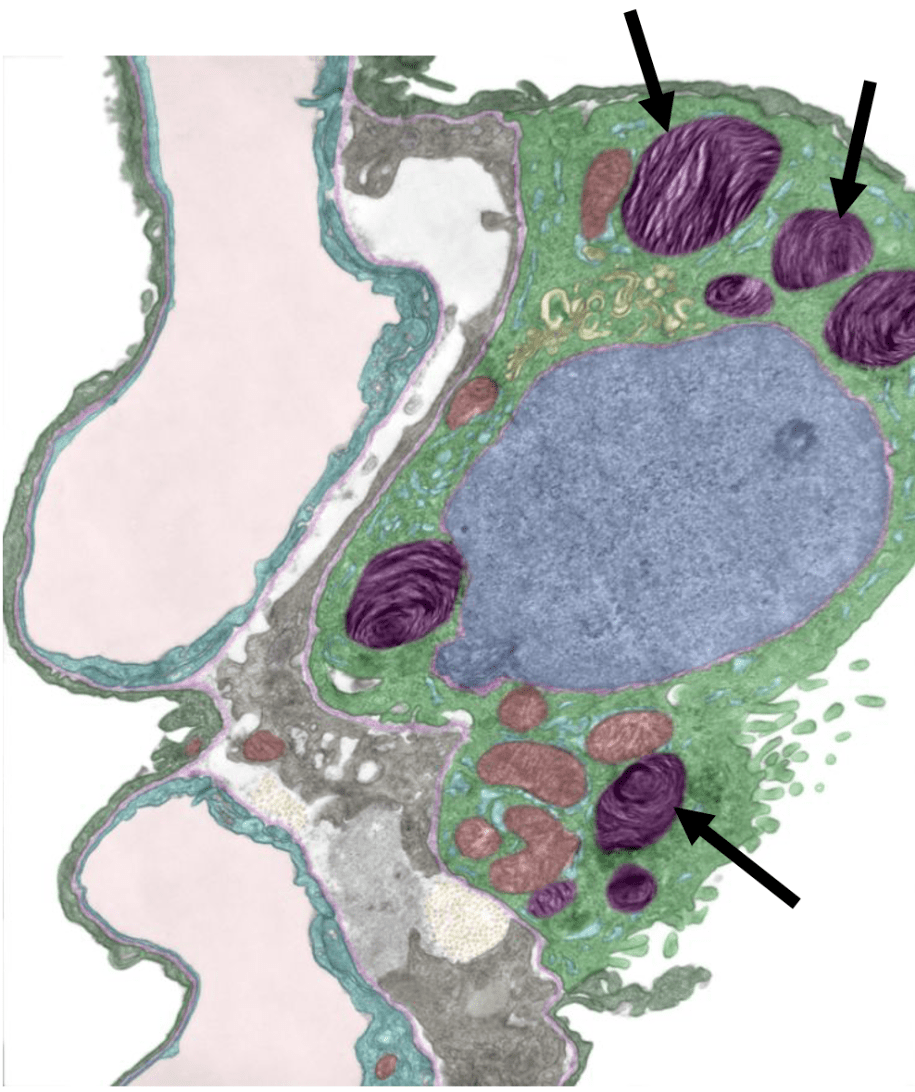
Respiratory distress syndrome
Bonus: Type II pneumocyte; pulmonary surfactant (lipids, phospholipids, & lipoproteins)