🎣Fishing🎣
🏞️Lakes🏞️
🐉Dragonflies🐉
🥾Trails and Hiking🥾
🐟Freshwater Fish🐟
100
What are some types of bait you can use for fishing?

Worms, leeches, minnows and insects. Flashy lures are also a good addition to ensure a bite.
Fishing bait is one of the most important parts of an angler’s entire setup. It doesn’t matter if you’re chasing world records or just hooking something for dinner, it’s your bait that will tempt it onto the hook. Get it right, and you’re in for a fight. Get it wrong, and the fish will ignore or even actively avoid you.
100
How many Great Lakes are there? What are their names?
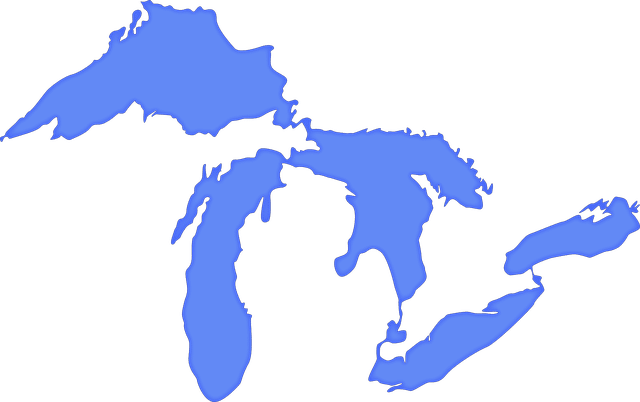
Hint: The lake names make up the mnemonic "HOMES".
There are five Great Lakes, made up by Huron, Ontario, Michigan, Erie and Superior.
The Great Lakes — Superior, Michigan, Huron, Erie and Ontario — and their connecting channels form the largest fresh surface water system on earth. They cover more than 94,000 square miles and hold an estimated six quadrillion gallons of water – about one-fifth of the world’s fresh surface water supply and nine-tenths of the U.S. supply. The system is invaluable as the source of drinking water for more than 40 million people in the U.S. and Canada.
100
Where do dragonflies live?

Dragonflies live on every continent except Antarctica. They can be found wherever there’s clean, fresh water, including ponds, lakes, rivers, streams, and wetlands.
Dragonflies may only buzz around in the summer in most parts of the U.S., but they are busy year round. Dragonflies lay their eggs in the water and spend most of their life cycle as “naiads” under water before developing wings and emerging as adults.
100
What should you do if you encounter a Grizzly Bear?
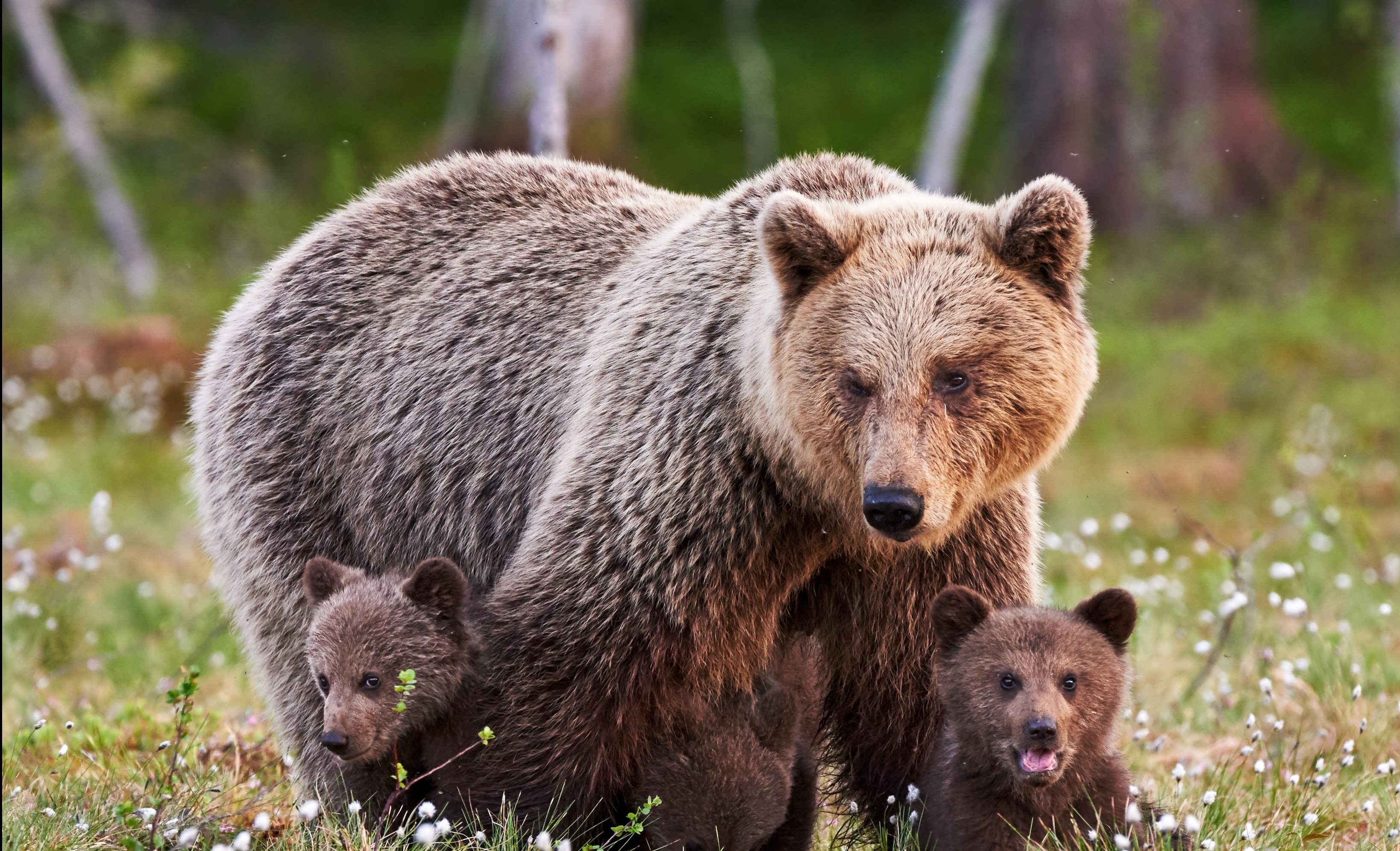
If you see a grizzly bear: stay calm with no loud or sudden movements, speak to it to let it know you're a human and not prey, back away slowly and make yourself appear big (pick up small children and stay in a group).
Bears travel the same trails people do, on the path of least resistance. You can help protect these animals by avoiding encounters with them. Avoid travelling in high quality bear habitat at key times of year. Make noise! Let bears know you are there. Call out, clap hands, sing or talk loudly especially near streams, dense vegetation and berry patches, on windy days, and in areas of low visibility. Watch for fresh bear signs. Tracks, droppings, diggings, torn-up logs and turned-over rocks are all signs that a bear has been in the area. Leave the area if the signs are fresh.
100
This freshwater fish can also live in saltwater, but is known in North American waters in Largemouth and Smallmouth varieties, a typical catch for fishers.

Hint: It has the same name as an instrument, but not the same pronunciation.
Bass
Bass can feed on almost anything that moves – plus some things that don’t. As juveniles, they feed on the abundant invertebrates such as daphnia, copepods, crunchy scuds and gooey worms plus tiny fish. As they grow, they expand their diet to include things like crawfish and crabs, frogs and salamanders, many kinds of fish plus the occasional mice, snakes or anything that looks potentially edible or interesting and really, almost anything that they think can fit into their mouths.
200
True or False: Fly fishing is the sport of fishing using a rod and an artificial fly as bait.
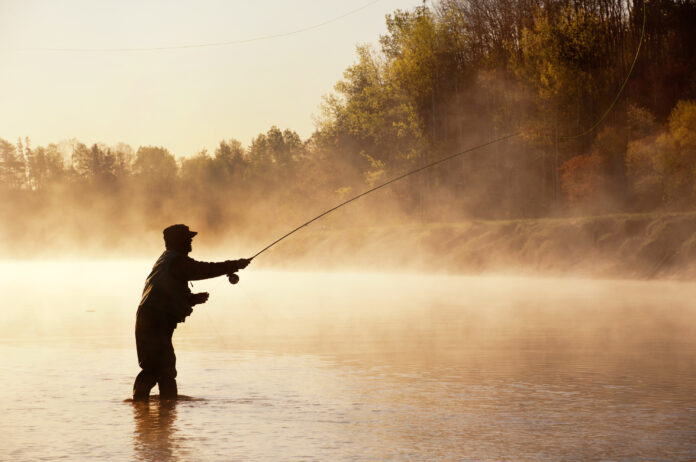
True!
Fly fishing is an angling technique that uses an ultra-lightweight lure called an artificial fly, which typically mimics small invertebrates such as flying and aquatic insects to attract and catch fish. Because the mass of the fly lure is insufficient to overcome air resistance, it cannot be launched far using conventional gears and techniques, so specialized tackles are used instead and the casting techniques are significantly different from other forms of angling. It is also very common for the angler to wear waders, carry a hand net, and stand in the water when fishing.
200
True or False: To be considered a lake, a body of water must connect to a larger body of water.
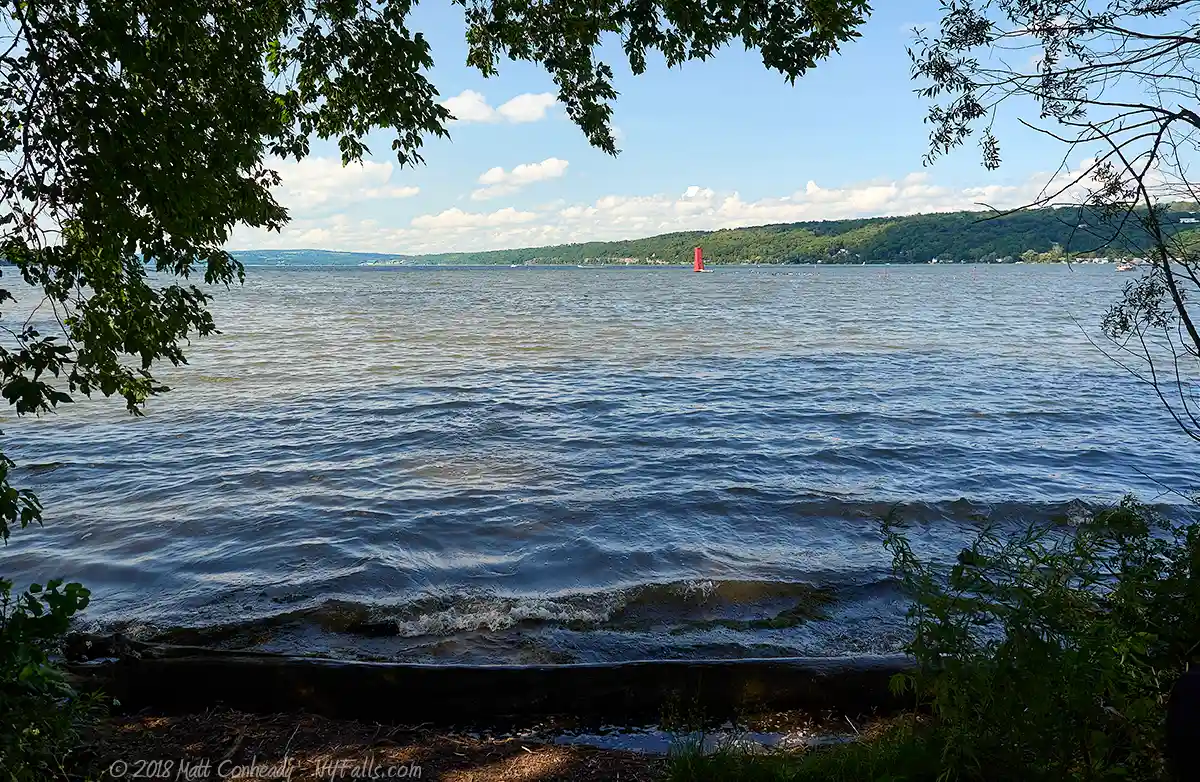
False! A lake is enclosed on all sides by land and does not connect to a larger body of water.
The Caspian Sea, while being landlocked is not considered to technically be a lake. But for 20 years Azerbaijan, Iran, Kazakhstan, Russia and Turkmenistan, which surround it, have disagreed over whether it is a lake or a sea. Like many lakes, it does not feed into an ocean, but it is sea-like in its size and depth. The distinction is not merely semantic, but has economic, military and political implications. Lakes’ surfaces and beds are divided up equally by bordering countries. Seas are governed by the UN’s Law of the Sea. The surface and bed are allotted, nearer to shore, according to the length of relevant coastline.
200
True or False: For the majority of their lives, most dragonflies are aquatic.
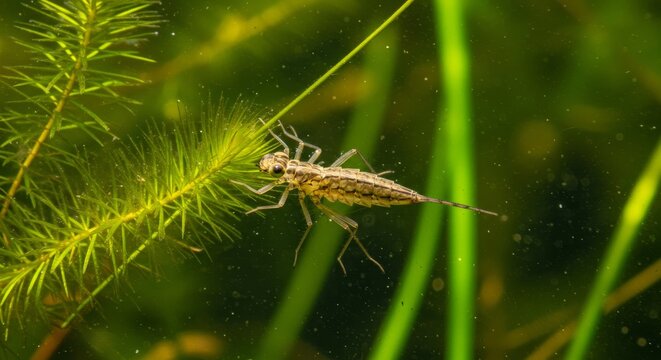
True!
Before growing into their familiar, flying form, baby dragonflies live in the water. In their larval stage, the aquatic dragonflies eat just about anything—tadpoles, mosquitoes, fish, other insect larvae and even each other. This phase typically lasts one to three years—some species, however, are aquatic for just weeks or months, while others might remain as larvae for half a decade. At the end of its larval stage, a dragonfly crawls out of the water; then, its exoskeleton cracks open and releases its abdomen, which had been packed in like a telescope. Its four wings come out, and the body dries and hardens over the next several hours.
200
True or False: Approximately 45 million Americans go hiking each year.

True
Some of the best places to hike in the United States are Glacier National Park, Zion National Park, Grand Teton, Mammoth Lakes, Yosemite, Rocky Mountain National Park, the Grand Canyon, Pisgah, Olympic National Park and Pictured Rocks National Lakeshore.
200
This highly prized gamefish is found in deep lakes, running up local rivers and streams to fertilize their eggs in gravel beds during the spawning season.
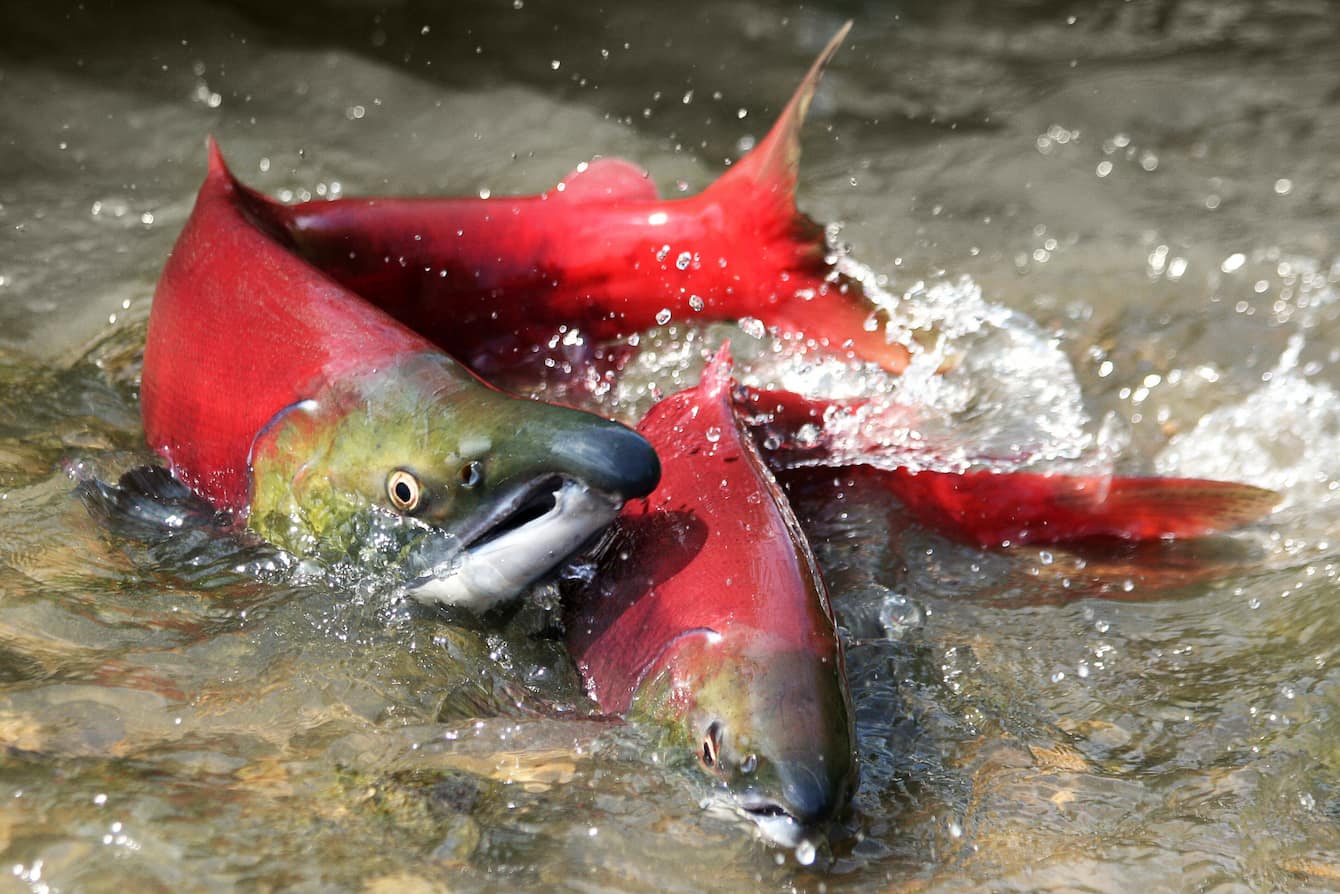
Salmon
Salmon are considered “anadromous” which means they live in both fresh and salt water. They are born in freshwater where they spend a few months to a few years (depending on the species) before moving out to the ocean. When it’s time to spawn, they head back to freshwater. Very few other fish can survive in such wide ranges of salinity, and would die if they moved between salt and fresh water the way that salmon do. That’s because when saltwater fish are exposed to freshwater, it can cause their cells to burst. And when freshwater fish are exposed to salt water, it can cause their cells to shrivel, due to a process known as osmoregulation. Luckily salmon have some pretty amazing physiological and behavioral adaptations that allow them to survive in both environments.
300
What is the act of putting a caught fish back into the water called?
a. Trap and Free
b. Tag and Return
c. Hook and Loose
d. Catch and Release
d. Catch and Release
Catch and release fishing is a type of recreational fishing where anglers immediately release a fish back to the water where it was caught. It's a great conservation strategy, but simply letting a fish go does not guarantee it will live. The actions you take before, during, and after you land a fish can improve the chances of survival, keep fish populations healthy, and keep fishermen fishing.
300
Besides Earth, what other celestial body has surface lakes in our Solar System?
a. Pluto
b. Saturn's Moon
c. The Sun
d. Venus
b. Saturn's Moons
Titan, which is the largest moon of Saturn, has lakes and rivers on its surface. Unlike Earth, the rivers and lakes and streams on Titan are made out of methane and ethane. But very much like Earth, there’s what we call a hydrologic cycle. So methane can move back and forth between the surface and the atmosphere. At other points in solar system history, we do think that other worlds also had lakes and streams. Mars, for example, we know, had a lot of liquid water on its surface earlier in its history.
300
How fast are dragonflies capable of flying?
a. 10 mph
b. 35 mph
c. 50 mph
d. 100 mph
b. 35 mph
Dragonflies are expert fliers. They can fly straight up and down, move forward and backward, hover like a helicopter and even mate in midair. Dragonflies rank among the world’s fastest flying insects and their aerial prowess is a crucial survival skill. If a dragonfly can’t fly, it will starve, because the insects only eat prey they catch while flying. But they’re resilient: a dragonfly can be missing an entire wing and still capture prey.

300
What is the longest hiking trail in America?
a. Great Western Trail
b. Appalachian Trail
c. Iditarod Trail
d. American Discovery Trail
d. American Discovery Trail
The American Discovery Trail creates a coast to coast route across the USA connecting people with rural and urban areas, wilderness, desert mountains and forests, with other trails, and with each other. It is generally split into four regions, Eastern, Central – Northern Route, Central – Southern Route, Western. Coast-to-coast, the northern route is about 4,834 miles and the southern route is about 5,057 miles.
300
This fierce, apex ambush predator fish is famous for its long, torpedo-like body, duck-bill snout and hundreds of razor-sharp teeth, one that you definitely don't want to meet underwater!
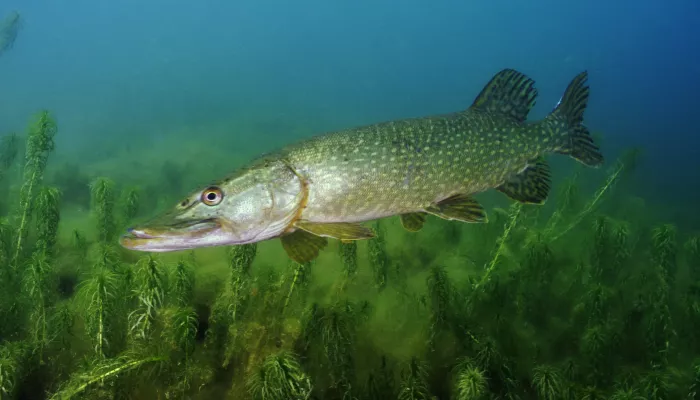
Pike
Famously predatory, the long, slender pike will lurk among the vegetation of a river or lake, bursting out with ferocious speed to catch its prey. These apex freshwater predators can reach swimming speeds of 8mph-10mph! Considerably quicker than majority of the fish they share waters with, contributing to their title of being apex predators.
400
What are some other types of fishing besides traditional fishing in calm, warm, still waters?
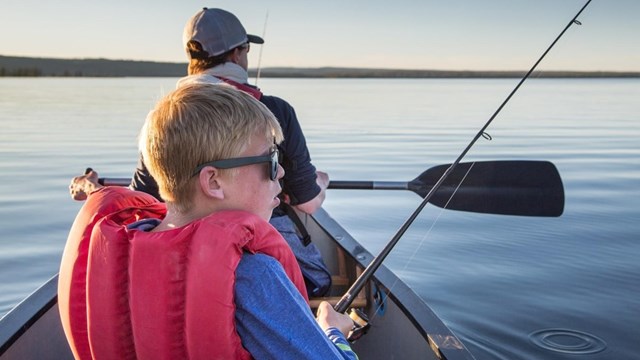
Some types are angling, drop lining, fly fishing, ice fishing, kite fishing, netting, spearfishing and trapping.
At the turn of the 21st century, sport fishing was thriving. It was estimated that about 40 million Americans spent at least one day per year fishing, and their combined expenditures on tackle, travel, and lodging pumped approximately $45 billion annually into the U.S. economy. The greater availability of air travel has increased anglers’ access to many areas of the world and introduced them to new sport fish, such as the dorado of South America, the tigerfish of Africa, and the inconnu of northern North America and Asia. Hardly a species of any importance does not have its angling devotees somewhere. Even the carp, long considered a “trash fish” in North America, has a considerable following.
400
What lakes make up the Finger Lakes?

What lake are we closest to at Kendal?
Otisco, Skaneateles, Owasco, Cayuga, Seneca, Keuka, Canandaigua, Honeoye, Canadice, Hemlock, and Conesus Lakes make up the Finger Lakes. We are closest to Cayuga at Kendal!
At the end of the last ice age, over one hundred-thousand years ago, massive glaciers advanced southward from Canada, carving deep trenches in the earth. As the earth warmed and the glaciers receded, the trenches filled with water and formed what we now know as the Finger Lakes. The eleven Finger Lakes range in length from 40 miles (Cayuga Lake) to only 3 miles (Canadice Lake) and in depth from 618 feet (Seneca Lake) to just 30 feet (Honeoye Lake), and are beloved for their natural beauty. The deep waters of the largest lakes, combined with the steep slopes of their hillsides, create a “micro-climate” ideal for wine production, which attracts wine makers and enthusiasts from all over the world to the region.
400
What flying pest can dragonflies eat upwards of 100 per day of?
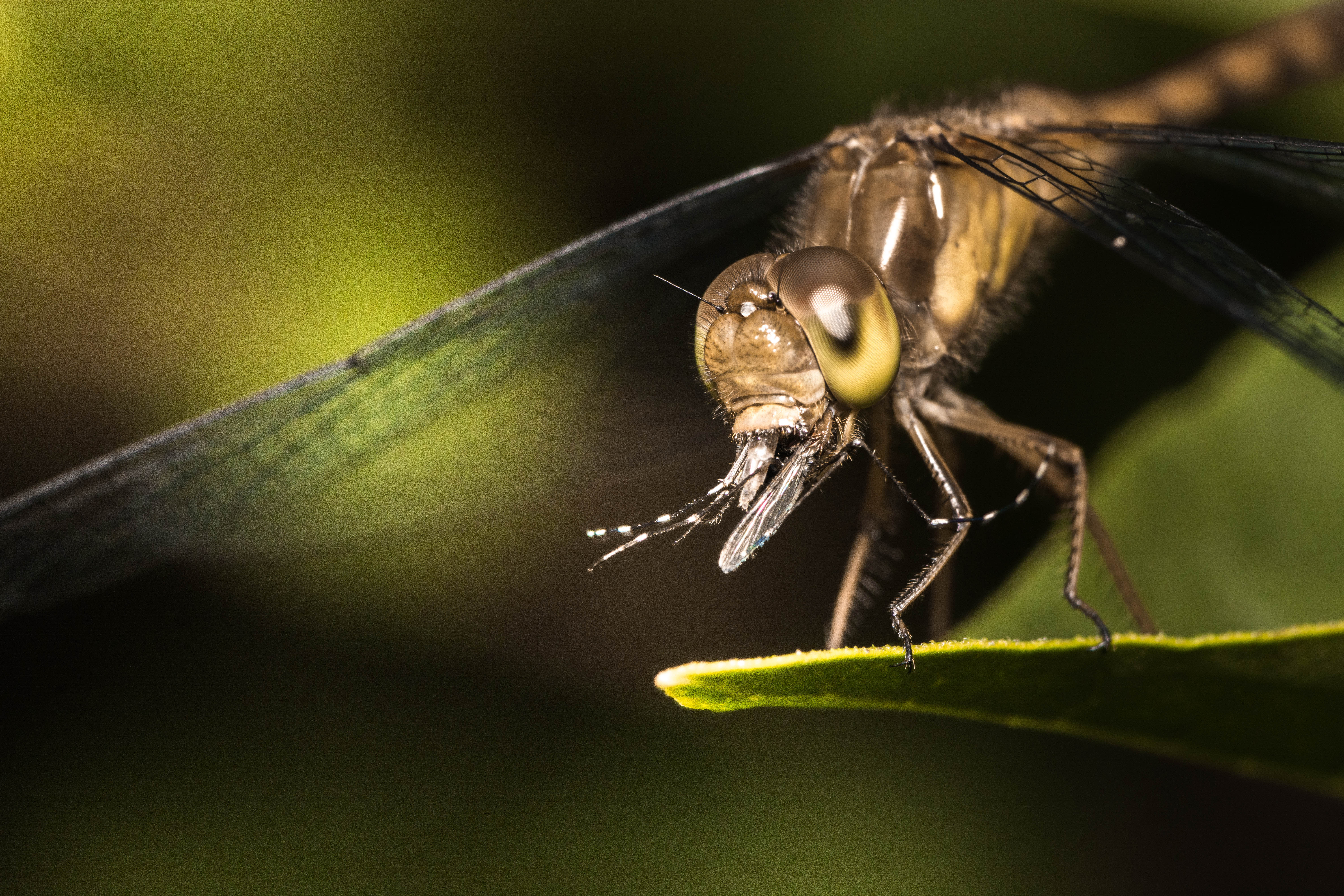
Hint: They are known to spread malaria and yellow fever.
Mosquitoes!
Dragonfly nymphs live in the water and usually hang out on aquatic vegetation waiting for their prey, which is virtually any animal small enough to grab. When prey gets close enough, the nymph unfurls its labium (mouthpart that shoots out past the head) to capture its prey. Larger dragonfly nymphs may even eat minnows or tadpoles. Adult dragonflies will also eat any insect they can catch. While they usually eat mosquitoes and midges, they’ll also eat butterflies, moths, bees, flies and even other dragonflies. Larger dragonflies will eat their own body weight in insect prey every day.
400
What are some important things to bring for hiking?

The ten essential things to bring for hiking are navigational systems like a map or compass, headlamp and/or flashlight, sun protection, first aid, knife, fire starters, shelter supplies and extra food, water and clothes.
"Day hiking" simply means any hiking outing that can be done in a day, as opposed to a multiday excursion like a backpacking trip or a thru-hike. A day hike can be a stroll around your local city park or a 4-hour trek up your nearest mountain. Whether it's 2 hours or 12, getting outdoors and experiencing nature offers profound mental and physical benefits.
400
This highly diverse group of bottom-feeding fish have tactile and sensory feelers like whiskers to help them navigate murky environments, sharp spines on their fins and smooth, slippery skin instead of scales.
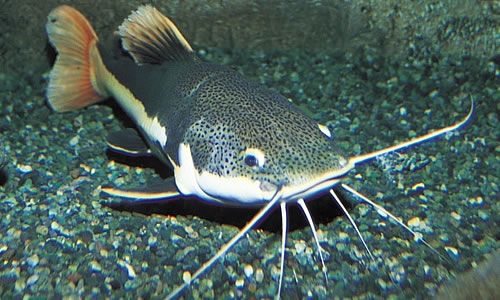
Catfish
With thousands of species and countless individuals, catfish are among the most abundant and adaptable freshwater fish on Earth. These remarkable creatures don’t just swim – they can walk on land, climb walls, and even breathe air, making them one of the most surprising fish in nature. Catfish are sometimes colloquially known as "swimming tongues", because their bodies are covered in hundreds of thousands of tastebuds.
500
What are some of the biggest fish which could be caught fishing? What is the biggest fish you've caught?
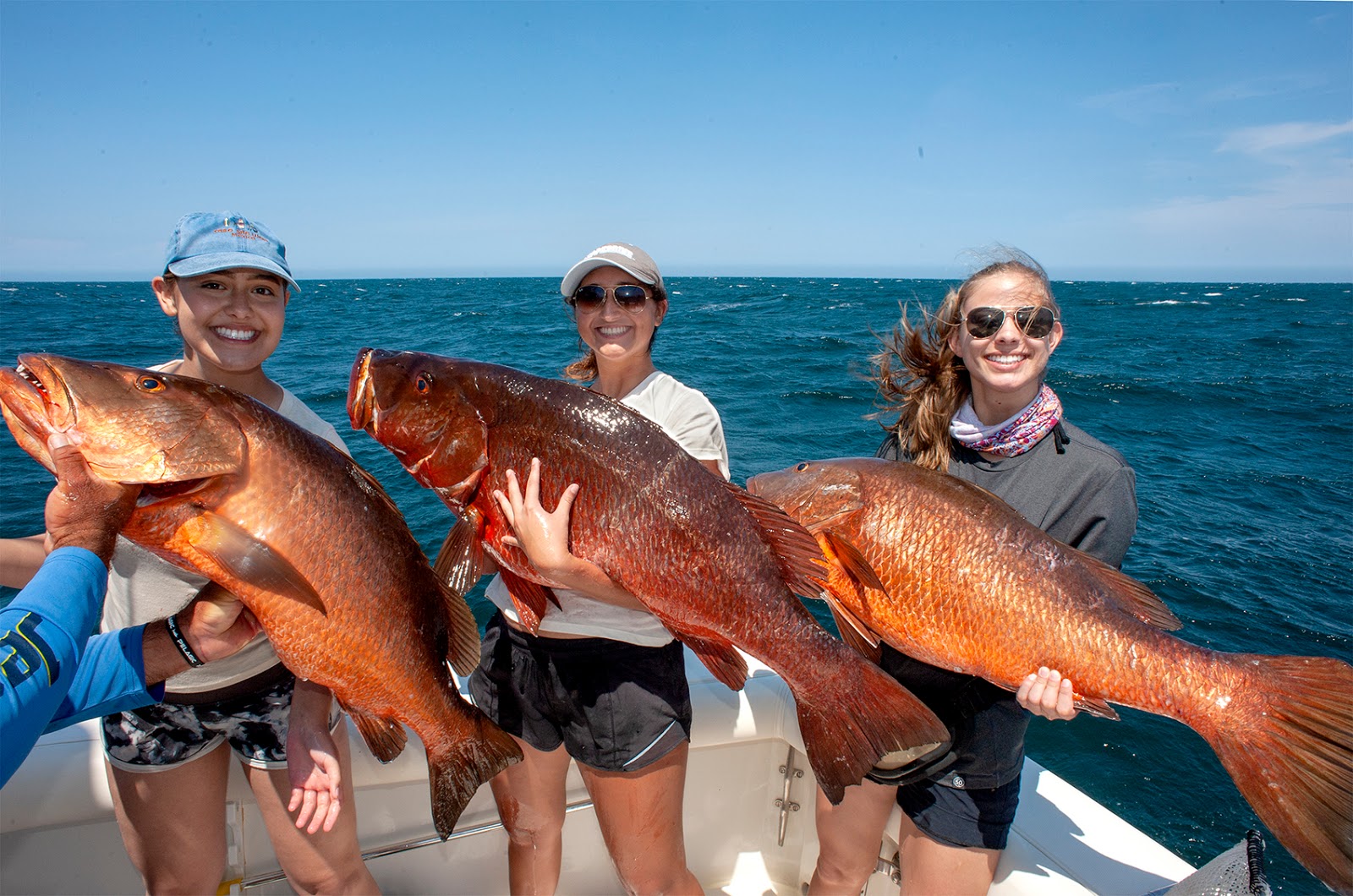
Some of the biggest fish are the Blue Marlin, Swordfish, Bluefin Tuna, Goliath Grouper and the Cubera Snapper.
Records are made to be broken, but here’s one that’s likely to stand forever. On April 21, 1959, Alfred Dean, fishing with a rod and reel, caught a great white shark that weighed 2,664 pounds. He was fishing offshore of Ceduna, Australia. Dean’s catch was certified by the International Game Fish Association as the All Tackle world record. Dean used 130-pound test line. What most anglers don’t realize is that Dean also caught a 2,344-pounder that’s the IGFA line-class record for 80-pound test.
500
Lakes are created by many different natural events, what are some different types of lakes?

Some different types of lakes are tectonic, volcanic, glacial, fluvial, solution, landslide, aeolian, shoreline, organic, anthropogenic and meteorite lakes.
All lakes are either open or closed. If water leaves a lake by a river or other outlet, it is open. All freshwater lakes are open. If water only leaves a lake by evaporation, the lake is closed. Closed lakes usually become saline (salty). This is because as the water evaporates, it leaves behind solids—mostly salts.
500
Dragonflies were some of the first winged insects to evolve about 300 million years ago! How big do you think the dragonflies from this era were?
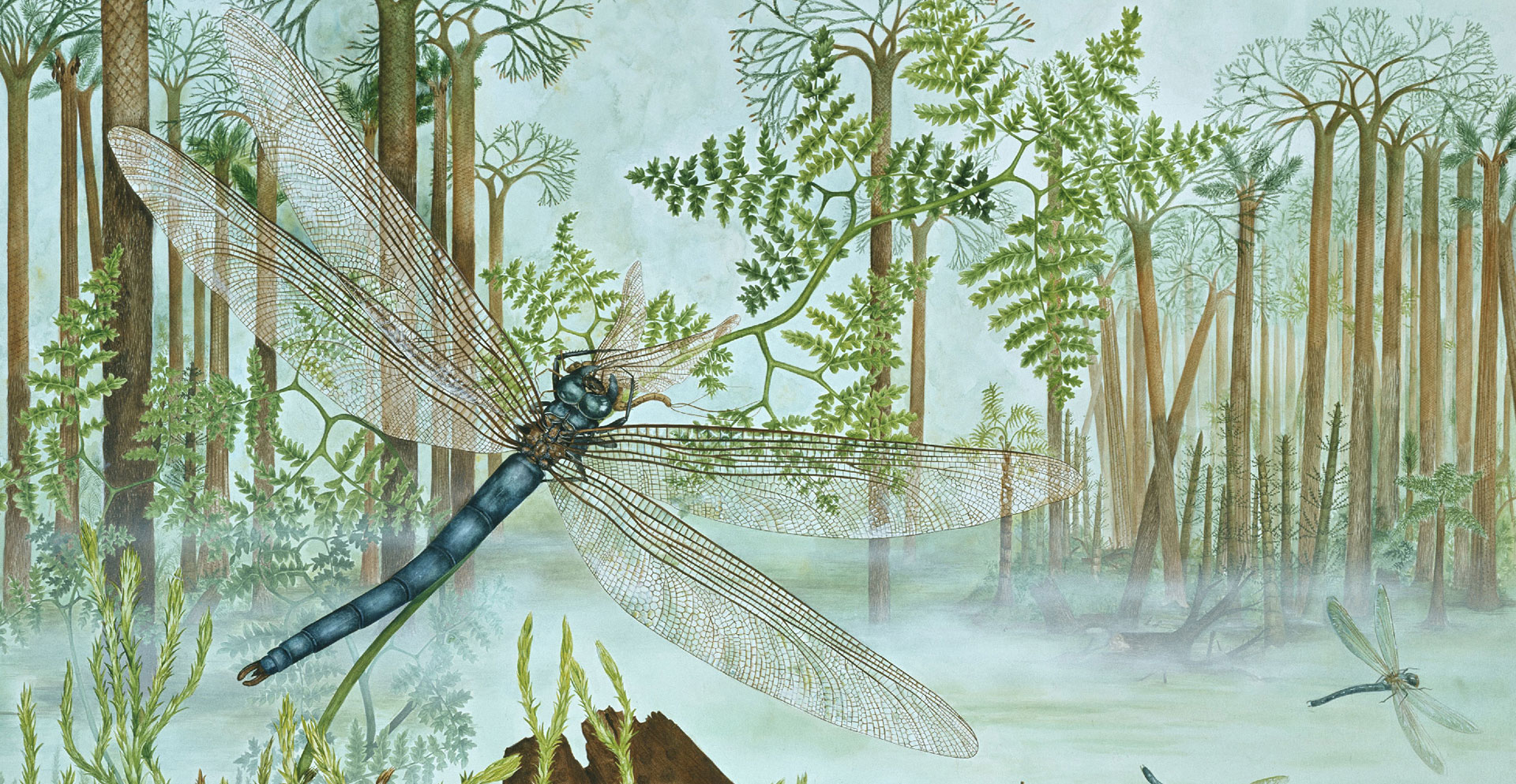
Giant dragonfly relatives, known as Meganeura and Meganeuropsis had wingspans up to 2.5 feet. Their body length could reach 18.5 inches.
Insects reached their biggest sizes about 300 million years ago during the late Carboniferous and early Permian periods. This was the reign of the predatory griffinflies, giant dragonfly-like insects. The leading theory attributes their large size to high oxygen concentrations in the atmosphere (over 30 percent, compared to 21 percent today), which allowed giant insects to get enough oxygen through the tiny breathing tubes that insects use instead of lungs.
500
What are some of the most popular hiking trails in the world? Where is your favorite place to hike?

The most popular hiking trails are The Inca Trail in Peru, The Camino de Santiago in Spain, The John Muir Trail in the USA, The Great Wall of China Trek, The Torres del Paine Ciruit in Chile, The Wonderland Trail in the USA and The Tour du Mont Blanc in France, Italy and Switzerland.
Arguably one of the best hikes in the world, the Inca Trail offers trekkers the chance to walk in the footsteps of the ancient Incas. This 26-mile journey winds through the Peruvian Andes, leading hikers past breathtaking mountain vistas, lush cloud forests, and well-preserved archaeological sites. The trail culminates at the Sun Gate, where the first glimpse of Machu Picchu—a UNESCO World Heritage Site—leaves trekkers in awe. While the hike is challenging, the reward of witnessing one of the New Seven Wonders of the World makes every step worthwhile.
500
This family of massive, prehistoric fish have existed largely unchanged since the Jurassic Period, renowned for their slow growth, long lifespans and producing caviar!

Sturgeon
Sturgeon use their delicate barbels—the long, whisker-like feelers between their noses and mouths—to forage for food. They drag the barbels along the bottom, searching for shellfish, invertebrates (animals without backbones) and small fish, among other types of prey. After locating a tasty morsel, the sturgeon sucks it up with its toothless mouth and swallows it whole.