Personal Hygiene
Dishwashing
Food Handling
Kitchen equipment
Kitchen Hazards
Reading a Recipe
100
1. When you arrive
2. Before you handle food
3. When you change food preparation tasks
4. After using the toilet
5. After touching your face/ hair/ mask
You should do what?
Horoi o ringa!
Wash your hands!
100
Complete the sentence:
Dishes must be washed in.....
HOT SOAPY WATER!
100
How would you protect yourself from the chemicals sometimes found on fresh fruit and vegetables?
Wash produce before eating.
100
What would you use to measure 150ml milk?
a. scales
b. a 1/2 cup measure
c. a ruler
d. a measuring jug
d. a measuring jug
100
Name 2 kitchen hazards that could cause cuts
Any 2 of:
knives, other sharp equipment, broken glass/ crockery
100
If a recipe calls for "1 cup of chopped onions," how should you measure the onions?
- A) Measure 1 cup of whole onions, then chop them
- B) Chop the onions first, then measure 1 cup
- C) Weigh the onions on a scale
- D) Use 1 onion regardless of size
- B) Chop the onions first, then measure 1 cup
200
What type of shoes are appropriate for the food tech room?
Closed-toed shoes
200
Why should dishes be left to drain upside down?
So that the water drains off them
200
Ingesting bacteria or parasites or other contaminants on improperly prepared food can cause....?
Foodborne illness, food poisoning
200
how many ml in a metric cup?
250ml
200
How can you avoid setting baking paper alight in the oven?
Cut it to size, don't allow it to touch the sides of the oven or the elements
200
Why is it important to read the entire recipe before beginning to cook?
- A) To understand the cooking techniques required
- B) To ensure you have all the ingredients
- C) To plan the cooking process and timing
- D) All of the above
D) All of the above
300
What should you wear if you have cuts or broken skin on your hands?
A food-safe glove. Cover cuts with a blue plaster.
300
Name 3 items of equipment you need to WASH dishes
Name 3 of:
Dish brush, plug, dishwashing liquid, cloth, draining rack,
300
Why should you chill leftovers within 2 hours?
Leaving food at room temperature for too long can cause bacteria to multiply rapidly
300
How many tsp in a Tbsp?
3
300
Name 3 burns hazards in the kitchen
Any 3 of:
Oven, stove-top, jug, hot water, hot food, hot equipment, steam, fire
300
What does it mean when a recipe says to "simmer"?
- A) Boil rapidly
- B) Cook on low heat just below boiling
- C) Fry in a pan
- D) Bake in the oven
- B) Cook on low heat just below boiling
400
Why do we cover cuts with a blue foodsafe plaster?
It can be easily seen if it falls off.
400
What is the important rule about washing knives?
Never leave them in the sink
400
True or false:
Cooking or freezing food kills most foodborne bacteria?
False.
It is a myth that bacteria are killed at temperatures below 4 degrees. In fact, bacteria growth is slowed, but not stopped. The only way to kill bacteria by temperature is by cooking food at temperatures of 75 degrees or more.
400
Why should you always use clean utensils to measure ingredients?
to avoid cross-contamination
400
Name the 3 major injury risks in the kitchen
Cuts
Burns
Slips and trips
400
Which cooking method involves cooking food in a small amount of fat over high heat?
- A) Boiling
- B) Steaming
- C) Sautéing
- D) Baking
- C) Sautéing
500
What is the message behind this photo?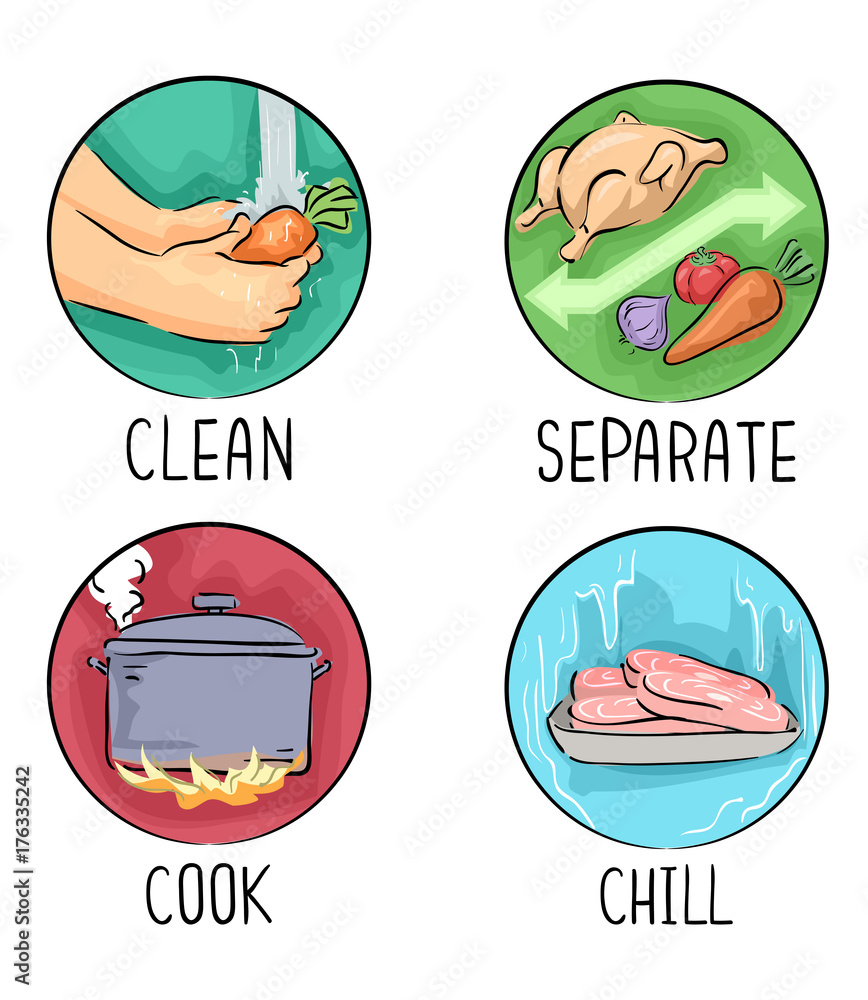
BAsic answer:
The "Clean, Separate, Cook, Chill" poster promotes food safety by emphasizing four key practices to prevent foodborne illnesses:
(Specific explanation earns double points!)
- Clean: Wash hands, utensils, and surfaces often to remove bacteria and prevent contamination.
- Separate: Keep raw meat, poultry, seafood, and eggs separate from other foods to avoid cross-contamination.
- Cook: Cook foods to the right temperature to kill harmful bacteria.
- Chill: Refrigerate foods promptly to slow the growth of bacteria.
500
If you receive ingredients from the teacher, what should you do with the container?
a. give it back straight away
b. leave it on the back bench
c. wash it and put it away
d. wash and dry it and return it
e. Put it in the dishwasher
d. wash and dry it and return it
500
Why mustn't you store fresh and cooked meat together in the fridge?
Becaus you risk Cross-contamination
contaminants can be transferred from the raw meat to the cooked meat.
500
What is this?
What is it used for?
A sieve is used to sift dry ingredients.
(NOT TO DRAIN NOODLES!!!)
500
Name 6 hazards in this picture.

Any 6 of:
- Knives:
- Hot stove: Risk of burns.
- Spilled liquids: Can cause slips and falls.
- Unattended cooking: Risk of fire.
- Overloaded plugs: Risk of fire.
- Cupboards and drawers open: trip hazard
- Handles sticking out: Risk of burns.
- Tea towel above stove: Risk of fire.
500
If you notice that water or other liquid has been spilled on the floor you should....
a. Clean it up
b. Alert people nearby
c. Tell the teacher
d. Yell at the person who spilt it until they clean it up.
b. Alert people nearby
a. Clean it up