Deep Face and infratemporal Fossa
Oral region, oropharynx, and salivary glands
Uper respiratory tract
External and middle ears
Larynx and laryngopharynx
100
This wedge-shaped space is located medial to the ramus of the mandible and lateral to the lateral pterygoid plate of the sphenoid bone.
What is the infratemporal fossa?
:watermark(/images/watermark_only_413.png,0,0,0):watermark(/logos/logo_url_sm.png,-10,-10,0):format(jpeg)/images/learnable/greater-wing-of-sphenoid-bone-7/38NLsId4ykZ4ll6tfQBflw_861_Skull_Lateral_View.png)
100
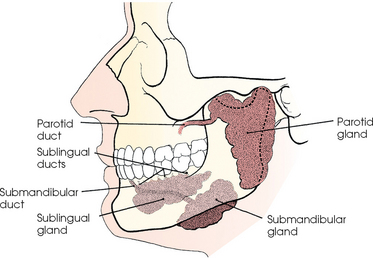
This salivary gland’s duct opens into the oral vestibule opposite the second maxillary molar.
What is the parotid gland?
100
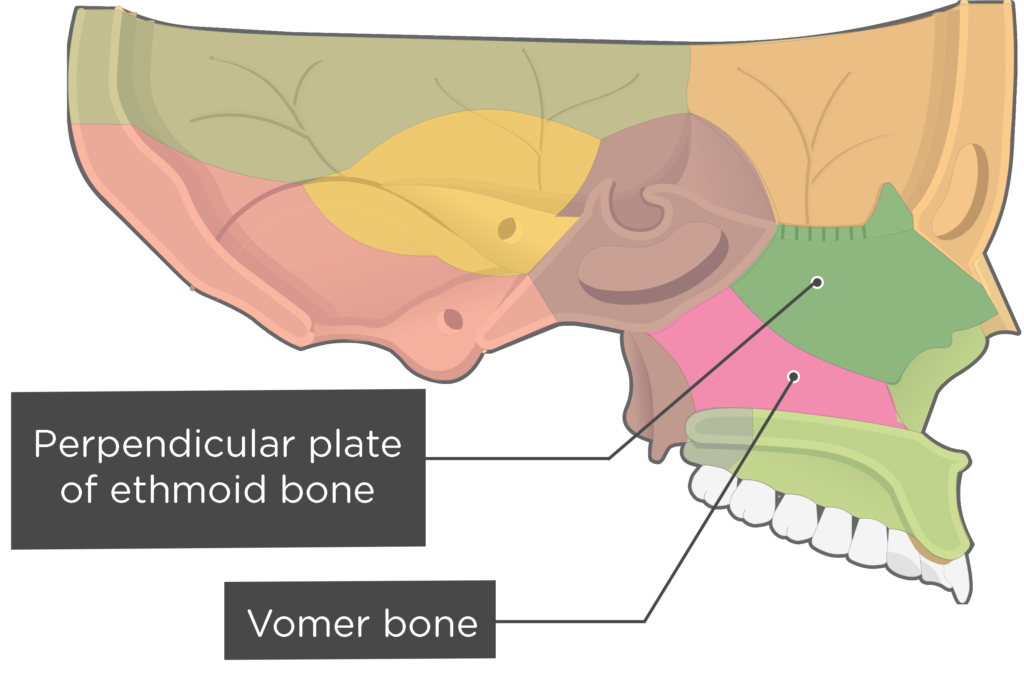
These two bones, along with the nasal septum cartilage, form the partition that divides the nasal airway into right and left channels.
What are the vomer and the perpendicular plate of the ethmoid?
100
This muscle of the middle ear, innervated by the mandibular nerve (CN V3), functions to increase tension on the tympanic membrane.
What is the tensor tympani?

100
This is the only laryngeal cartilage that completely encircles the airway.
What is the cricoid cartilage?
:watermark(/images/watermark_only_413.png,0,0,0):watermark(/logos/logo_url_sm.png,-10,-10,0):format(jpeg)/images/learnable/lamina-of-cricoid-cartilage/A9HFEUK3Xg4u4J0JvdXADg_Lamina_of_cricoid_cartilage__1_.png)
200
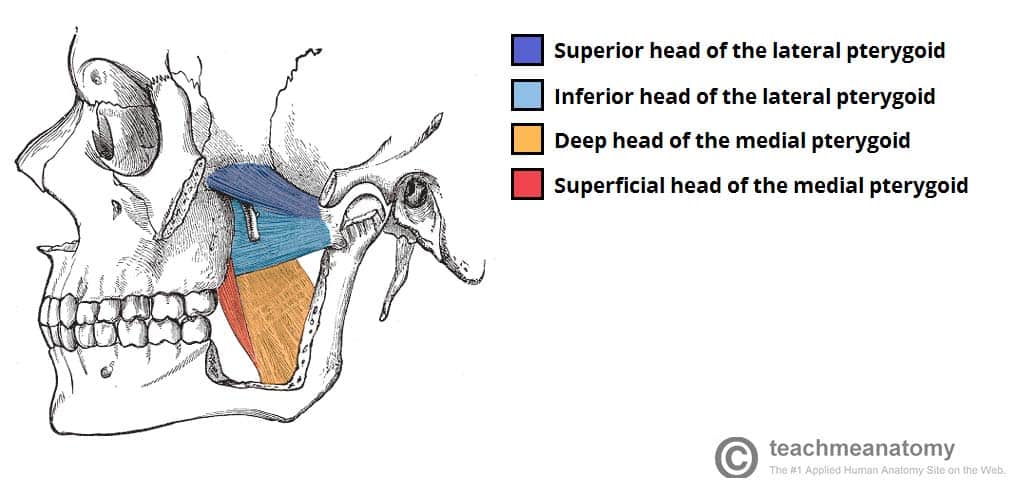
These are the four muscles of mastication, all of which are innervated by the mandibular nerve (CN V3).
What are the masseter, temporalis, medial pterygoid, and lateral pterygoid?
200
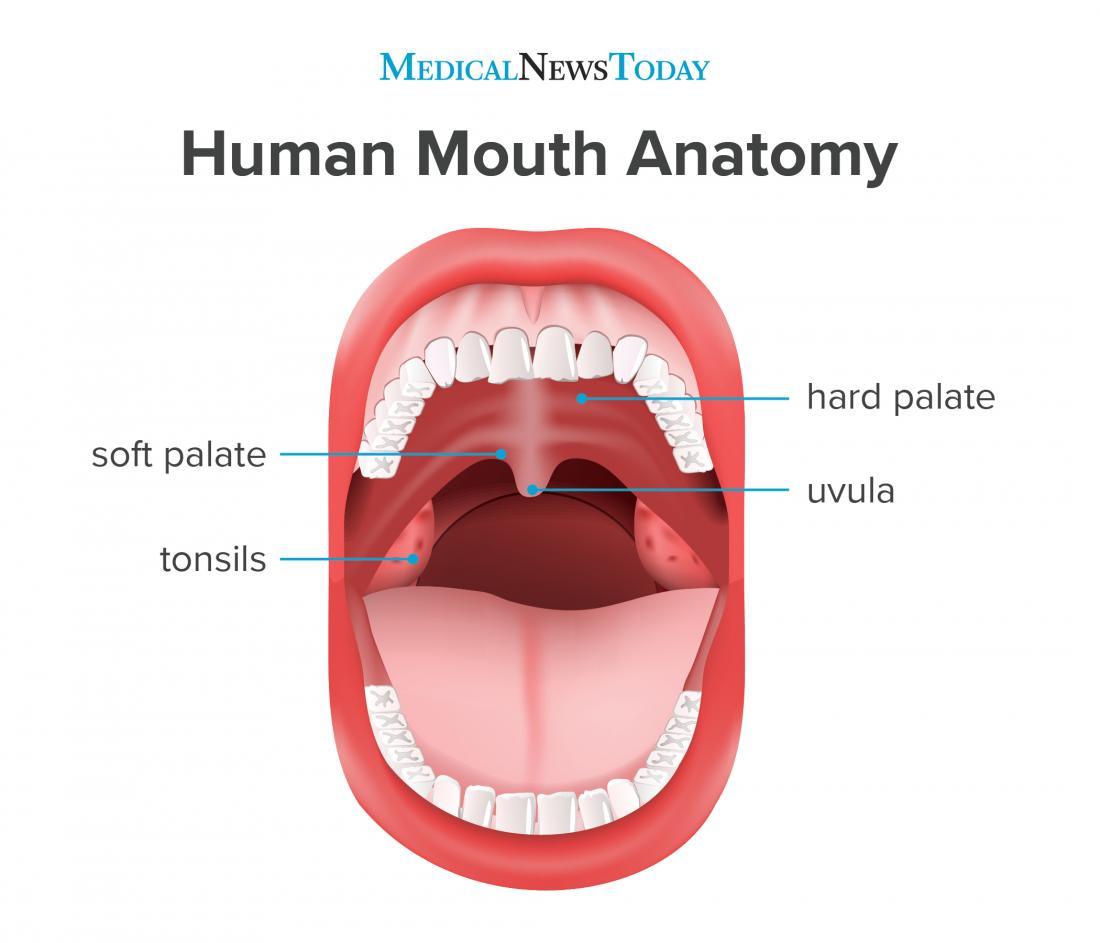
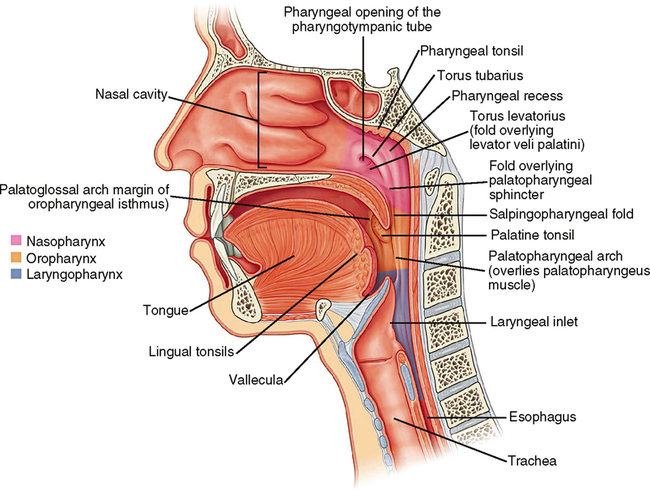
These two mucosal folds, created by underlying muscles, form the anterior and posterior pillars of the tonsillar fossa.
What are the palatoglossal and palatopharyngeal folds (or arches)?
200
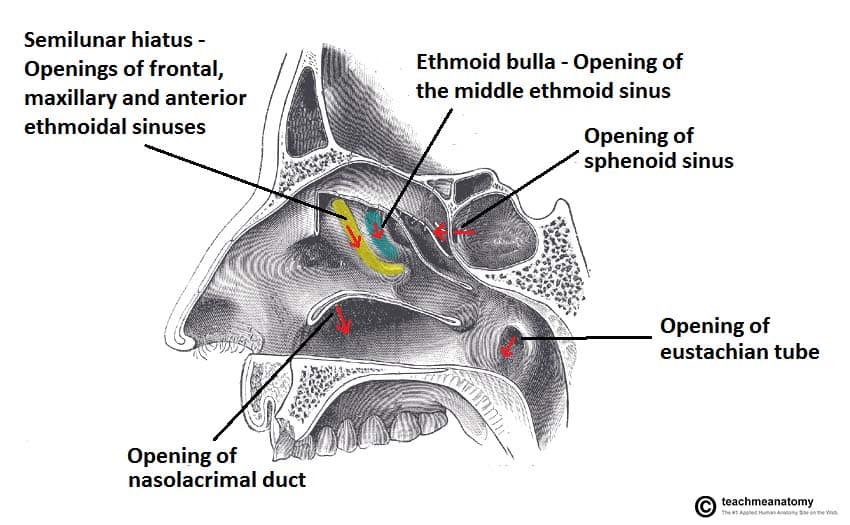
This specific region in the middle meatus is the drainage site for the frontal sinus, maxillary sinus, and anterior ethmoidal air cells.
What is the semilunar hiatus?
200
This structure connects the tympanic cavity to the nasopharynx to equalize pressure and is a common route for the spread of infections.
What is the auditory tube (or pharyngotympanic/Eustachian tube)?

200
These bilateral, deep recesses in the laryngopharynx allow swallowed food to pass around the laryngeal inlet toward the esophagus.
What are the piriform recesses?

300
This specific branch of the maxillary artery enters the cranial cavity through the foramen spinosum, often passing between the two roots of the auriculotemporal nerve.
What is the middle meningeal artery?
300
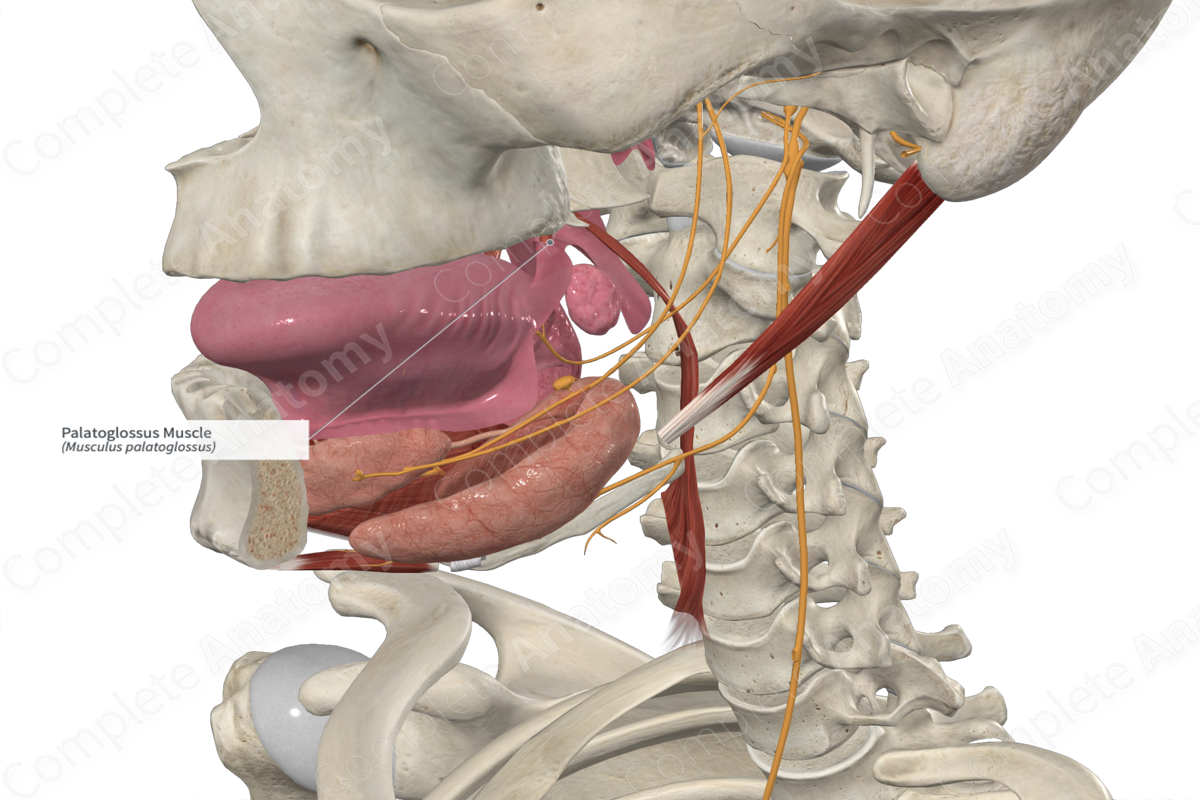
This cranial nerve provides motor innervation to all intrinsic and extrinsic muscles of the tongue, with the single exception of the palatoglossus.
What is the hypoglossal nerve (CN XII)
300
This is the most common site for arterial nosebleeds (epistaxis), located on the anterior portion of the medial nasal wall.
What is Kiesselbach’s area?
Bonus Points: What is the key artery that contributes to both anterior and posterior epistaxis.

300
This feature of the tympanic membrane is a central depression formed by the attachment of the tip of the malleus.
What is the umbo?

300
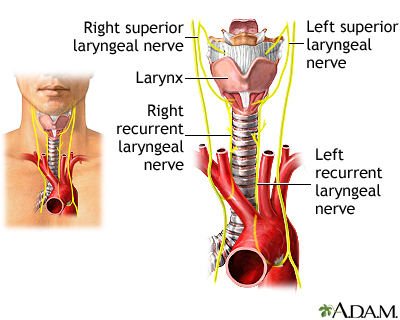
This nerve provides motor innervation to all intrinsic muscles of the larynx except for the cricothyroid muscle.
What is the recurrent laryngeal nerve?
400
This is the only muscle of mastication primarily responsible for protruding (protracting) the mandible.
What is the lateral pterygoid muscle?
400
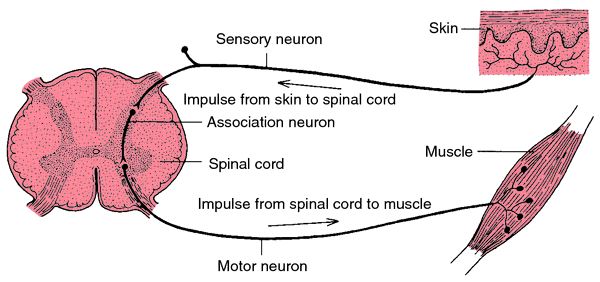
In a clinical assessment of the gag reflex, this nerve serves as the afferent limb, while the vagus nerve (CN X) serves as the efferent limb.
What is the glossopharyngeal nerve (CN IX)?
400
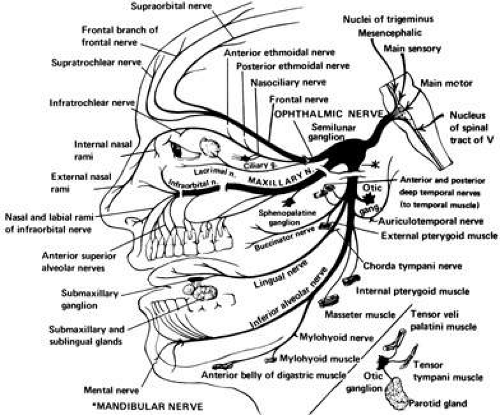
General sensory innervation to the anterior and superior aspects of the nasal cavity is provided by branches of this division of the trigeminal nerve.
What is the ophthalmic nerve (CN V1)?
400
This cranial nerve provides sensory innervation to the external surface of the tympanic membrane and the mucous membrane of the middle ear.
What is the vagus nerve (CN X)?

400
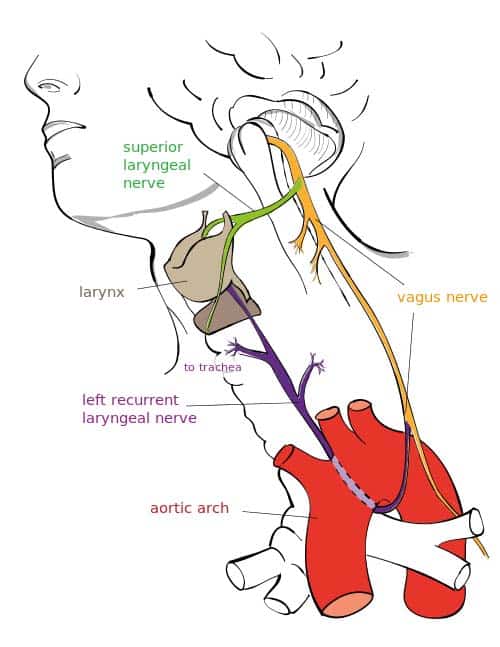
This branch of the superior laryngeal nerve provides sensory innervation to the laryngeal mucosa above the level of the vocal folds.
What is the internal laryngeal nerve?
500
This sensory branch of CN V3 carries general sensation (touch, temperature, pain) from the mucosa of the anterior two-thirds of the tongue.
What is the lingual nerve?
500
This nerve, a branch of the mandibular nerve (CN V3), supplies sensory innervation to all the teeth of the lower jaw.
What is the inferior alveolar nerve?
Bonus Points: What artery runs along side of this nerve? What nerve runs deep to this nerve?

500
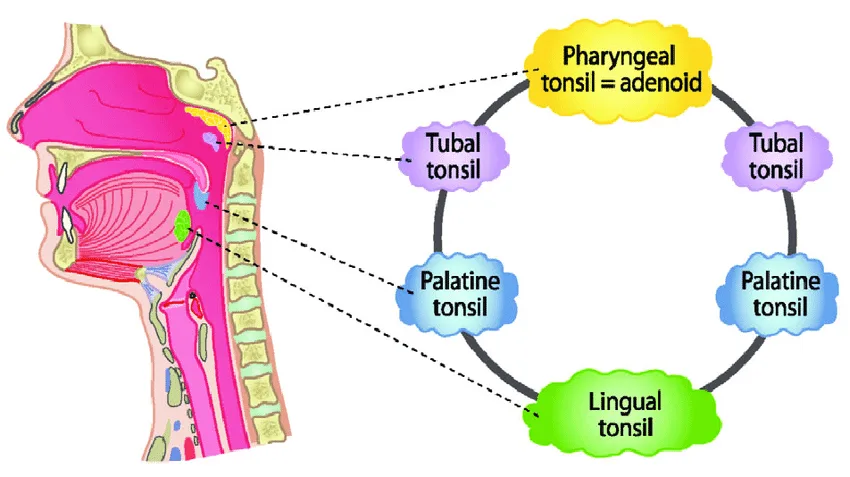
This collective term describes the aggregation of lymphoid tissues (pharyngeal, palatine, and lingual tonsils) guarding the respiratory and digestive inlets.
What is Waldeyer’s Ring?
500
Paralysis of this middle ear muscle, innervated by the facial nerve (CN VII), can lead to hyperacusis (sensitivity to loud sounds).
What is the stapedius muscle?

500
During the pharyngeal phase of swallowing, this structure and its uvula are elevated to close off the nasopharynx.
What is the soft palate?
Bonus Point: What nerve provides taste sensation to the soft palate?