Compartment Syndrome
Abd Exploration
Pharm and Genetics
Rando
Review
100
These two compartments are opened when you make the medial incision during a lower leg fasciotomy
Deep and superficial posterior
- The medial incision is made 2 cm medial to the tibia. The fascia overlying the soleus muscle is incised to release the superficial posterior compartments, and the gastrocnemius and soleus muscles are freed from their attachment to the posterior tibia to release the deep posterior compartment.
- The lateral incision is made 1 cm medial to the fibula. A horizontal incision is made to identify the anterior intermuscular septum. Vertical incisions are then made 1 cm anterior and 1 cm posterior to the septum.
100
These are the anterior, posterior, and right lateral boundaries of the lesser sac.
gastrocolic ligament, the pancreas, and the liver
100
This is the diagnosis associated with SMAD4 mutation.
Juvenile Polyposis 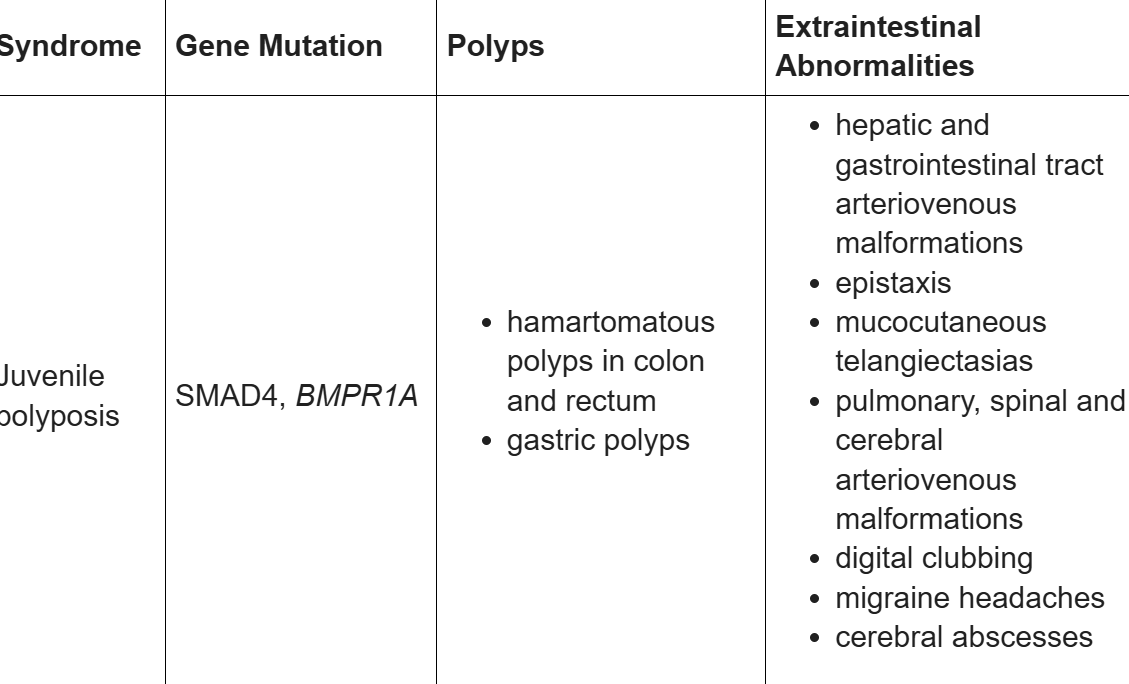
100
This portion of the GCS is the best predictor of long-term outcomes in TBI patients.
Motor score post-resuscitation
100
Excessive stoma output leads to this acid-base disturbance.
Non-anion-gap metabolic acidosis
Due to loss of HCO3- and compensatory increase in Cl- displacement into the extracellular space and Cl- reabsorption in the kidneys, this leads to hyperchloremic metabolic acidosis.
200
A 44-year-old woman with 55% TBSA burns receives 18 L of crystalloid in the first 24 hours. She develops oliguria, rising peak airway pressures, and a tense abdomen. Bladder pressure is 26 mm Hg. There is no intra-abdominal injury or infection. How is her condition best classified?
A. Primary abdominal compartment syndrome
B. Secondary abdominal compartment syndrome
C. Recurrent abdominal compartment syndrome
D. Chronic intra-abdominal hypertension
E. Intra-abdominal hypertension grade III
B.
Secondary IAH/ACS arises from conditions that do not originate in the abdominopelvic cavity — burns, massive resuscitation for hemorrhage or sepsis, ischemia/reperfusion — leading to bowel and retroperitoneal edema and ascites; it is substantially iatrogenic from excessive fluid resuscitation and is therefore partly preventable.
200
A bipolar electrocautery device can seal vessels of this size or smaller
7mm
200
This is an antidote given for cyanide toxicity.
Score: Hydroxocobalamin (Cyanokit)
True Learn: Antidotes include
- hydroxocobalamin (first-line because it does not cause hypotension or methemoglobinemia)
- Sodium Nitrite (causes methemoglobin/hypotension)
- amyl nitrite (less commonly used now)
- sodium thiosulfate.
200
True or false:
Granulomas are associated with Crohn's disease
True
Crohn's: Cobblestone mucosa, noncaseating granulomas up to 50%, creeping fat, transmural/full-thicness inflammation
200
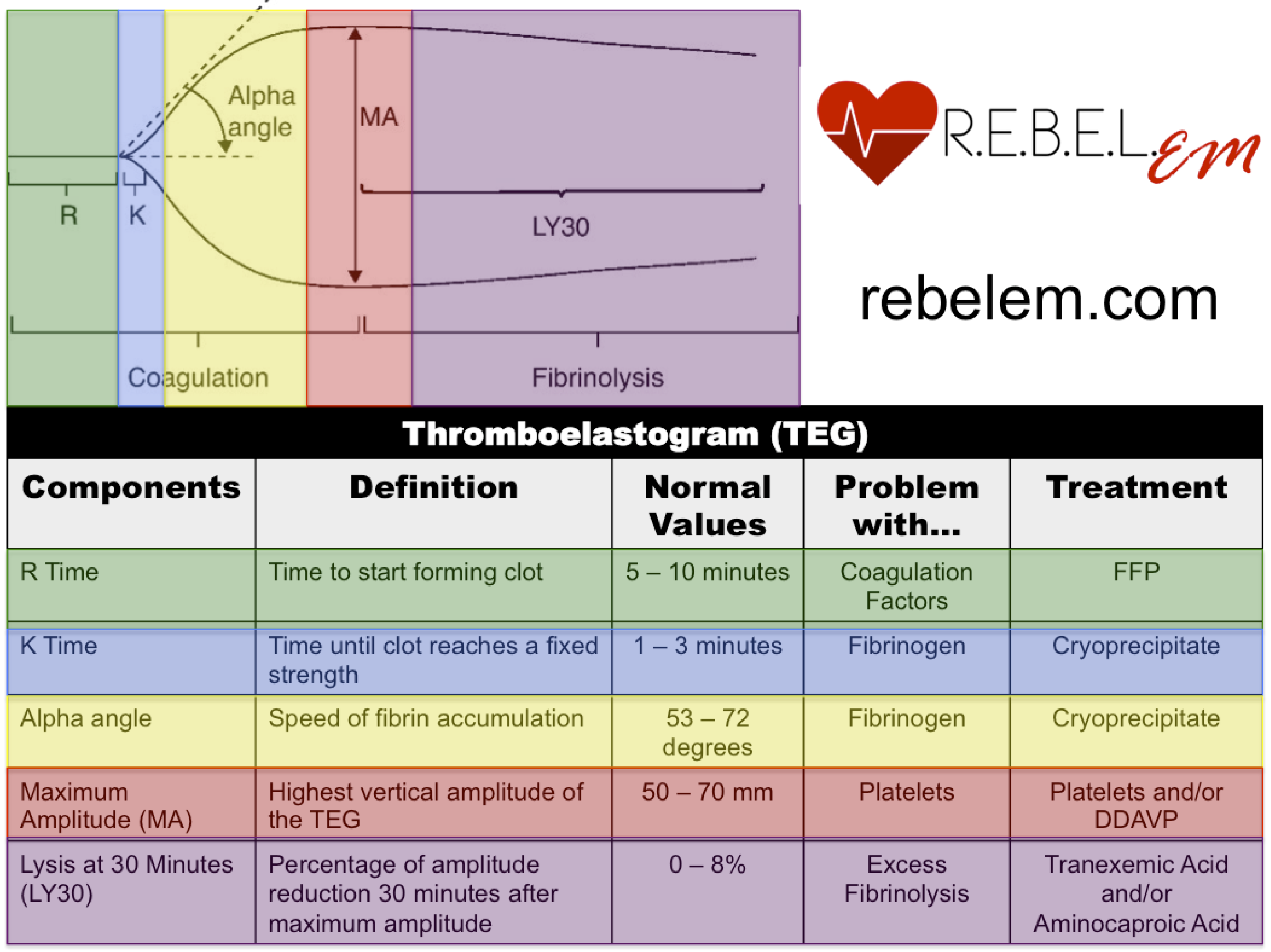
Patients with prolonged R Time on TEG need this.
300
A 62-year-old man is in the ICU on hospital day 3 after a ruptured AAA repair. He is intubated and sedated. Bladder pressure is 17 mm Hg on two consecutive measurements 4 hours apart. Urine output is 0.8 mL/kg/h, peak airway pressures are unchanged, and creatinine is at baseline. What is the most accurate characterization of his condition?
A. Normal intra-abdominal pressure
B. Intra-abdominal hypertension grade II
C. Intra-abdominal hypertension grade III
D. Abdominal compartment syndrome
E. Recurrent abdominal compartment syndrome
B.
IAH is a sustained IAP ≥12 mm Hg and is graded
I (12–15)
II (16–20),
III (21–25)
IV (>25 mm Hg).
300
This is the definitive treatment of choice for a unilocular mesenteric cyst.
Enucleation is the best treatment option for a simple unilocular cystic mass in the mesentery of the small bowel. Mesenteric cysts are nonneoplastic, more commonly occur in women, and are present in the small bowel mesentery 60% of the time (40% in the large bowel mesentery). They typically contain serous fluid or chyle. Marsupialization with internal drainage is also a consideration for very large cysts
300
This is how long methotrexate should be held prior to surgery
Not held at all.
Higher risk of flare/relapse than increased infection rates.
300
A 60 yo F with rectal cancer has an LAR. She recovers well, and pathology shows well-differentiated upper rectal adenocarcinoma with 1mm invasion into the mesorectum w/o lymph-vascular or nodal involvement and negative margins. This is how you tell her she will need to be monitored moving forward.
She has T3N0M0 rectal cancer with no high-risk features.
- History, Physical and CEA every 3-6 Months x 2 yrs, then every 6 months x 5 yrs
- Colonoscopy Q1y, then every 3yrs depending findings
- Annual CT C/A/P x 6-12 months x 5 yrs.
300
This is given to patients with coagulopathy and antithrombin III deficiency
FFP is given to restore heparin responsiveness
Heparin works by accelerating antithrombin's inhibition of thrombin and factor Xa several-thousand-fold, so when AT is depleted, heparin fails
400
A 58-year-old man is admitted to the ICU with necrotizing pancreatitis. Over 24 hours, he receives 14 L of crystalloid. He is intubated for hypoxic respiratory failure. His urine output has decreased to 0.3 mL/kg/h. Peak airway pressures have risen to 40 cm H2O without change on portable CXR. His abdomen is distended. BP is 105/65 mm Hg on 0.1 µg/kg/min of norepinephrine
What physiologic effect does his condition have on preload, afterload, cardiac output, and O2 delivery?
Increased IAP leads to compression of the inferior vena cava and increased intrathoracic pressure, resulting in:
Decreased preload
Decreased Cardiac output and index
Decreased O2 delivery
Increased SVR / Afterload
400
During staging laparoscopy for gastric/GE junction cancer, washings should be obtained from these two locations
subphrenic space and the pelvis
400
This is the mechanism of action of both milrinone and cilostazol
Phosphodiesterase-3 inhibitor
- Decreases the rate of cAMP degradation, increasing cellular concentrations and improving myocardial contractility by increasing calcium influx into cells and causing peripheral vasodilation in smooth muscle cells.
400
A 16-year-old girl is admitted with a 1-day history of right lower quadrant pain. Presentation reveals increased right lower quadrant abdominal pain with rebound tenderness and guarding. She is febrile (39.1°C), HR is 110 beats/min, and BP is 120/70 mm Hg. Her WBC count is 15,000/µL, and electrolytes and hematocrit are normal. Serum pregnancy test is normal. CT of the abdomen and pelvis reveals a nonidentified appendix and mild free fluid in the pelvis. What is the next step in management?
diagnostic laparoscopy
A thorough history and physical examination are the most important components of this patient's evaluation. A high suspicion for appendicitis should prompt the surgeon to proceed with a diagnostic laparoscopy to evaluate acute appendicitis or other intra-abdominal pathology. Although nonoperative management of appendicitis is becoming increasingly acceptable, the presence of a concerning abdominal examination, along with markers of systemic infection (fever, leukocytosis, and tachycardia), should prompt operative intervention.
400
True or False:
The anabolic phase starts 6-8 days post op in an uncomplicated post-operative course
False
Immediate post op 1-3 days: catabolic aka adrenergic-corticoid phase = negative nitrogen balance due to neurohumoral changes associated with the stress response. Cortisol mobilizes amino acids for gluconeogenesis. Glucagon increases glucose levels. Increased Epinephrine mobilizes fatty acids and stimulates glucose metabolism into lactate; ADH and aldosterone increase Na and water retention.
Anabolic phase post op days 3-6 = positive nitrogen balance and an increase in the insulin-to-glucagon ratio. Decrease in cortisol, epi, ADH, and aldosterone.
500
A 52-year-old man is in the surgical ICU on hospital day 2 after damage-control laparotomy for a duodenal injury, now with a temporary abdominal closure. He is intubated on pressure-support ventilation, agitated, and coughing against the ventilator, with active abdominal wall splinting on exam. The bedside nurse reports a bladder pressure of 24 mm Hg after instilling 150cc NS into the bladder. Peak airway pressures are stable, urine output is 1.0 mL/kg/h, and creatinine is unchanged from baseline. The nurse calls you concerned about abdominal compartment syndrome.
What should be done to accurately assess abdominal compartment syndrome? (looking for two points)
deepen sedation, and if abdominal wall tone persists, administer neuromuscular blockade, then repeat the measurement.
---In an active patient or one with a tense abdomen from voluntary or reflex muscular contraction, transduced bladder pressure overestimates true IAP. In these situations, sedation or chemical paralysis should be considered to obtain an appropriate IAP measurement. The underlying principle is that IAP is a function of abdominal wall compliance, which is dictated by elastic recoil of the abdominal musculature and diaphragm; active muscular contraction reduces compliance and drives the measured pressure up independent of intra-abdominal volume
Instill less saline into the bladder
---Larger volumes falsely raise the measured pressure, particularly at higher IAP
Extra learning points:
- Measure at end-expiration (IAP rises with diaphragmatic contraction during inspiration).
- Use saline >25°C; measurements with saline at 15°C differ significantly from body-temperature values
- ACS requires sustained IAP >20 mm Hg with new organ dysfunction or failure; an isolated elevated number in an agitated patient is not a surgical indication until the measurement has been validated under proper conditions.
500
Accessing the Celiac lymph node basin intraoperatively is done by placing the US probe in this location.
Left lobe of the liver.
The celiac lymph node can best be seen via an ultrasound probe that is placed on the left lobe of the liver or directly on the hepatoduodenal ligament. Remember, ultrasound works best when the probe is directed through solid or fluid-filled structures.
500
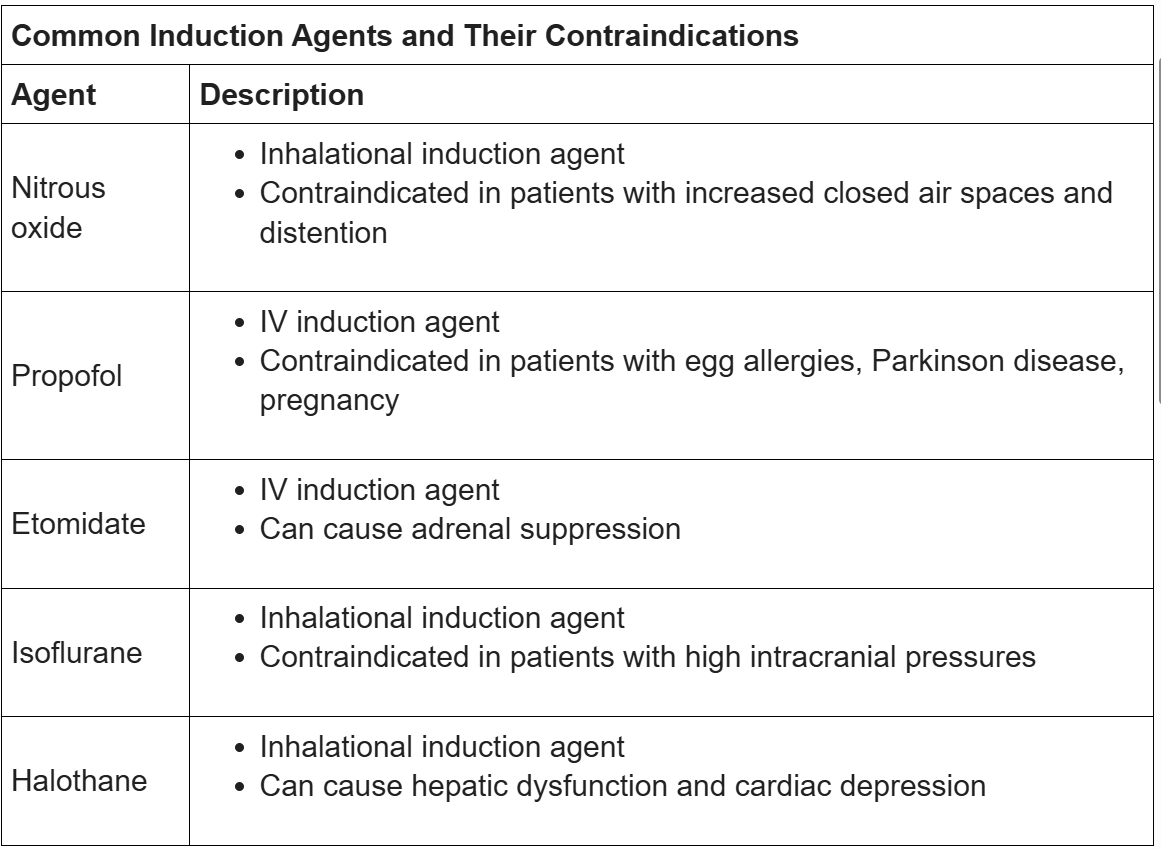
This anesthetic agent can cause adrenal suppression.
500
A 64-year-old man with no prior cardiac history who is POD 2 from a left upper lobectomy for non-small cell lung cancer is at increased risk of developing atrial fibrillation specifically because of what factor related to his history and/or procedure?
The manipulation of the left, superior pulmonary vein during the procedure
The left atrial myocardium may extend several centimeters around the pulmonary veins (more so the superior rather than the inferior) and may contain pacemaker-like activity. Atrial fibrillation occurs in 1:5 patients after lung cancer resection and peaks on postoperative day 2. Left lobectomy specifically may be an independent risk factor for postoperative atrial fibrillation. A preoperative workup should have revealed any prior cardiac history such as heart failure (increased brain natriuretic peptide) or coronary artery disease (ongoing myocardial ischemia).
500
A 47-year-old woman with a history of lymphoma currently undergoing chemotherapy presents to the ED with several days of right lower quadrant pain and anorexia. The patient is afebrile and hemodynamically stable. Laboratory studies are significant for a WBC of 1400/µL. A CT scan shows fat stranding and bowel wall thickening in the area of the cecum and appendix. On examination, the patient has right lower quadrant tenderness with voluntary guarding.
What diagnosis do you suspect?
neutropenic enterocolitis, also known as typhlitis.
Patients may present with similar symptoms and examination findings to acute appendicitis (right lower quadrant pain and anorexia). However, neutropenia and ileal and/or cecal inflammation on CT scan should raise suspicion for typhlitis. It is important to recognize this pathology as an important differential diagnosis, particularly in immunocompromised patients, because the management differs significantly. Surgery should be avoided except in cases of frank perforation, uncontrollable hemorrhage with coagulopathy, or clinical deterioration.