Log Functions
Properties of Logs
Common/Natural Logs
Computing or Solving
Graphing Logarithms
100
Express in exponential form
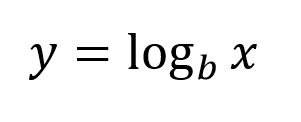
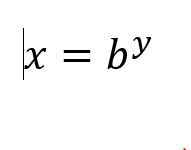
100
How else can you represent loga(x/y)
loga(x)-loga(y)
100
This number is the base of the Natural Logarithm
e
100
Simplify: (Tech Free)
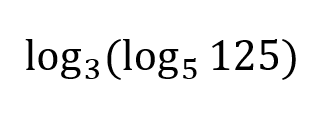
1
100
State the vertical asymptote of the graph
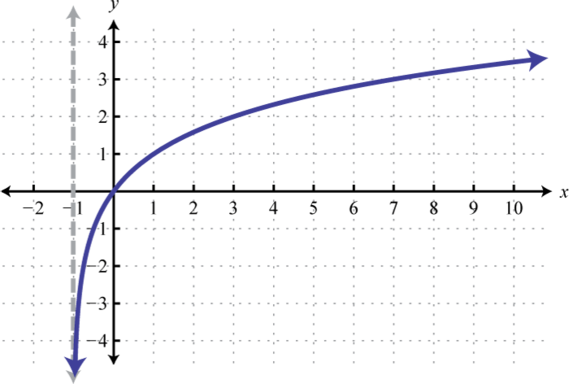
x = -1
200
A logarithm is the inverse of...
an exponent.
200
Simplify:
4log2A+6log2B
log2(A4B6)
200
Which base is implicit in log(5)?
10
200
Simplify: (Tech Active)
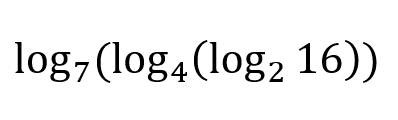
0
200
Describe the transformations in the graph
log4 (x - 7) + 5
right 7, up 5
300
Complete the rule:
loga(x)+loga(y)=
loga(xy)
300
Simplify:
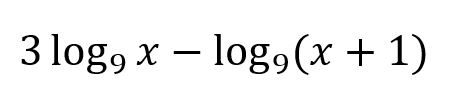
What is: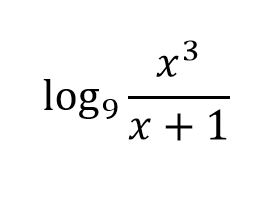
300
Evaluate log10000 (Tech Free)
4
300
Solve for x: 7x=738 (Tech Active)
3.393
300
Find the End Behaviours of
f(x)=log2(x+6)-1
x approaches infinity f(x)= positive infinity
x approaches -6 f(x)=negative infinity
400
Express in log form: 9x=50
log950=x
400
Expand to a full logarithmic expression.
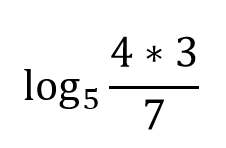
What is:
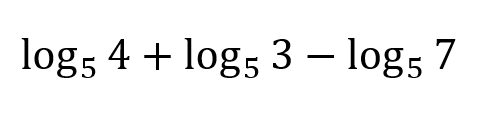
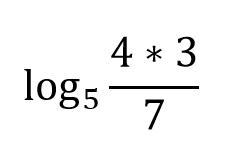
400
What is the exact value of...
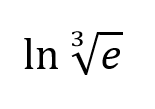
1/3
400
Solve for x: 8(12)x=112 (Tech Active)
1.062
400
find the x-intercept for f(x)=log2(x+8)-4
x=8 (8,0)
500
This logarithm can be rewritten:

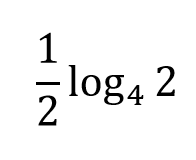
500
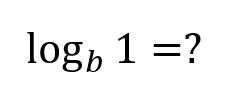
0 (zero)
500
Evaluate log37 (Tech Active)
1.77
500
Solve for t: 1000 = 500e.06t (Tech Active)
11.55
500
Find the end behaviour, x-intercept, vertical asymptote and shifts of this function
Log2(x+4)-3 (Tech Active)
end behavior
X-->-4 f(x) is -> - infinity
x--> infinity F(x) -> + infinity
X-intercept = x=4 (4,0)
vertical asymptote= x= -4
shifts: left 4 down 3