Anatomy
Anatomy
Muscles
Injuries
Injuries
Special Tests
1
Name the ligament marked A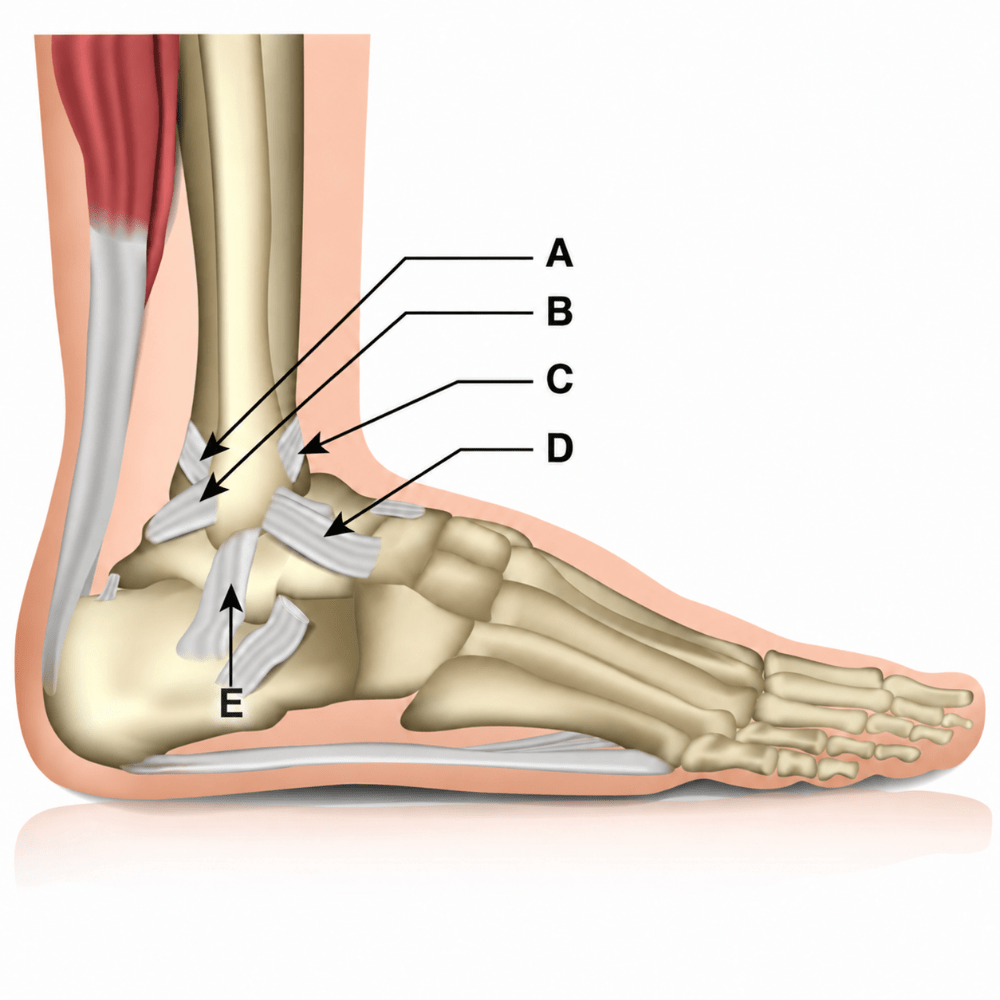
Posterior TibioFibular Ligament
1
Name Structure C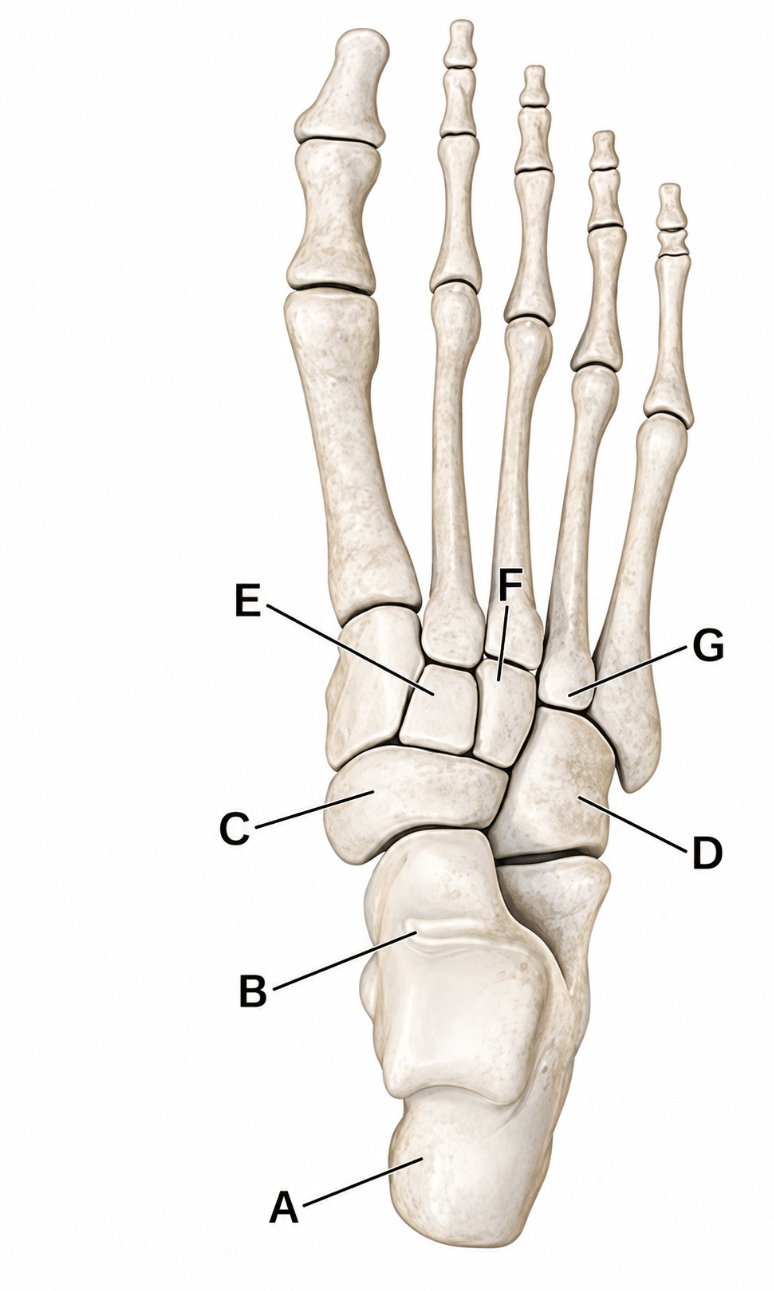
The Navicular Bone
1
This muscle predominantly dorsiflexes the ankle, but also inverts it:
Tibialis Anterior
1
A volleyball player lands on a teammates foot after attempting a block. Her foot lands into inversion and there is palpable pain on the distal end of the lateral malleolus. She is also unable to weightbear. What is the likely injury
Lateral Ankle Fracture
1
What is structure A in this picture of a high ankle sprain?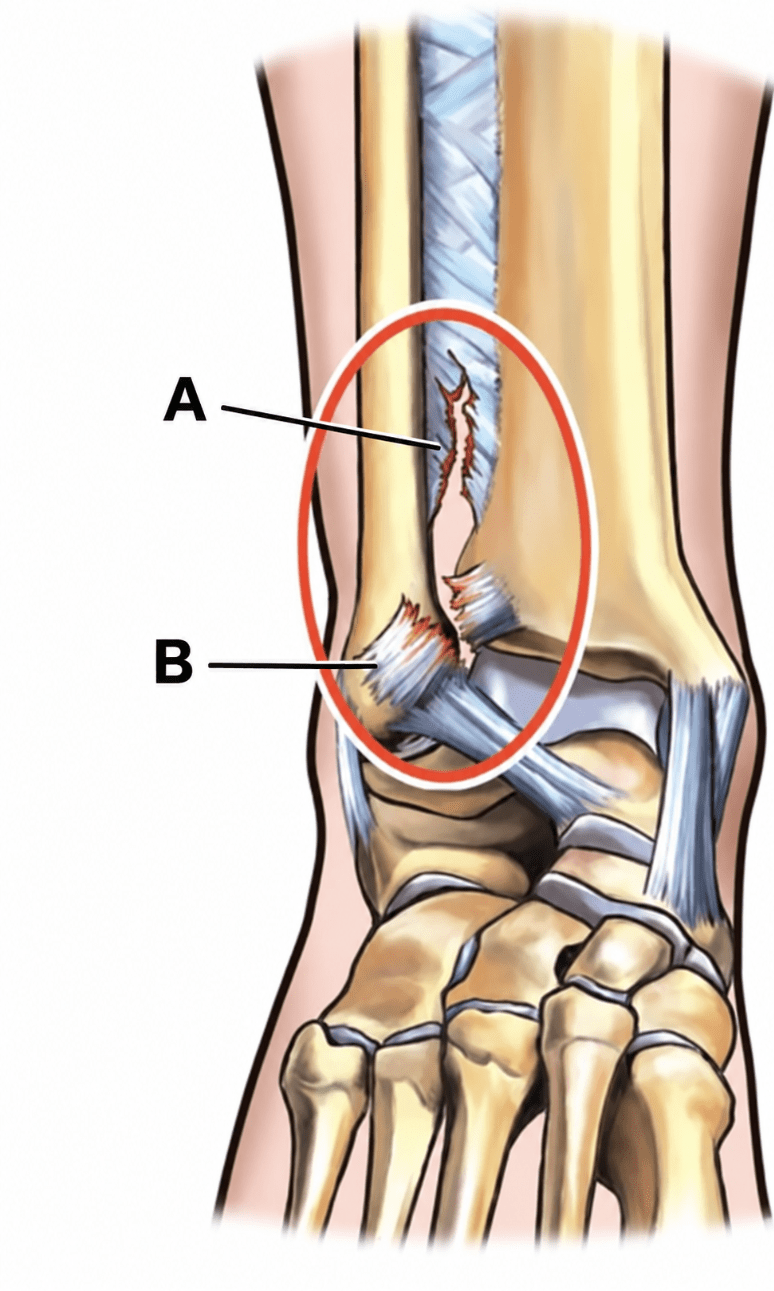
Interosseous Membrane
1
This clinical decision rule helps determine whether an ankle or foot injury may need X-rays based on bone tenderness and the ability to take four steps.
Ottawa Rules
2
Name Structure E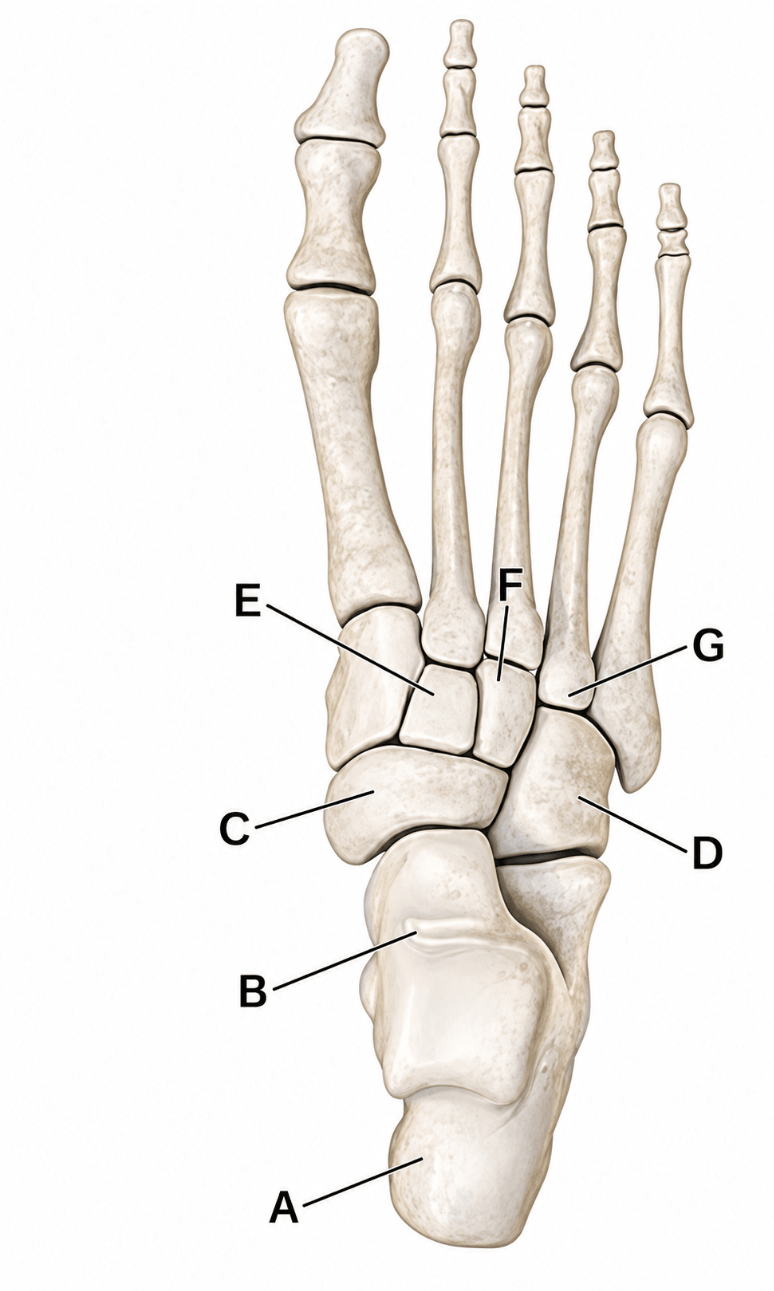
Intermediate / Middle Cuneiform
2
Name structure A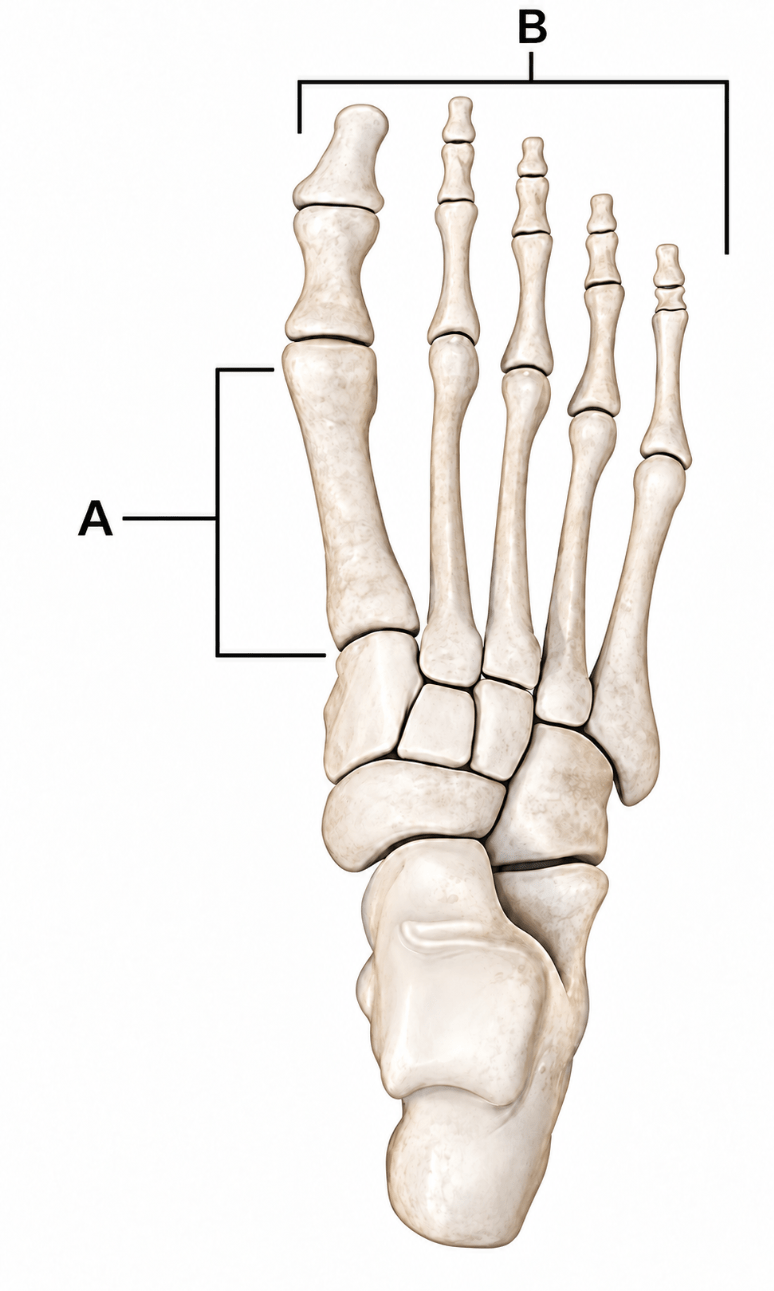
Metatarsals
2
This muscle dorsiflexes the foot, but mainly influences the big toe:
Extensor Hallucis Longus
2
A runner develops a broad area of pain along the inner edge of the shin after increasing training. What condition is this?
Medial tibial stress syndrome, or shin splints
2
An athlete’s big toe is forced upward while the foot is planted, spraining the joint at its base. What injury is this?
Turf Toe
2
Stabilizing the lower leg while pulling the heel forward (Anterior Drawer) tests for injury to which ligament
Anterior Talofibular Ligament (ATFL)
3
Name the ligament marked B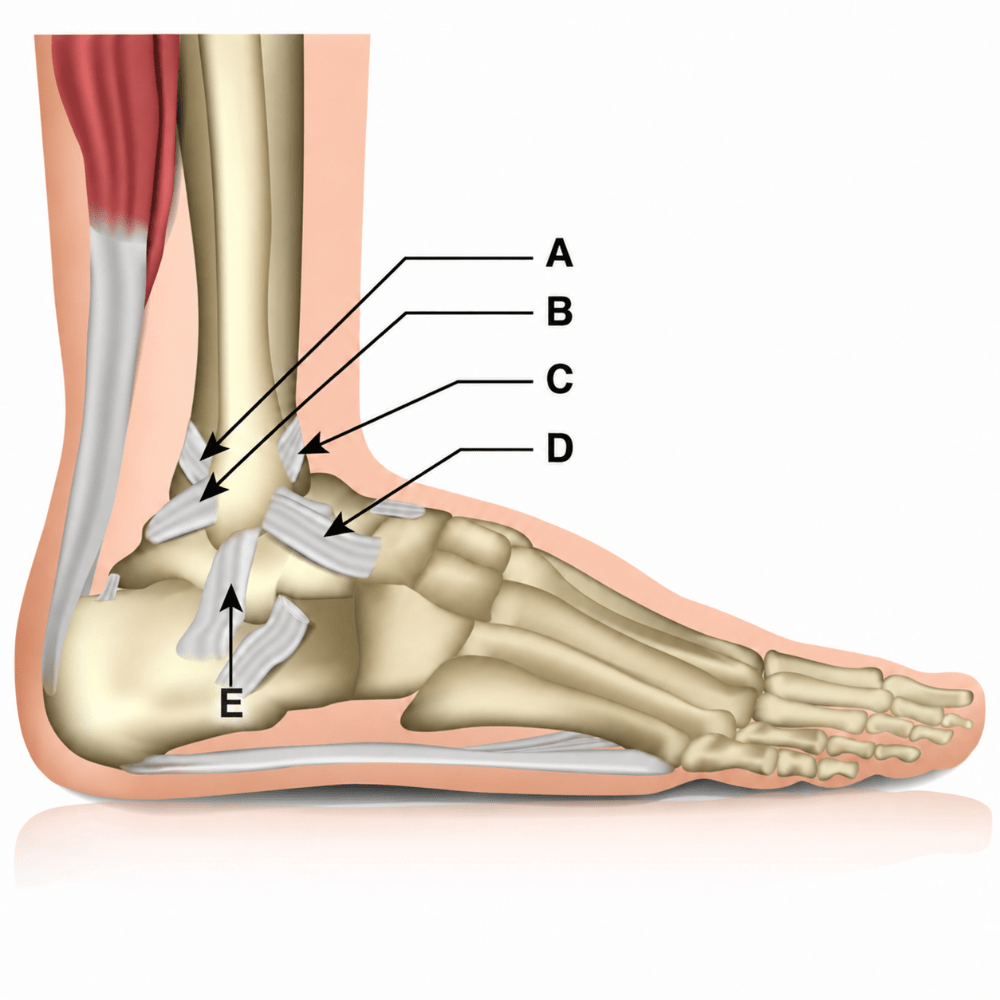
Posterior Talofibular Ligament
3
What bone joints with the distal Tibia and Fibula to joint the Talocrural Joint?
The Talus
3
This muscle lifts up toes 2-5
Extensor Digitorum Longus
3
What is the name of structure B in this picture of a high ankle sprain?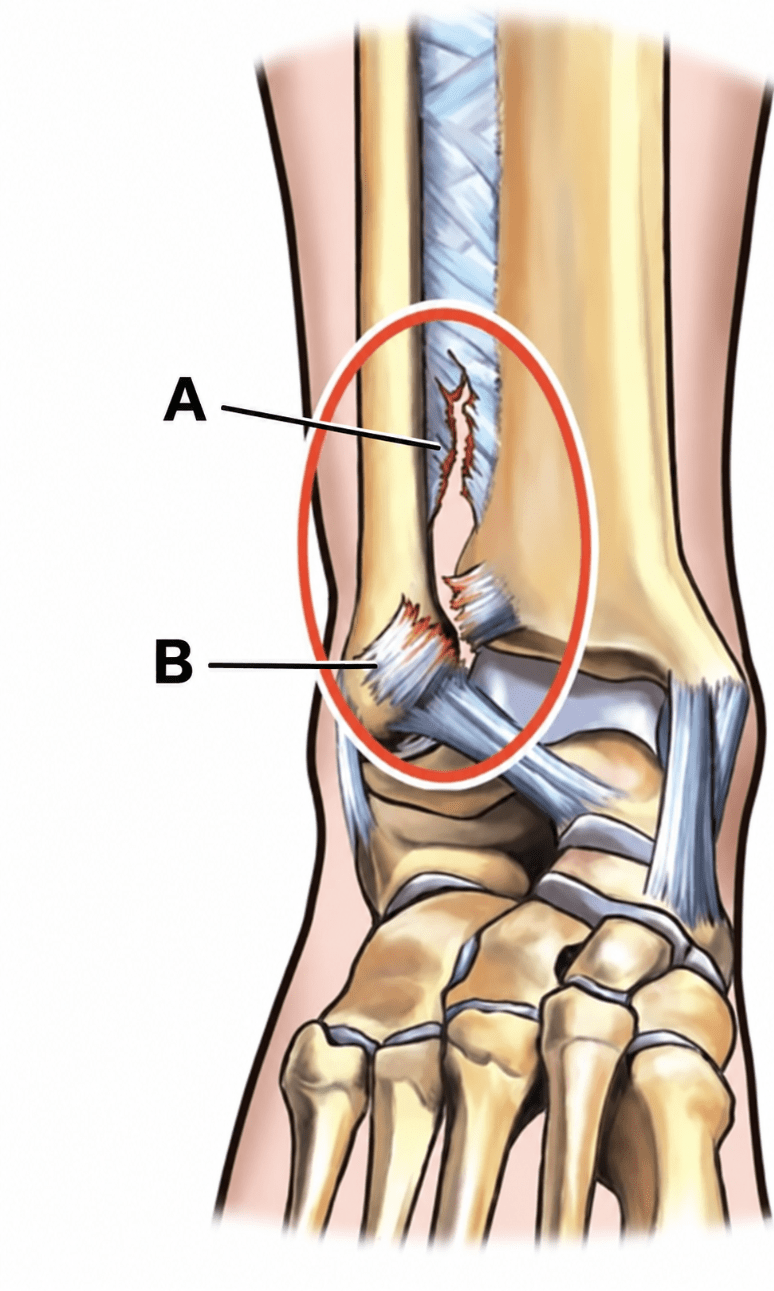
Anterior Tibiofibular Ligament
3
When this foot shape bears weight, the arch is low or collapses toward the ground. What is it called?
Pes Planus or Flat Feet
3
This test could assess either the Calcaneofibular ligament or the deltoid ligament, depending on the application of inversion or eversion.
Talar Tilt
4
What is the name of the ligament structure that supports the medial side of the ankle?
The Deltoid Ligament
4
Name Structure D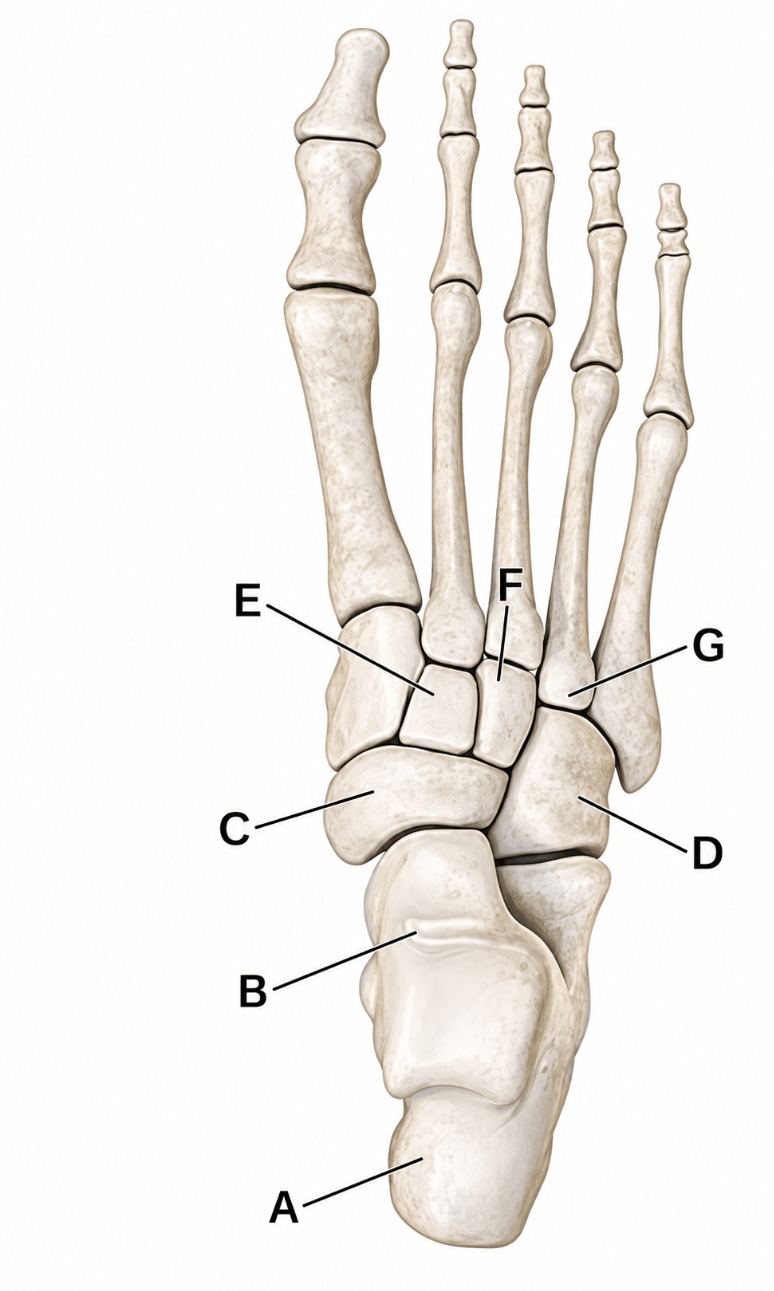
The Cuboid
4
These muscles work together to bring the ankle into EVERSION
Fibularis Longus and Brevis
4
After rolling an ankle into inversion, and athlete is able to weightbearing, but notes swelling, pain and discoloration. what injury is likely indicated?
Lateral ankle sprain
4
The big toe angles toward the other toes, creating a prominent bump near the base of the toe. What condition is this?
Hallux Valgus or a bunion
4
The dorsiflexing and externally rotating the ankle (Kleiger's) will test for what kind of injury?
Syndesmosis / High Ankle Sprain
5
Name the ligament marked C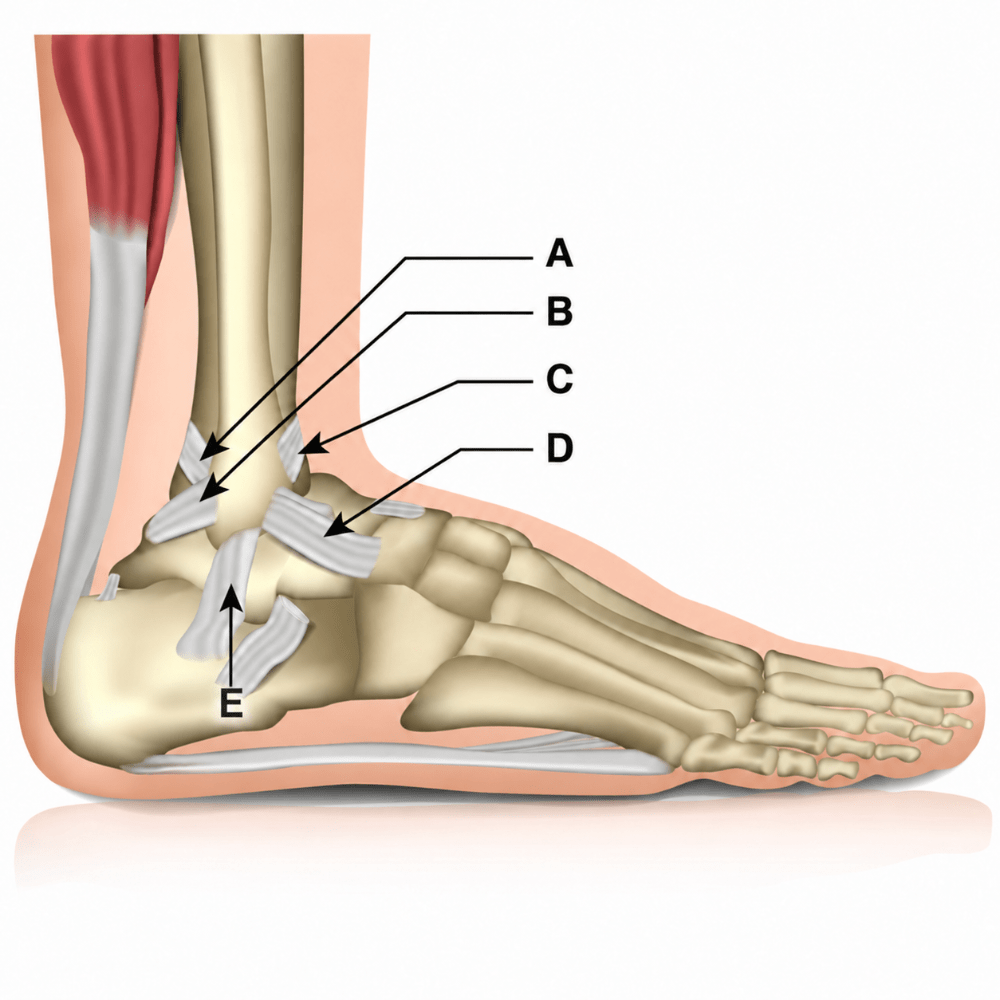
Anterior Tibiofibular Ligament
5
This nerve passes behind the medial ankle and divides into the medial and lateral plantar nerves.
The Tibial Nerve
5
The main plantarflexor of the foot that also helps with knee flexion.
Gastrocnemius
5
Someone has pain under the heel that is often worst with the first steps after getting out of bed. What condition is this?
Plantar Fasciitis or fasciopathy
5
Repeated rubbing from footwear creates a small pocket of fluid beneath the skin. What is this?
Blister
5
Compressing the Tibia and Fibula together can produce pain, which would indicate what injury?
Syndesmosis / High Ankle Sprain
6
This nerve supplies the lateral compartment muscles that evert the foot.
The Superficial Fibular Nerve
6
Name the ligament marked D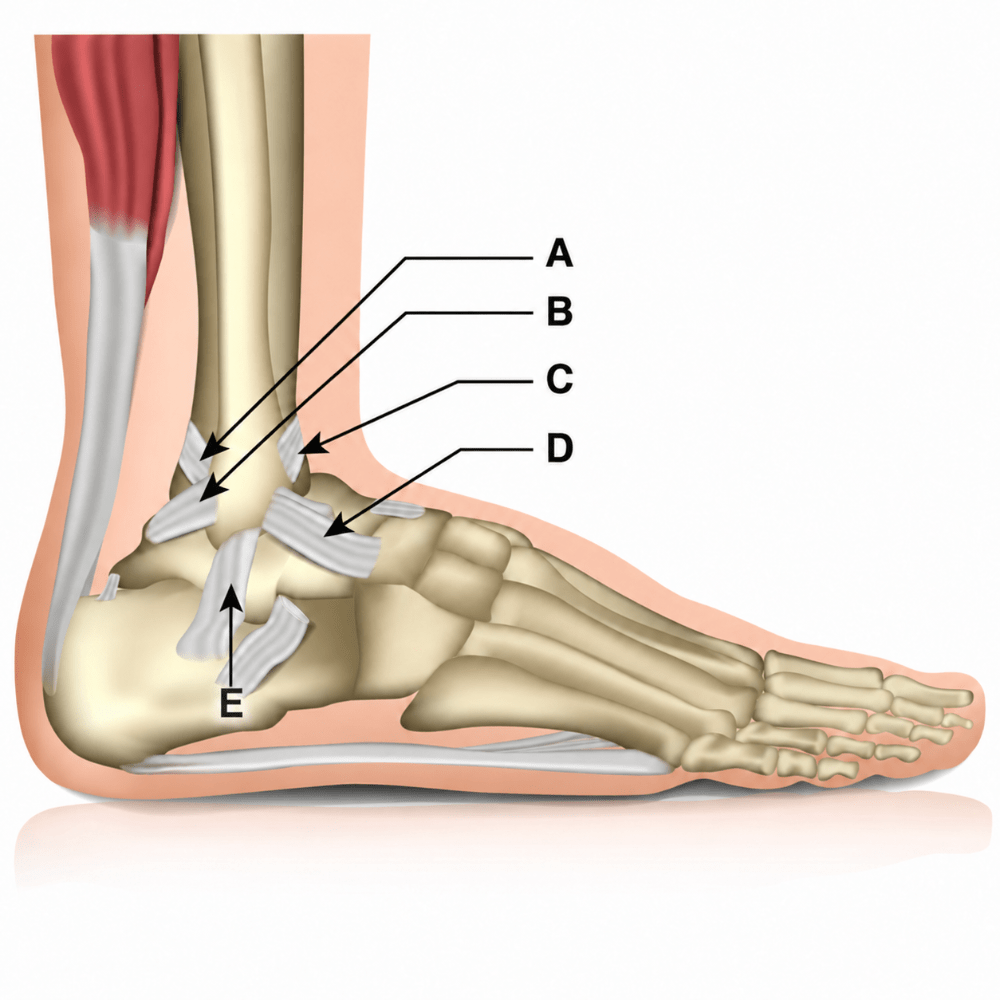
Anterior Talofibular Ligament
6
The tibialis posterior mainly functions in which 2 movements?
Plantarflexion and Inversion
6
A soccer athlete lands awkwardly on the turf, turning the ankle into eversion. What ligament could be torn as a result of this mechanism?
Deltoid ligament
6
Repeated pressure or friction causes a broad patch of thickened, hardened skin. What is this?
a callus
6
What injury does the Thompson test evaluate when squeezing the calf?
Ruptured Achilles Tendon
7
What bone sits below the Talus?
The Calcaneous
7
Name Structure B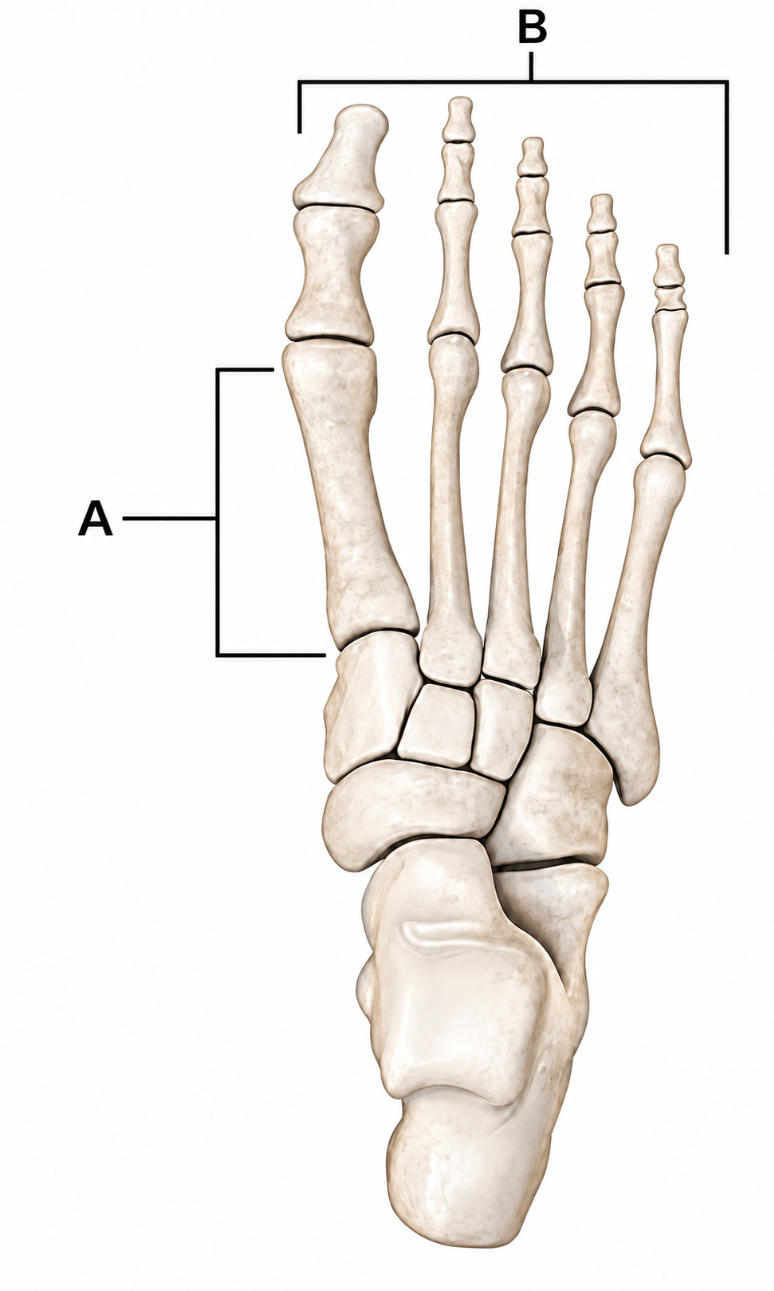
Phalanges
7
Curling the toes would require which muscle?
Flexor Digitorum
7
A football running back gets tackled hard and hears/feels a pop in the lower leg. Durign examination, the athelte reports his lower leg is going numb and feels increased pressure. The athletic trainer notices the skin is becoming discolored. What injury is likely being indicated?
Compartment Syndrome.
7
The edge of a toenail grows into the surrounding skin, causing soreness and sometimes redness or swelling. What is this?
an ingrown toenail
7
In the Windlass Test, extending the toe could produce pain which would indicate what injury/condition?
Plantar Fasciitis.
8
All lower leg nerves stem from which nerve?
The Sciatic Nerve
8
This nerve supplies muscles that dorsiflex the ankle and extend the toes.
The Deep Fibular Nerve
8
This muscle solely acts to plantarflex the foot.
The Soleus
8
Repeated loading and jumping leads to an athlete complaining of pain and achiness in the posterior lower leg, just above the calcaneus. The athlete is able to weight bear and walk, but notices the discomfort returning during exercise and sometimes at rest. What injury is indicated?
Achilles Tendinitis / Tendinopathy
8
An athlete feels a sudden pop in the back of the ankle and has is unable to push off the ground. What injury should be suspected?
Achilles Tendon Rupture
8
In a positive Matle's test, a patient who is lying prone with both knees flexed would notice the affected foot in a plantarflexed position. this would indicate what injury?
Achilles Tendon Rupture.