Innate (nonspecific) Defense
Adaptive (specific) Defense
Adaptive (specific) Defense
Lymphatic System
Miscellaneous
100
What is included in your 1st line of defense and what is 1 example of how it provides defense?
Skin - Acid mantle, Keratin - acidic characteristics kill microbes before entering into hypodermis and below.
Mucous Membranes - MALT's, nasal hairs, mucus, cilia, gastic juices, etc. - contain lymphoid tissue (phagocytes, lymphocytes) which will destroy envaders.
100
What is the difference between an antibody, antigen, and pathogen?
Antigen = provokes an immune response
Antibody = binds to antigen
Pathogen = entire disease causing agent such as a bacteria or virus
100
What line of defense is adaptive immunity?
3rd line of defense
100
What structures are included in the lymphatic system?
1. Lymph
2. Lymphatic Vessels
3. Lymphoid Tissues (nodes/organs)
100
This is the study of immunity.
Immunology
200
What is the MHC1 (major histocompatibility complex 1)?
Protein attached to the membrane of healthy cells which become abnormal when the cell becomes invaded with a virus or bacteria.
200
How is adaptive immunity acquired?
Exposure to microbes - build up and strengthen over time.
200
Name 1 way we obtain antibodies.
B cells (which we obtain from lymphocytes), your mother (via passive immunity), and therapeutic (lab-made) antibodies.
200
Fluids that are not picked up by lymphatic vessels which accumulate in tissues.
Edema or lymphedema
200
The process of making new blood cells...
Hematopoiesis
300
What cells or chemicals provide a second line of defense?
1. Phatocytes 2. Natural killer cells 3. Antimicrobial proteins 4. Inflammatory response 5. Fever
** Be sure to know the mechanisms behind all of these **
300
How do natural killer cells destroy target cells?
Release perforin to target the cells membrane and nuclues and cause disintegration.
300
What 4 structures are involved in adaptive immunity?
B cells & T cells (lymphocytes), macrophages, and antigen-presenting cells (APC's).
300
What 6 organs house lymphoid tissue and are considered part of the lymphatic system?
1. Spleen 2. Thymus 3. Adenoids 4. Tonsils 5. Peyers patches 6. Appendix
** be sure to know characteristics of each structure for the test **
300
Identify the structures I point out to answer this question successfully.
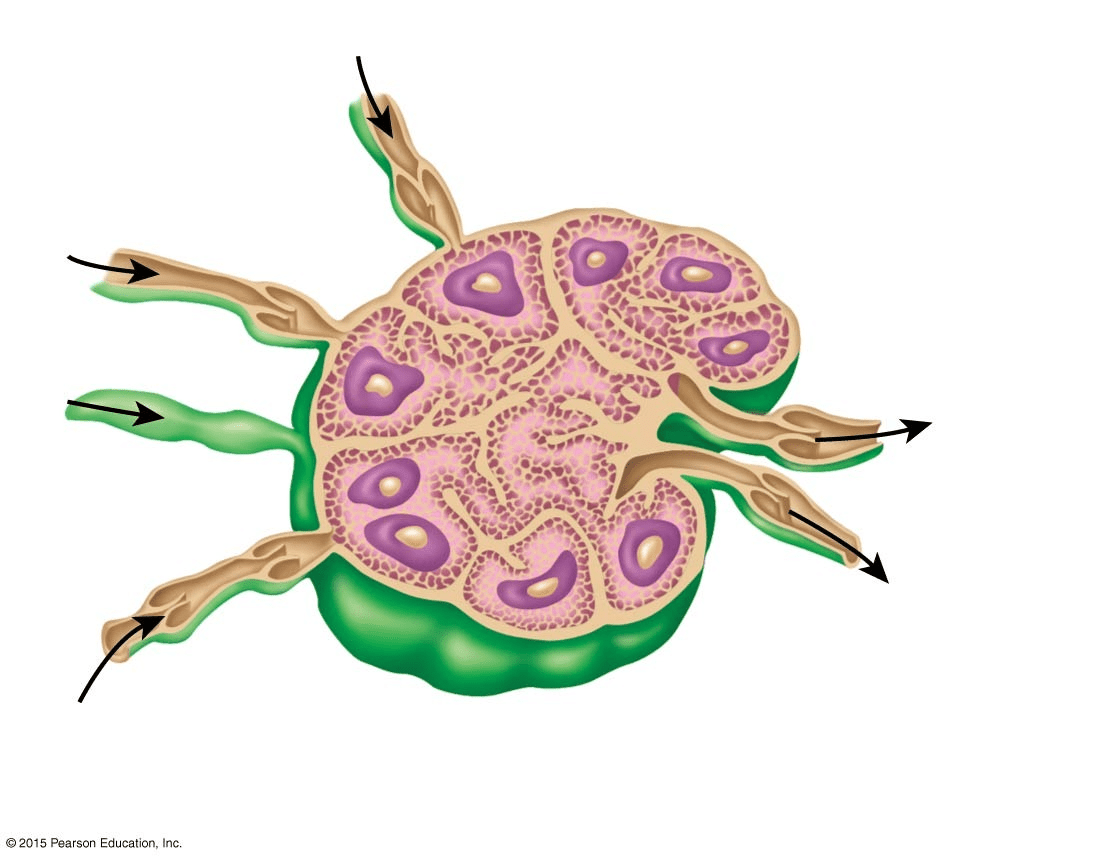
Good job?
400
What are natural killer cells and what do they release which assist in their job?
Cells that secrete enzymes to trigger apoptosis in infected cells. They secrete perforin which targets the cells membrane and nucleus.
400
What are the 5 types of antibody classes?
IgM, IgA, IgD, IgG, IgE (remember MADGE)
** Be sure to know what each does**
400
What are APC's and what are the 3 main types?
APC's - Antigen presenting cells
Types: Dendritic cells, Macrophages, B-Lymphocytes
400
Which duct does lymph from majority of the body empty into? Where does this empty back into the circulatory system?
Thoracic duct...junction of left internal jugular and left subclavian veins
400
What is systemic defense?
Defense is not limited to infection site; spreads throughout the body
500
How do antimicrobial proteins work to enhance innate defense? What are the most important types?
Attack microorganisms directly and hinders reproduction. Most important types include complement proteins and interferons which are proteins secreted by virus-infected cells which bind to membrane receptors on healthy cell surface and interfere with the ability of viruses to multiply.
500
What are the different types of effector T-Cells and what are their characteristics?
Helper T Cells - Recruit other cells (B cells, cytotoxic T cells, macrophages) to fight invaders by secreting cytokines.
Cytotoxic T Cells - Inserts a toxic chemical (perforin) to kill infected cells.
Regulatory T Cells - Release chemicals to suppress the activity of T and B cells. Stops immune response to prevent uncontrolled activity. A few members of this group are memory cells.
500
What is the difference between humoral and cellular immunity?
Humoral = antibody-mediated immunity; involves B cells which mature in bone marrow; provided by antibodies present in body fluides. Think immune memory and vaccines.
Cellular = cell-mediated immunity; direct cell to cell contact; involves T cells which mature in the thymus; targets virus-infected cells directly.
500
What defense cells are located within lymph nodes and what are their function?
1. Macrophages - Engulf and destroy foreign substances.
2. Lymphocytes - respond to foreign substances in lymphatic system. 2 types: B cells and T cells.
500
What is similar and different about a neutrophil and macrophage?
Both cells engulf foreign materials into a vacuole (are phagocytes). However, neutrophils eat invaders then die and become pus while macrophages continue working after engulfing envaders.
600
How does a fever help fight infections?
WBC secrete pyrogens which resets our thermostat causing an increase in temperature. This inhibits the release of iron and zinc which is needed by bacteria. Fever also increases the speed of repair process.
600
What is the difference between active and passive immunity?
Active immunity - occurs when B cells encounter antigens and produce antibodies. It can be artifically acquired from vaccines or naturally acquired during bacterial or viral infections.
Passive immunity - occurs when antibodies are obtained from someone else. It can be artifically acquired from immune serum or gamma globulin or naturally acquired from mother to fetus. Immune memory does not occur.
600
What is the overall differences between innate and adaptive defense? Give me at least 4 differences.
Innate defense - Born with it; Involves skin, mucous membranes, phagocytes, natural killer cells (lymphocytes), antimicrobial proteins, inflammation and fever; is the bodies 1st and 2nd line of defense for localized illnesses and injuries and can be external and internal; Fight occurs between antigen and antibody in the body fluids.
Adaptive defense - Acquired over time (memory); Involves B cells, T cells, macrophages, and APC's; is the bodies 3rd line of defense; can be humoral or cell-mediated; fight occurs between 2 cells; 1 invader and 1 immune cell.
600
How does excess fluid enter lymphatic capillaries and travel back to the circulatory system? What assists in this?
High pressure due to excess fluid in interstitial tissues causes flap-like minivalves on lymphatic capillaries to open and fluid to move in. Once the pressure is higher inside the lymphatic capillary then outside, the minivalves close and the high pressure causes lymph to move through lymphatic vessels, through the nodes, and eventually into collecting ducts which empty back into the circulatory system. This movement is aided by skeletal muscles, pressure changes in thorax, smoothmuscles in walls of lymphatics.
600
You need 1 representative from each team. This indivdual will need to fill out the flow chart with verbal assistance from group members. You will have 1.5 minutes worth of time to complete. 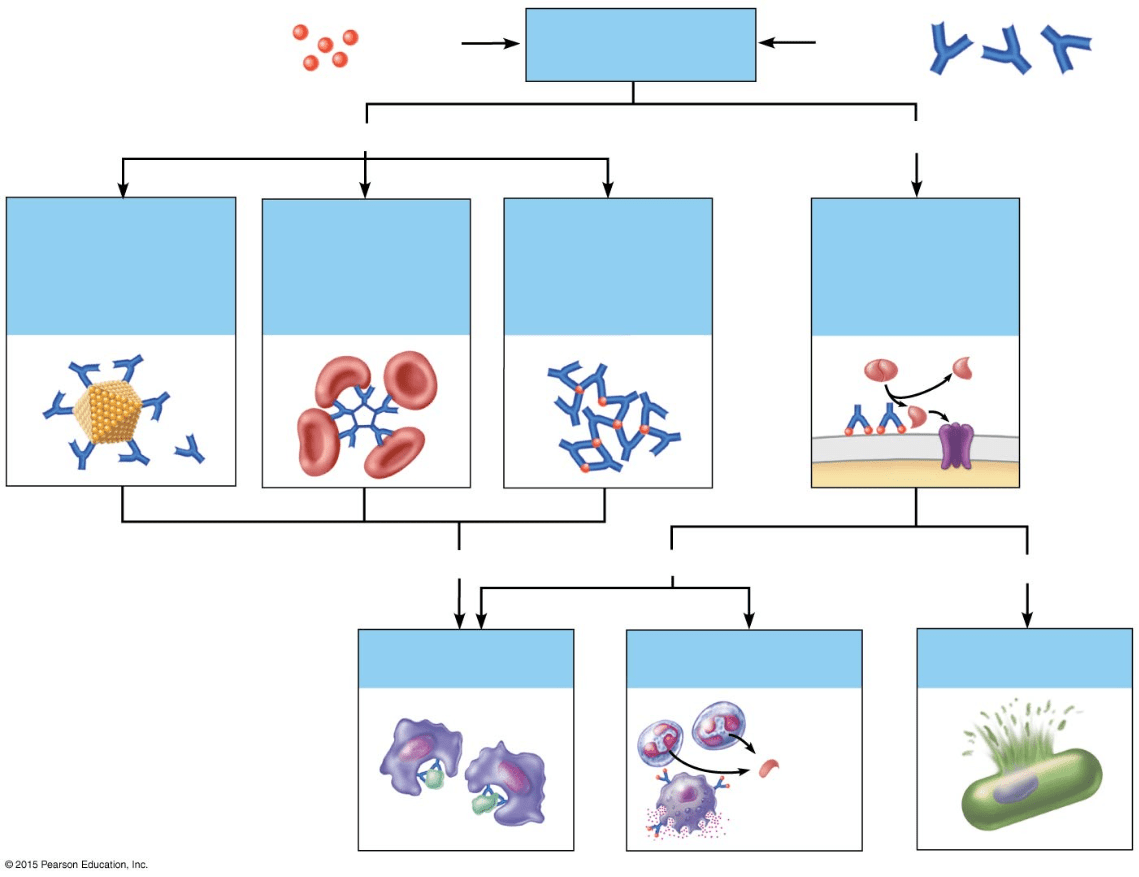
!!!--- KNOW THIS FLOW CHART---!!!