Bacteria 1
Bacteria 2
Bacteria 3
Bacteria 4
Parasites
Virus/Fungi
100
A 7-year-old boy presents to the emergency room with acute kidney failure. His initial lab work shows thrombocytopenia, and a blood smear shows:
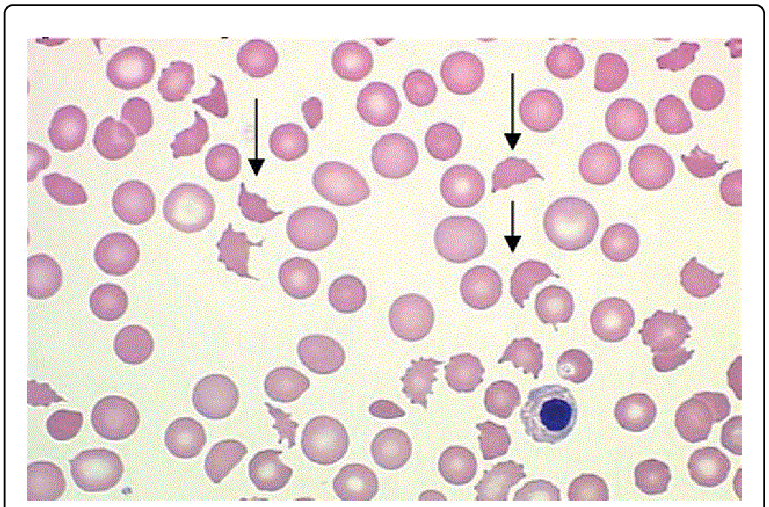
What complication of STEC is this patient experiencing?
Hemolytic uremic syndrome
Hemolytic uremic syndrome is a toxin mediated microangiopathic injury that causes a prothrombotic state and causes intravascular microthrombi. it is well known for its three classical features of acute kidney failure caused by the occlusion of renal vessels, thrombocytopenia, and hemolytic anemia as shown in the photo above.
100
A 30 y.o. woman presents to clinic with increased frequency of urination, burning sensation when urinating, and suprapubic abdominal pain. She reports that she is sexually active. Laboratory testing reveals that the organism is a non-motile. coagulase-negative, non-hemolytic, and urease-positive. What is the likely cause of the infection?
Staphylococcus saprophyticus
Reasoning: S. saprophyticus is the second most common cause of urinary tract infections behind uropathogenic E. coli. While you can differentiate the two species based on gram stain, E. coli is also urease negative while S. saprophyticus is urease positive. Proteus mirabilis is also a cause of urinary tract infections and is urease positive but can be differentiated from S. saprophyticus as Proteus mirabilis is motile and gram-negative.
100
Fourteen hours after birth, a neonate develops fever, hypotension, tachypnea, apnea, lethargy, poor feeding and vomiting. The newborn genetic screening panel returned normal. The mother reports no family history of any metabolic disorders. During one of her prenatal care visits, she remembers a doctor telling her she was colonized with “a bacteria of some kind” but declined treatment. What is the likely causative agent of the newborn’s illness?
Group B streptococci (Streptococcus agalactiae)
Reasoning: Group B strep is a major cause of disease in neonatal and perinatal periods. Mothers who are colonized by Group B strep can pass on the organisms to their child during birth. If the neonate becomes ill, they will often develop meningitis, septicemia, and pneumonia.
100
45-year-old man presents to the ER for a five-week history of cough with bloody sputum. He is HIV positive and has lived in several homeless shelters in Omaha. He also reports having night sweats and chest pain. He remembers other people in the shelter having similar symptoms as him. You perform an acid fast stain which shows:
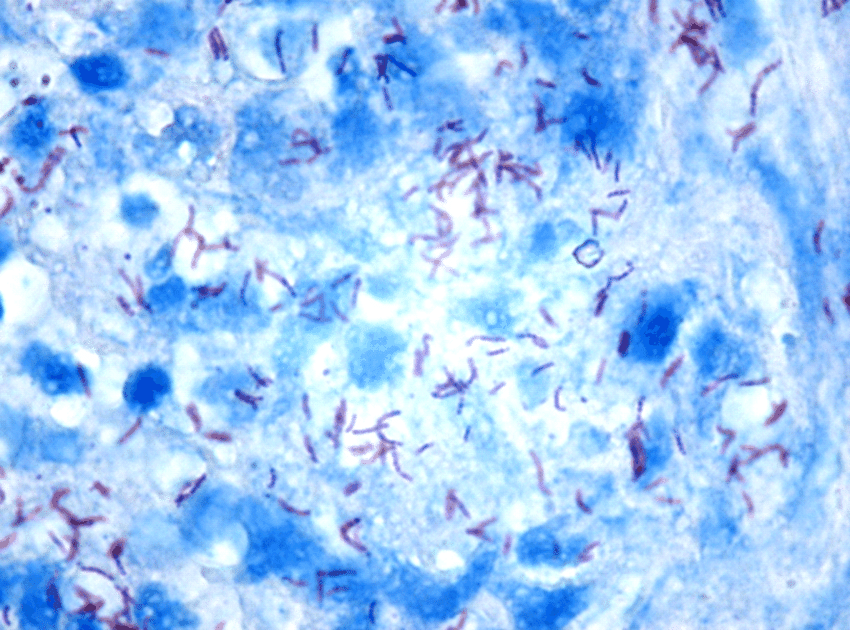
What organism is most likely responsible for his illness?
Mycobacterium tuberculosis
Reasoning: Mycobacterium tuberculosis is an acid-fast bacteria that causes cough with bloody sputum, night sweats, weight loss, chest pain, and fever. Living in close quarters like homeless shelters is a risk factor for getting TB as is being immunocompromised. Non-TB mycobacterium typically do not spread from person to person like TB does.
100
What species of Plasmodium are responsible for relapsing disease?
Plasmodium vivax and ovale
P. vivax and P. ovale invade liver cells where they go dormant in a Hypnozoite stage. Hypnozoites can reactivate and trigger a new presentation of infection.
100
A 40-year-old man has recently undergone a kidney transplant and takes immunosuppressant drugs to prevent organ rejection. Three weeks after his transplant, he reports feelings of fatigue, malaise, muscle aches, and gastrointestinal distress. A biopsy of his small intestine shows this image. Which pathogen is most likely causing this patient’s symptoms?
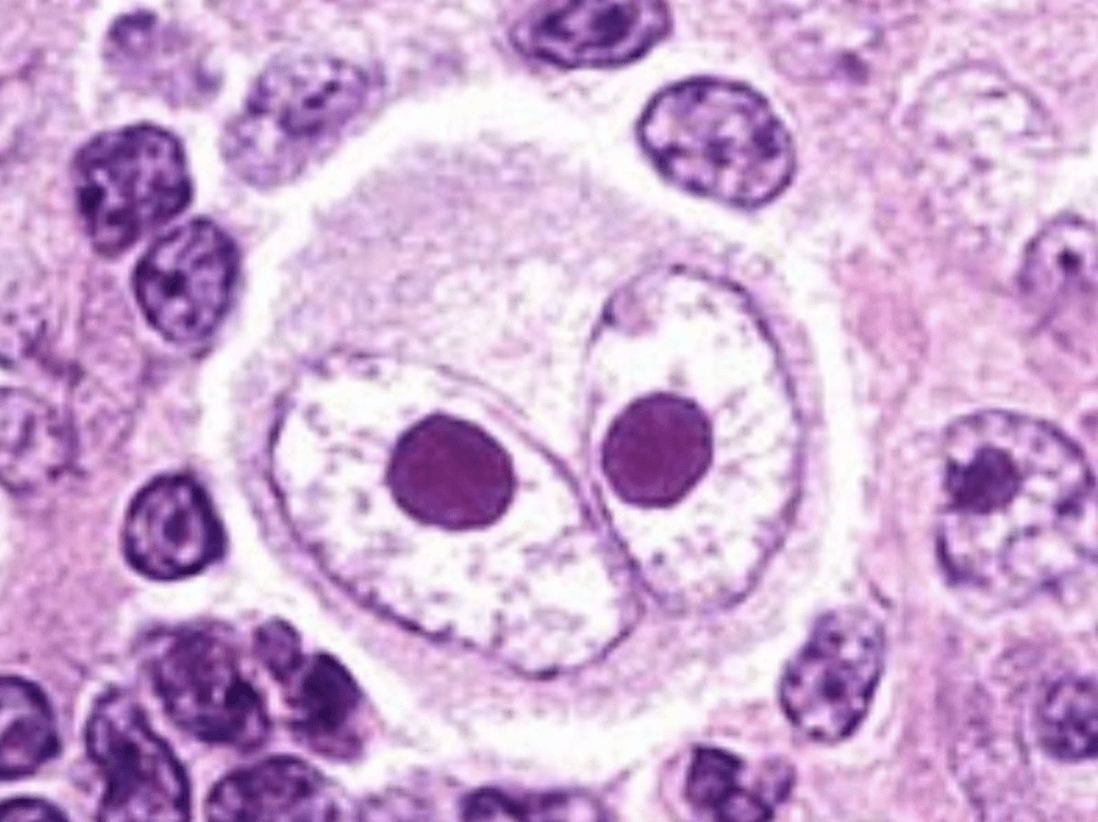
Cytomegalovirus (CMV)
CMV is very common – 90% of 80-year-olds have antibodies to the virus. Infection is usually asymptomatic; however, immunosuppressed patients can have severe manifestations ranging from nonspecific symptoms of viremia to end-stage organ disease and death. The patient in this vignette presents with nonspecific symptoms, but the biopsy shows an owl’s eye inclusion body, which is highly specific for CMV.
200
You have a patient who has recently immigrated from Nepal, who comes into clinic with very dry, scaly, hypopigmented patches with very sharply defined edges:
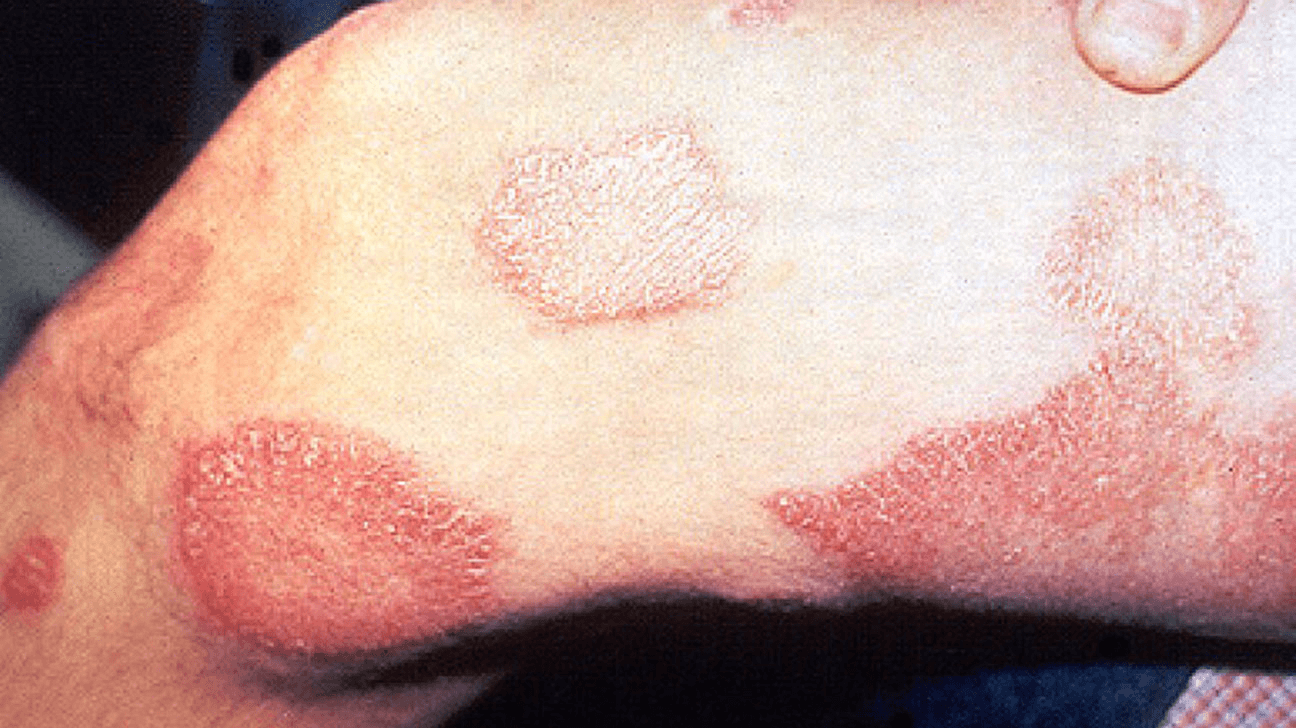
Upon palpation, the plaques are anesthetic. A biopsy is performed on the plaques revealing well-formed granulomas, and a few acid-fast bacteria. What is the most likely cause of this person's lesions?
Mycobacterium leprae
Reasoning: This patient is likely suffering from tuberculoid leprosy. It is classically characterized by anesthetic macules or plaques, enlarged peripheral nerves near the skin lesions, and histology with well-formed granulomas with few acid-fast bacteria.
200
You have a 23-year-old patient who contracted Mycobacterium tuberculosis when doing her emergency medicine rotation. Her X-ray showed the following:
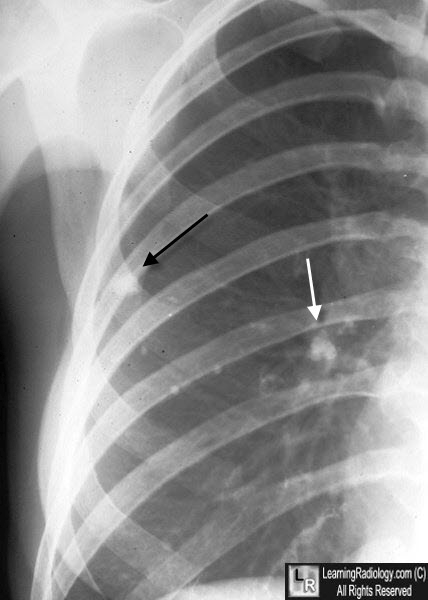
What is this classic finding of TB called?
Ghon complex
Reasoning: TB classically forms necrotizing granulomas. When there is a combination of a parenchymal granuloma and an involved hilar lymph node on the same side, the two together are called a “Ghon Complex”.
200
A 55-year-old patient arrives to the emergency room with severe leg weakness. He has a past medical history of hypertension, asthma and untreated Mycobacterium tuberculosis infection. You perform an MRI of the spine and find:
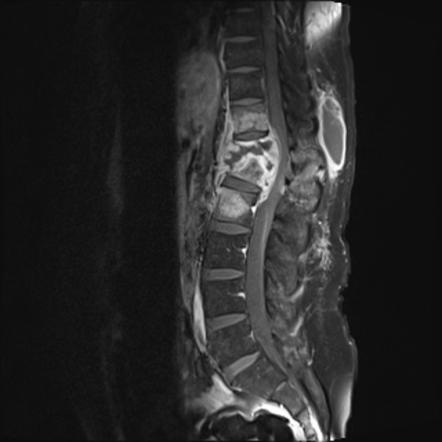
What complication of TB has this patient developed?
Pott’s Disease
Reasoning: While TB is classically a pulmonary disease, it has several extra-pulmonary symptoms including bone infection, especially in the spine. This can lead to bony destruction as what is depicted above.
200
A 34-year-old woman comes to clinic complaining of joint pain in her knees, elbows and wrists. She tells you that she arrived in the U.S. three years ago from El Salvador and when asked tells you that she remembers having some throat infections as a child. Upon examination, she has a fever of 100 F and a systolic heart murmur on auscultation. What is the likely mechanism causing this woman’s symptoms?
Cross-reactive antibodies to Group A strep
This patient likely has rheumatic fever which is characterized by arthritis, fever, and heart failure but can also present with fatigue, and chorea (uncontrollable movements). Rheumatic fever develops when strep pharyngitis or scarlet fever infections are not treated, and the immune system develops cross-reactive antibodies that target healthy tissue. While it is not a common illness in the US, it remains relatively common in other countries.
200
Hiker drank out of a stream while hiking and now is suffering from steatorrhea and non-bloody diarrhea. What is the most likely cause?
Giardia lamblia
Giardia is a common infectious causes of diarrhea presenting with watery, fatty/greasy diarrhea. It is transmitted via ingestion of spores transmitted in contaminated water. The classic association is with camping/outdoor activity, thought it can be transmitted through other water sources (international travel, daycares)
200
A 34 yo HIV positive male with a CD4 count <100 presents to clinic concerned about new dysphagia. Most of the physical is normal, except for white plaques noted in the patient's oral cavity, which bleed after they are scraped off. After being referred for swallowing difficulties, endoscopy shows similar white plaques along the esophagus as well. Upon visualization, yeast and pseudo-hyphae can be visualized. What is the causative agent of this patient’s dysphagia?
Candida albicans
Reasoning: White plaques in the oral cavity that you can scrape off are a key physical finding. Additionally, esophagitis is another clinical presentation of candida infections which is usually confirmed with endoscopy. Yeast and pseudo-hyphae are the typical pathological descriptions of candida species. Another clue is that the patient has a CD4 <100 (level associated with infections like esophageal candidiasis)
300
A 67-year-old man presents with a 2-week history of fever, fatigue, and worsening malaise. He underwent aortic valve replacement with a prosthetic valve 2 months ago. Blood cultures obtained from multiple sites grow gram-positive cocci in clusters that are catalase-positive and coagulase-negative. The organism is sensitive to novobiocin. Despite appropriate antibiotic therapy, the infection persists. Which of the following properties of the causative organism most likely contributes to its ability to cause persistent infection in this patient?
Formation of a polysaccharide-rich biofilm that facilitates adherence to prosthetic material
Explanation: Staphylococcus epidermidis is a coagulase-negative Staphylococcus (CoNS) that commonly causes infections involving prosthetic devices, including artificial heart valves and joint replacements. It produces an extracellular polysaccharide-rich biofilm that allows it to adhere to foreign materials, resist host immune defenses, and reduce antimicrobial penetration, contributing to persistent infections.
300
A 68 y.o. male with a past medical history of asthma and a 40-pack year smoking history presents to clinic with cough, fatigue, fever, and chills. You obtain a gram stain that shows:
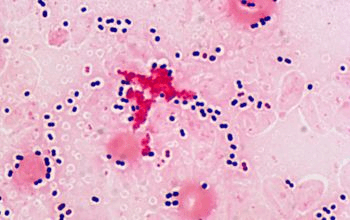
What is the main virulence factor produced by this organism that protects it from host immunity?
Polysaccharide capsule
Reasoning: The organism shown by the gram stain is Streptococcus pneumoniae which is a gram-positive bacterium that is typically described as “lancet shaped” and found in diplococci. The polysaccharide capsule it produces makes it difficult for macrophages to phagocytose the organism. Streptococcus pneumoniae is a common cause of community acquired pneumonia, adult meningitis, sinusitis, otitis media, and bacteremia.
300
A 32-year-old arrives in clinic for a suspected UTI. She has had increased frequency of urination, back pain, increased urgency, and she has noted gross blood in her urine. An ultrasound was performed to look at her kidneys and staghorn calculi were noted. Lab work showed that the bacteria cultured was negative for lactose fermentation and negative for oxidase. What mechanism does this bacterium use that leads to struvite stones as seen in this patient?
Urease
Reasoning: The organism in this prompt is Proteus mirabilis. It classically causes UTIs as it infects the genito-urinary tract. It is known to produce large quantities of urease which hydrolyzes urea into ammonia and carbon dioxide. As it creates an alkaline environment it leads to the precipitation of phosphate, carbonate, and magnesium which leads to the characteristic struvite stones.
300
A 22 year old female patient arrives in clinic with a suspected UTI. She has an urgent, frequent need to pee, increased bladder fullness, burning while urinating, and pelvic pain. You take a urine sample and send it in for culture. The bacteria is found to be aerobic and have positive lactose fermentation. On gram stain it is revealed to be a gram-negative rod. What virulence factor does this organism have that allows it to colonize and invade the bladder?
P pili or P fimbriae adhesions
Escherichia coli is the most common cause of community acquired urinary tract infections (UPEC). It is heavily associated with ascending infections. It is a lactose fermenting bacterium. It uses adhesions to bind cells lining the bladder and upper urinary tract preventing bacterial elimination when urine is voided from the bladder.
300
This organism uses snails as an intermediate host in its life cycle and invades humans directly via skin. What is the most common mechanism of exposure of this parasite?
Contact wtih unclean water
Schistosoma mansoni has its eggs deposited in water sources. From here, the larvae hatch and migrate to snails where they develop into cercariae. After leaving the snails they must find a human host via chemotaxis in order to survive. If successful, they enter the unbroken skin and a male and female mate in the liver, before traveling to the intestines to deposit their eggs. Illness includes Katayama fever (fever, flu-like ssx, swollen lymph nodes, hepatosplenomegaly; hypersensitivity to antigens), granulomas, portal HTN from fibrosis, and GI hemorrhage.
300
A 53 yo female presents to the ER with fever, cough, and chest pain that worsens with normal breathing. Upon getting an X-ray, nodular infiltrates are noted. When taking the patient’s history, the ER physician notes that she had recently traveled to Arizona to visit her sister. Her medication list includes etanercept, ibuprofen, and propranolol. What is the most likely agent responsible for the patient’s illness?
Coccidioides imitis
Explanation: Pt is presenting with pulmonary signs of a possible fungal infection. Nodular infiltrates and history of immunosuppression (etanercept) also raises this on the differential. History of travel to Southwest US would raise suspicion for Coccidioides.
400
A 6-month-old child arrives to the emergency department with constipation, poor feeding, hypotonia and a weak cry. The child had been healthy up to this point with no complications during birth. The mother recalls the child had been eating normally and had recently filmed a video of her child trying honey for the first time. What is the mechanism of infection in this infant?
Ingestion of Clostridium botulinum spores
Reasoning: The infant is suffering from infection of food botulism caused by Clostridium botulinum. In infants, it is classically caused by ingestion of spores (particularly through consumption of raw honey). In adults it is more associated with wound botulism. In the laboratory, conventional health diagnosis requires demonstration of the toxin.
400
A 42-year-old man with a history of renal transplantation presents with 2 weeks of fever, cough, and progressive shortness of breath. He is taking immunosuppressive medications to prevent graft rejection. Chest CT reveals multiple nodular pulmonary infiltrates, and brain MRI obtained for new-onset headache reveals a ring-enhancing lesion. Sputum microscopy demonstrates bacteria that are partially acid-fast. What Gram stain and shape will be seen on microscopy?
Filamentous, branching Gram-positive rods
Explanation: Nocardia species are aerobic, filamentous, branching gram-positive rods that are weakly or partially acid-fast due to mycolic acids in their cell walls. They are acquired primarily through inhalation and can cause pulmonary disease with hematogenous spread to the brain, particularly in immunocompromised patients.
400
A patient presents to their PCP with several skin boils concerning for infection with S. aureus. The PCP prescribes clindamycin. After 3 days of therapy, the patient develops abdominal pain, distention, and severe diarrhea. A glutamate dehydrogenase antigen and toxin test returns positive. What medication would you give to treat this patient’s infection?
Oral vancomycin
Reasoning: This patient developed severe diarrhea in a hospital setting after receiving antibiotics (particularly clindamycin) is a classic patient presentation of Clostridioides difficile. A positive glutamate dehydrogenase antigen test is a highly sensitive test that detects the presence of C. difficile but does not discern toxigenic vs. non-toxigenic strains. Given the patient’s symptoms and history though, you would treat by discontinuing clindamycin, give supportive care and oral vancomycin.
400
An 80-year-old woman presents to clinic with A four-year history of productive cough, and intermittent dyspnea with exertion. She has been treated with azithromycin for presumed community acquired pneumonia, and her symptoms had initially improved. Subsequently she experienced discrete recurrent episodes of “bronchitis” with productive cough. She reported a 10-year pack smoking history in the past. Her past medical history includes asthma, atrial fibrillation, GERD, osteopenia, and hyperthyroidism. Her sputum culture returned positive for an acid fast bacteria, but her TB test returned normal. CT imaging was performed and it showed:
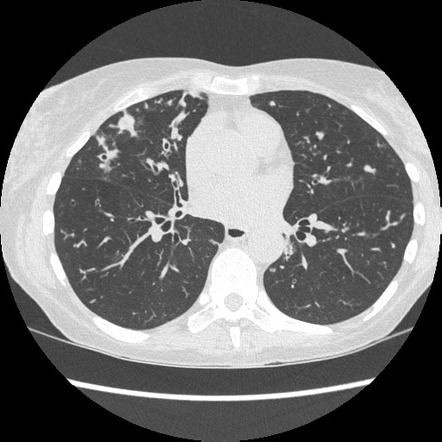
What is the most likely cause of her symptoms?
MAC
This woman likely suffers from MAC pulmonary disease. This patient fits the pattern of lady Windermere syndrome, which is typically seen in elderly white woman who chronically suppressed the normal cough reflex.
400
Patient presents to ER with watery diarrhea, pneumonia, and an itchy foot. Patient most likely has an infection cause by which parasite?
Strongyloides stercoralis (roundworm)
S. stercoralis is commonly transmitted via cutaneous contact (stepping on contaminated soil) or autoinfection (parasite matures and then lays eggs in the intestinal wall). Once the parasite enters the blood stream, it travels into the lungs where it matures. Once mature, the worm will travel up the trachea, into the esophagus, and migrate to into the GI tract. As a result, infection can cause symptoms related to these life cycle phases (wound at the site of entry, Diarrhea, and pneumonia). [https://www.ncbi.nlm.nih.gov/books/NBK436024/]
400
A 36-year-old woman presents to her primary care physician with complaints of painful recurrent sores that appear on her lower lip. She shows this recent picture to her physician. Which type of cell does this pathogen reside in during its latent phase?
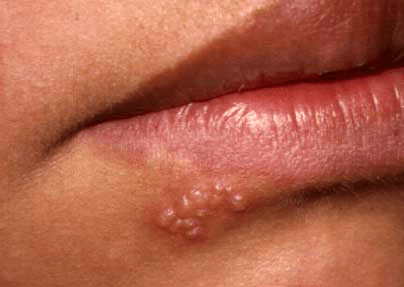
Sensory neurons (trigeminal ganglion)
This patient is infected with herpes simplex virus 1 (HSV-1). The alpha sub-family of human herpesviruses includes HSV-1, HSV-2, and varicella-zoster virus (VZV). Viruses of the alpha sub-family reside in sensory neurons in their latent phase (trigeminal ganglion for HSV-1), and cause pain in the local skin and mucous membranes during reactivation.
500
A 19-year-old male arrives at the emergency room with trismus, difficulty breathing and muscles spasms. His mother found him unable to move two hours prior when coming over to visit. Physical exam shows a deep puncture wound on the bottom of his foot. What neurotransmitters are blocked by the toxin produced by this patient’s infection?
GABA and glycine
Reasoning: Trismus (“lock jaw”) is a classic system of generalized Clostridium tetani infection which causes spastic paralysis. The toxin that the organism produces is Tetanospasmin which blocks the release of inhibitory neurotransmitters GABA and glycine.
500
You have a 40-year-old patient in clinic who has recently returned from Mexico with a weeklong history of non-bloody diarrhea and abdominal pain. He reports only drinking bottled water however he does recall eating fresh fruits and vegetables while on the beach. He denies fever and chills. Which of the toxins the organism produces binds to the intestinal receptor guanylyl cyclase C?
Heat stable enterotoxin
This patient likely received enterotoxigenic E coli from eating fruits and vegetables washed with contaminated water. This is likely as he has recently traveled abroad. Enterotoxigenic E coli produces 2 enterotoxins the first one is heat stable enterotoxin which binds to guanylyl cyclase receptor causing hypersecretion of fluids and inhibition of fluid absorption. The second is heat labile enterotoxin which interacts with a membrane protein (Gs) that upregulates adenylyl cyclase to increase cAMP, and thus Cl- secretion.
500
An 18-year-old male arrives to the emergency room with shortness of breath, extreme fatigue, productive cough that he reports steadily worsened over the past 12 hours. He has a past medical history of cystic fibrosis and several episodes of pneumonia. A sputum culture is ordered that grows green with a metallic sheen on Mueller-Hinton agar. The laboratory technician notes that the colonies smell like grapes. What is the main exotoxin produced by this organism?
Exotoxin A
The patient in this scenario is infected with Pseudomonas aeruginosa which commonly is a cause of pneumonia in patients that are on ventilators and patients with neutropenia, burns, or cystic fibrosis. This organism classically grows a green/blue color that has a metallic sheen and these colonies smell “grape-like” or “corn tortilla-like". These are gram-negative organisms and have many molecules that contribute to pathogenesis, Exotoxin A is the main exotoxin responsible for disrupting protein synthesis by blocking peptide elongation. Lipopolysaccharide is an endotoxin found in Gram-negatives that resists host defenses and often triggers cytokine pathways.
500
A 23 y.o. male presents to the emergency room with a 24-hour history of fever, chills, abdominal pain, vomiting and confusion. His mother tells you that he had surgery to remove his gallbladder last week. The patient has a 102 F fever and a BP of 70/50. His labs reveal significant renal insufficiency and elevated liver enzymes. Upon physical examination, the patient has a diffuse, red, macular rash resembling a sunburn with peeling skin shown in the picture below: 
What toxin is most likely responsible for this patient’s symptoms?
Toxic Shock Syndrome Toxin 1 (TSST1)
Reasoning: Staphylococcus toxic shock syndrome is characterized by rapid onset of fever, rash, hypotension and multi-organ involvement. While classically associated with tampon use, it can also occur with recent surgery, or recent cellulitis. The picture depicts scalded skin syndrome which is induced by toxin damage to the skin causing blisters that frequently rupture. Both Toxic Shock Syndrome and Scalded Skin syndrome can present with skin rashes. However, Scalded Skin Syndrome does not have any systemic features (hypotension, abdominal pain, vomiting, and confusion). Thus, given these findings, the correct answer could be Toxic Shock Syndrome
While Group A strep can also cause toxic shock-like syndrome, the “sunburn like rash” is only occasionally seen in Group A strep toxic shock-like syndrome.
500
A 33-yo female in South America presents to her physician with complaints of fever, malaise, and a large swollen lesion on her right cheek. A peripheral blood smear is collected, and it is determined that she has Chagas disease for which she is treated.
What complications is she at risk of if her disease progresses to a chronic stage (list at least 2)?
Hepatosplenomegaly, Myocarditis/cardiomyopathy, Megaesophagus, and Megacolon
The causative organism is Trypanosoma cruzi. T. cruzi is transmitted via the triatomine (kissing) bug. Bites from the bug leave large swollen areas (particularly on the face or extremities) called Chagomas. The complications listed are essentially due to inflammatory damage to their respective tissues (heart, GI tract, Liver, and spleen
500
A 74-year-old man of Swedish descent reports receiving countless blood transfusions to treat his hemophilia. This history includes hundreds of transfusions received before 1992, when blood donations began to be screened for all variants of HIV. Despite his very high risk of HIV exposure, he never became infected with the virus. Which homozygous mutation is most likely contributing to this patient’s inability to become infected with HIV?
CCR5 gene deletion
The CCR5 receptor is a protein expressed on the surface of leukocytes and is used by HIV to enter and infect the cells. Up to 13% of individuals of Northern European descent have a deletion of the CCR5 receptor gene, which codes for a mutant CCR5 receptor that fails to reach the cell surface. Homozygotes for this deletion do not become infected with HIV despite multiple exposures, and heterozygotes, if infected, have a very slow course of disease. The patient in this vignette is likely to be a homozygote for this mutation.
600
A 45-year-old man presents with a 3-week history of progressive swelling and tenderness along his right jaw. He underwent a dental extraction approximately 2 months ago. Physical examination reveals a firm, indurated mass over the mandible with multiple draining sinus tracts that discharge yellow granules. Microscopic examination of the drainage reveals branching, gram-positive rods. Anaerobic cultures grow the causative organism. Which of the following is the most appropriate treatment for this patient's infection?
Penicillin
Explanation: Actinomyces israelii is an anaerobic, branching, gram-positive rod that normally colonizes the oral cavity and can cause invasive infection after disruption of the mucosal barrier, such as during dental procedures. Classic findings include draining sinus tracts with yellow sulfur granules, chronic, indurated cervicofacial swelling, sometimes called “lumpy jaw.” Treatment is with prolonged penicillin therapy, often penicillin G followed by oral penicillin, depending on disease severity and extent.
600
A 45-year-old male arrives in clinic with a chief complaint of skin lesions. Upon physical exam you find a sporotrichoid pattern of lesions like so: 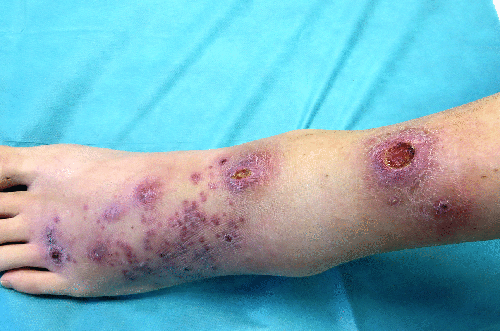
You order microbiological testing and find acid fast bacteria. What is the most likely cause of this patient's infection?
Mycobacterium marinum
Reasoning: Mycobacterium marinum is an acid-fast organism that commonly follow minor trauma or inadvertent inoculation that led to “fish tank granulomas” as shown in the picture above. The organism produces specific membrane lipids that recruit permissive macrophages to the site of infection which allow the bacteria to spread.
600
A 65 y.o. woman arrives at the hospital with worsening shortness of breath, fever, chills. Upon admission she was diagnosed with COVID-19 and after a week, required ventilator assistance to breathe. After being placed on a ventilator, purulent tracheal discharge was sent for a gram stain revealing gram-positive cocci in clusters. What other clinical manifestations would you need to monitor for in this patient?
Secondary bacteremia with subsequent seeding (ex: endocarditis, osteomyelitis).
Reasoning: The most common causes of ventilator associated pneumonia are Pseudomonas aeruginosa, Escherichia coli, Klebsiella pneumoniae, Acinetobacter, and Staphylococcus aureus. The Gram stain reveals gram-positive cocci in clusters, which is characteristic of S. aureus. S. aureus can colonize the respiratory tract leading to pneumonia, especially when patients are already ill. Bacteremia is a common complication.
600
A 24-year-old man presents to the emergency department with severe pain and swelling in his right thigh 2 days after sustaining a deep laceration while planting crops in soil. Physical examination reveals crepitus and hemorrhagic bullae surrounding the wound. Gram stain of tissue obtained during surgical debridement reveals large, gram-positive, boxcar-shaped rods. When cultured on blood agar, the organism produces a characteristic double zone of hemolysis. Which of the following virulence factors is primarily responsible for the extensive tissue destruction observed in this patient?
Alpha toxin
Explanation: Clostridium perfringens is an anaerobic, gram-positive, spore-forming bacillus that can cause clostridial myonecrosis (gas gangrene). Its alpha toxin is a phospholipase C (lecithinase) that damages cell membranes, causing myonecrosis, hemolysis, and tissue destruction. The double zone of hemolysis on blood agar is caused by an inner zone of complete hemolysis (theta toxin) and an outer zone of partial hemolysis (alpha toxin)
600
A 24-yo female who recently immigrated from Nigeria presents to your clinic for fever, malaise, and myalgia. Upon ordering a CBC, you also find that she has a hemoglobin of 10.1. A giemsa-stained blood smear is completed, and shows the following:
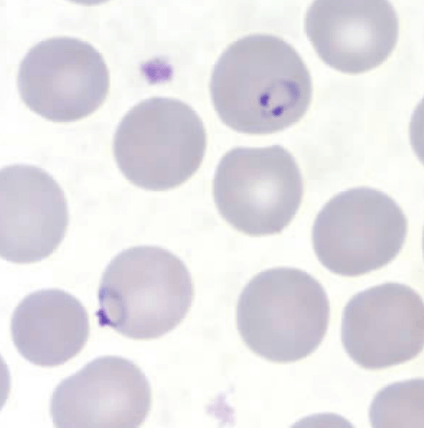
What lifecycle stage of the pathogen is observed in this stain?
Trophozoite
Malaria generally presents with ssx of fever, malaise, myalgia, headache, and mild anemia. The blood smear also shows the rings they form in RBCs as part of their life cycle. Giemsa-stained smears can be used to help in ID'ing the species.
The trophozoite form is observed inside red blood cells and represents the feeding stage of the parasite. Schizonts are the replicating stage and rupture to release merozoites, which continue infection.
600
A 70-year-old man presents with several weeks of progressively enlarging skin lesions on his right hand and forearm. He reports that he has been gardening with his wife and frequently handles roses and potting soil. Physical examination reveals painless, ulcerated nodules extending proximally along the lymphatic drainage of his right arm. A biopsy of one of the lesions is obtained for histopathologic examination.Which of the following findings would most likely be observed on microscopy?
Cigar shaped yeast
Explanation: Sporotrichosis is caused by Sporothrix schenckii, a dimorphic fungus found in soil, decaying vegetation, and plant material. It typically enters the skin through traumatic inoculation, such as a puncture from a rose thorn.