Graphs: Plotting mischief silently
Limits: Math's boundary whispers
Derivatives: Calculus with flair
Applications: Math's real-world magic
Critical Points: Where math gets crucial
Integrals: Summing up solutions seamlessly
Who's that Person?
100
\text{Given the graph is f(x), where is f(x) increasing?}
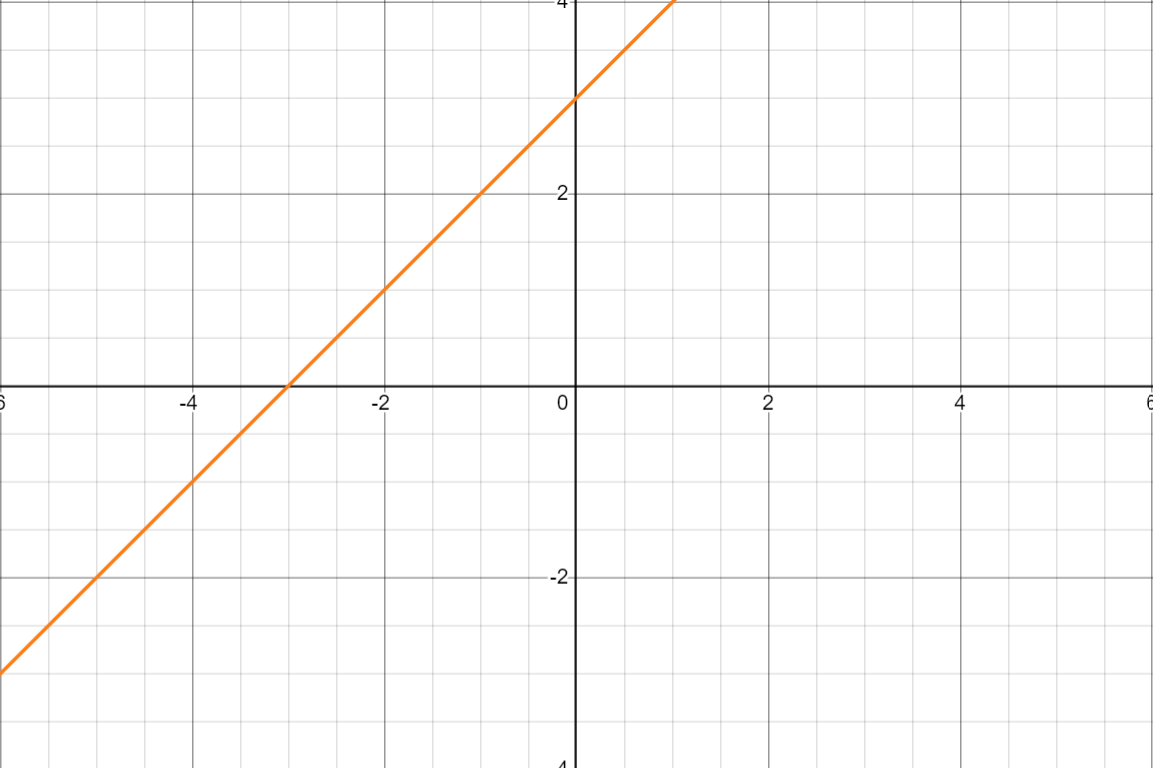
(-\infty,\infty)
100
\text{Evaluate the limit:}lim_{x->1}2x-5
-3
100
\text{The derivative of the following function: } f(x)=x^2
f'(x)=2x
100
\text{Use linear approximation to approximate f(x) at x = 2; } f(x) = x^{1/3}
L(2) \approx 4/3
100
When do critical points occur?
\text{All values of }x \text{ such that } f'(x) = 0
100
\text{Evaluate the integral: }\int_{ }^{ } 1 dx
x+C
100
This ancient Greek philosopher and mathematician is best known for his discovery of a theorem related to right-angled triangles, which is fundamental in geometry. Who is this person?
Pythagoras
200
\text{Given the graph is f(x), where is f(x) decreasing?}
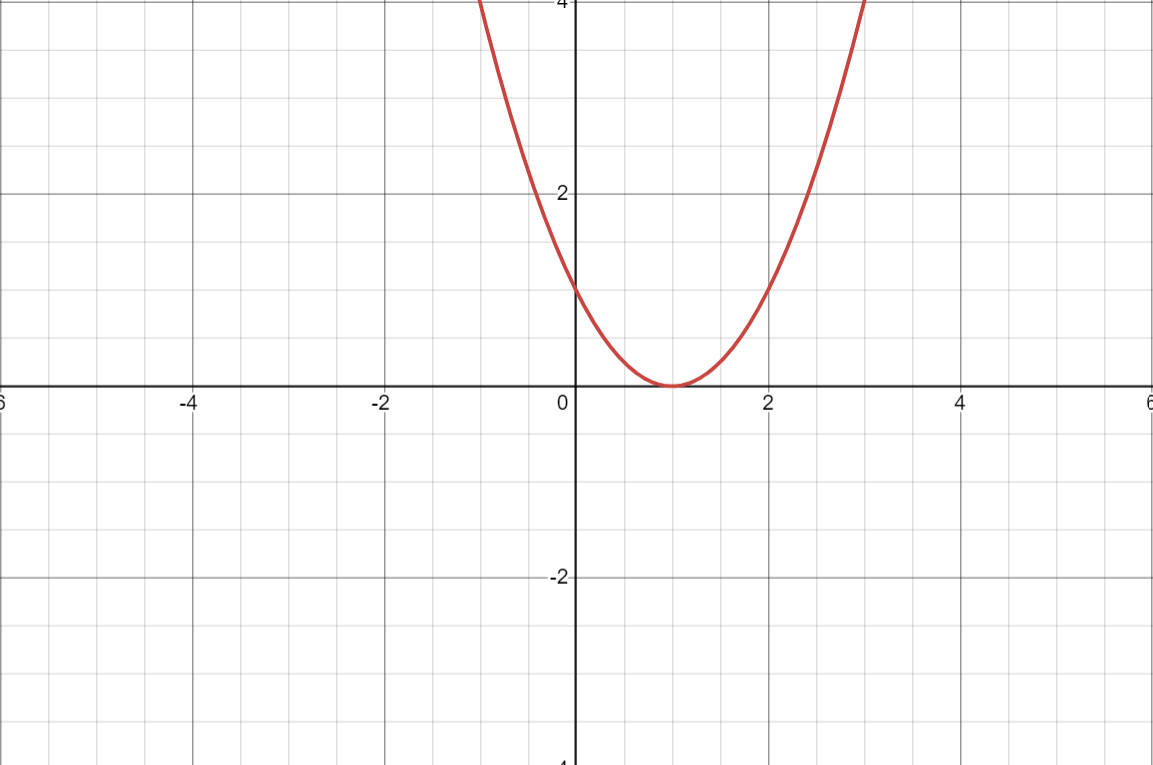
(-\infty,1)
200
\text{Evaluate the limit:}lim_{x->2}\frac{x^2-4}{x-2}
4
200
\text{The derivative of the following function: } f(x)=sec^2(x)
f'(x)=2sec^2(x)tan(x)
200
\text{Use linear approximation to approximate f(x) at x = 0.1}; f(x) = e^x
L(0.1) \approx 1.1
200
\text{Find all critical points of } f(x) = x^2-6x+1
x = 3
200
\text{Evaluate the integral: }\int_{ }^{ }3x^2 + 2x dx
x^3+x^2+C
200
This individual was an Austrian physicist known for his contributions to quantum mechanics, particularly through his formulation of the famous thought experiment involving a cat. Who is this person?
Erwin Schrödinger
300
\text{Given the graph is f'(x), where are the local maxs and local mins of f(x)}
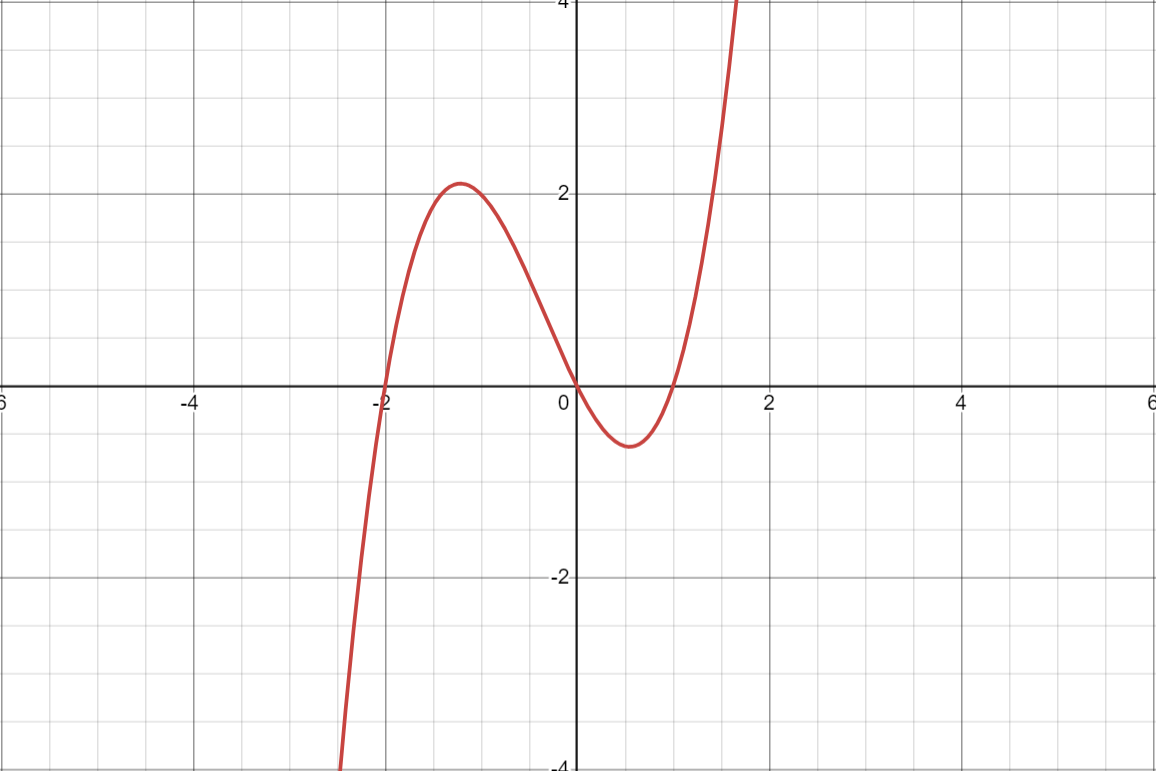
\text{Local Maxs/Mins: } x =-2, x = 0, x = 1}
300
\text{Evaluate the limit:}lim_{x->infty} \frac{3x^3-2x^5+5}{x^3+4x+1}
-\infty
300
\text{Solve for } dy/dx, \text{ given }y^3-x=x^2
dy/dx=\frac{2x+1}{3y^2}
300
\text{Use linear approximation to approximate f(x) at x = 0.004; } f(x) = frac{-4}{\sqrt(x+1)}
L(0.004) \approx -3.992
300
\text{Find all critical points of } f(x) = 2x^3-6x
x = +-1
300
\text{Evaluate the integral: }\int_{1}^{4}3x^2-1 dx
60
300
This English mathematician and physicist formulated the laws of motion and universal gravitation, laying the groundwork for classical mechanics. Who is this person?
Sir Isaac Newton
400
\text{The limit as: }lim_{x->2}f(x)
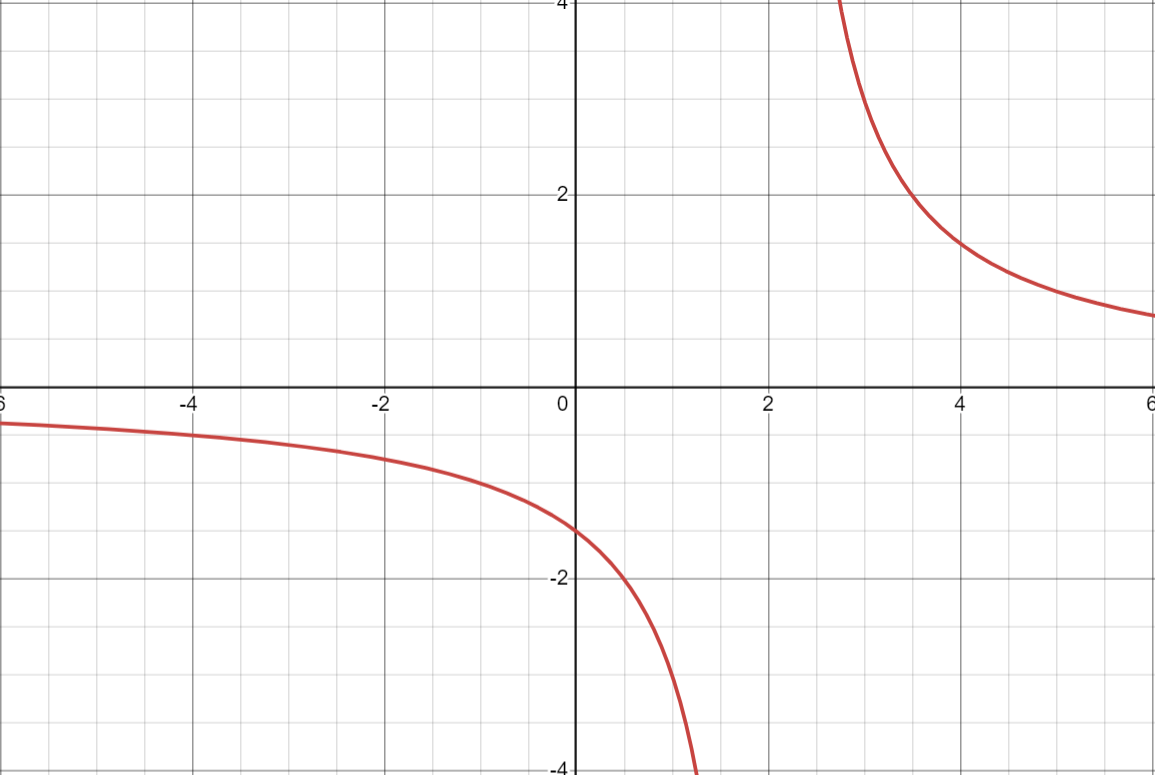
DNE
400
\text{Evaluate the limit: } lim_{x->0^+}xln(x)
0
400
\text{The derivative of the following function: } f(x)= cos(3x)sec(1-x)
f'(x)=-3sin(3x)sec(1-x)-cos(3x)sec(1-x)tan(1-x)
400
A spherical snowball melts in such a way that the instant at which the radius is 20 centimeters its radius decreases at 3 cm/min. At what rate is the volume of the snowball changing at that instant?
-4800 pi \frac{cm^3}{min}
400
\text{Find all critical points of } f(x) = frac{x^2+1}{x^2-x-6}
x = -7+-5sqrt2
400
\text{Evaluate the integral: }\int_{ }^{ }cos(pi x)dx
\frac{1}{pi}sin(pix) + C
400
This American theoretical physicist is often referred to as the "Father of the Atomic Bomb" for his role as the scientific director of the Manhattan Project during World War II. Who is this person?
J. Robert Oppenheimer
500
\text{The limit as: }lim_{x->0}f(x)
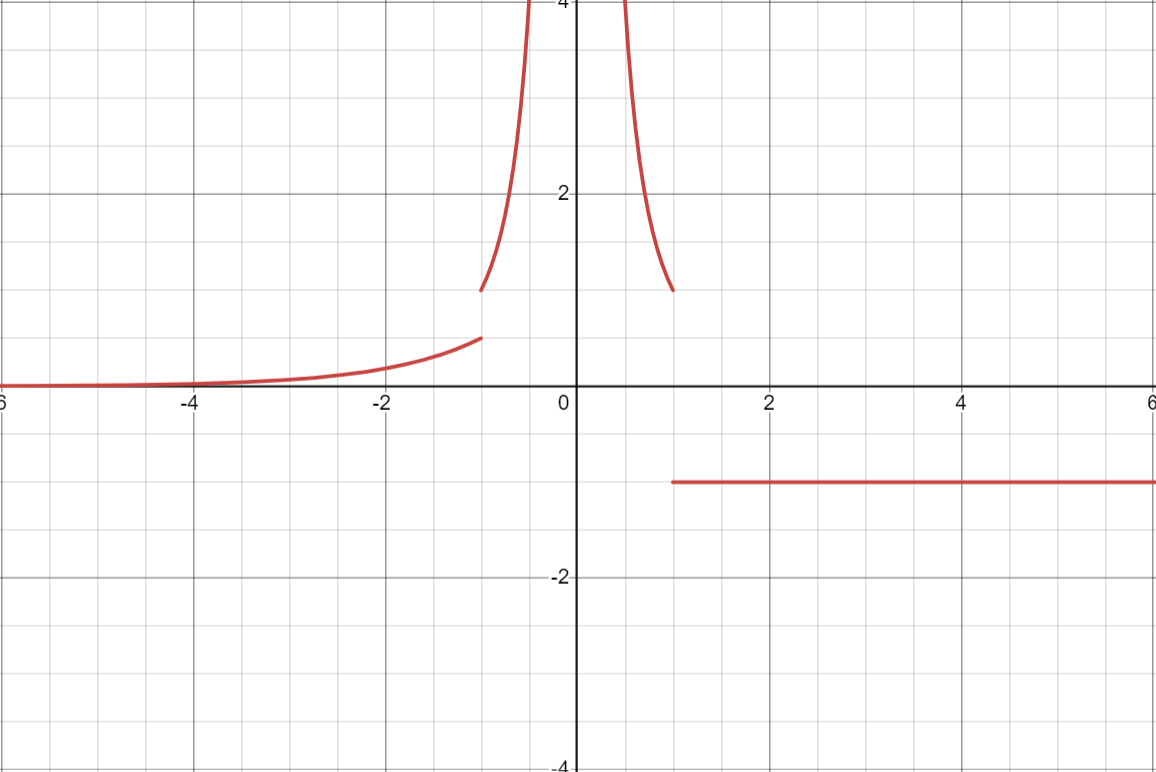
infty
500
\text{Evaluate the limit: } lim_{x->infty} \frac{2x}{x^3-4x^2-9x+1} * e^{3x}
\infty
500
\text{Solve for } dy/dx, \text{ given }x^3sqrt(1-y^2)=cos^2y
dy/dx=\frac{3x^2(1-y^2)}{x^3y-2sqrt(1-y^2)cos(y)sin(y)}
500
Air is being pumped into a spherical balloon at a rate of 5 cubic centimeters per minute. Determine the rate at which the radius of the balloon is increasing when the diameter of the balloon is 20 cm.
1/{80pi}\text{ cm/min}
500
\text{Find all critical points of } f(x) = x^2ln(3x)+6
x = frac{1}{3sqrte}
500
\text{Evaluate the integral: }\int_{-\frac{1}{\sqrt3}}^{\sqrt3}\frac{2}{1+x^2}dx
\pi
500
This British mathematician and computer scientist is known for his pivotal role in breaking the German Enigma code during World War II, which significantly aided the Allied war effort. Who is this person?
Alan Turing
1000
\text{Where is the function undefined? Where does the limit not exist?}
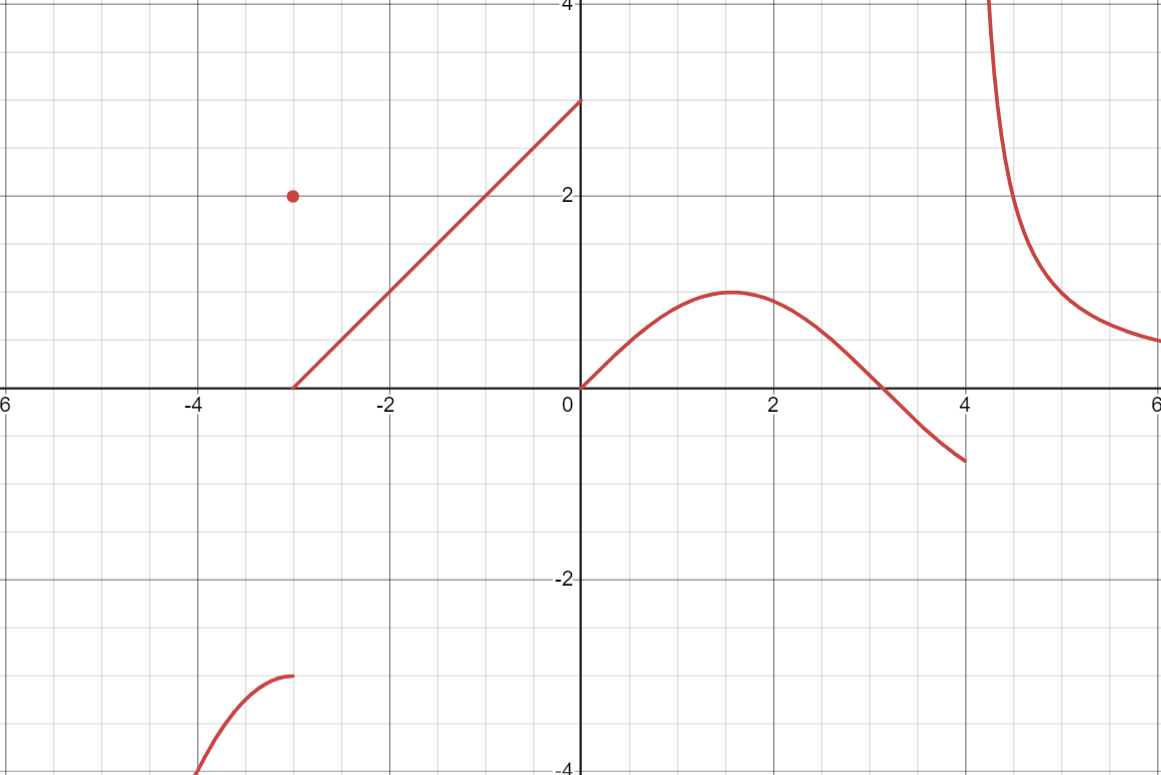
\text{Undefined at x=0, x=4}
\text{Limit DNE at x=-3, x=0, x=4}
1000
\text{Evaluate the limit: } lim_{x->infty} (1+1/x)^x
\text{(All work must be shown)}
e
1000
\text{Solve for } dy/dx, \text{ given }tan(x^2y^4) = 3x + y^2
dy/dx=\frac{3-2xy^4sec^2(x^2y^4)}{4x^2y^3sec^2(x^2y^4)-2y}
1000
An airplane at an altitude of 6 miles travels horizontally at 550 mph. It passes directly over a radar station. What is the rate at which the distance between the plane and the radar station is changing when the plane is 8 miles away from the station?
(550sqrt7)/4 \text{ mph}
1000
\text{Find all critical points of } f(x) = xe^{x^{2}}
\text{None}
1000
\text{Evaluate the integral: }\int_{5}^{15}\sqrt(100-(x-5)^2) dx
25\pi
1000
This ancient Greek mathematician is often referred to as the "Father of Geometry" and is best known for his influential work "Elements," which laid the foundation for much of modern mathematics. Who is this person?
Euclid