Communication
The Senses
Isolation or no?
Can they go home?
Falls, Falls, Falls
Post-op
Name the Disease
Potpourri
Wounds
100
Facial expressions, eye contact, gestures are examples of what?
Nonverbal communication
100
Announcing your name, utilizing the "clock" method when describing food on a tray, describing the room and/or obstacles
Caring for visually impaired or blind patients
100
What is "Standard Precaution"
Used on all patients. Involves gloves and hand washing
100
When does discharge teaching begin?
At the time of admission
100
Poor gait and balance, strength issues, visual impairment
Risk factors for falls
100
What are the 5 P's of compartment syndrome?
Pain, decreased pulse, pallor/pale, paralysis, paresthesia or decreased sensation
100
Infection of the bone that becomes painful, swollen, and extremely tender
Osteomyelitis
100
Clustering cares around a patients prayer times, is an example of what?
Cultural sensitivity
100
Evaluate level of mobility, neurovascular status, nutritional and hydration, and circulatory status
Assessment Risk Factors for Pressure Injuries
200
Depends on understanding of language?
Verbal communication
200
Opacity or cloudiness of the lens, increased incidence with aging, number 1 cause of disability in the United States
Cataracts
200
What type of isolation is needed for a patient with HIV?
Standard or Protective
200
Health history, vitals, current medications, Braden scale
Admission questions
200
Slippery surfaces, poor lighting, clutter
Major causes for falls in the home
200
What is a complication of surgical patients?
PE or DVT
200
First stage may be asymptomatic or have fatigue and skin rash. Later stages the patient may have oral candidia, loss of appetite, wasting syndrome, effects on cognition, and frequent infections
HIV
200
When are restraints to be utilized?
With violent or aggressive patients who do not respond to alternative resources
200
What are two forces that contribute to pressure injuries?
Friction and Shear
300
Confident, eye contact, working to capacity with or without supervision, remaining calm under pressure, asking for help when necessary
Characteristics of the Assertive Nurse
300
Using voice amplifiers, pen and paper, letter charts, face the patient when speaking
Ways to communicate with patients who are deaf or have hearing impairments
300
What type of isolation is needed for a patient with non-respiratory MRSA?
Contact
300
Lifting with the knees and not the back or utilizing lifting devices
Safe handling and preventing back strain
300
True or false: Falls are the leading cause of injury fatality in older adults
True
300
A patient undergoing mastoid or ear surgery should do what to avoid infection in the ear?
Wear ear plugs when showering or swimming
300
Rare autoimmune disease that has symptoms of dry eyes, dry mouth, pain, and fatigue
Sjögren's
300
Who is a mandated reporter?
Any healthcare worker (Nurses, Providers, Social Workers, etc)
300
Full-thickness skin and tissue loss, tissue loss within the ulcer cannot be confirmed due to slough or eschar obscuring
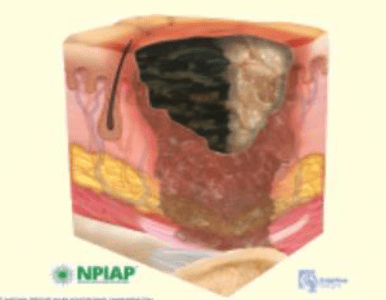
Unstageable Pressure Injury
400
Used to help establish a rapport and trust
Therapeutic relationship
400
Illusion of motion or spinning sensation
Vertigo
400
What isolation is needed for a patient with C. Diff?
Contact
400
Encouraging to utilizing pain medication, adhering to therapy appointments, using hip precautions
Total Hip Arthroplasty discharge
400
Bed in low position with fall alarm on, call light within reach, assistive device within reach
Nursing interventions to help prevent falls
400
What is common for a patient to have after any surgical procedure?
Pain
400
Fever, fatigue, butterfly rash, joint swelling
Systemic Lupus Erythematosus
400
What does CMS stand for?
Circulation, Movement, Sensation
400
Full-thickness loss of skin, adipose is visible, slough and eschar may be visible
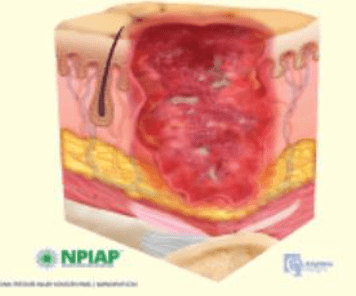
Stage 3 pressure injury
500
Sociocultural differences, mental and emotional state, developmental level
Factors influencing communication
500
Blurred vision, "halos" around lights, increased IOP, "silent thief of sight"
Glaucoma
500
What isolation is needed for a patient with Tuberculosis?
Airborne
500
Watching for "heat/hot spots", keeping dry, watching for signs of compartment syndrome
Cast care
500
Gait belt, walker, cane
Mobility aides
500
Wear eye protection, administer antibiotic, anti-inflammatory and corticosteroid eye drops. Call provider If any vision changes.
Cataract post-op instructions
500
Symmetric joint pain, swelling, warmth, erythema, morning joint stiffness, and lack of function
Rheumatoid Arthritis
500
Skin breakdown, anxiety, delirium, death
Physiological hazards associated with restraints
500
Localized area of non-blanchable erythema
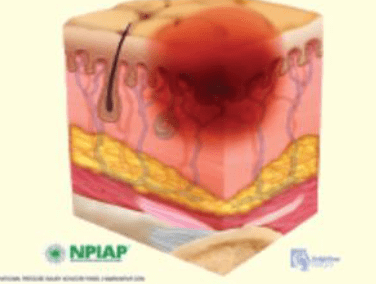
Stage 1 Pressure Injury