ID That Bug
Name that Stain
What's that cell?
Troubleshooting Galore
Blood Group Madness
100
A patient’s urine culture grew a white opaque colony with clumped gpc. Following testing shows catalase positive, coagulase negative, and Novobiocin resistance
Staphylococcus saprophyticus
100
The bread and butter of the Histology lab, this stain consists of an oxidized, naturally occurring dye and a synthetic, anionic counterstain.
Hematoxylin and Eosin
100
This fiery soldier helps fight parasitic infections and is seen in increased amounts during an allergic reaction or in the urine due to acute interstitial nephritis:max_bytes(150000):strip_icc()/eosinophil-white-blood-cell-leukocyte-400x-at-35mm-human-blood-smear-eosinophils-have-a-bilobed-nucleus-and-large-reddish-cytoplasmic-granules-increased-numbers-of-eosinophils-eosinophilia-occur-in-allergies-1-3-of-the-total-of-white--58ac65cd5f9b58a3c918b494.jpg)
Eosinophil
100
Your analyzer aspirated a bubble in the sample, leading to a discrepant result. What type of error is this?
Random
100
Named after the type of monkey it was first discovered in, this IgG blood group is denoted by a positive or a negative.
Rh
200
A patient’s CSF grows this gram-negative organism well on a CAP and is close friends with Staphylococcus aureus on a BAP. A milky white mixture of this organism and aminolevulinic acid produces no fluorescence
Haemophilus influenzae
200
A lab favorite due to its quick turnaround time, this stain can help ID Kidney issues, goblet cells, or even a fungal infection
Periodic Acid Schiff
200
After kissing one too many people at the bar last weekend, you may see this form of an immune cell “hugging” nearby cells with it’s enlarged cytoplasm
Reactive Lymphocyte
200
A chronic lymphocytic leukemia patient’s WBCs are all smudged up due to weakened cytoplasm. What should you add to the whole blood to help prevent smudging?
Albumin
200
Though a mismatch in this well-known blood group causes life-threatening transfusion reactions, a HDFN of this blood group is often mild and self-limiting
ABO
300
This bacterium is sexually transmitted, but is also well-known to cause blindness due to inner-eyelid scarring through transmission on fingers and towels. It doesn’t grow well, but a Nucleic Acid Amplification Test can ID this “cloaked” microorganism
Chlamydia trachomatis
300
This stain uses the principle of metallic substitution to demonstrate pathological calcium deposits in soft tissues
Von Kossa
300
Commonly mistaken for lymphocytes by novice Techs, the appearance of these premature cells often warrants a consultation with the hematopathologist
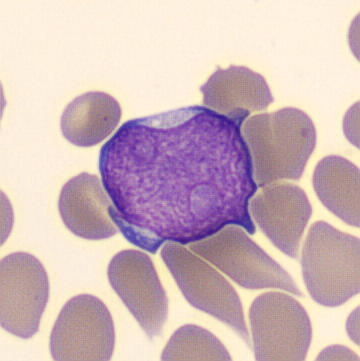
Blasts
300
A patient’s CBC has a remarkably high MCHC. The blood smear result shows RBC clumps throughout. What is the likely cause of the high MCHC?
Cold Agglutinins
300
Its lowercase letter is named “cellano”, this IgG blood group is the second most common cause of severe HDFN behind Rh
Kell
400
1 of the 3 organisms often seen in the “triple whammy” of the surface wound swabs of the homeless population, this gram-positive bacillus was historically seen to cause life-threatening infections characterized by a “Pseudomembrane” on the back of the throat
Corynebacterium diphtheriae
400
This stain uses an argentaffin reaction to demonstrate fungal cell walls. It is often used to help identify Pneumocystis jirovecii, a pathogenic fungus in immunocompromised patients
Grocott’s Methenamine Silver
400
This purple granulocyte often plays a role in hypersensitivity reactions by releasing histamine
Basophil
400
Oh no! A patient’s electrolytes show a critically high chloride, critically high sodium, and a low potassium. What error caused these results?
Saline Contamination
400
This IgM blood group’s phenotype relies on 3 different genes, including the Secretor Gene and the H gene
Lewis
500
This bacilli’s disease was historically known as Consumption, which was romanticized due to the victim’s pale skin, weight loss, and rosy cheeks. Culturing in specialized media often takes weeks due to the hydrophobic cell wall.
Mycobacterium tuberculosis
500
This stain uses hydrogen bonding to attach to the beta-pleated sheets of proteins seen in Amyloidosis. Use polarizing light filters to demonstrate birefringence!
Congo Red
500
Don’t let its cute owl eyes fool you - this form of lymphocyte is often indicative of Hodgkin’s Lymphoma
Reed-Sternberg Cell
500
A negative result of this lectin confirms that a patient’s blood group is a Subgroup of A
Dolichos biflorus
500
This blood group, weakly expressed in newborns and carrying both IgG and IgM antibodies, shares its name with a Christian church denomination.
Lutheran