Medieval Timeline
Reformation Timeline
Christian Family Tree
Reformation
Hope for Unity
100
The Great Schism occurred this year
1054
100
Martin Luther publishes his 95 Theses this year
1517
100
This is the event that occurred at G (1054)
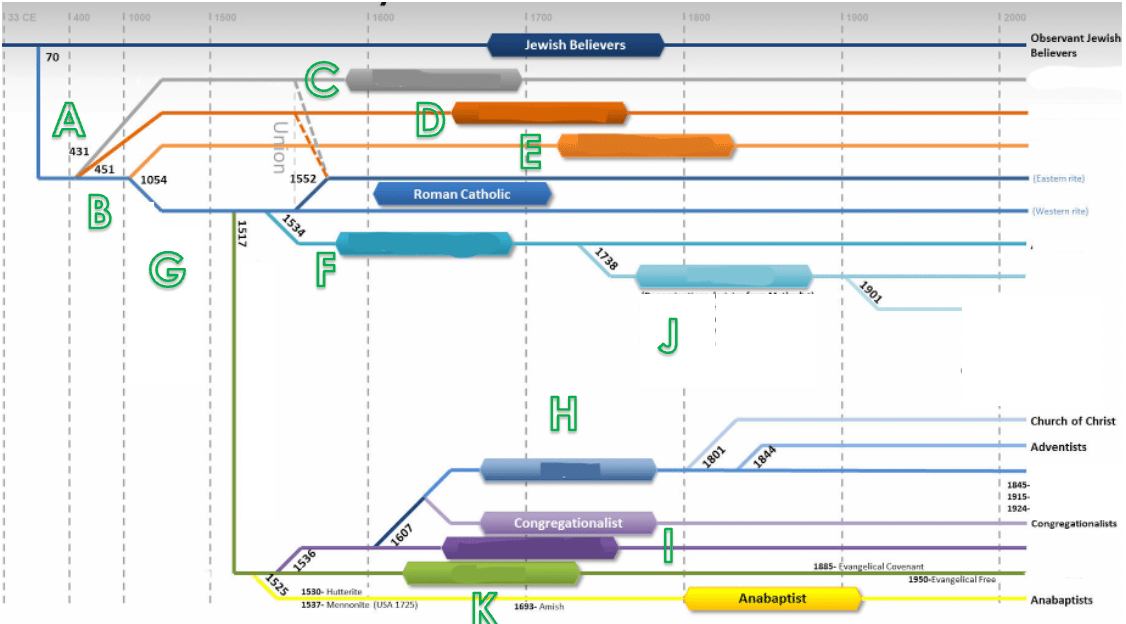
the Great Schism
100
This pope and this Augustinian monk were involved in the events of the early 1500s that marks the beginning of the Protestant Reformation
Pope Leo X
Martin Luther
100
This document, published in 1999, represents reason to hope that Christians are capable of healing the divisions of the Protestant Reformation and moving toward Christian unity through ecumenism
The Joint Declaration on the Doctrine of Justification
200
The western Roman Empire fell in this year
476
200
The Church convened the Council of Trent from this year to this year
1545-1563
200
These are the churches in grey (C) dark orange (D) and light orange (E)
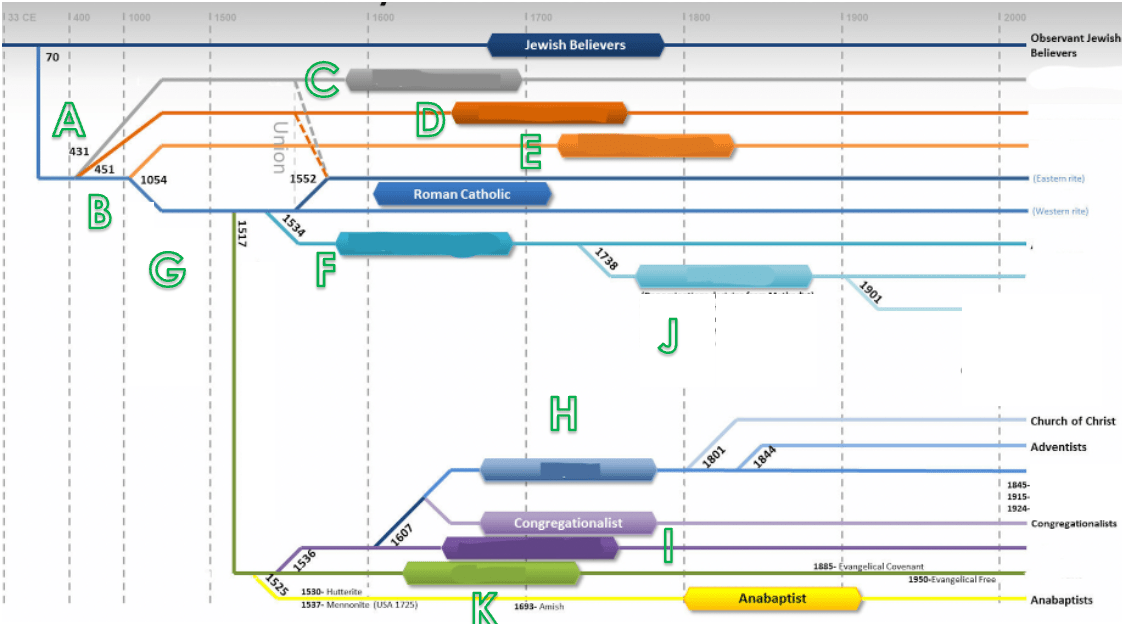
C=Assyrian Orthodox
D=Oriental Orthodox
E=Eastern Orthodox
200
This reformer's theology of how humans are saved (soteriology) is in the form of 5 'Solas'
Martin Luther
200
These five Christian communions (i.e. ‘Churches’) agreed on the basic truth of justification in 2019 at the University of Notre Dame.
Anglican, Methodist, Catholic, Lutheran, Reformed
300
The crusades began and ended in these years
began=1095
ended=1291
300
In this year, Martin Luther was excommunicated by Pope Leo X
1521
300
This church is represented with green and the letter K below. It was founded by an Augustinian monk who was excommunicated by Pope Leo X.
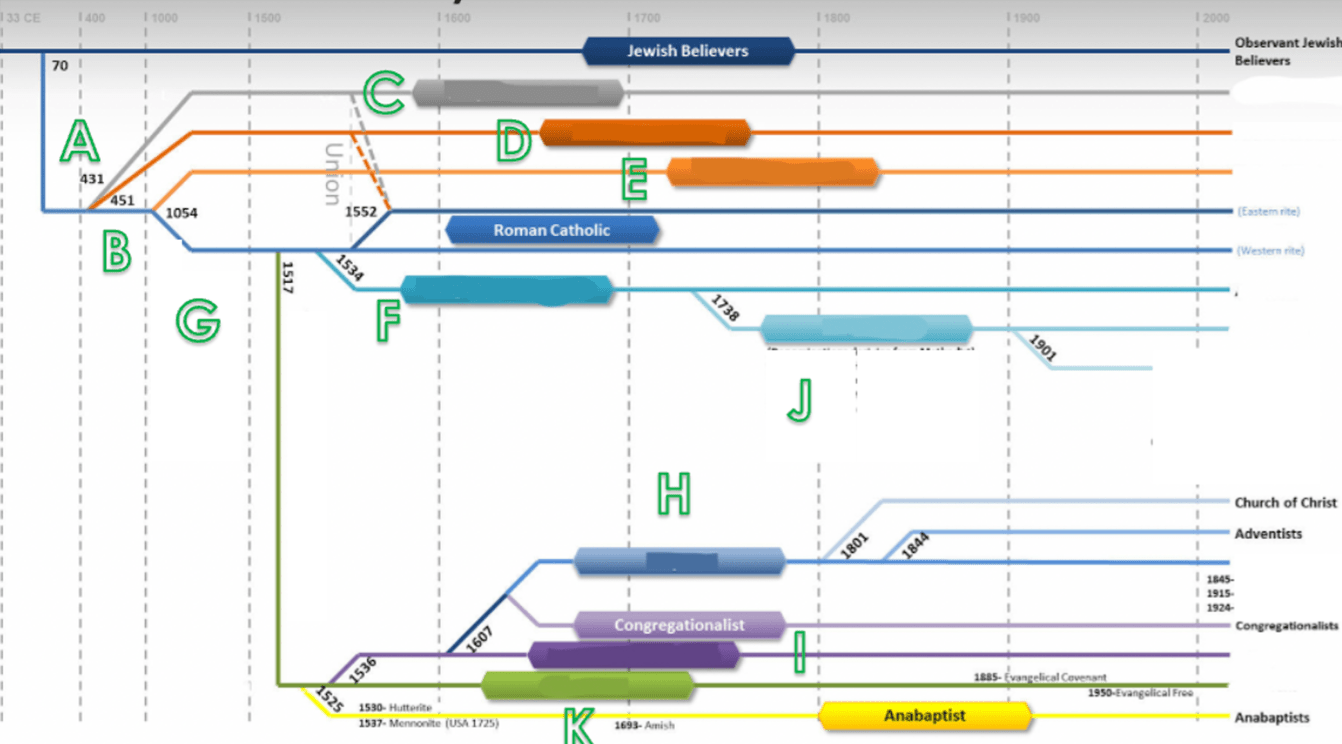
Lutheran Church
300
This pope and this monarch of England were involved in the events of the early 1500s that led to the birth of the Anglican Church
Pope Clement VII
King Henry VIII
300
This early church saint, who heavily influenced both Martin Luther and is still deeply revered in the Roman Catholic tradition said, "We eat the body of Christ to become the body of Christ."
St. Augustine
400
St. Dominic founded the Order of Preachers in this year
1216
400
In this year, with the Act of Supremacy, Henry VIII claims to replace the pope as supreme head of the Church in England
1534
400
This is the church represented with the F and darker blue below.
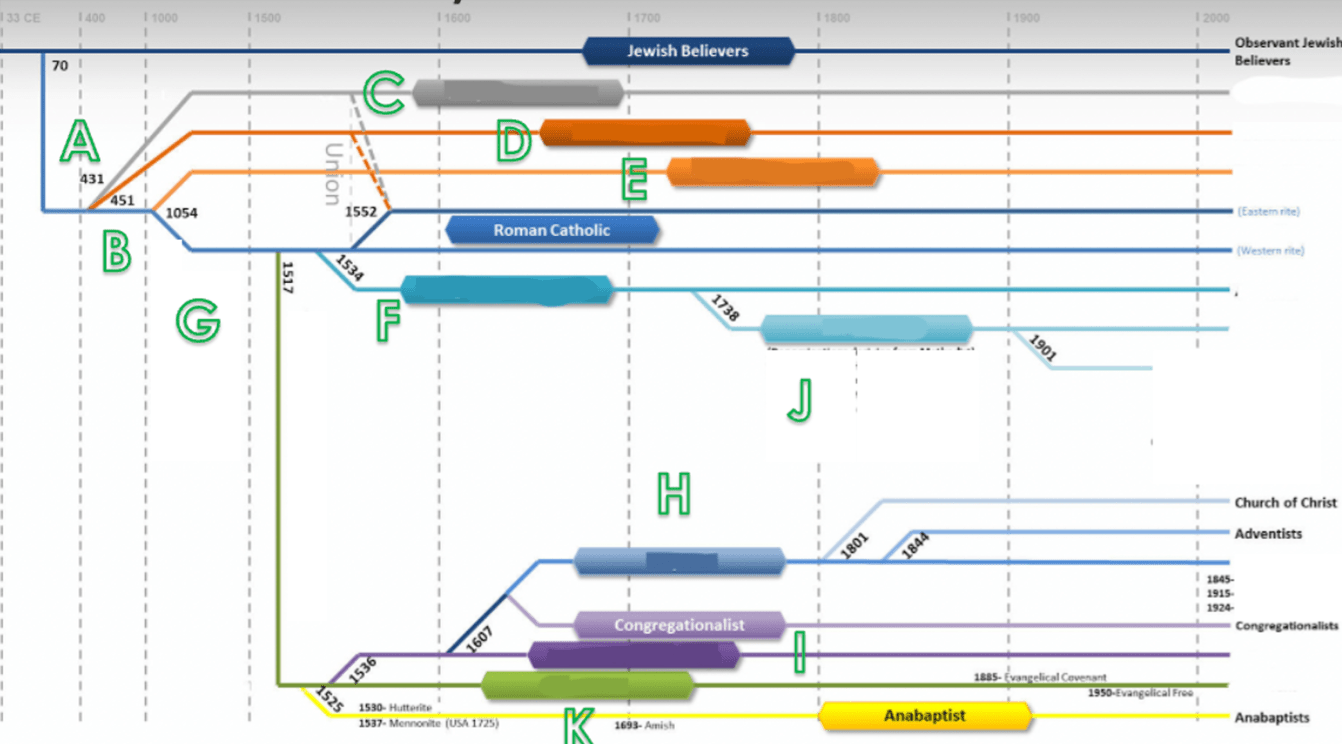
Anglican (Episcopal)
400
These are Martin Luther's 5 Solas
Sola Scriptura (scripture alone)
Solus Christus (Christ alone)
Soli Deo gloria (glory to God alone)
Sola gratia (grace alone)
Sola fide (faith alone)
400
This pope and this patriarch met for dialogue in 1976 that produced bold hope that Catholic and Eastern Orthodox Churches are capable of reuniting
Pope Paul VI
Patriarch Athenagoras
500
St Francis founded the Order of Friars Minor in this year
1210
500
The Spanish Inquisition was in effect during these years
1478-1834
500
This is the church represented with lighter blue and the J below, this church formed after reforming away from the Anglican Church
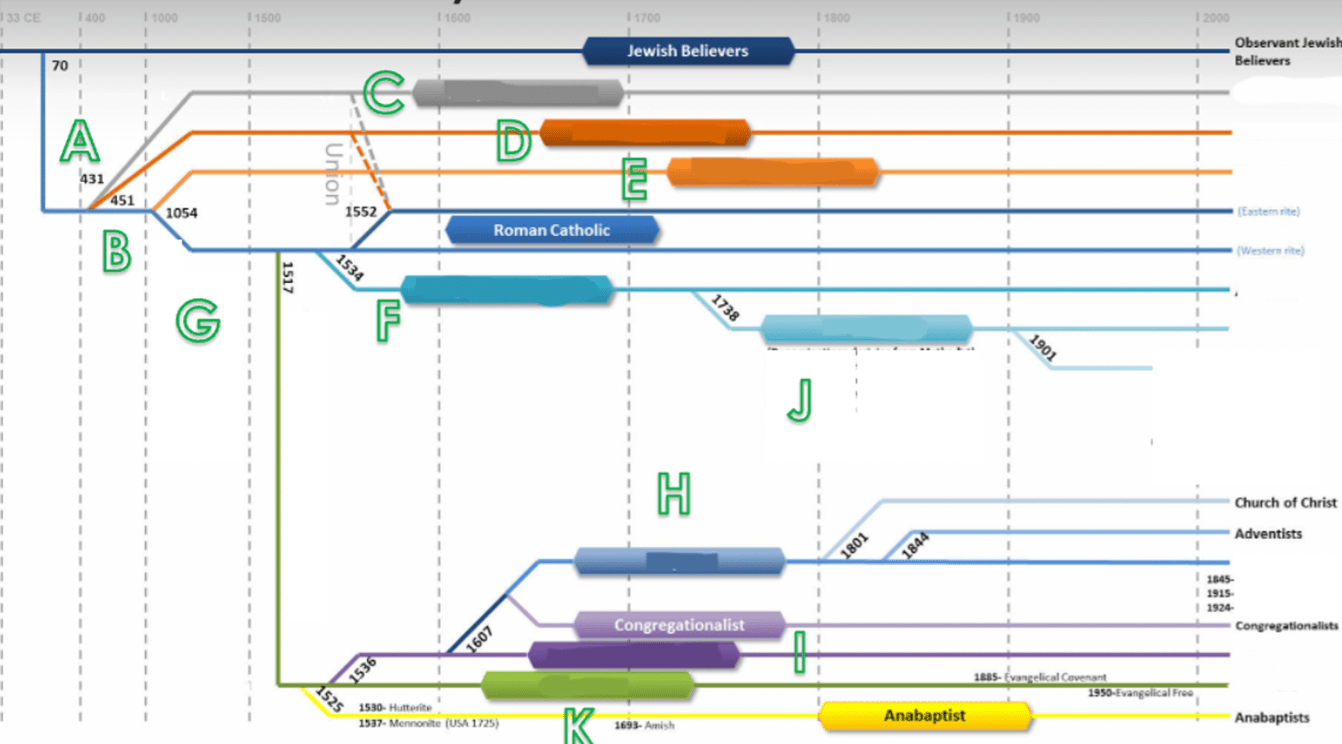
Methodist Church
500
This pope and this patriarch of Constantinople were involved in the events of 1054 that sparked the Great Schism
Pope Leo IX
Patriarch Michael Cerularius
500
This pope and this patriarch met for dialogue in 2014 that produced hope that the Catholic and Eastern Orthodox Churches are capable of reuniting
Pope Francis
Patriarch Bartholomew
600
This is the year Benedict of Nursia founded his monastery at Monte Casino in Italy.
530 AD
600
In this year, John Calvin published his Institutes of Christian Religion, defining the principles of Reformed Christianity.
1536
600
These are the two events that occurred at letter A and B
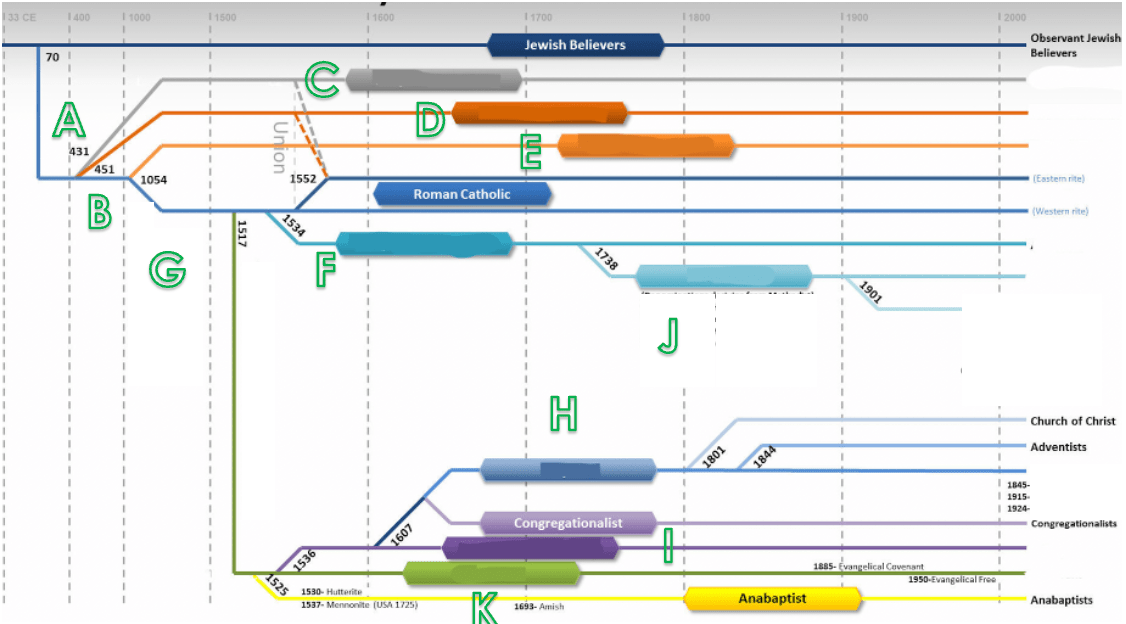
A-Council of Ephesus
B- Council of Chalcedon
600
The TULIP acrostic is a summary of this reformer's theology of how humans are saved (soteriology)
John Calvin
600
This early Church saint from Alexandria, who heavily influenced the Council of Nicaea, said, "God became man so that man might become God."
St. Athanasius
700
St. Patrick died this year
461 AD
700
In this year, the Medieval Inquisitions were begun
1184
700
These are the churches represented in dark grey-blue with the H and in purple with an I -respectively.
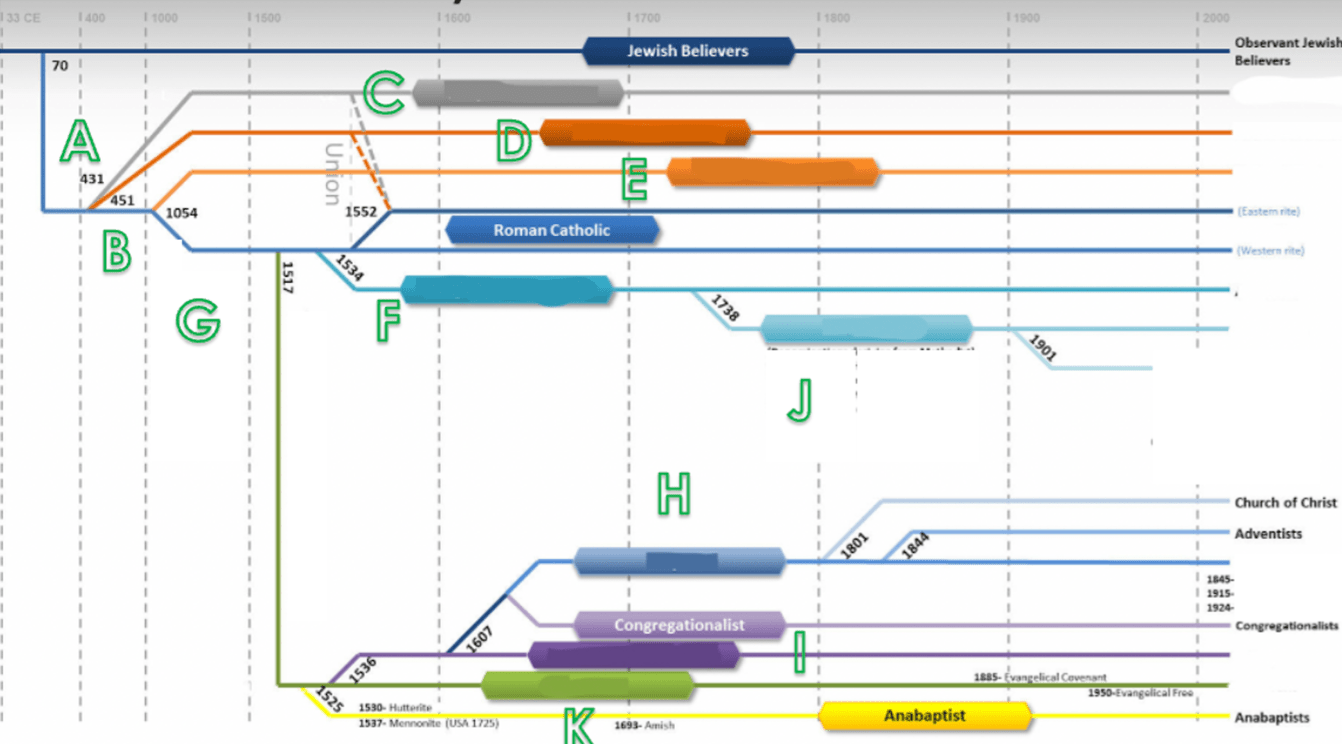
I= Reformed (Calvinist) Churches
H=the Baptist Church
700
These five doctrines make up the TULIP acrostic of reformed theology
T total depravity
U unconditional election
L limited atonement
I irresistible grace
P perseverance of the saints
700
According to ‘differentiating consensus’, this is the basic truth of justification. In other words, humans are saved...
by grace in faith in Christ.