DBT
CBT
Symptoms
Coping Skills
Misc.
100
What is mindfulness?
The practice of being fully present and aware of your current experience—without overreacting or getting lost in thoughts.
100
What is the CBT Triangle?
The CBT Triangle shows and explains how thoughts, feelings, and behaviors continuously influence one another; changing any one corner shifts the others.

100
Someone repeatedly experiences sudden episodes of intense fear accompanied by a racing heart, dizziness, and shortness of breath. What might these episodes be called?
Panic attacks.
100
Your feeling overwhelmed before a big test. Name one coping skill you could use to help calm your body.
Deep breathing, checking in with someone, DBT TIPP (temperature, intensive exercise, Paced breathing, PMR), music, coloring, grounding skills, etc.
100
What is one example of a healthy boundary?
Saying no when your uncomfortable or communicating your limits respectfully.
200
DBT is made up of 4 parts, name one of them.
Mindfulness
Emotion Regulation
Distress Tolerance
Interpersonal Effectiveness
200
What are cognitive distortions, also known as "Thinking Traps".
Cognitive distortions are thinking patterns or traps that cause us to view situations in exaggerated or overly negative way. They can make our thoughts feel like facts, even when they aren't.
200
Name 3 common symptoms of anxiety
excessive worry, racing heart, restlessness, fidgeting, sweating, muscle tension, difficulty concentrating, low appetite, nausea, headaches
200
You're really angry at a friend and want to send a hurtful text, but you don't want to make things worse or damage the friendship. What DBT skill could help you pause before reacting?
S.T.O.P Skill! (a short sequence used to pause impulsive reactions and choose a wiser response).
S — Stop: Freeze your body and halt the impulse. Don’t speak, move, or send the message.
T — Take a step back: Create physical or mental distance; take a breath.
O — Observe: Notice your thoughts, feelings, body sensations, and what’s happening around you.
P — Proceed mindfully: Choose an action aligned with your goals and values, not the urge.
200
What is one sign you might need a break before continuing an argument?
You're becoming overwhelmed, raising your voice, struggling to listen, feeling an urge to say something hateful or do something hurtful (emotionally and physically)
300
Name two parts of the P.L.E.A.S.E skill.
Treat Physical Illness and take medications as prescribed.
Balance eating in order to avoid mood swings.
Avoid mood-Altering substances and have mood control.
Maintain good sleep so you can enjoy your life.
Get exercise to maintain high spirits.
300
List 1 Cognitive Distortions or "thinking trap" with an example.

300
Name 3 symptoms of depression (other than sadness!)
low energy, loss of interest, changes in sleep or appetite, difficulty concentrating, feelings or worthlessness, hopelessness, helplessness, suicidal thoughts, isolation
300
1) What is one healthy coping strategy you can use when you feel the urge to avoid something that makes you anxious or uncomfortable?
2) Bonus 100pts!: Why can avoiding things that make us anxious or uncomfortable our anxiety worse over time?
1) Break the task into smaller steps, use a calming skill, gradually face the situation instead of avoiding it all together, reward ourselves along the way with breaks, treats, etc.
2) Because avoidance might make us feel better in the moment, but it teaches our brain that the situation is something to fear! facing things gradually helps us build confidence and learn that we can handle comfy situations!
300
What is the difference between assertive and aggressive communication?
Assertive communicates needs respectfully, aggression ignores or violates others boundaries.
400
What is the DBT S.T.O.P skill used for?
S.T.O.P is a short sequence used to pause impulsive reactions and choose a wiser response.
S — Stop: Freeze your body and halt the impulse. Don’t speak, move, or send the message.
T — Take a step back: Create physical or mental distance; take a breath.
O — Observe: Notice your thoughts, feelings, body sensations, and what’s happening around you.
P — Proceed mindfully: Choose an action aligned with your goals and values, not the urge.
400
How can changing our negative thoughts into more balanced thoughts, change the way we feel and act?
It can help us feel less overwhelmed, anxious, or upset and make healthier choices about how we respond in situations instead of reacting based on negative thoughts.
REMEMBER: THOUGHTS ARE NOT FACTS!
400
TRUE or FALSE: ADHD can affect more than just someone's ability to pay attention.
AND..... Bonus 100 pts- can you name another symptom of ADHD not related to focus/attention.
TRUE!
- Difficulty paying attention to details or making careless mistakes
- Trouble sustaining focus on tasks or play
- Forgetfulness in daily activities
- Difficulty following instructions or organizing tasks
- Easily distracted by external stimuli or unrelated thoughts
Hyperactive-impulsive symptoms may include: Fidgeting, tapping, or squirming when seated - Difficulty remaining seated or staying still
- Excessive running, climbing, or restlessness in children
- Talking excessively or interrupting others
- Impulsive decision-making, difficulty waiting turns, or acting without thinking
400
Names 4 different grounding skills.
Count backwards from 100 by 3s or 7s – Focus on numbers to interrupt racing thoughts.
Recite the alphabet backwards – Forces your brain to concentrate, pulling attention away from anxiety.
Categories lists – Name items in a category (foods, animals, movies).
ABC lists – Match each letter with a category item.
Listing US capitals and their states – Requires focus and memory.
54321 Method – Identify 5 things you see, 4 you feel, 3 you hear, 2 you smell, 1 you taste.
Memory games – Try to remember phone numbers, license plates, or objects in a room.
- Sour candy – Strong taste snaps attention back to the present.
- Frozen orange / frozen washcloth – Cold sensations on hands, face, or neck bring focus to your body.
- Face dive (cold water) – Briefly immerse your face in cold water to activate a calming response.
- Showering – Notice water temperature, pressure, and sound.
- Grounding with colors – Pick a color and find/list as many objects in that color as you can in detail. Once finished, go to the next color.
- Box breathing – Inhale for 4, hold 4, exhale 4, hold 4.
- Figure-8 breathing – Trace a figure-8 while syncing breath to movement.
- 5-finger breathing – Trace your hand while inhaling up and exhaling down each finger.
- Triangle breathing – Inhale along one side of a triangle, hold the next, exhale the last.
400
What is the Circle of Control and how can it help us deal with stressful situations?
The Circle of Control helps us recognize what we can control, what we can influence, and what is outside of our control. It helps reduce anxiety and stress by reminding us not to waste energy focusing on things we can't control. It helps depression by shifting our focus towards small, manageable steps we can take to feel more empowered and less stuck!
For example, we can't control what someone says about us, but we can control how we respond to is. 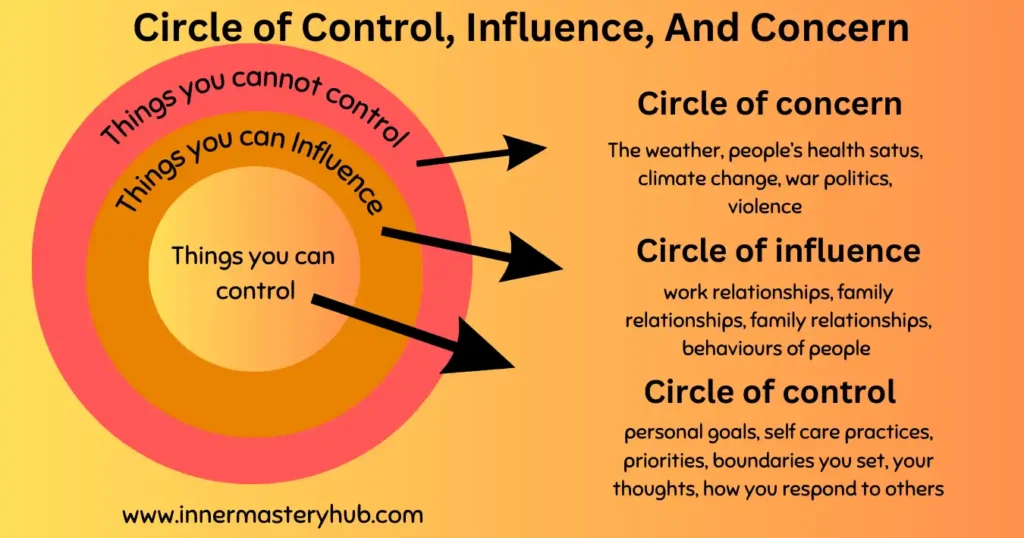
500
Name all four parts of T.I.P.P
T – Temperature (Cold Exposure)
I – Intense Exercise
P – Paced Breathing
P – Progressive Muscle Relaxation
500
You receive a text that says "we need to talk". Identify all 3 parts of the CBT triangle.
Thought: "I'm in trouble", "I did something wrong", "this is going to be horrible"
Feel: anxiety, worry, scared
Behavior: Avoid the text, avoid the person, wait until they respond, isolate, act quieter than usual
500
What does the Anger Iceberg teach us about the feelings we show on the outside versus what we might actually be feeling underneath?
Anger is often just the emotion we show on the outside because it's an easier emotion to express! Underneath, we might actually be feeling hurt, embarrassed, scared, rejected, etc. It reminds us that there's usually more going on than what we see/show to others.

500
Explain what maladaptive coping is and can you provide an example (how people use it)?
Maladaptive coping is using unhealthy ways to deal with stress or difficult emotions that might make you feel better temporarily, but can cause more problems in the long run.
Examples:
- Self-harm
- Using substances (weed, alcohol, ect.)
- Doom scrolling
- Avoiding situations or people
- Emotional Suppression (pushing away our feelings)
- Self‑Blame
- Aggression
500
What are 5 guidelines/rules of PHP?
- No exchanging contact info
- No glorifying unhealthy behaviors (Self-harm, substance use)
- No substances brought to program
- Remain sober
- No energy drinks
- No physical touch
- Respect one another
- No electronics outside of academics
- Confidentiality (what's said in groups stays in group!)
- Attend daily
- Communicate safety needs