Unit 1: Infection
Unit 1: Bacteria and Ear
Unit 2: Genes
Unit 3: Cancer
Random
100
During PCR, which step separates the DNA strands?
Denaturation
100
What is the outer ear called/ earlobe?
Pinna/ auricle
100
Which prenatal procedure removes amniotic fluid for chromosome testing?
Amniocentesis
100
A mutation causes a proto-oncogene to become permanently active. What is the result?
Uncontrolled cell division (oncogene activation)
100
A pedigree shows the trait in every generation and affects males and females equally. What inheritance pattern is most likely?
Autosomal dominant
200
Which type of bacterial communication involves transfer of DNA through direct contact using a pilus?
Conjugation
200
Which bacterial structure surrounds and protects bacteria from immune attack.
Capsule
200
Which type of vaccine uses a weakened but living version of a pathogen?
Live attenuated vaccine
200
Which imaging technique is best for detecting skeletal metastases?
Bone scan
200
What is the most common maternal screen?
Newborn screening
300
If a solution undergoes a 1:10 serial dilution twice, what is the final dilution?
1:100
300
Which class of antibiotics works by preventing bacteria from forming cell walls?
B-lactams
300
A disorder caused by mutations in multiple genes plus environmental factors follows what inheritance pattern?
Multifactorial Inheritance
300
Which gene type normally prevents uncontrolled cell division?
Tumor suppressor gene
300
Which type of skin cancer is the most dangerous because it spreads quickly?
Melanoma
400
A patient tests negative by ELISA early in infection but later tests positive. Explain why results changed.
Antibodies had not yet reached detectable levels earlier; immune response developed later
400
Damage to the hair cells inside the cochlea cause what type of hearing loss?
Sensorineural hearing loss
400
A mutation passed from mother to all children but never from father to child follows which inheritance pattern and why?
Mitochondrial inheritance; mitochondria come from the mother’s egg cell
400
A patient’s microarray shows red expression in a cancer growth gene compared to normal tissue. What does this indicate?
The gene is overexpressed in cancer cells
400
Explain three differences between gram positive and gram negative bacteria.
Gram-positive bacteria have a thick cell wall and no outer membrane, while Gram-negative bacteria have a thin cell wall and an outer membrane. Gram-negative bacteria are often more antibiotic resistant because of this outer membrane. Gram-positive stain purple, and Gram-negative stain pink.
500
Draw/ describe the steps of an ELISA: what order do the different substances attach.
Antigen attaches to the well (plate is coated with antigen). Primary antibody binds to the antigen if present. Enzyme-linked secondary antibody binds to the primary antibody. Substrate is added → enzyme causes a color change if the target is present.
500
Describe how sound waves reach the brain, include the 8 structures involved in order.
Pinna-> external auditory canal-> tympanic membrane/ eardrum-> malleus-> incus-> stapes-> (oval window-bonus)-> cochlea-> auditory nerve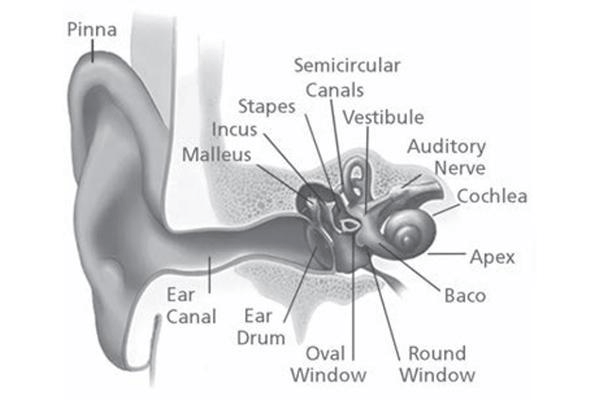
500
A screening test suggests increased risk for trisomy 21. Give an example of a screening test and suggest what should happen next and why?
A quad screen (maternal blood test), cell-free fetal DNA test (noninvasive prenatal testing), or ultrasound. Diagnostic testing (CVS or amniocentesis) to confirm because screening tests do not diagnose
500
A doctor chooses MRI instead of CT to evaluate suspected brain tumor spread. Explain why this decision makes sense.
MRI provides better soft-tissue detail than CT
500
A patient has abnormal mole characteristics following the ABCDE rule. Name all 5 warning signs that suggest melanoma and explain why screening matters.
Asymmetry, border irregularity, color variation, diameter >5 mm, evolving shape. Screening allows early detection before metastasis