Exam 1
Exam 2
Exam 3
Exam 4
Exam 5
Exam 6
100
The absence of a nucleus is the defining characteristic of this type of cell.
What is a prokaryote?
100
This type of transport moves substances against their concentration gradient and requires ATP.
What is active transport?
100
Gram-negative bacteria have this additional layer outside the peptidoglycan wall.
What is the outer membrane?
100
This process breaks down glucose into pyruvate and occurs in the cytoplasm.
What is glycolysis?
100
The phase of the bacterial growth curve that shows the maximum rate of cell division.
What is the exponential growth phase?
100
This is the concept that a drug should selectively kill or inhibits the growth of microbial targets while causing minimal or no harm to the host.
What is selective toxicity.
200
This enzyme synthesizes new DNA strands during replication.
What is DNA polymerase?
200
This organelle breaks down bacteria after immune cells perform phagocytosis.
What is the lysosome?
200
These short, bristle-like appendages help bacteria adhere to surfaces.
What are fimbriae?
200
An enveloped virus consists of this structure and a surrounding membrane.
What is a nucleocapsid?
200
Most human pathogens fall under this temperature classification.
What are mesophiles?
200
Processes related to this molecule in bacterial cell walls is often a target of antibiotics.
What is peptidoglycan?
300
This enzyme is essential for building the RNA transcript during transcription.
What is RNA polymerase?
300
This process physically separates daughter cells after mitosis or meiosis.
What is cytokinesis?
300
This organelle is found in algae but not in protozoa or fungi.
What is a chloroplast?
300
Viruses are the only microbe that can have a genome entirely made of this molecule.
What is RNA?
300
This type/form of a microbe is the most difficult to kill and requires complete sterilization to eliminate.
What are bacterial endospores?
300
Fomites, contaminated food, and air can serve as vehicles in this type of transmission.
What is indirect transmission?
400
This RNA molecule carries amino acids to the ribosome during protein synthesis.
What is transfer RNA (tRNA)?
400
The phase of meiosis where crossing over occurs.
What is prophase I?
400
This type of fungus divides through budding.
What is a yeast?
400
Naked viruses are released from the host cell through this process.
What is lysis?
400
This is a moist heat disinfection method often used on dairy or beverage products.
What is pasteurization?
400
This short stage in an infection is when the first symptoms begin to appear.
What is the prodromal stage?
500
The alpha helix and beta pleated sheet are examples of this level of protein structure.
What is secondary structure?
500
A heterozygous individual for a recessive trait is often called this.
What is a carrier?
500
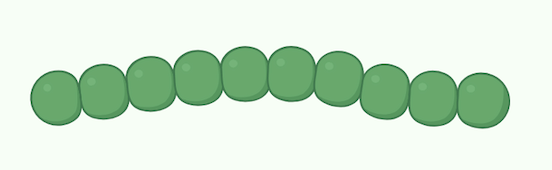
Streptococcus
500
Fermentation allows glycolysis to continue in the absence of oxygen by regenerating this molecule.
What is NAD⁺?
500
This type of radiation can achieve sterilization.
What is ionizing radiation?
500
Resistance factor plasmids can be transferred through these three processes.
What are transformation, transduction, and conjugation?