Cells, Cells, Cells!
Chemistry of Life
Random
Cellular Transport
DNA & DNA Replication
100
What is the function of the lysosome?
Get rid of waste products, such as worn down cell parts
100
An Atlantic red fish lives in the ocean with a 3.5% salt content. Which of the following salt concentrations would cause the Atlantic red fish to lose mass at the greatest rate?
A- 10% salt
B- 1% salt
C- 3% salt
D- 6% salt
10% salt --> it causes water to leave the cell at the greatest rate, because it is the largest differences from the 3.5%
100
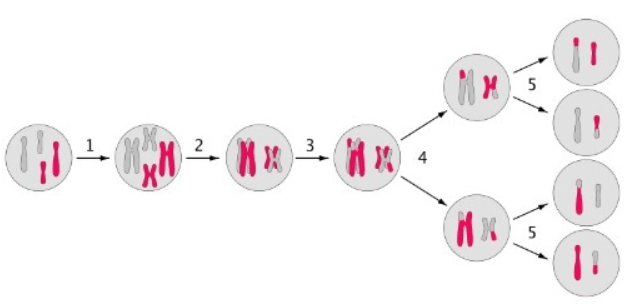 What process is being shown in the picture above?
Meiosis
100
What are the three types of passive transport?
Diffusion, osmosis, and facilitated diffusion
100
What are the base pairing rules for DNA?
Adenine with Thymine
Cytosine with Guanine
200
What is the difference between prokaryotic and eukaryotic cells?
Prokaryotic cells do not have a nucleus, eukaryotic cells do.
200
We talked about four macromolecules: proteins, lipids, carbohydrates, and nucleic acids.
Which macromolecule would be the most abundant in muscle cells?
proteins
200
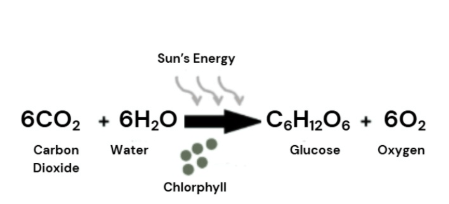
What process is shown in the diagram above?
Photosynthesis
200
Facilitated diffusion is for the transport of large molecules. They must travel through which part of the cell membrane?
protein channel
200
What is the function of the enzyme helicase?
unzips/unwinds the DNA
300
Which cellular organelle is responsible for housing the DNA and controlling the cellular processes?
nucleus
300
What property of water allows aquatic organisms to survive when a body of water freezes?
A- The less dense frozen ice sheets float on top of the water, providing insulation.
B- The cohesive property of water prevent the body of water from freezing
C- The water molecules have the property of adhesion
D- The ice sinks, giving the aquatic organisms a way to escape the water
A- The less dense frozen ice sheets float on top of the water, providing insulation.
300
Students were conducting an experiment to determine the effect of the amount of sunlight on the growth of grass. The same type of grass was planted in the same type of soil. All grass was provided the same amount of water. The students collected data for seven days. Their data is shown below.
What is the dependent variable?
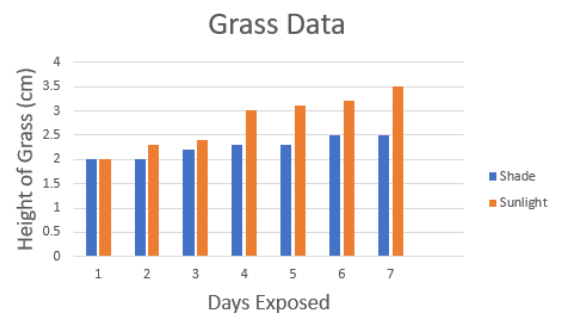
Amount of light
300
Endocytosis: active or passive transport?
active transport
300
The enzyme that lays down the new DNA nucleotides
DNA polymerase
400
Which part of the cell controls what enters and exits the cell?
cell membrane
400
Which of the following elements are present in all four of the macromolecules of life? (protein, carb, lipid, nucleic acid)
Options:
- Hydrogen
- Potassium
- Carbon
- Iron
- Oxygen
- Nitrogen
Hydrogen, Carbon, Oxygen
400
During which phase of the cell cycle is DNA replicated?
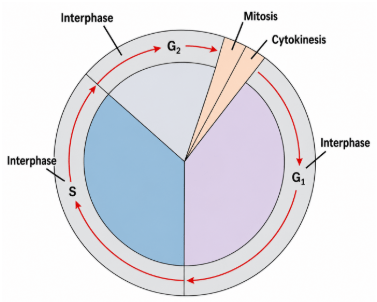
Interphase
400
what are the main differences between active and passive transport?
active- low to high, needs energy
passive- high to low, no energy
400
What does the term semi-conservative mean?
When DNA is created, it is made up of half old/original DNA and half new DNA.
500
what is the function of the mitochondria?
To produce energy in the form of ATP
500
What does "polarity" mean in regard to water molecules?
Water molecules have a positive and negative end, somewhat like a magnet
500
At which pH range would both of these enzymes be able to function?
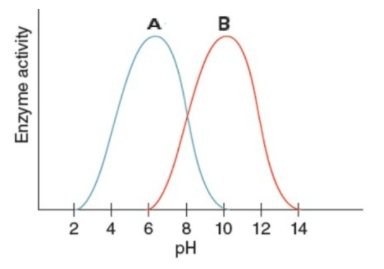
6-10
500
1) what is the name of the building block of the cell membrane, and,
2) what are the two parts of it?
1) phospholipid
2) phosphate head, lipid tail
500
Which cell cycle process is shown in this picture below?
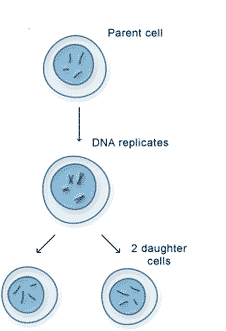
Mitosis, creating two genetically identical daughter cells