MLK 1
MLK 2
MLK 3
MLK 4
MLK 5
100
Where was Martin Luther King, Jr. born?
A. Texas
B Ohio
C Georgia
C Georgia
100
In 1963, Martin Luther King was arrested and jailed during anti-segregation protests in Birmingham, Alabama. What famous work did he write during that time?
A.Why We Can't Wait: B. Where Do We Go From Here /Chaos or Community/ C. Letter From Birmingham City Jail
Letter From Birmingham City Jail
100
What date was Dr. Martin Luther King, Jr. assassinated, and where?
A. April 4, 1963
B. April 4, 1967
C.April 4, 1968
C. April 04, 1968, Memphis, Tennessee.
100
What year was Dr. Martin Luther King, Jr. Day declared a U.S. national holiday?
A. 1980
B 1987
C. 1986
C. 1986.
100
Dr. King was assassinated on April 4, 1968, in Memphis. He was there in support of a strike by members of what profession?
A.Taxi Drivers
B.Sanitation Workers
C. Teachers
B Sanitation Workers
200
Martin Luther King Jr. believed in progress through nonviolent means. Who was a significant influence on King's philosophy?
A.Ghandi
B. Martin Luther King Sr
C. Abraham Lincoln
Gandhi
200
Martin Luther King received a Ph.D. from Boston University in what field?
A.Engineering
B. Theology
C. Illocutionary
B Theology
illocutionary definition relates to the aspect of an utterance concerning the speaker's intention or the specific action being performed by saying something, such as making a promise, giving an order, or asking a question. This goes beyond the literal meaning of the words used.
200
In 1958, Dr. Martin Luther King, Jr. published his first book called __________.
Stride Toward Freedom: The Montgomery Story.
200
Dr. Martin Luther King, Jr. was Time Man of the Year in what year?
A. 1963
B. 1964
C Both A And B
C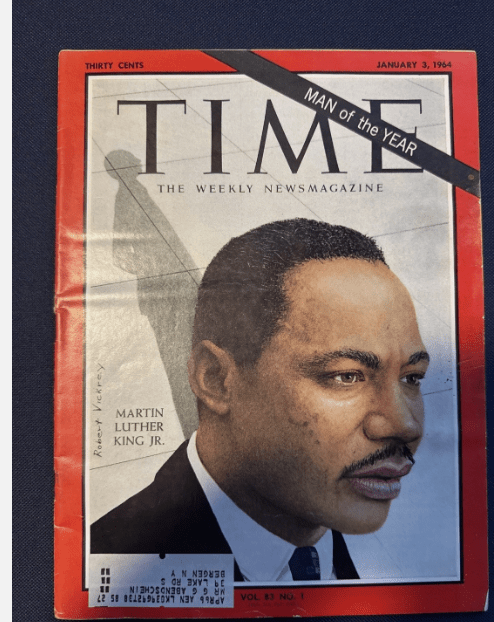
200
Martin Luther King Jr. believed in responding to discrimination peacefully.
A: True
B: False
True
300
Who assassinated Martin Luther King?
A. James Earl Ray
B. James Ray
C. Sirhan Sirhan
James Earl Ray
300
What world-famous prize was Martin Luther King honored with?
A. Time Man of the Year
B. The Nobel Peace Prize
C. The Entertainer of the Year Award
BThe Nobel Peace Prize
300
Dr. Martin Luther King, Jr. delivered his famous “I have a dream” speech on the steps of the ________.
A. White House
B. Lincoln Memorial
C. My House
B Lincoln Memorial.
300
When is Dr. Martin Luther King Day?
A. Third Monday of January
B. Second Monday of January
C. I do not know
A.
It is observed on the third Monday of January each year.
300
When Dr. King won the Nobel Peace Prize in 1964, he was the youngest man to receive the award. How old was he?
A. 36
B. 34
C. 35
C. 35
400
Martin Luther King was the leader of which organization?
A.SCC
B SCLC
C. WHO
The Southern Christian Leadership Conference (SCLC)
400
Dr. Martin Luther King, Jr. delivered his famous “I have a dream” speech on the steps of the
A. Washington Monument
B. George Washington Home
C. Lincoln Memorial
Lincoln Memorial.
400
Dr. Martin Luther King, Jr. was named Time magazine’s ___________
A. Man of the Year
B. Excellent leader of the Year
C. Hero of the Year
A.Man of the Year.
400
Where did Martin Luther King Jr study and receive his doctorate of Divinity degree?
A. Chicago
B. Boston
C. Atlanta
B Boston University
400
How long did the Montgomery Bus Boycott last?
1. 365 days
2. 282 days
3. 381 days
381 days
500
Which of these major events first distinguished Martin Luther King as an important civil rights leader? 1. The Montgomery Bus Boycott 2. The March on Washington 3 Brown v. Board of Education
A. March on Washington
B. Brown Vs Board of Education
C. Montgomery Bus Boycott
The Montgomery Bus Boycott
500
When was Dr. Martin Luther King, Jr. born?
A January 19, 1929
B. January 15, 1929
C. January 16, 1929
B.January 15, 1929, Atlanta, Georgia
500
Who was Dr. Martin Luther King, Jr. married to?
A. Coretta Smith King
B. Coretta Scott King
C. Loretta Scott King
Coretta Scott King.
500
Martin Luther King’s Birthday became a federal holiday under what president?
A. Jimmy Carter
B. Ronald Reagan
C. Gerald Ford
B Ronald Reagan
500
In which case did the Supreme Court decide that segregation in public schools is unconstitutional?
A. Brown v. Board of Education of Topeka, 347 U.S. 483 (1954).
B Brown II (1955):
C.Mendez v. Westminster (1947)
A Brown v. Board of Education