Vitals Vantage
Vital Sign Showdown
Vital Sign Showdown 2
Vital Sign Info
Vitals Victory
100
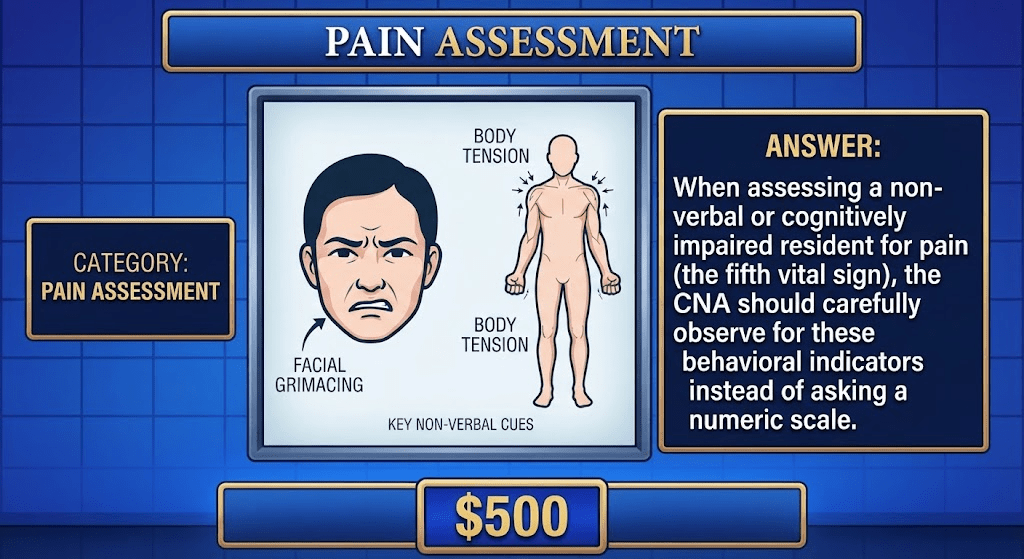
What are the four traditional vital signs?
Temperature, pulse, respirations, and blood pressure.
100
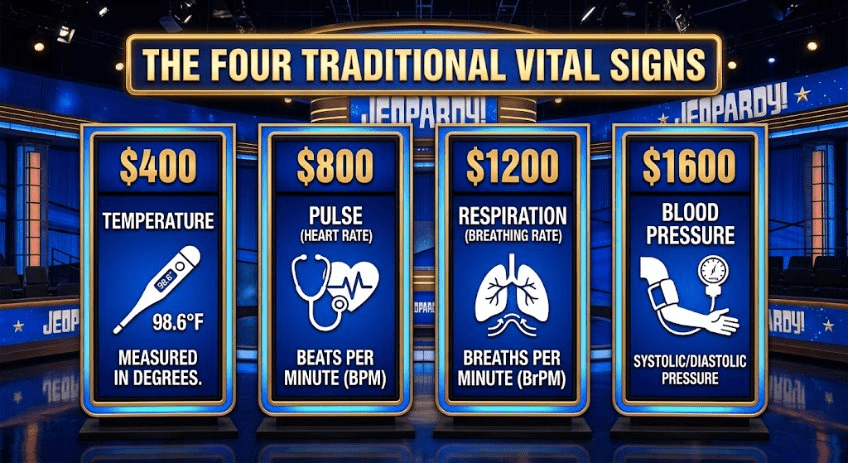
What is a tympanic temperature?
This common non-invasive method of taking a temperature involves placing the thermometer probe inside the ear canal
100
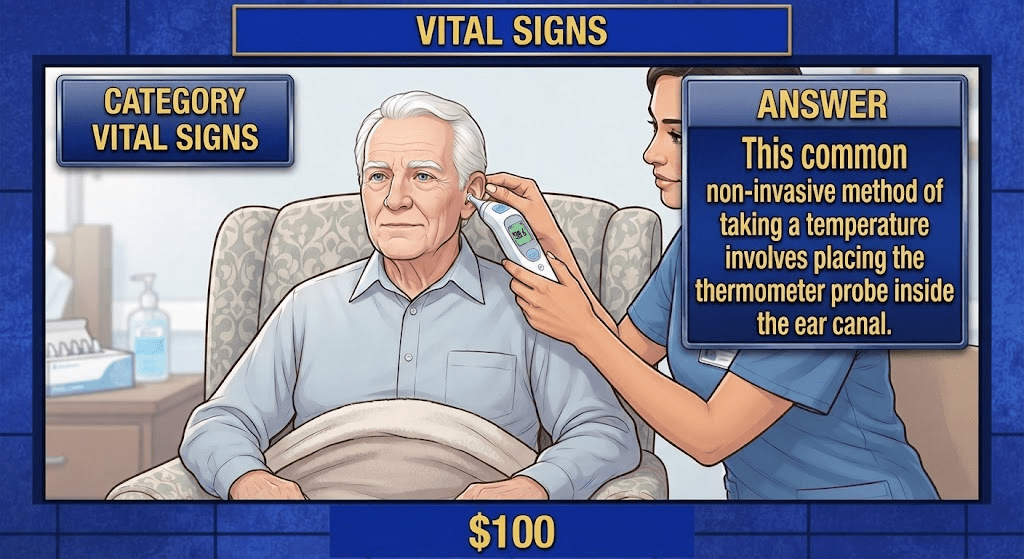
What is the radial pulse?
This is the most common pulse site used by a CNA for taking a routine, resting pulse on an adult resident.
100
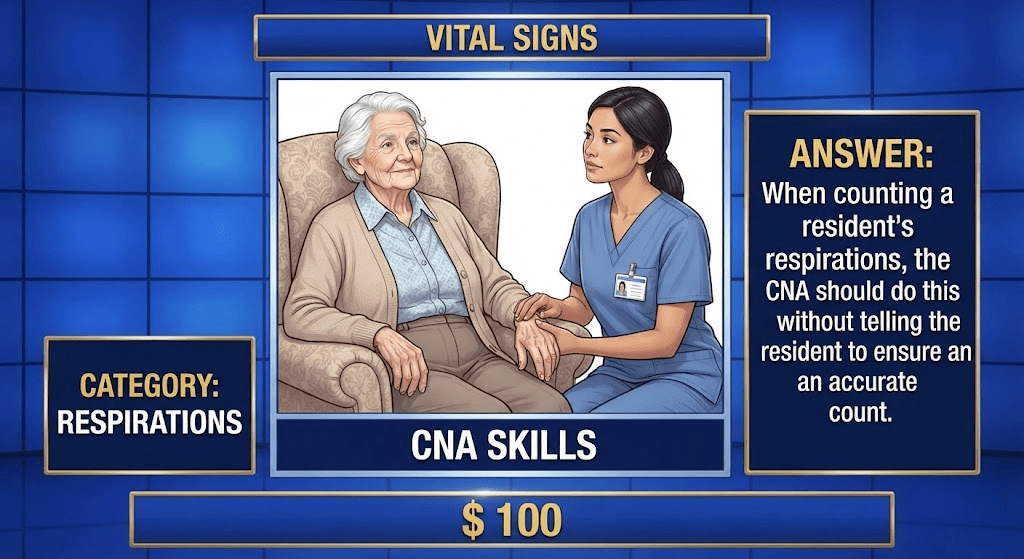
What is count respirations immediately after taking the pulse (without altering the resident's awareness)?
When counting a resident's respirations, the CNA should do this without telling the resident to ensure an accurate count.
100
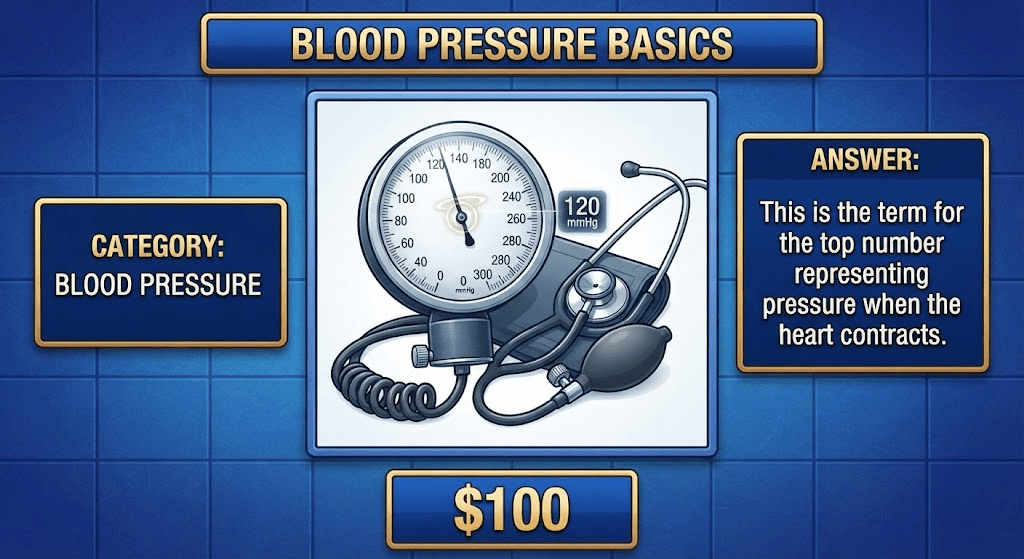
What is systolic pressure?
When measuring blood pressure with a manual sphygmomanometer and stethoscope, this is the term for the top number representing pressure when the heart contracts.
200
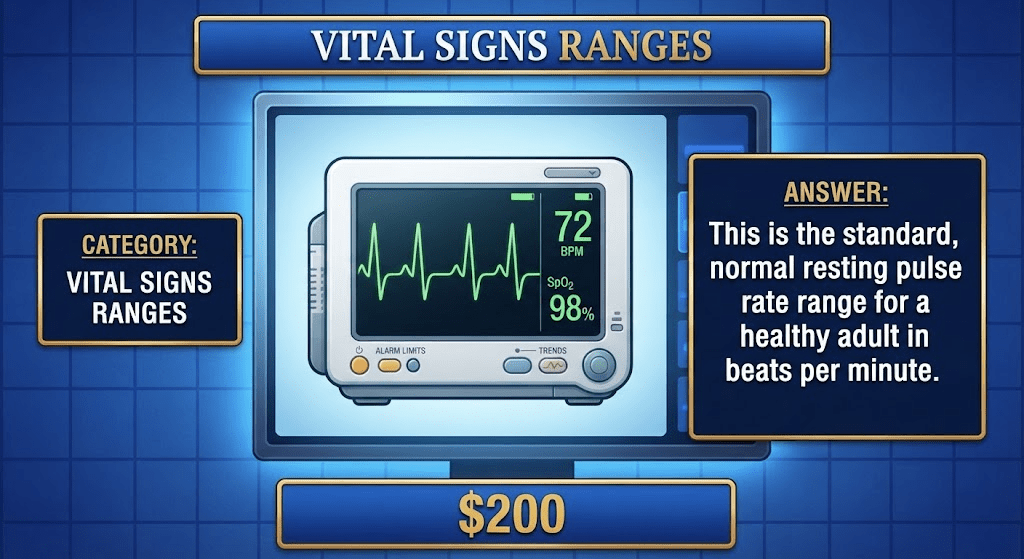
What is 60 to 100 beats per minute?
This is the standard, normal resting pulse rate range for a healthy adult in beats per minute.
200
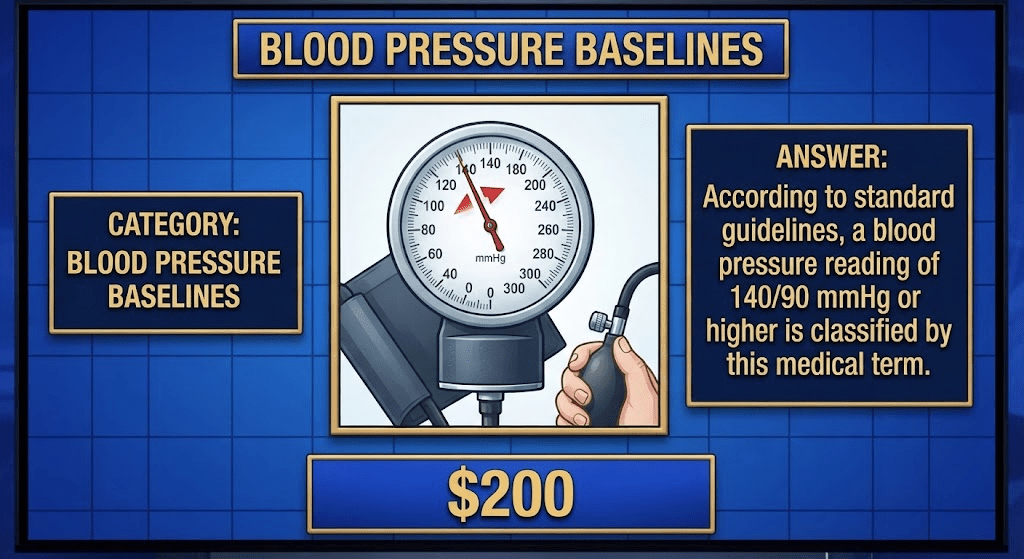
What is hypertension (high blood pressure)?
According to standard guidelines, a blood pressure reading of 140/90 mmHg or higher is classified by this medical term.
200
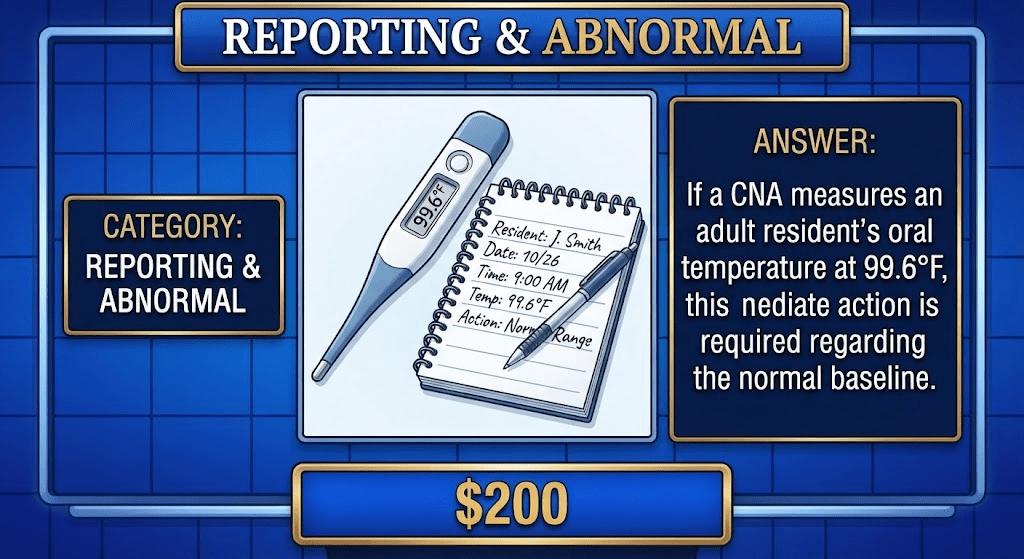
What is nothing/no action is required (since it is within the normal resting range)? (Note: Normal oral temperature typically ranges from 97.6°F to 99.6°F)
If a CNA measures an adult resident's oral temperature at 99.6°F, this immediate action is required regarding the normal baseline.
200
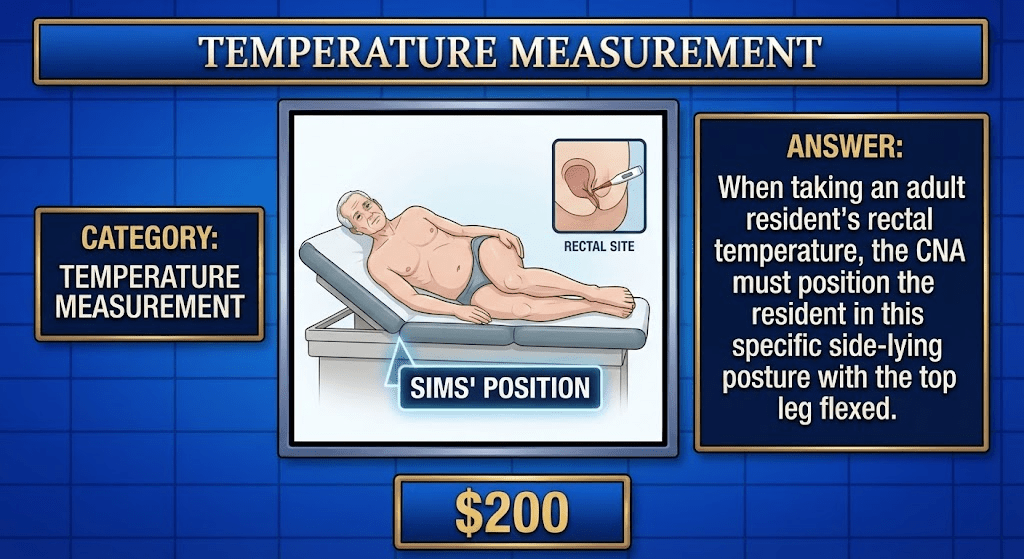
What is the Sims' position, when related to temperature measurement?
When taking an adult resident's rectal temperature, the CNA must position the resident in this specific side-lying posture with the top leg flexed.
200
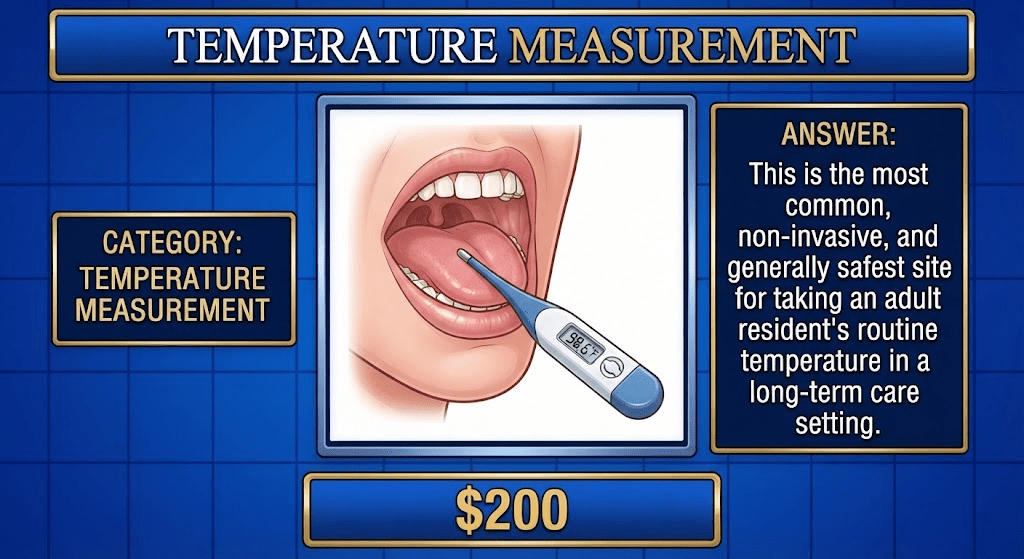
What is the safest and most common temperature measurement site?
Oral (mouth) site is the most common, non-invasive, and generally safest site for taking an adult resident's routine temperature in a long-term care setting.
300
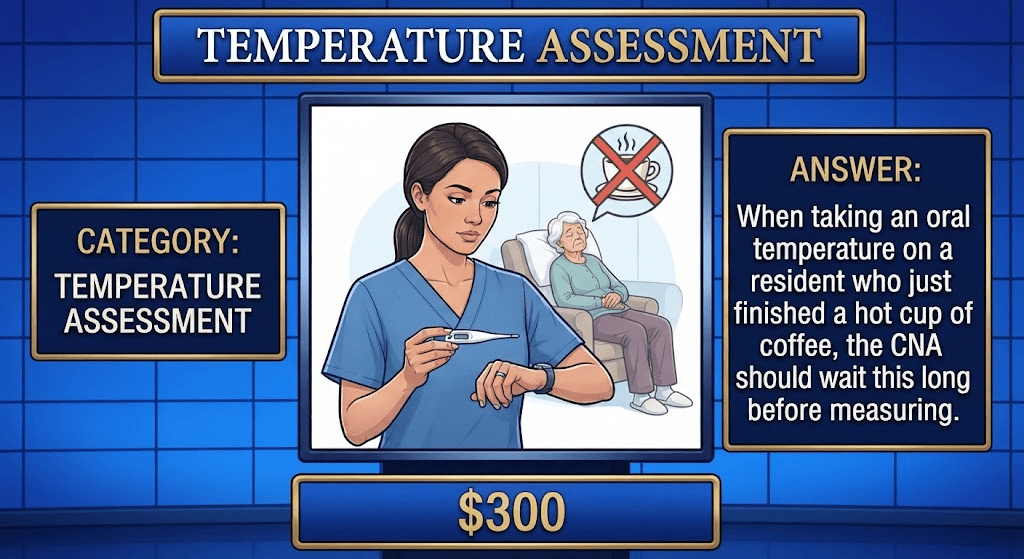
What is 10 to 20 minutes, when related to temperture measurement?
When taking an oral temperature on a resident who just finished a hot cup of coffee, the CNA should wait this long before measuring.
300
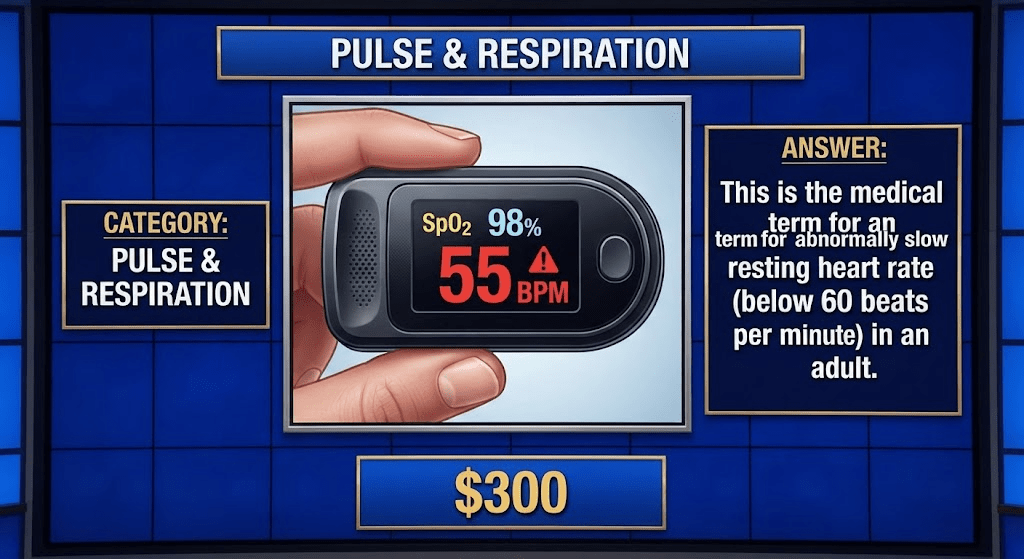
What is bradycardia?
This is the medical term for an abnormally slow resting heart rate (below 60 beats per minute) in an adult.
300
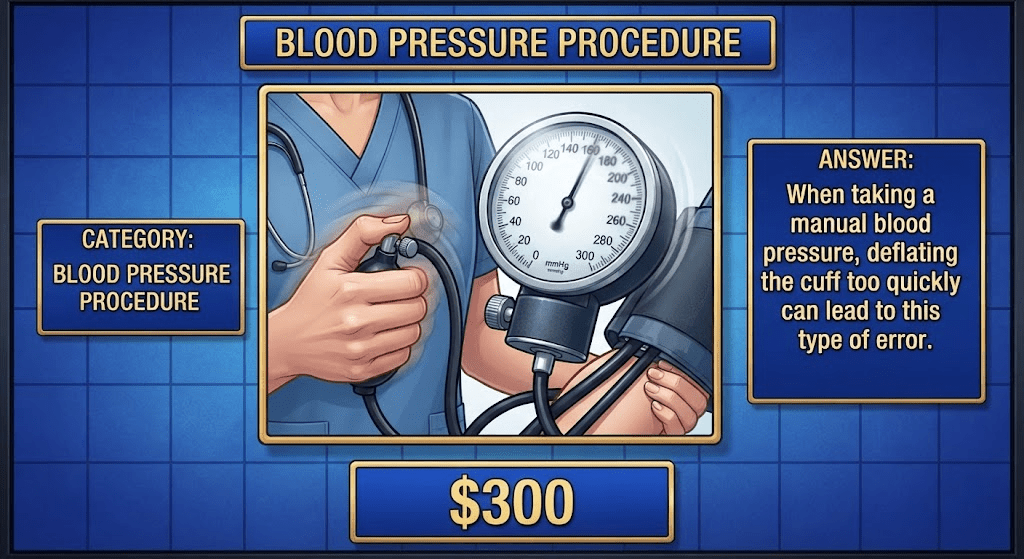
What is a falsely low reading (or an inaccurate reading)?
When taking a manual blood pressure, deflating the cuff too quickly can lead to this type of error.
300
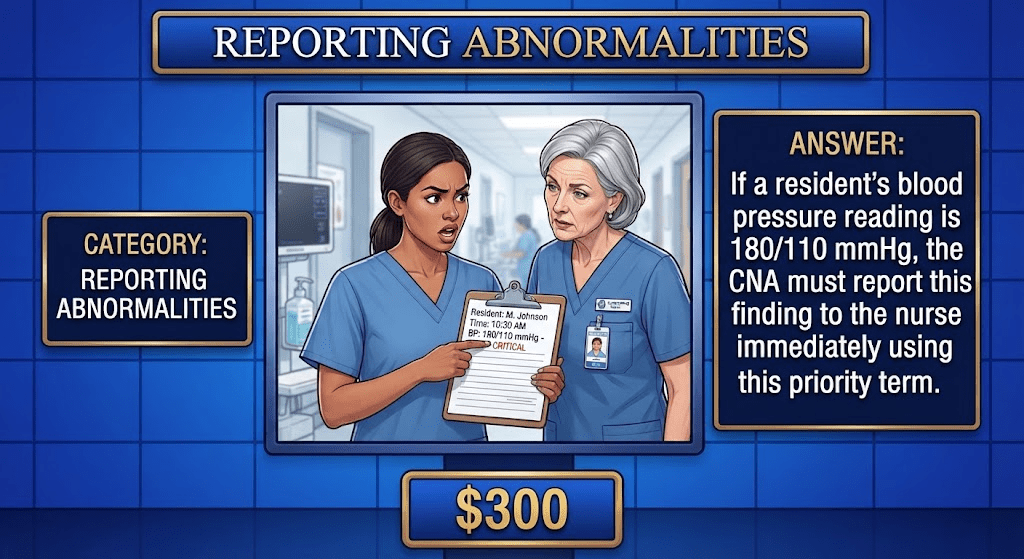
What is hypertensive crisis (or a reportable/critical value)?
If a resident's blood pressure reading is 180/110 mmHg, the CNA must report this finding to the nurse immediately using this priority term.
300
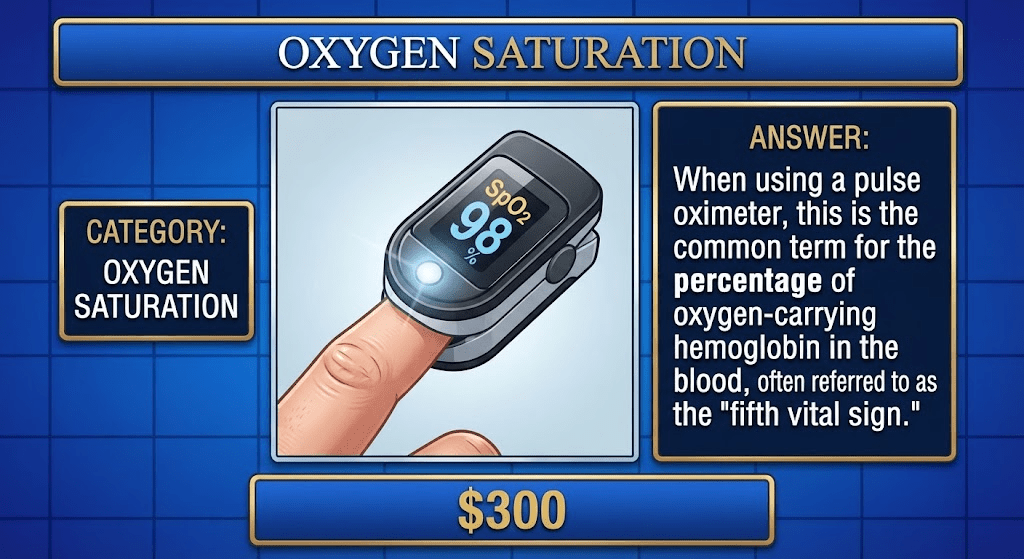
What is oxygen saturation (or SpO2)?
When using a pulse oximeter, this is the common term for the percentage of oxygen-carrying hemoglobin in the blood.
400
What is the axillary (underarm) route best used for when measuring temperature?
To obtain the most accurate core temperature reading on an uncooperative adult resident, this is the safest and most reliable route to use.
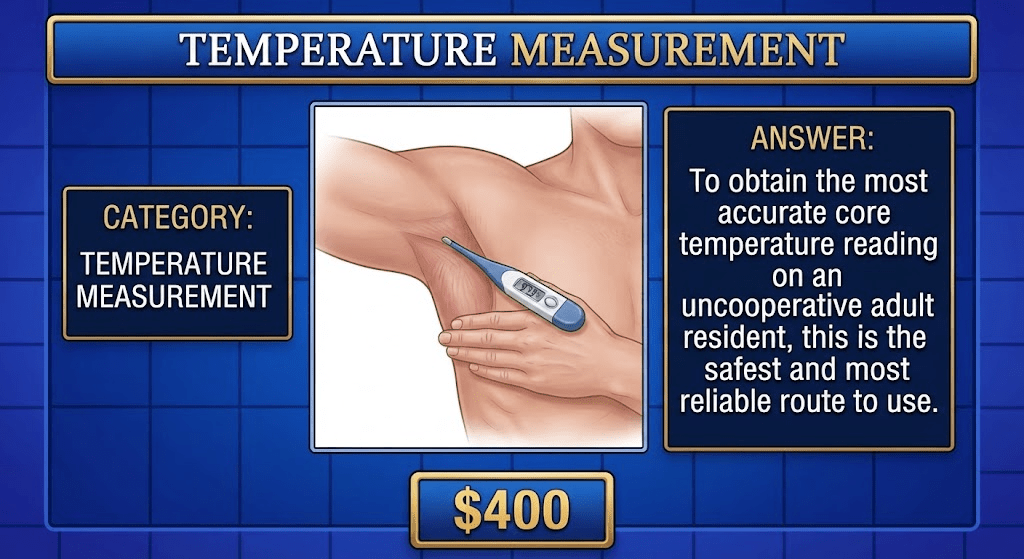
400
What is count respirations (or observe the rise and fall of the chest)?
When taking an adult resident's pulse and respirations, the CNA must do this immediately after counting the pulse rate, without removing their fingers from the pulse site.
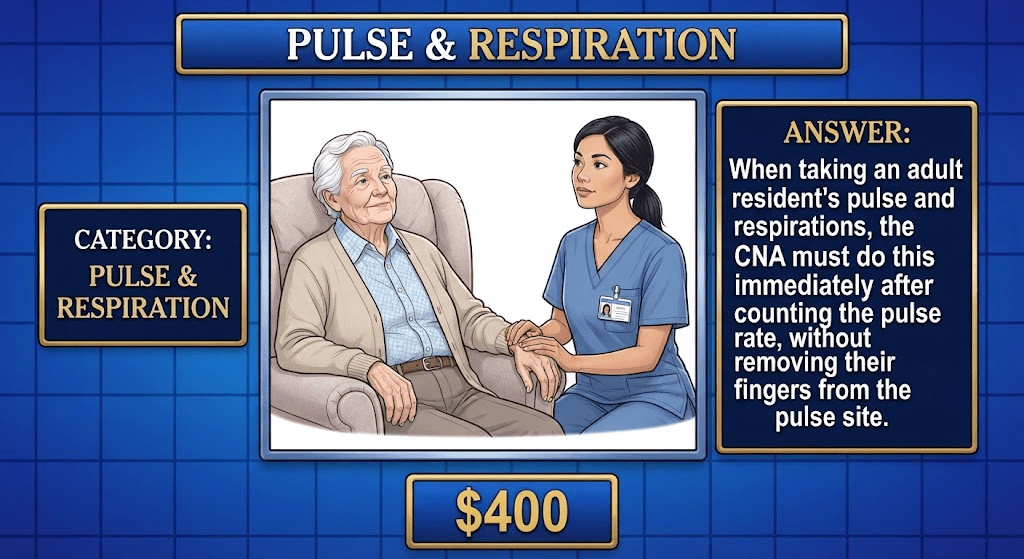
400
What is completely deflate the cuff, wait at least one minute (or 30-60 seconds), and re-inflate?
If the CNA is taking a manual blood pressure on an adult resident and cannot hear the sounds clearly, this is the correct procedure they must follow to ensure an accurate reading.
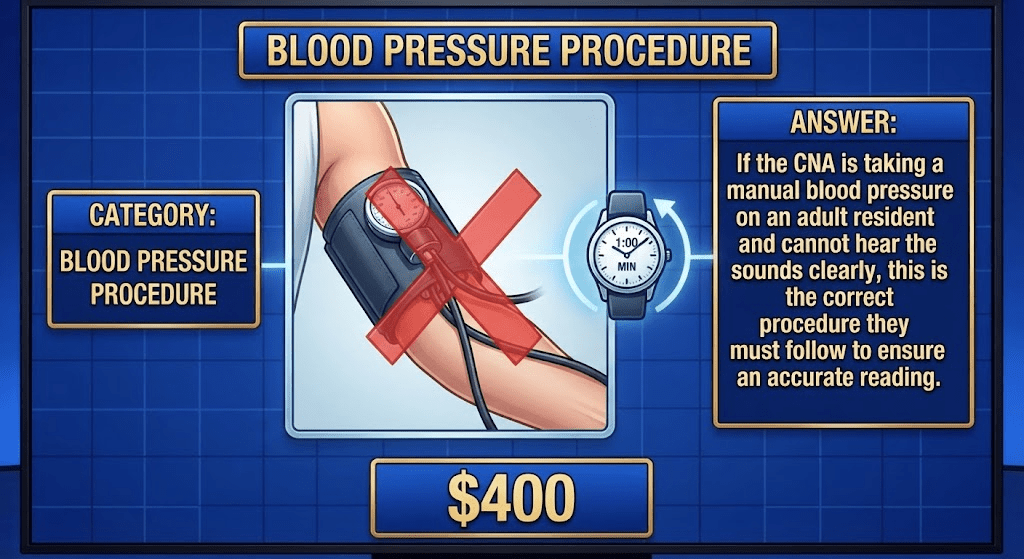
400
What is tachycardia?
This is the specific medical term for a pulse rate that is consistently above 100 beats per minute in a resting adult resident.
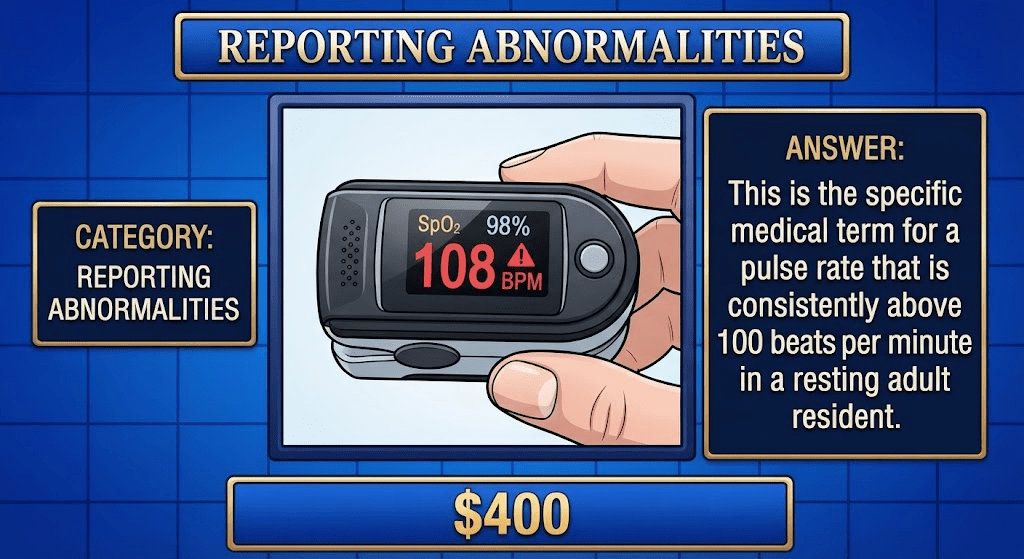
400
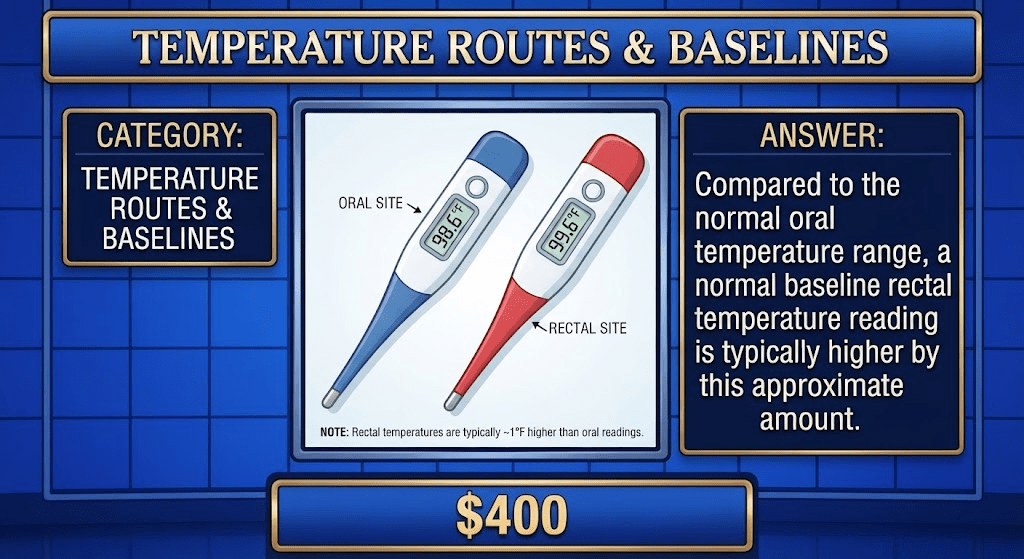
What is one degree Fahrenheit (1°F)?
Compared to the normal oral temperature range, a normal baseline rectal temperature reading is typically higher by this approximate amount.
500
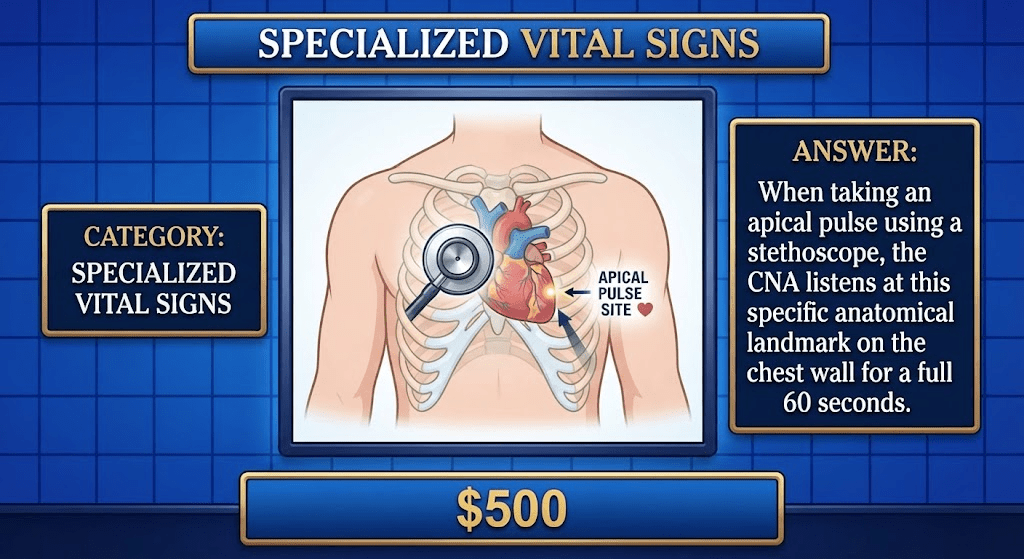
What is the 5th intercostal space at the midclavicular line (apex of the heart)?
When taking an apical pulse using a stethoscope, the CNA listens at this specific anatomical landmark on the chest wall for a full 60 seconds.
500
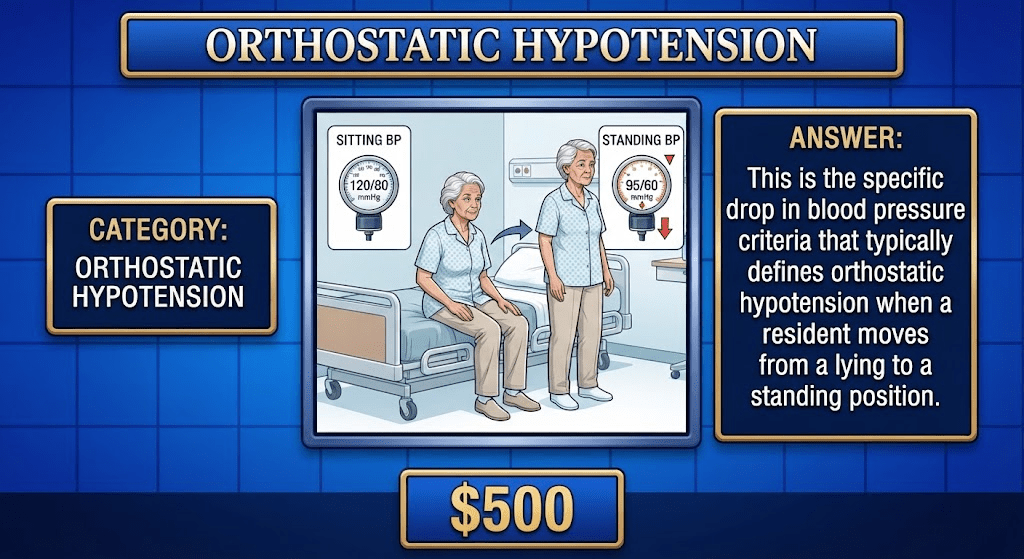
What is a decrease in systolic pressure of 20 mmHg or more (and/or diastolic of 10 mmHg or more)?
This is the specific drop in blood pressure criteria that typically defines orthostatic hypotension when a resident moves from a lying to a standing position.
500
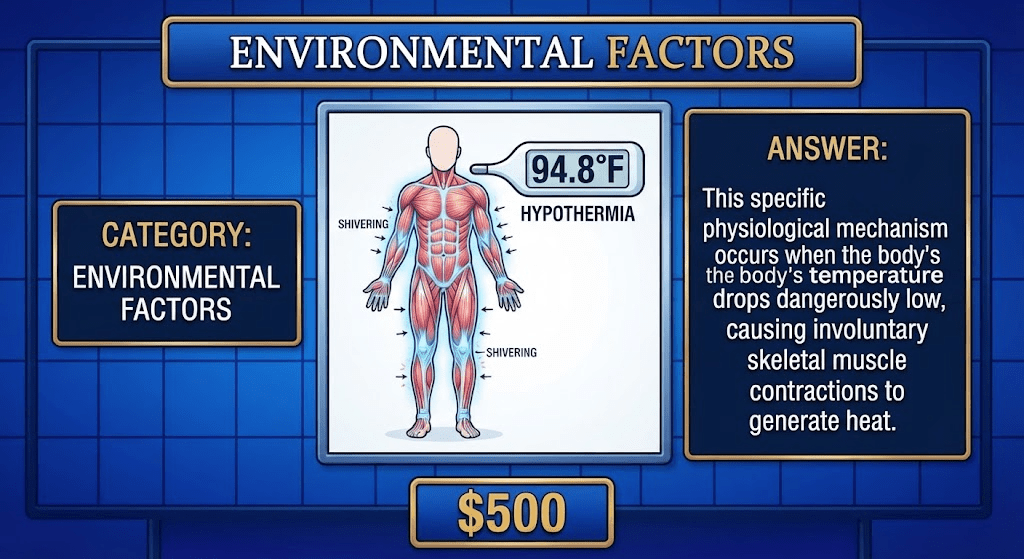
What is shivering?
This specific physiological mechanism occurs when the body's temperature drops dangerously low, causing involuntary skeletal muscle contractions to generate heat.
500
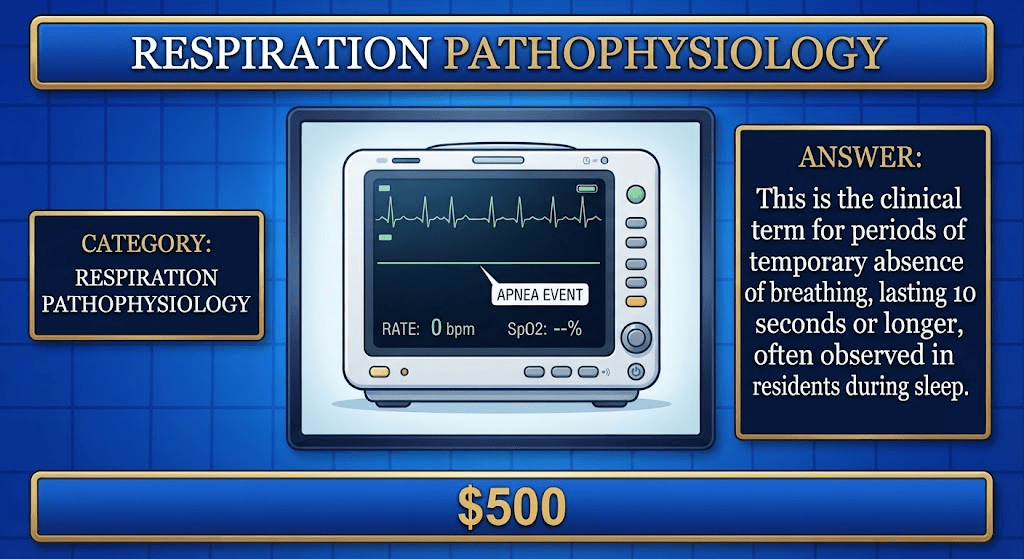
What is apnea?
This is the clinical term for periods of temporary absence of breathing, lasting 10 seconds or longer, often observed in residents during sleep.
500
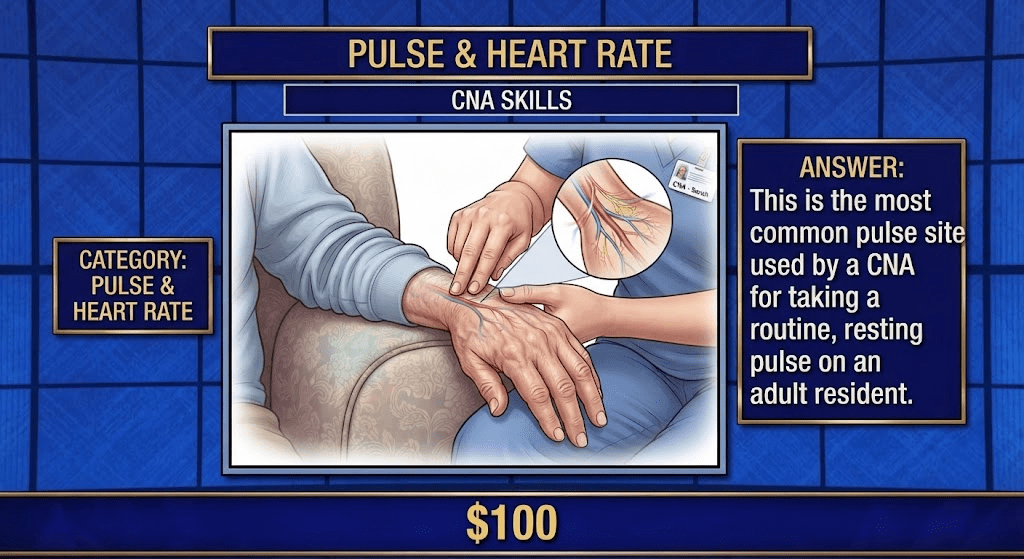
What are grimacing, guarding, restlessness, or vocalizing (moaning) observations for?
When assessing a non-verbal or cognitively impaired resident for pain (the fifth vital sign), the CNA should carefully observe for these behavioral indicators instead of asking a numeric scale.