Respiratory Anatomy
Respiratory Process
Speech Production
Respiratory Cycle
Muscles of Respiration
100
What is the main muscle responsible for breathing that contracts and moves downward during inhalation?
The diaphragm
100
What happens to the lungs during inhalation?
The lungs expand and fill with air
100
Why is respiration important for speech production?
Respiration provides the airflow and air pressure needed to produce speech sounds.
100
What are the two main phases of one respiratory cycle?
Inhalation and exhalation.
100
How do the muscle fibers of the external intercostals differ in orientation from the internal intercostals, and why does this matter?
External intercostals run obliquely downward and forward.
Internal intercostals run perpendicularly to them, pointing downward and backward.
200
Which structure contains the vocal folds and plays a major role in speech production?
The larynx
200
During exhalation for speech, does air move into or out of the lungs?
Air moves out of the lungs.
200
What type of breathing is typically used during speech: inhalation or controlled exhalation?
Controlled exhalation.
200
During normal, quiet expiration, the diaphragm does this, causing it to move upward and return to its resting dome shape.
Relaxes
200
Which respiratory muscles are most important for speech breathing?
The diaphragm, intercostals, and abdominal muscles
300
Air passes from the nasal cavity into this specific, superior-most region of the pharynx, which sits directly behind the nasal passages.
Nasopharynx
300
During inhalation, does the pressure inside the lungs increase or decrease compared to atmospheric pressure?
It decreases, allowing air to flow into the lungs.
300
Prevents chocking by ensuring that food and liquid do not enter the airway.
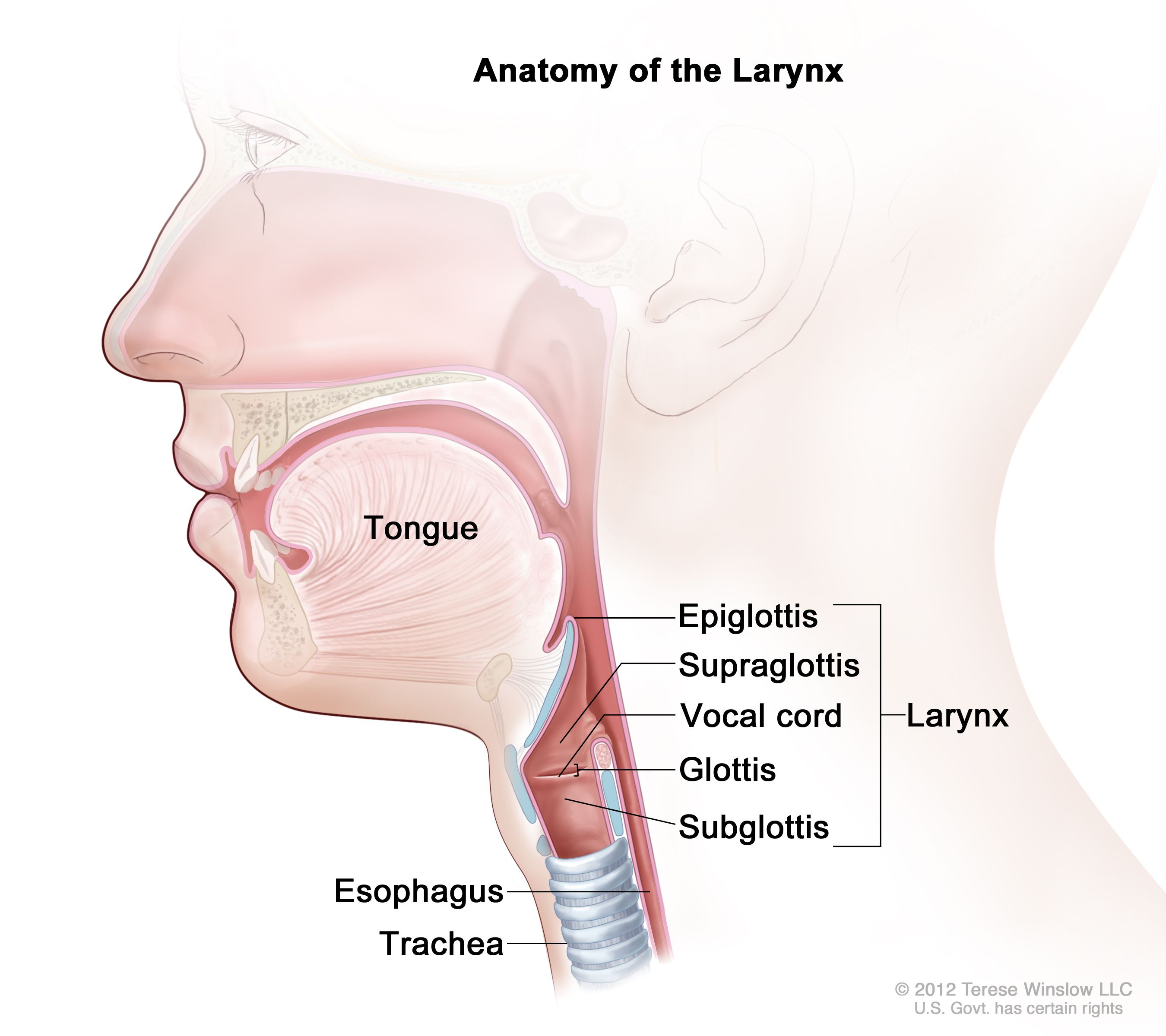
Epiglottis
300
What is the name for the normal, everyday amount of air you breathe in and out when you are resting?

Tidal volume
300
Which muscles located between the ribs help expand and contract the chest cavity during breathing?

The intercostal muscles.
400
Which part of the respiratory system is considered the primary site of external respiration?
The alveoli.
400
What happens if subglottal pressure becomes too low during speech?
Voice intensity decreases.
400
How does the vocal tract function as a filter during speech production?
It amplifies some frequencies and reduces others.
400
Originating from cervical levels C3, C4, and C5, this specific nerve keeps the diaphragm alive.
Phrenic Nerve
400
Which muscles are recruited to assist the external intercostals during a deep, forced inhalation to help lift the very top of the ribcage?
The scalene muscles and the sternocleidomastoid
500
Why is cartilage present in the trachea but absent in the alveoli?
The trachea must remain open, while alveoli need thin flexible walls for gas exchange.
500
Why is expiratory airflow carefully regulated during speech?
To maintain steady phonation and loudness.
500
Why is expiratory airflow regulation more important than inspiratory volume during connected speech?
Speech depends on controlled exhalation rather than inhalation.
500
Why does airflow stop momentarily at the end of inspiration and expiration?
Lung pressure equalizes with atmospheric pressure.
500
Why is the diaphragm considered the primary muscle of inspiration rather than the intercostals?
It produces the greatest increase in thoracic volume.