PCR
Electrophoresis
Gene seq
rDNA
CRISPR
100
What is PCR?
Polymerase Chain reaction is a process to make millions of copies of specific sequences of DNA
100
What is gel electrophoresis?
Used to separate DNA fragments by size and electric current
100
What is gene sequencing?
Determines sequence of nucleotides from segment of DNA
100
What does rDNA stand for?
Recombinant DNA Technology
100
What is CRISPR used for?
Genetic engineering
200
What are the three steps of PCR?
Denature, Anneal, Extend
200
What are used to cut the DNA into specific fragments?
Restriction enzymes
200
What is genetic engineering?
Artificial manipulation, modification, or recombination of DNA
200
What is rDNA used for?
Genetic engineering
200
How does CRISPR work?
genome editing tech that allows scientists to cut DNA at precise locations and remove or replace specific genes
300
Which step of PCR occurs at the highest temperature?
Denaturation
300
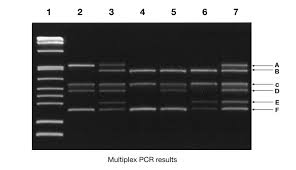 According to the picture, are the bands closest to the top of the gel larger or smaller?
Larger
300
What is the purpose of genetic engineering?
To modify the traits of an organism or population of organisms
300
Where is the DNA placed in the process of rDNA?
Desired gene is introduced into the plasmid genome of a bacterium
300
What is the enzyme used in CRISPR? Where is it originally found?
Cas9, bacteria
400
If the temperature during extension went from 80 degrees to 200 degrees, what would happen?
The DNA would not copy, it would unwind or denature
400
 Which of the suspects is a closer match to the crime scene sample?
Suspect 3 shares the same bands
400
Are Genetically modified organisms all bad?
No, genetically modified organisms (GMOs) can contain nutrients that you might otherwise not receive.
400
What are some of the products produced with rDNA?
Insulin, HEP b vaccine, Insect resistant corn
500
What are some of the uses of PCR?
Gene sequencing
Medical diagnosis
Genetic testing
500
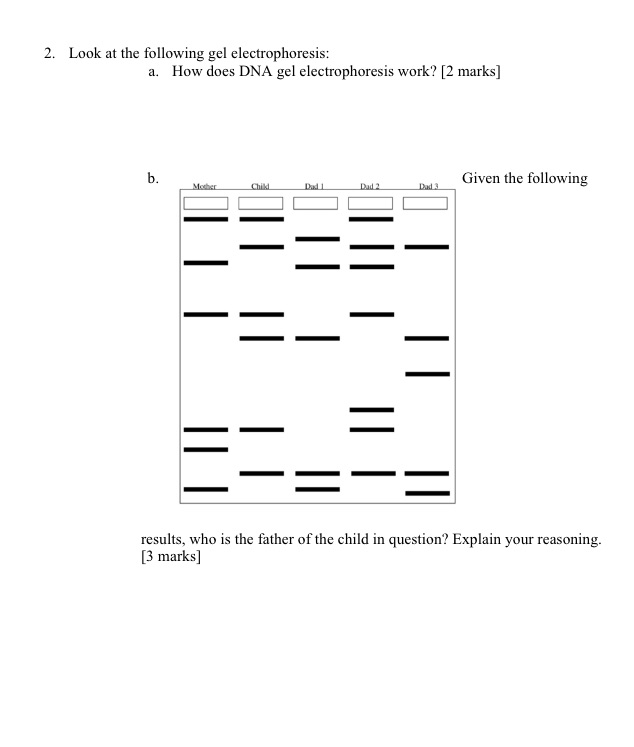 Who is the father?
Dad 2
500
Why are there moral hangups on using genetic recombination or genetic engineering on humans?
Can be used for eugenics
500
If someone is diabetic, explain how they might receive insulin through rDNA?
The gene for producing insulin is isolated using restriction enzymes. It is placed into the plasmid with ligase. As the bacteria reproduce, the gene is copied and the product (insulin) is produced.