Program Translation
Bitwise
ADTs
File IO & Macros
Random Mops
100
This step turns an assembly language file into a machine language file.
What is assembling?
100
This operation inverts all bits of a number.
What is ~/complement/not?
100
This is the purpose of an ADT.
What is to hide implementation from the user?
100
This function opens a file.
What is fopen?
100
C is ____ type-checked, which means it occurs at compile time.
What is statically?
200
This step combines multiple object files into an executable.
What is linking?
200
1011 ^ 1100 =
What is 0111?
200
This file serves as the interface for the client when using an ADT.
What is a header file?
200
This function writes to a binary file.
What is fwrite?
200
C is ____ typed, which means you can get around type restrictions.
What is weakly?
300
This step of compilation breaks characters into groups representing symbols.
What is lexical analysis?
300
unsigned char a = 0x09
a << 2 =
What is 0x24?
300
This type is used to store generic data.
What is void *?
300
This is your SI leader's favorite ice cream flavor.
What is cookies and cream?
300
This type allows you to give names to integer constants.
What is an enum?
400
This step of compilation checks the syntax correctness of a syntax tree.
What is semantic analysis?
400
char a = 0xf2;
a >> 4 =
What is 0xff?
400
This keyword is used in a ADT header file to hide the implementation of a struct.
What is typedef?
400
This is the output of the following code.
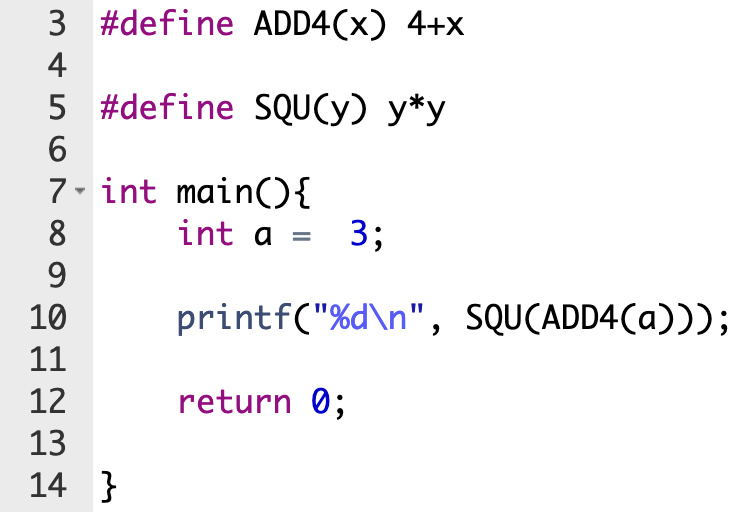
What is 19?
400
This is the decimal value of the following signed character:
char c = 0xf9
What is -7?
500
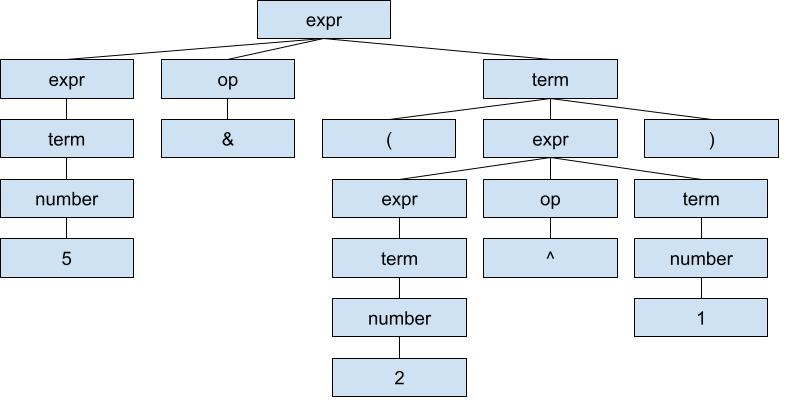
This is an abstract syntax tree for the given rules and expression.
expr -> term | expr op term
term -> ident | number | ( expr )
op -> & | ^ | >>
5 & (2 ^ 1)
500
This is the output of the following code:
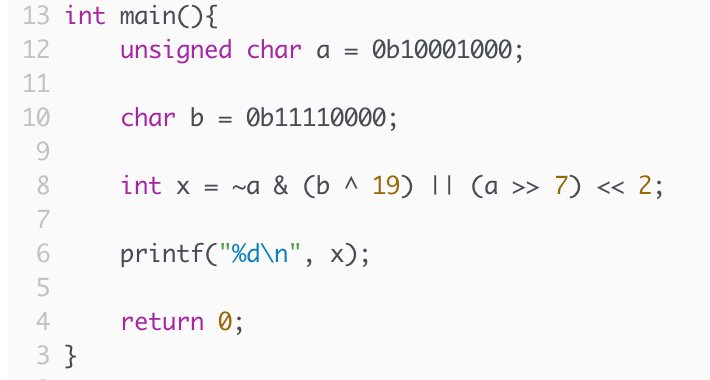
What is 1?
500
Write a basic constructor for an ADT called "CoolADT"
The struct is called "struct coolADT_s" and the header file is the following:
typedef struct coolADT_s * CoolADT;
CoolADT cool_create();
CoolADT cool_create(){
CoolADT newCool = (CoolADT) malloc(sizeof(struct coolADT_s));
return newCool;
}
500
This is the output of the following code:
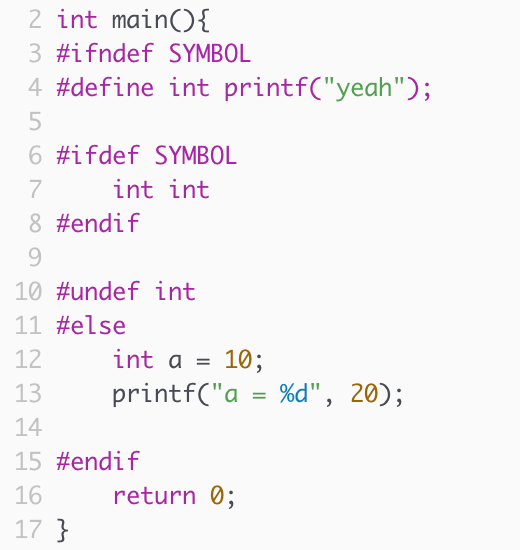
What is nothing?
500
I couldn't think of another ADT question, so here's a random one!
This is the output of the following code.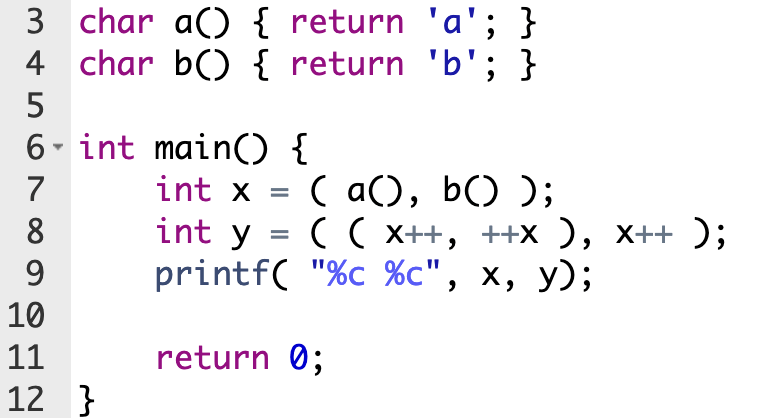
What is 'e d'?