Standard Units
Velocity
Acceleration
Graphs
Relationships
100
d
meters (m)
100
Mr. F is able to clear 100m in an astonishing 9s. How fast can he run?
11.11m/s
100
A car goes "0 to 60" mph (~27m/s) in 3 seconds. What is its acceleration?
9m/s2
100
What does the slope of the line represent?
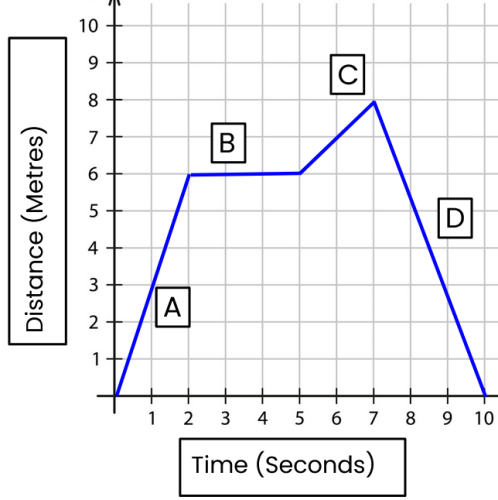
velocity
100
When velocity is constant, what is the relationship between distance and time?
direct
200
t
seconds (s)
200
A car on the highway moving at 120 kilometers per hour (kph) drives for 2 hours. How far did it travel?
240km
200
A train moving at full speed, 25m/s, accelerates to a stop at a rate of .417m/s2. How long does it take to stop?
60 seconds/1 minute
200
When is the object slowest?
B
200
When time is constant, what is the relationship between distance and velocity?
direct
300
speed
meters per second (m/s)
300
Snails have an average velocity of ~0.01m/s. How long in minutes would it take a snail to move the length of this classroom, ~12m?
20 minutes
300
Larry accelerated to a velocity of 5m/s at a rate of 2.5m/s2 over the course of 2s. What was his initial velocity?
0m/s
300
Roughly draw the graph. Circle every point when the object accelerates.
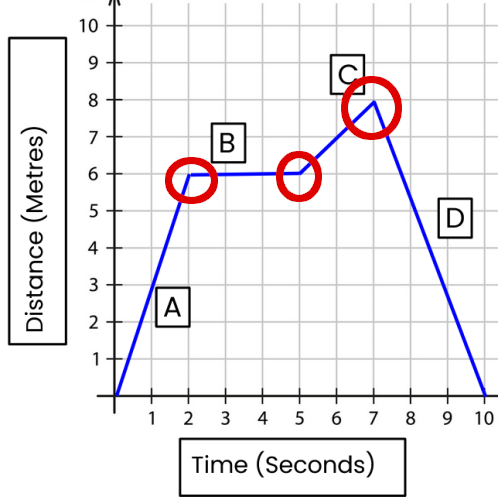
300
When distance is constant, what is the relationship between velocity and time?
inverse
400
VF
meters per second (m/s)
400
Moe ran with a velocity or 2m/s for 5s, stopped for 10 seconds, and then ran with a velocity of -1m/s for 5s. How far did he travel?
5m
400
Moe ran with a velocity or 2m/s for 5s, stopped for 10 seconds, and then ran with a velocity of -1m/s for 5s.
What was average acceleration from t=15s to t=20s?
-.2m/s2
400
When is the object fastest?
A and D
400
When the change in velocity is constant, what is the relationship between acceleration and time?
Inverse
500
a
meters per second squared (m/s2 or m/s/s)
500
Moe ran with a velocity or 2m/s for 5s, stopped for 10 seconds, and then ran with a velocity of -1m/s for 5s. What was his average velocity?
0.25m/s
500
Moe ran with a velocity or 2m/s for 5s, stopped for 10 seconds, and then ran with a velocity of -1m/s for 5s.
What was his average acceleration over the entire trip?
-.15m/s2
500
What is the object doing?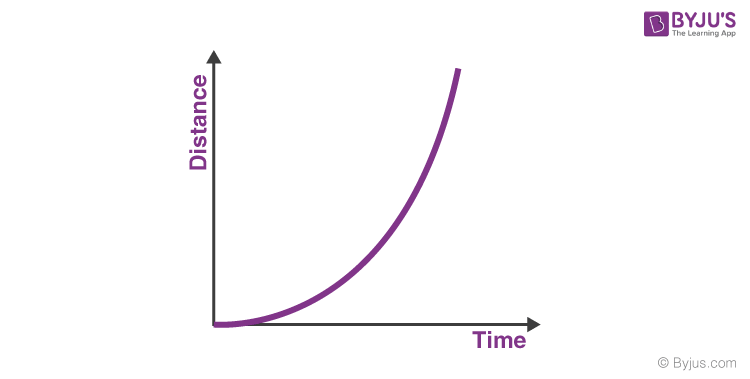
Accelerating
500
For an object starting at rest, when time is constant, what is the relationship between acceleration and distance?
SHOW YOUR WORK
direct
VF=at
t=d/v
so... t=d/(at)
As d gets bigger, a must get bigger to keep t the same.