Properties of Matter
Mixtures and Solutions
Energy
Electricity
Light
Forces
100
Question:
Which of the items below is least likely to be soluble in water?
Answers:
A- sugar
B- feather
C- soap
D- salt
B-feather
100
QuestionID:142107
Question:
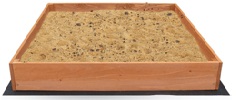
A student playing outside notices that there are small rocks mixed in with the sand in the sandbox. What would be the easiest way to separate the rocks from the sand to remove them from the sandbox?
Answers:
A- Use tweezers to remove each individual rock
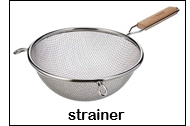
B- Use a sieve to filter the sand through a fine wire screen
C- Use water to separate the rocks and sand
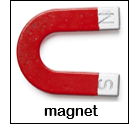
D- Use a magnet to attract the rocks
B- Use a sieve to filter the sand through a fine wire screen
100
QuestionID:145983
The picture below shows wind turbines in a field. When the wind blows, it causes the wind turbines to spin. When wind turbines spin, they produce electrical energy.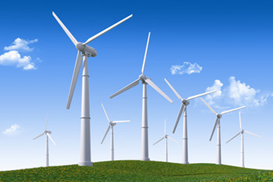
Question:
What kind of energy causes the wind turbines to spin?
Answers:
A- light energy
B- electrical energy
C- sound energy
D- mechanical energy
D- mechanical energy
100
QuestionID:121878
Question:
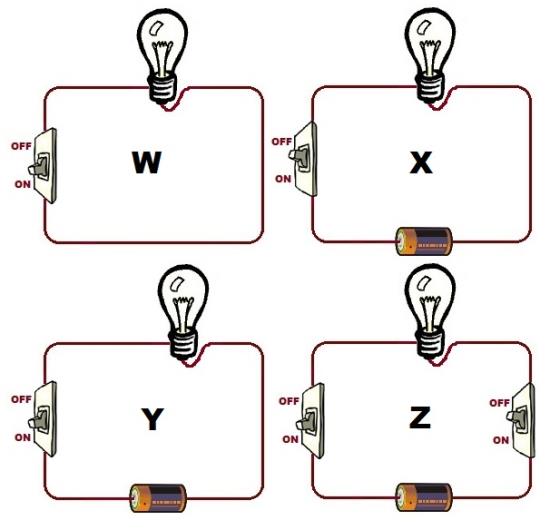
Which circuit(s) above will power the lightbulb?
Answers:
A- W, Y, and Z
B- W and Y
C- All of the above
D- Y
D- Y
100
QuestionID:121920
Question:
Which statement below about light is true?
Answers:
A- Light refracts when it hits a mirror.
B - Light is the fastest mode of travel.
C- It is called reflecting when light travels through an object and is bent.
D- Light never travels in a straight line.
B - Light is the fastest mode of travel.
100
QuestionID:121967
Question:
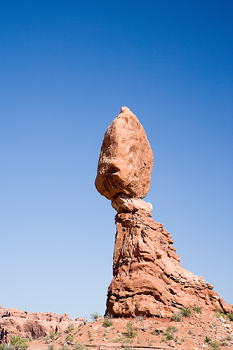
The large rock is balancing on the other rocks in the picture above. Which statement below is true?
Answers:
A- An ancient race of giants placed the rock there.
B- The rocks are magnetic which makes the rocks balance.
C- In order for the rock to fall, an outside force must be applied.
D- The rock will eventually fall if no force is applied.
C- In order for the rock to fall, an outside force must be applied.
200
QuestionID:163154
The lists below describe the properties of three groups of materials.
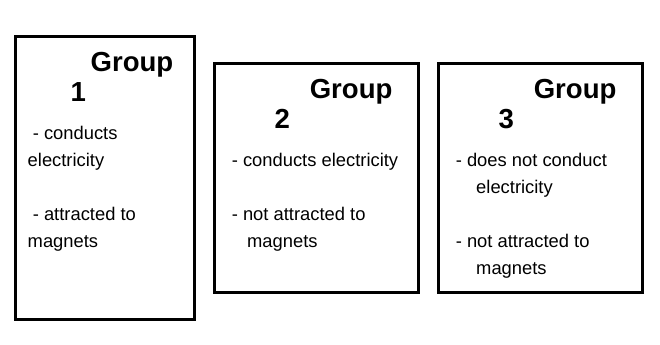
Question:
Which group is most likely to be made up of metals only?
Answers:
A- Group 2
B- Group 1
C- Groups 1, 2, and 3
D- Group 3
B- Group 1
200
A student is planning to make four different mixtures that contain salt. Each of the mixtures is listed below.
- Salt mixed with iron filings
- Salt mixed with hot water
- Salt mixed with pepper
- Salt mixed with flour
Question:
Which mixture will result in a change in the physical properties of the salt?
Answers:
A- Salt mixed with pepper
B- Salt mixed with hot water
C- Salt mixed with flour
D- Salt mixed with iron filings
B- Salt mixed with hot water
200
QuestionID:145992
A student rings a bell, as shown below.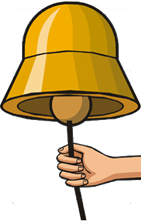
Question:
In this example, the _______ energy used to swing the bell results in _______ energy produced by the bell.
Answers:
A- mechanical; sound
B- electrical; sound
C- mechanical; electrical
D- sound; light
A- mechanical; sound
200
QuestionID:146123
Look at the two circuit diagrams below. Each circuit diagram has a battery, a light bulb, and a switch.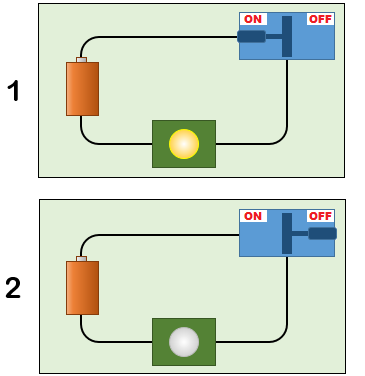
Question:
Casey is comparing circuit 1 and circuit 2. Which statement is true?
Answers:
A- Circuit 1 is a closed circuit, and circuit 2 is an open circuit.
B- Circuit 1 is an open circuit, and circuit 2 is a closed circuit.
D- Circuits 1 and 2 are open circuits.
E- Circuits 1 and 2 are closed circuits.
A- Circuit 1 is a closed circuit, and circuit 2 is an open circuit.
200
QuestionID:121937
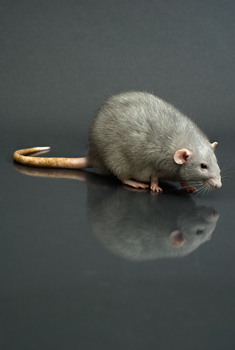
Question:
In the photograph above, an upside down mouse is seen directly below the mouse shown. What happens to the light when it hits the surface to create this effect?
Answers:
A- The light waves are bent when they hit the surface.
B- The light passes through the surface.
C- The light is refracted by the surface.
D- The light is reflected by the surface.
D- The light is reflected by the surface.
200
QuestionID:163997
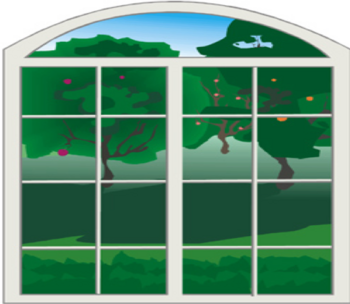
Kendall is learning about force in her science class. She looks out the window and wonders why nothing is moving outside if forces are acting on each other.
Question:
What causes the trees outside the window to remain still on the ground?
Answers:
A- The force of the Earth pushing up on the trees is balanced with the force of gravity pulling the trees down
B- The force of gravity is slowly pushing the trees up, which causes them to grow
C- Force only applies to objects in motion, the trees she sees aren’t moving and so there is no force
D- The trees’ roots act like anchors when the force of the Earth is pushing the trees up too much
A- The force of the Earth pushing up on the trees is balanced with the force of gravity pulling the trees down
300
QuestionID:142173
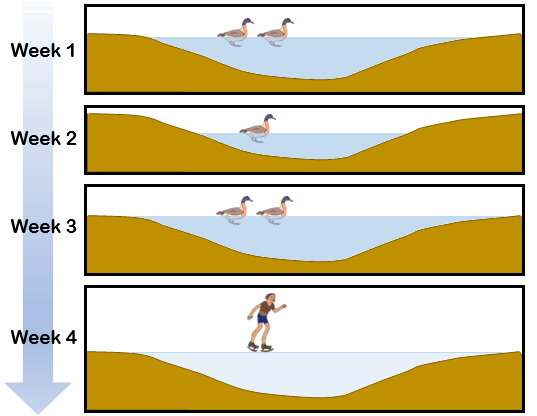
The diagram below shows a pond and how it changes over four weeks.
Question:
What MOST LIKELY occurs between week 3 and week 4?
Answers:
A- a drop in temperature from 10°C to 0°C
B- a rise in temperature from 10°C to 16°C
C- a rise in temperature from 0°C to 10°C
D- a drop in temperature from 16°C to 10°C
A- a drop in temperature from 10°C to 0°C
300
QuestionID:146576
Rosa’s mother made two pitchers of lemonade. In one pitcher, she added sugar to the lemonade and stirred until the sugar disappeared. In the other pitcher, she did not add sugar. She put both pitchers in the refrigerator.
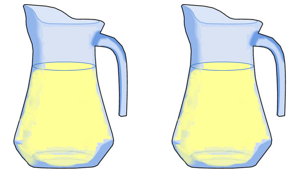
After two hours, Rosa’s mother takes the pitchers out of the refrigerator, but she can’t remember which one was made with sugar. Rosa is listing different methods that her mother could use to identify which pitcher has sugar in it.
- Taste the lemonade from each pitcher.
- Take a sample of lemonade from each pitcher, and boil each sample.
- Pour lemonade from each pitcher into two different glasses, and look at the glasses.
Question:
Which of Rosa’s methods will work?
Answers:
A- methods 1 and 2
B- methods 2 and 3
C- all three methods
D- methods 1 and 3
A- methods 1 and 2
300
QuestionID:145985
The diagram below shows a thermometer in a glass of water.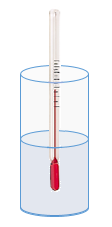
Question:
What type of energy allows the thermometer to measure the water’s temperature?
Answers:
A- light energy
B-electrical energy
C- mechanical energy
D- thermal energy
D- thermal energy
300
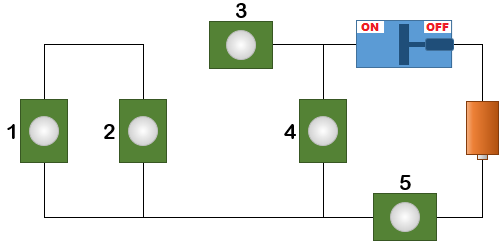
Question:
When the switch is closed, which bulbs will light up?
Answers:
A- None of the bulbs will light up.
B- Only bulbs 3, 4, and 5 will light up.
C- Only bulbs 1, 2, and 5 will light up.
D- Only bulbs 4 and 5 will light up.
D- Only bulbs 4 and 5 will light up.
300
QuestionID:158098
A student took the picture below of their shadow.
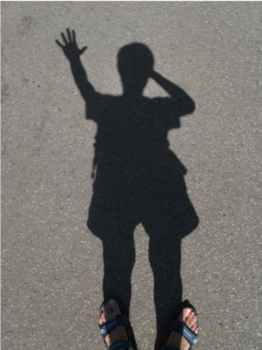
Question:
Which property of light makes it possible to produce a shadow?
Answers:
A- Light can be separated into different colors
B- Light travels in straight lines
C- Light can be reflected
D- Light can be refracted
B- Light travels in straight lines
300
QuestionID:171781
Four horses are pulling a cart. The diagram below shows an overhead view of the horses and the cart. Each horse is number for identification.
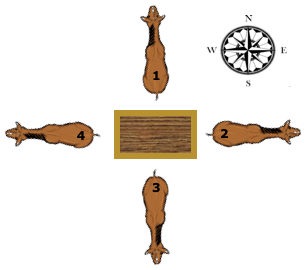
Question:
What do the horses need to do to move the cart to the southwest?
Answers:
A- Horses 3 and 4 walk forward, and Horses 1 and 2 walk backwards
B- Horses 1 and 3 walk forward, and Horses 2 and 4 walk backwards
C- Horses 2 and 3 walk forward, and Horses 1 and 4 walk backwards
D- Horses 1 and 2 walk forward, and Horses 3 and 4 walk backwards
A- Horses 3 and 4 walk forward, and Horses 1 and 2 walk backwards
400
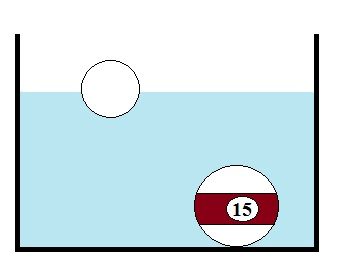
Question:
A ping pong ball and a billiard ball were placed in a container of water. The billiard ball sunk to the bottom while the ping pong ball floated. Why is that?
Answers:
A- The billiard ball was larger than the ping pong ball.
B- The ping pong ball does not have density while the billiard ball does.
C- The billiard ball was less dense than the water and the ping pong ball was more dense than the water.
D- The billiard ball was more dense than the water and the ping pong ball was less dense than the water.
D- The billiard ball was more dense than the water and the ping pong ball was less dense than the water.
400
Question:
Yuichi adds a spoonful of salt into a cup of water. He stirs the water until the salt disappears. Then, he adds a spoonful of sand to the cup. How can Yuichi separate the sand, salt, and water from each other?
Answers:
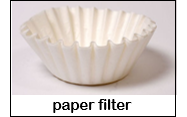
A- Pour the mixture through a paper filter to separate the salt. Then, boil the remaining mixture to separate the water from the sand.
B- Boil the mixture to separate the water from the salt and sand. Then, use a magnet to separate the sand from the salt.
C- Pour the mixture through a paper filter to separate the sand. Then, boil the remaining mixture to separate the water from the salt.
D- Pour the mixture through a paper filter to separate the salt and sand from the water. Then, use a magnet to separate the sand from the salt.
C- Pour the mixture through a paper filter to separate the sand. Then, boil the remaining mixture to separate the water from the salt.
400
QuestionID:145986
Question:
The items listed below need energy to do their jobs. Which two items use the same form of energy to do their jobs?
Answers:
A- a radio and a campfire
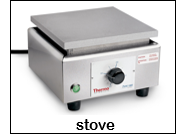
B- a bicycle and a stove
C- a drum and a hammer
D- a street light and a pair of scissors
C- a drum and a hammer
400
QuestionID:146129
Look at the two circuit diagrams below. In the circuit on the left, the light bulb is lit up. In the circuit on the right, the light bulb is not lit up.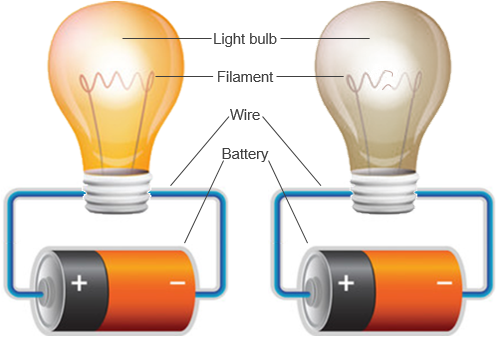
Question:
Why is the light bulb on the right not lit up?
Answers:
A- The filament is broken, so the circuit is closed.
B- The circuit needs more batteries.
C- The filament is broken, so the circuit is not a complete loop.
D- The circuit is missing a switch.
C- The filament is broken, so the circuit is not a complete loop.
400
QuestionID:121918
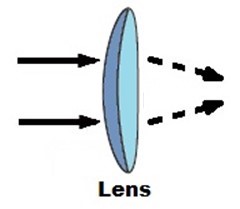
Question:
The arrows in the diagram above show light traveling through a lens. What happens to the light as it passes through the lens?
Answers:
A- It is reflected.
B- It is refracted.
C- It is expanded.
D- It is curved.
B- It is refracted.
400
QuestionID:163999
Three balls with different masses are shown below.
 85g 425g 149g
Question:
If the same amount of kicking force is applied to each ball, which will travel the farthest?
Answers:
A- The football because it has the highest mass and was designed for kicking
B- The beach ball because it has the lowest mass
C- They will all travel the same distance because the applied force is the same
D- The baseball because it is the smallest
B- The beach ball because it has the lowest mass
500
QuestionID:172259
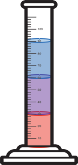
While wearing splash goggles to prevent any of the substances from irritating their eyes, a student measured out 30 ml of three different unknown substances that had been dyed either red, blue, and purple. Next, the student slowly poured each substance into a graduated cylinder.
Question:
The teacher informed the student that one of the substances is water. Which of the following would best help the student identify which substance is water?
Answers:
A- Taste each of the substances to find which one tastes like water.
B- Place an ice cube in the graduated cylinder and see which layer it settles in before melting.
C- Using a stirring rod, gently mix all three substances until they are completely mixed, and then allow them to settle for 30 minutes.
D- Add cooking oil to the graduated cylinder and it will form a layer directly on top of the water.
B- Place an ice cube in the graduated cylinder and see which layer it settles in before melting.
500
QuestionID:146568
The table below describes how four different mixtures are made.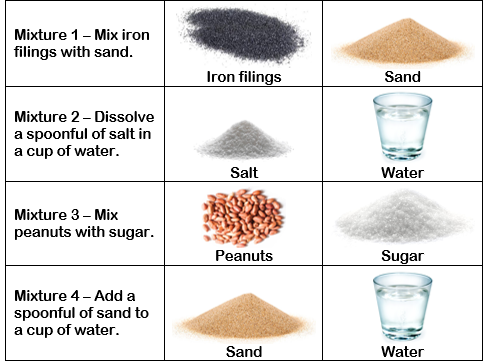
Question:
Jason wants to separate the ingredients in these mixtures. Which of the following should he use to separate the salt from the water?
Answers:
A-
B-
C-
D-
A-
500
QuestionID:145989
Look at the list of activities below.
- a hot-air balloon flying
- a grasshopper jumping
- a traffic signal lighting up
- a basketball bouncing
- a pair of hands clapping
- a solar-powered clock ticking
- a laptop computer beeping
Question:
Which activities use light energy?
Answers:
A- activity 1
B- activities 5 and 6
C- activities 4 and 6
D- activity 6
D- activity 6
500
QuestionID:171731
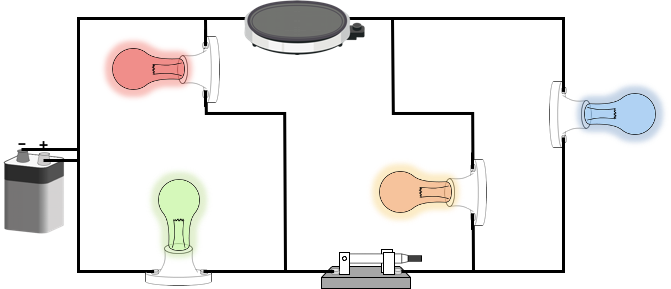
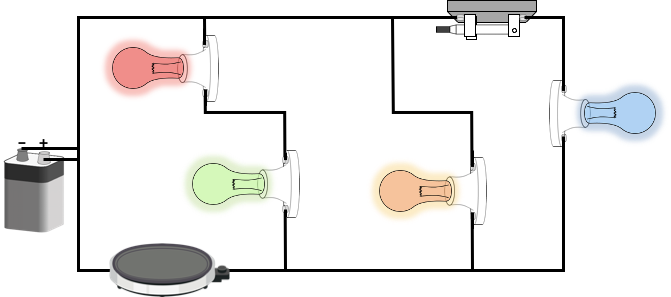
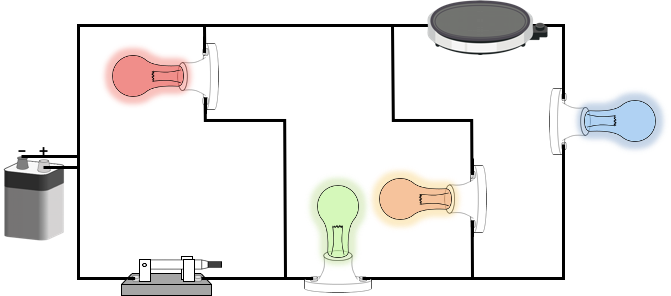
A student wants to build a circuit with four light bulbs and one hot plate. The student wants to place a switch in the circuit that will turn off two of the lightbulbs and the hot plate when opened.
Question:
Which of the following circuits should the student build?
Answers:
A-
B-
C-

D-
A-
500
QuestionID:158095
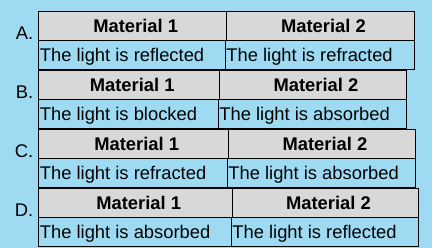
The image below shows how a ray of light behaves with two different materials.

Question:
Which table best describes the behavior of the light ray as it encounters the materials?
Answers:

500
QuestionID:171772
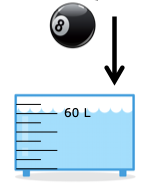
Students drop the same heavy ball into a tub of water from different heights. For each height, they measure the amount of water splashed out of the tub and then refill the tub to the original amount.
Question:
Why is the amount of water splashed out of the tub different in each trail?
Answers:
A- The force of the ball hitting the water changes.
B- The size and shape of the ball hitting the water changes.
C- There is less water in the tub after each trail.
D- The mass of the ball hitting the water changes.
A- The force of the ball hitting the water changes.