Perception
See that?
Name that bias
The sum is more than the parts
Let's get smart
STAT
100
Type of processing where external sensory input leads to cognition
Bottom Up
100
This blindness is characterized by missing parts in our visual field, like a cyclist when someone is driving. They don't see the bike because they are focused on cars.
inattentional blidness
100
Not using reason as a basis for behavior.
The decision has no mathematical basis.
Gambler's fallacy
100
Law of:

closure
100
g=
general intelligence
100
The most occurring piece of data in a set
mode
200
Type of processing where prior expectations and experiences prime thoughts
Top-down
200
This type of blindness is when we fail to see changes in the environment or image
change blindness
200
This is the tendency for the brain to value new information that supports existing ideas, sometimes called belief bias.
We see what we want to see
Confirmation Bias
200
Law of:

Figure & Ground
200
This is an image of what type of distribution:
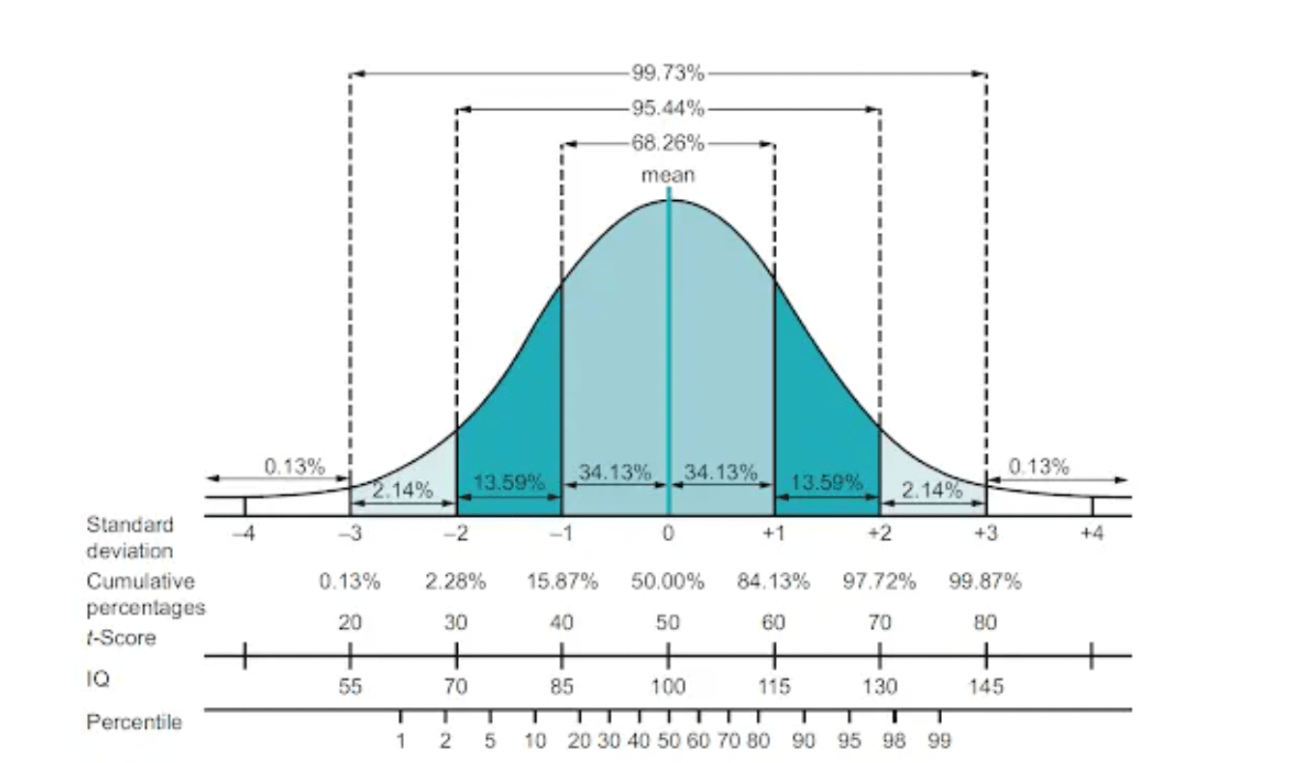
Symetrical or normal. Binet's IQ test uses this standard bell curve.
200
The center number in a data set that has been organized from lowest to highest
median
300
Reading uses which two types of processing?
Top & Bottom
300
binocular cue when our eyes look inward as an object nears our face
convergence
300
This is the tendency to interpret past events as more predictable than they actually were.
Hindsight bias
300
Law of:

Proximity
300
This type of thinking considers all possible solutions, but is not great for subjective topics. It is time-consuming.
algorithim
300
What does a negative 3 Z-score represent?
three standard deviations below the mean
400
Perception is influenced by... names at least three
culture, context, schema
400
Monocular cue: Closer objects are clearer, and further objects are fuzzier
reletive clarity
400
Oh I already put so much in, I might as well see it through
Sunk cost fallacy
400
The Law of:

Similiarity
400
Short-cut thinking and decision-making that uses schemas
heuristics
400
The full list of data from lowest to highest
range
500
Perception style that is more common in Eastern cultures and looks at an object/ scene as a whole
Holistic
500
Monocular cue: Closer objects are larger, and further objects are smaller
relative size
500
is a cognitive bias where an individual's subjective confidence in their own abilities, knowledge, or judgment is greater than their objective accuracy or performance. This can lead people to take excessive risks, ignore contrary evidence, and make poor decisions across various aspects of life, from investing to personal relationships.
Overconfidence bias
500
Which psychologist is famous for implementing concepts based of the sum being more than the parts?
Gestalt
500
thinking about thinking
metacognition
500
This statistic is most easily skewed by outliers
mean