Scales That Aren't Major
Key Relationships
Manipulating Intervals and Instruments
On Melody
On Timbre and Texture
Figured Bass
400
The B Natural Minor Scale written down
What is

400
Relative Minor of the the Following Key

What is B-flat Minor?
400
The inversion of the interval heard here
What is a Perfect 4th?
400
Compared to the first statement of this melody, the second is transposed up or down this far away (2.10/1)
What is a whole step (M2) up?
400
Of the following choices (Big Band, Basso Continuo, Rhythm Section, and Percussion), the one that best describes the ensemble playing this passage (2.8/2)
What is a rhythm section?
400
The correct Roman numeral analysis of the chord shown in the key of B-flat major

What is V
800
The following passage in C Minor, sung in solfege

What is [singing]?
800
Compared with the first scale, this is the second scale
What is its relative major?
800
The sounding pitch (a major 2nd lower) of the clarinet's note below

What is F-sharp?
800
The mezzo-soprano's part can be described as moving one way and then another by using these two words, each with the same suffix

What is disjunct changing to conjunct?
800
Of the following choices (canon, doubling, call and response, or melody and accompaniment), the texture that best describes the relationship between the synthesizer and electronic organ parts (2.11/3)
What is call and response?
800
The chord in Box C is built on this scale degree

What is the tonic?
1200
The scale heard here, beginning on D (dd)
What is D Melodic Minor?
1200
The relationship between the two scales played
What are parallel major and minor?
1200
The English Horn and French Horn (Horn in F) both sound a fifth lower than written. These are their true pitches in the first chord below

What are C (English Horn) and G (French Horn)?
1200
The repetitive compositional device used in the first two measures of the bassoon part seen below
What is an ostinato?
1200
The part in this score than can be appropriately described as a solo

What is the tenor?
1200
In the key of C major, this is the way to notate the figured bass for a subdominant chord in 2nd version
What is IV 6/4?
1600
The scale used in the given example

What is chromatic?
1600
The relationship between the two keys shown

What are distantly related keys?
1600
This is the sound of a compound major second, which is larger than an octave
What is [singing]
1600
Compared with measure 2, the bassoon part in measure 4 is transposed down this far
What is a perfect 4th?
1600
The difference in texture between the first and second halves of this passage can be described using these two-word terms with opposite meanings

What are closed and open spacing?
1600
In the key of G Minor the following figured bass symbol may be written alternately with a letter name as follows
V7
What is D7?
2000
The names of four additional scales besides major and minor
What are chromatic, pentatonic, whole-tone, and octatonic?
2000
All of the keys closely related to E Major, looking at this chart
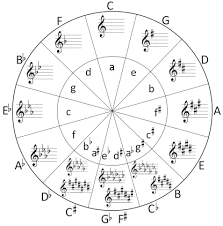
What are C#m, G#m, F#m, BM, and AM?
2000
The two-part formula for finding an interval's inversion, thus changing its size and quality
What is to 1) switch the quality of the interval to its opposite (i.e., major to minor, augmented to diminished) unless perfect, which remains perfect and 2) change the number to another that adds up to 9 (e.g., 2nd becomes 7th, 3rd becomes 6th, etc.)
2000
What the ending line of the Star Spangled Banner, "and the home of the brave" would sound like if sung first syllabically and then melismatically (dd)
What is [singing]
2000
The instruments most commonly included in a brass quintet
What are 2 trumpets, French Horn, trombone, and tuba?
2000
The figured bass analysis of the last measure of this hymn would be shown this way
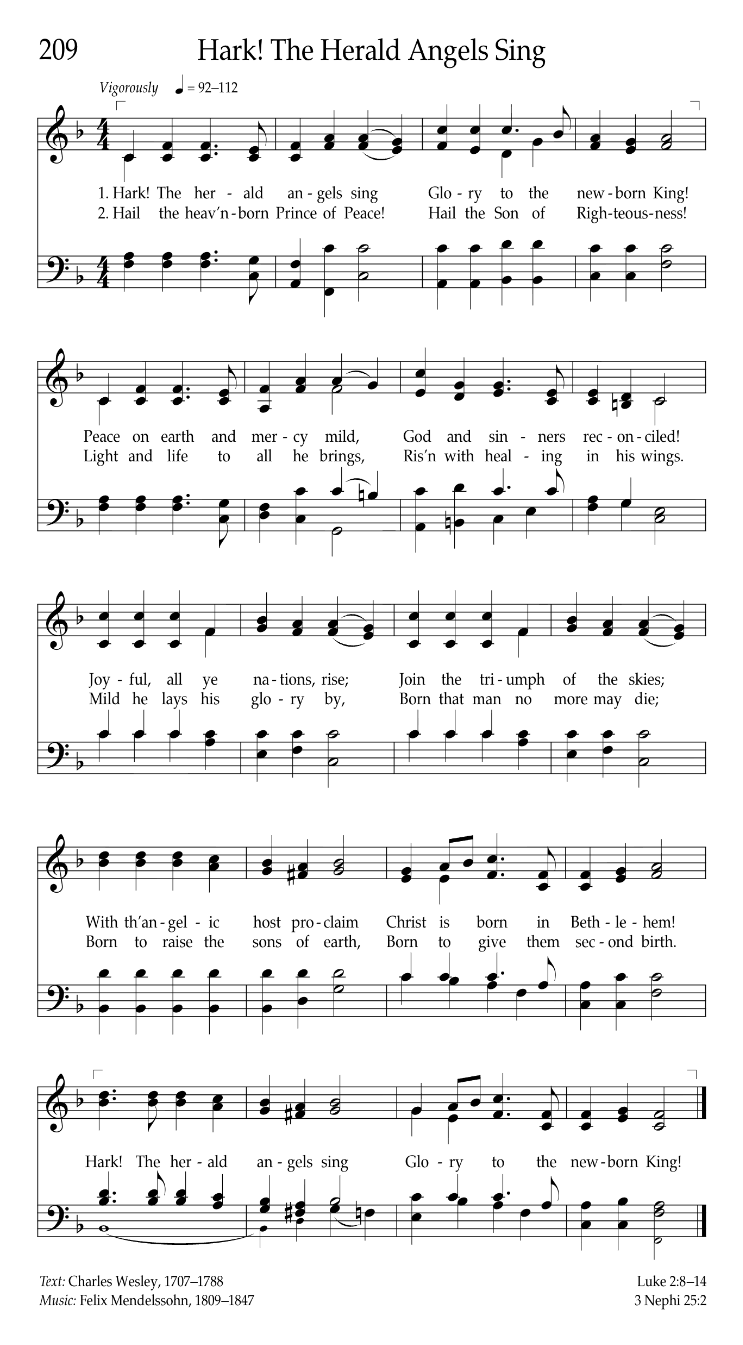
What is I 6/4, V7, I?