Hindustani or Carnatic?
Musical Instruments Pt. 2
World Events
Middle Eastern Music Theory
Bollywood
200
The more improvised of the two.
Hindustani
200
The only instrument heard during the recitation of the Quran, due to its "Halal" nature.
Voice
200
Middle eastern scale or mode, the most common being "rast."
Maqam
200
In addition to song, this choreographed art form can be found in most Bollywood films.
Dance
400
Carnatic music places stronger emphasis than Hindustani on this instrument.
Voice
400
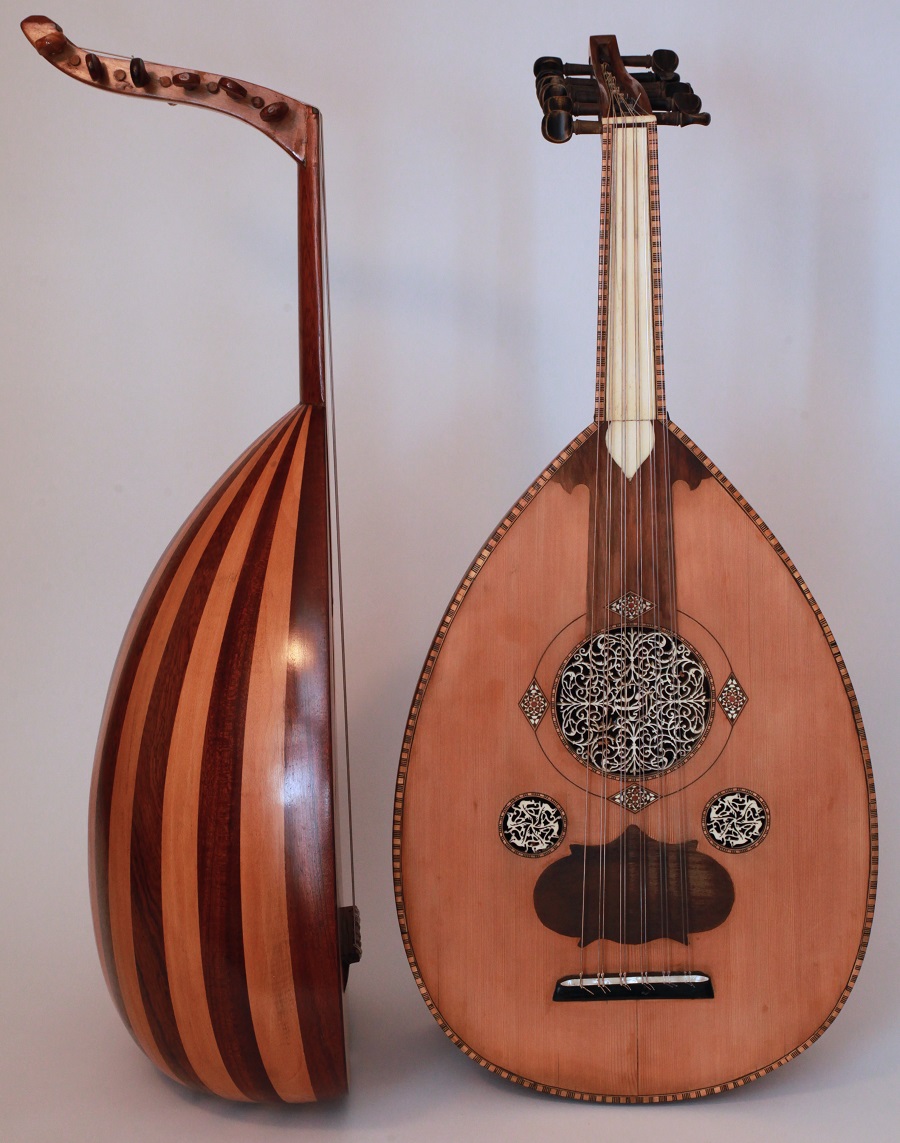
This lute-like instrument is the most popular in Middle Eastern music.
Oud
400
During the 1980s in the US, these structures were increasingly built due to Indian immigration.
Hindu Temples
400
Rhythmic mode, which repeats every measure.
Iqa
400
The region from which Bollywood gets its name, changed to Mumbai in 1995.
Bombay
600
Rhythmic cycles found in both musical regions of India.
Talas
600
This instrument was played by George Harrison on the 1965 song "Norwegian Wood," supposedly marking its western debut.
Sitar
600
This country achieved independence from the British in 1947.
India
600
This style of recitation of the Quran is more elaborate and embellished than murattal.
Mujawwad
600
These types of films blend nearly every major genre, and can be longer than average as a result.
Masala
800
Carnatic music, being the more theoretically complex of the two, features around 36,000 of these.
Ragas
800
This Chinese fiddle-like instrument can be heard in both traditional and modern settings, and is featured in the Taiwanese-American band, The Hsu-nami.
Ehru
800
From 1966 to 1976, Mao Zedong led this social movement in China, which demonstrates the complexities of tradition vs innovation.
Cultural Revolution
800
These scale fragments can be thought of as the western "tetrachord."
Jin
800
Like Hollywood, Bollywood relies on these celestial figures to power or sell films.
Stars
1000
The "mood" of a raga
rasa
1000
The harmonium can be heard in this Hindu musical form, which features sanskrit chanting and vernacular hymns.
Bhajan
1000
During the 1960s, Ahmed Rushdi wrote this breakout hit, considered the "first pop song" from Pakistan.
Ko Ko Korina
1000
This solo improvised form explores a maqam, and usually precedes a larger performance.
Taqsim
1000
Considered the Charlie Chaplin of Bollywood.
Raj Kapoor