CARDIAC
Respiratory
GI/GU
Neuro & Pain
Endocrine & Immune
100
A patient is prescribed atorvastatin for hyperlipidemia. Which assessment finding should the nurse instruct the patient to report immediately?
Unexplained muscle pain or weakness.
Rationale:
Statins can cause myopathy and rhabdomyolysis, rare but serious adverse effects that can lead to acute kidney injury. Patients should promptly report muscle pain, tenderness, weakness, or dark-colored urine.
100
A patient uses fluticasone daily for asthma control. What instruction is most important after administration?
Rinse the mouth after each use.
Rationale:
Inhaled corticosteroids increase the risk of oral candidiasis (thrush). Rinsing reduces this risk.
100
A patient taking omeprazole for several years is at increased risk for deficiency of which vitamin?
Vitamin B12
Rationale:
Proton pump inhibitors reduce gastric acid production, impairing vitamin B12 absorption.
100
A patient is being discharged with gabapentin for neuropathic pain. Which instruction is most important for the nurse to include when teaching about this medication?
Avoid driving or operating heavy machinery until the effects of the medication are known.
Rationale:
Gabapentin commonly causes dizziness, drowsiness, and sedation, especially when therapy is initiated or doses are increased. Patients should be cautioned about activities requiring alertness until they know how the medication affects them.
100
Which insulin provides basal glucose control and typically has no pronounced peak?
Insulin glargine
Rationale:
Glargine provides steady insulin coverage over approximately 24 hours.
200
Answer this patient's question: "How does digoxin work? What does it do?"
It helps your heart pump harder (increased cardiac output by positive inotropic effect) & slows the heart rate (negative chronotropic effect)
200
A pediatric patient with persistent asthma has a peak flow of 55% of baseline. The patient has their scheduled budesonide breathing treatment. What is the nurse's best action now?
Give an albuterol inhaler prior to budesonide treatment to open airways
200
A patient with hepatic encephalopathy receives lactulose. Which finding indicates the medication is effective?
Decreased serum ammonia levels and improved level of consciousness
Rationale:
Lactulose traps ammonia in the GI tract and promotes its elimination through the stool.
200
EMS is called to a residence after a family member finds a patient unconscious and on the floor. An empty bottle recently filled with alprazolam is found. Which medication do you anticipate EMS will administer?
flumazenil
this is the reversal for benzo overdose
200
A patient taking levothyroxine reports insomnia, palpitations, and weight loss. What is the most likely explanation?
Excessive thyroid hormone replacement
Rationale:
Overreplacement can cause symptoms of hyperthyroidism.
300
What class of medication is most appropriate to treat a pulmonary embolism?
Thrombolytic agents (Alteplase and tenecteplase)
Therapeutic effect: lysis of thrombi
300
A patient with asthma states, “I use my albuterol inhaler 4 to 5 times every day.” What does the nurse recognize this finding most likely indicates?
Poor asthma control requiring reassessment of the treatment plan.
Rationale:
Frequent use of a short-acting beta₂-agonist (SABA) such as albuterol indicates that the patient's asthma is not well controlled. Reliance on a rescue inhaler more than prescribed suggests inadequate long-term management and may necessitate adjustment of controller medications, such as inhaled corticosteroids. Increased SABA use is also associated with a higher risk of severe asthma exacerbations.
300
A patient taking metoclopramide for 6 months develops repetitive facial grimacing and tongue movements. What adverse effect is occurring?
Tardive dyskinesia
Rationale:
Long-term dopamine blockade can lead to potentially irreversible extrapyramidal symptoms.
300
A patient taking phenelzine ate lunch and developed a severe headache and elevated BP. What happened?
The patient ate food with tyramine, causing dangerous elevations in blood pressure.
300
A patient abruptly stops taking prednisone after several months of therapy. Which life-threatening complication is the priority concern?
Adrenal crisis
Rationale:
Chronic corticosteroid therapy suppresses natural cortisol production, requiring gradual tapering.
400
A patient is being discharged post-MI with 2 stents placed 3 days ago.
Meds to be given now: acetaminophen PO, carvedilol PO, clopidogrel PO, atorvastatin PO
Assessment: T 98.4, HR 59 (apical), RR 16, BP 140/76, SpO2 96% on RA, 2/10 pain at PCI site at L groin.
What action(s) should the nurse take?
Contact the doctor to clarify beta-blocker administration, as the patient's HR is less than 60.
400
A patient taking theophylline develops severe tachycardia and agitation. Which laboratory value would support the nurse's suspicion?
Elevated theophylline level above the therapeutic range
Rationale:
Theophylline has a narrow therapeutic index. Toxicity commonly produces neurologic and cardiac manifestations.
400
A patient taking tamsulosin for benign prostatic hyperplasia (BPH) states, "The medication isn't working because I'm still waking up at night to urinate." Which finding would indicate the medication is having its intended therapeutic effect?
Improved urinary stream and decreased difficulty initiating urination
Rationale:
Tamsulosin is an alpha-1 adrenergic blocker that relaxes smooth muscle in the prostate and bladder neck, improving urine flow. While symptoms such as nocturia may take longer to improve, decreased hesitancy and a stronger urinary stream are indicators that the medication is working.
400
A Parkinson's patient taking carbidopa/levodopa develops severe involuntary movements. What complication should the nurse suspect?
Levodopa-induced dyskinesia
Rationale:
High dopamine levels from therapy may result in abnormal involuntary movements.
400
A patient prescribed methimazole develops a fever and sore throat. Which laboratory value is the priority to assess?
White blood cell count
Rationale:
Methimazole (an anti-thyroid medication that treats hyperthyroidism) can cause agranulocytosis, placing patients at high risk for severe infection.
500
You have a 70-year-old male with hx of MI and heart failure. Assessment: agonal breathing, no palpable pulse. You see the following on the ECG strip. What interventions would be appropriate?
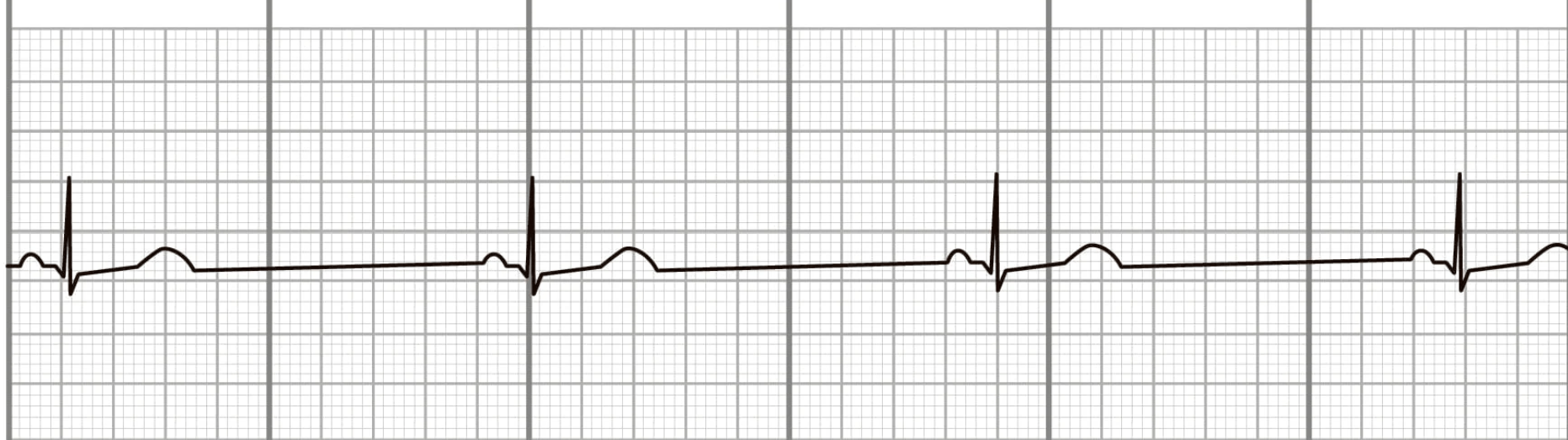
CPR & Epinephrine IV Push
Patient is in PEA (pulseless electrical activity)
500
A 60 year-old male comes into the ED with positive troponins and angina. What question does the nurse need to ask before administering standard treatment for MI to prevent an adverse reaction?
Have you taken sildenafil recently?
Rationale:
Sildenafil causes vasodilation by increasing nitric oxide effects. When combined with nitrates, profound hypotension can occur, leading to syncope, shock, or death.
500
A physician prescribes loperamide for a patient complaining of constipation for the past 3 days. When is the best time to administer this medication?
Never
loperamide is an anti-diarrheal
500
A patient receiving fentanyl and sertraline develops hyperthermia, agitation, tremors, and hyperreflexia. What condition is most likely occurring?
Serotonin syndrome
Rationale:
Concurrent serotonergic medications may result in excess serotonin activity, producing a potentially life-threatening syndrome.
500
A patient goes to a urgent care with fever, malaise, muscle soreness, and dry mouth for the past 4 days. What medication(s) would be appropriate to recommend?
Symptom management: tylenol and water
No antivirals because it has been 4 days since onset of symptoms