Labeling the Parts
of the Brain
of the Brain
A
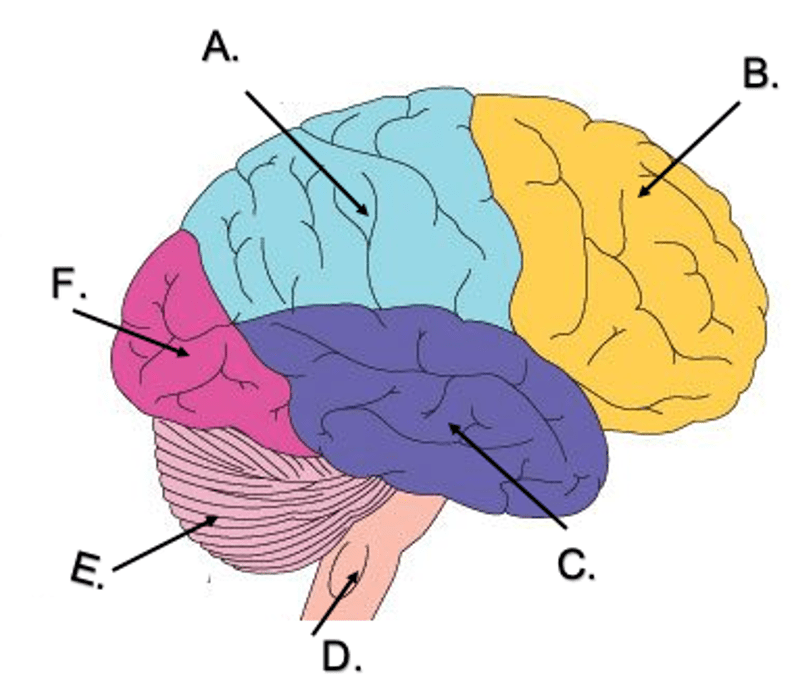
parietal lobe
nerves that branch off from the spinal cord and extend to all parts of the body make up this system
peripheral nervous system
shuffling gait when walking
basal ganglia
a rare neurological disease that affects motor neurons, those nerve cells in the brain and spinal cord that control voluntary muscle movement; people with this eventually will not be able to stand or walk, get in or out of bed on their own, or use their hands and arms
amyotrophic lateral sclerosis (ALS)
a procedure to collect cerebrospinal fluid to check for the presence of disease or injury
lumbar puncture
B
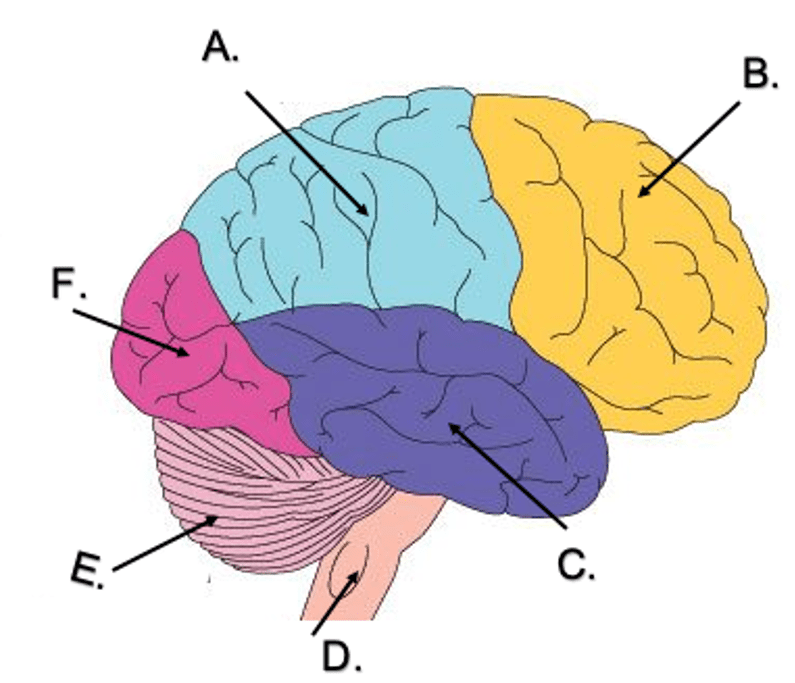
frontal lobe
the system associated with “rest and digest”
parasympathetic nervous system
sleep disorders
thalamus
sensitivity to light
photophobia
a test that measures muscle response to nervous stimulation
electromyography
C
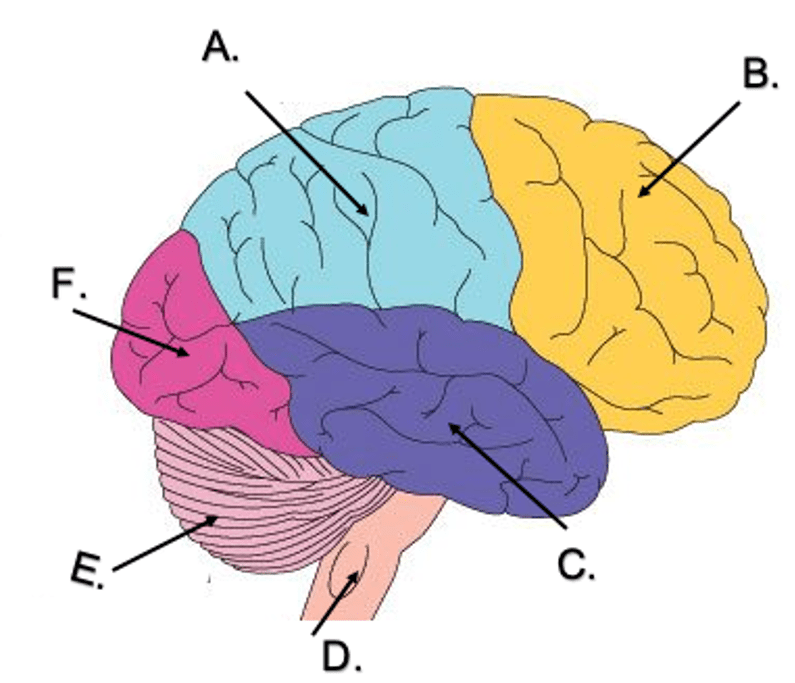
temporal lobe
the system that controls the lungs, the heart, smooth muscle, and exocrine and endocrine glands, largely without conscious control
autonomic nervous system
body temperature regulation
hypothalamus
inflammation (swelling) of the protective membranes covering the brain and spinal cord
meningitis
a commonly used test to determine if damage has occurred to the brain or spinal cord through electrodes placed on the scalp in which the brain and nerve’s responses to stimuli are recorded
evoked potential testing
D
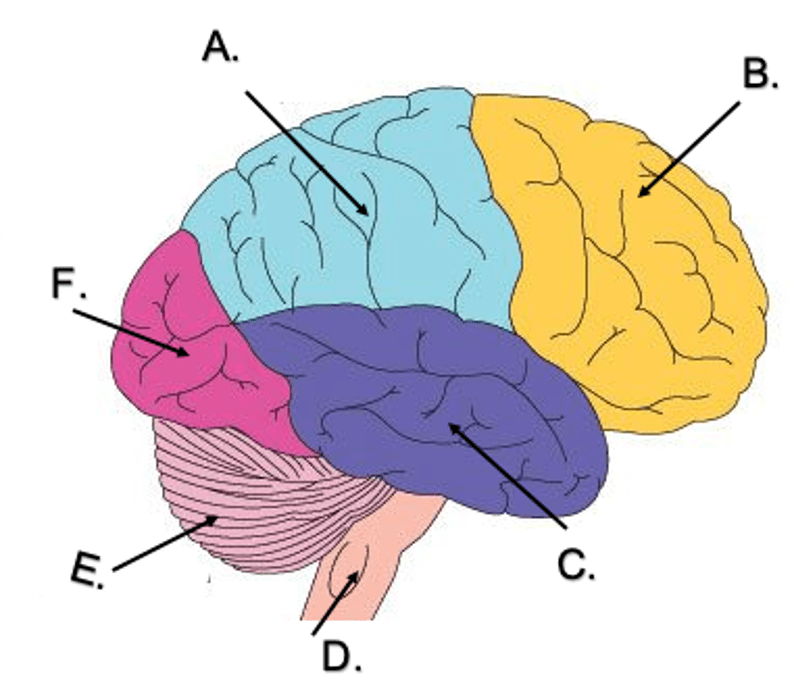
brain stem
the system that allows voluntary control of body movements using the skeletal muscles
somatic nervous system
loss of muscle coordination
cerebellum
predicted outcome of a disease
prognosis
measures different substances in the cerebrospinal fluid including white blood cells, bacteria, and blood
CSF analysis
E
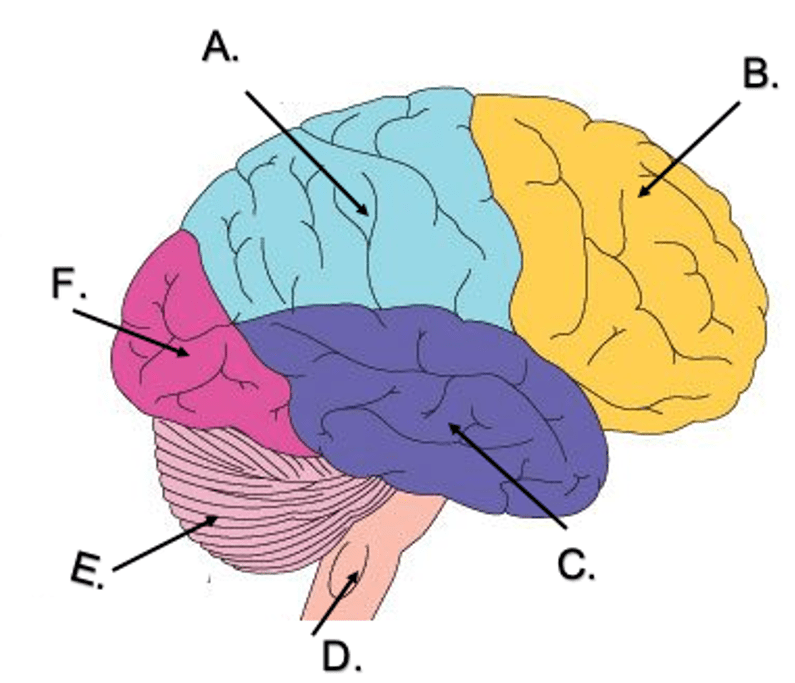
cerebellum
the memory center of the brain
hippocampus
brain stem
a chronic pain condition that often occurs after an injury or surgery and causes intense pain to the arms, hands, legs, or feet
complex regional pain syndrome
an assessment tool to determine a person’s neurological function
neurological exam
F
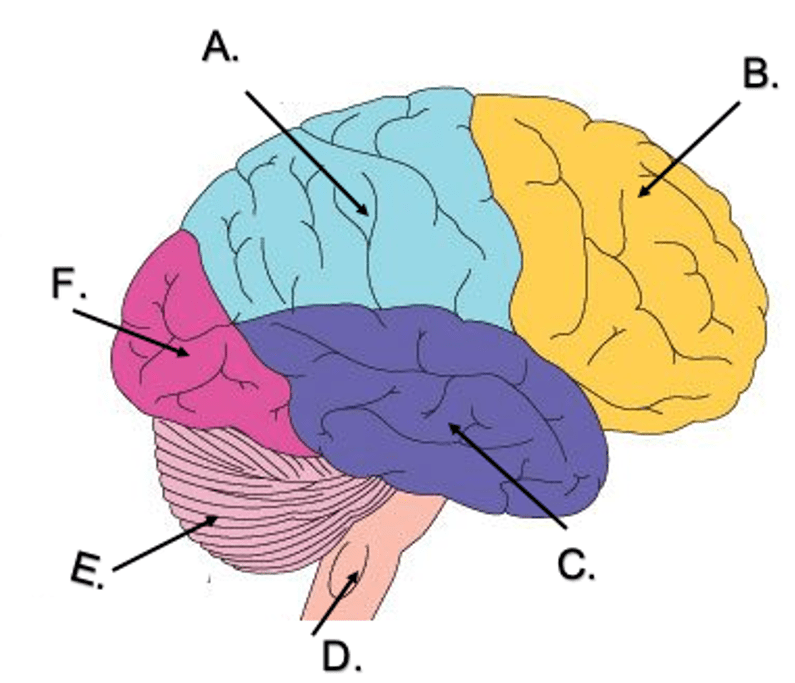
occipital lobe
an insulation layer around the nerves that helps move nerve impulses
myelin
can speak clearly, but the words make no sense
Wernicke’s area (in the temporal lobe)
part of the neurological exam that is used to identify problems with the cranial nerves and to help confirm disease or injury of the nervous system
cranial nerve testing
the basic unit of the nervous system
neuron
fail to form words properly, and speech will be halting and slurred
Broca’s area (in the temporal lobe)