Nuclear Processes
Radioactive Decay
Subatomic Particles
Atmosphere Layers
Earth’s Layers & Plate Movement
Heat Transfer
100
During fission, what particle must be absorbed by the nucleus to trigger the split?
A neutron
100
What particle is released during alpha decay?
2 protons + 2 neutrons
100
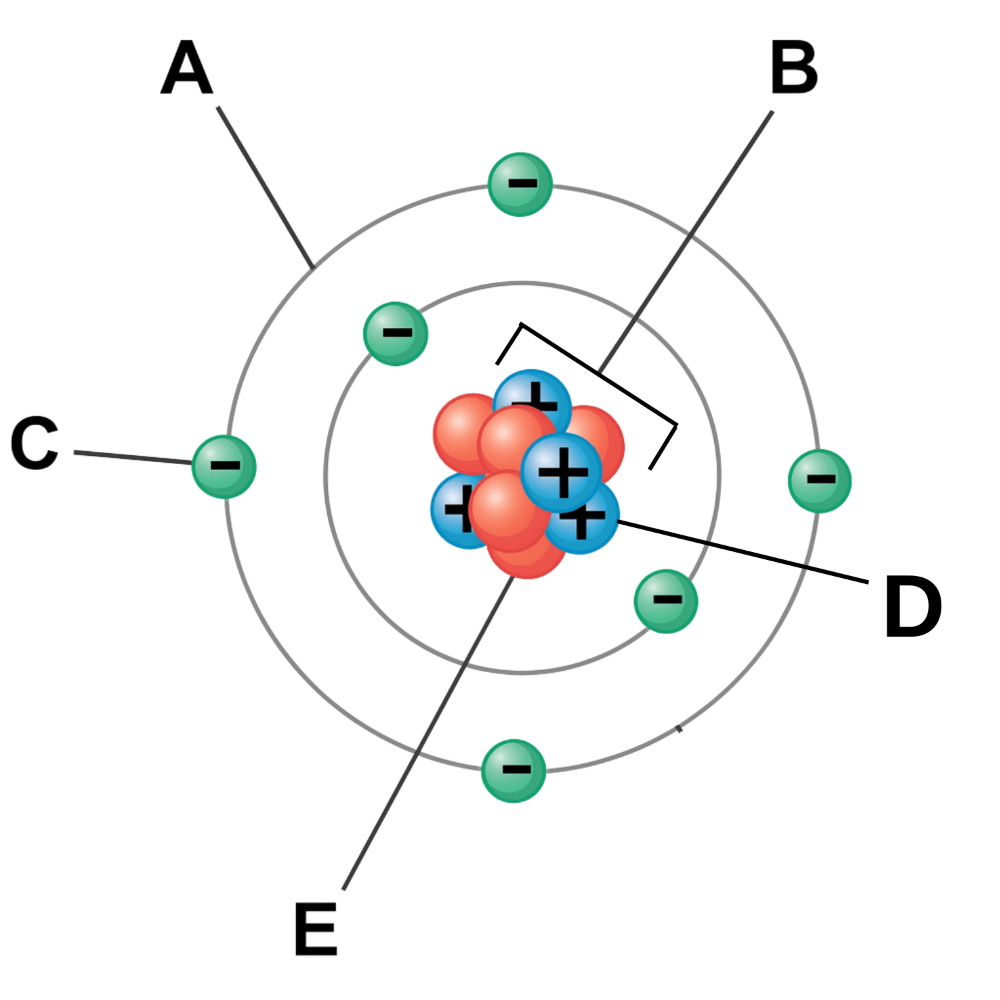 Which particle has a positive charge? (Labeled D)
Proton
100
What is the blanket of gases around Earth called?
Atmosphere
100
Which layer makes up most of Earth’s volume?
The mantle.
100
What is the flow of energy from warmer places to cooler places called?
Heat
200
What is the process where two nuclei combine?
Nuclear Fusion
200
In beta decay, what does a neutron turn into?
A proton + an electron
200
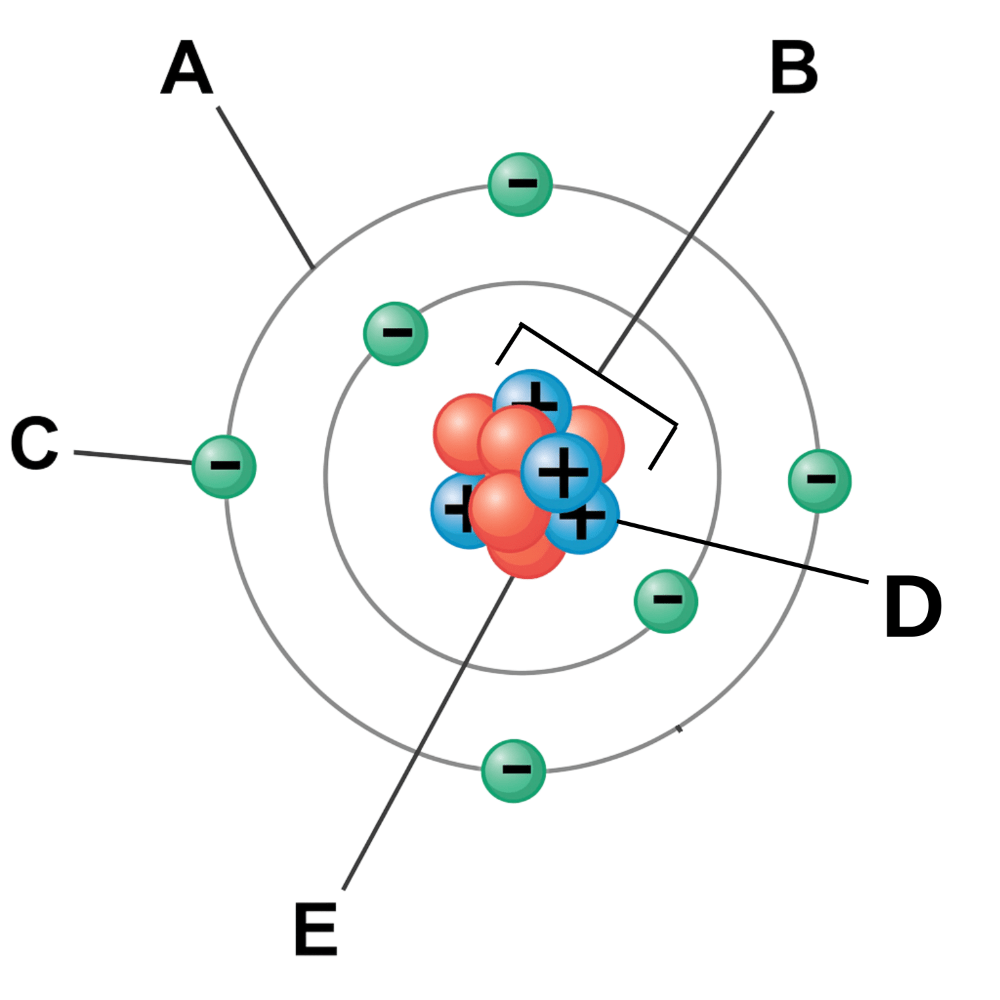 What is the center of the atom called? (Labeled B)
Nucleus
200
Which layer contains weather?
Troposphere
200
Which layer is liquid?
The outer core
200
Which type of heat transfer moves through empty space by electromagnetic waves?
Radiation
300
What happens when a large nucleus splits?
Nuclear Fission
300
Which type of decay releases pure energy, not particles?
Gamma decay
300
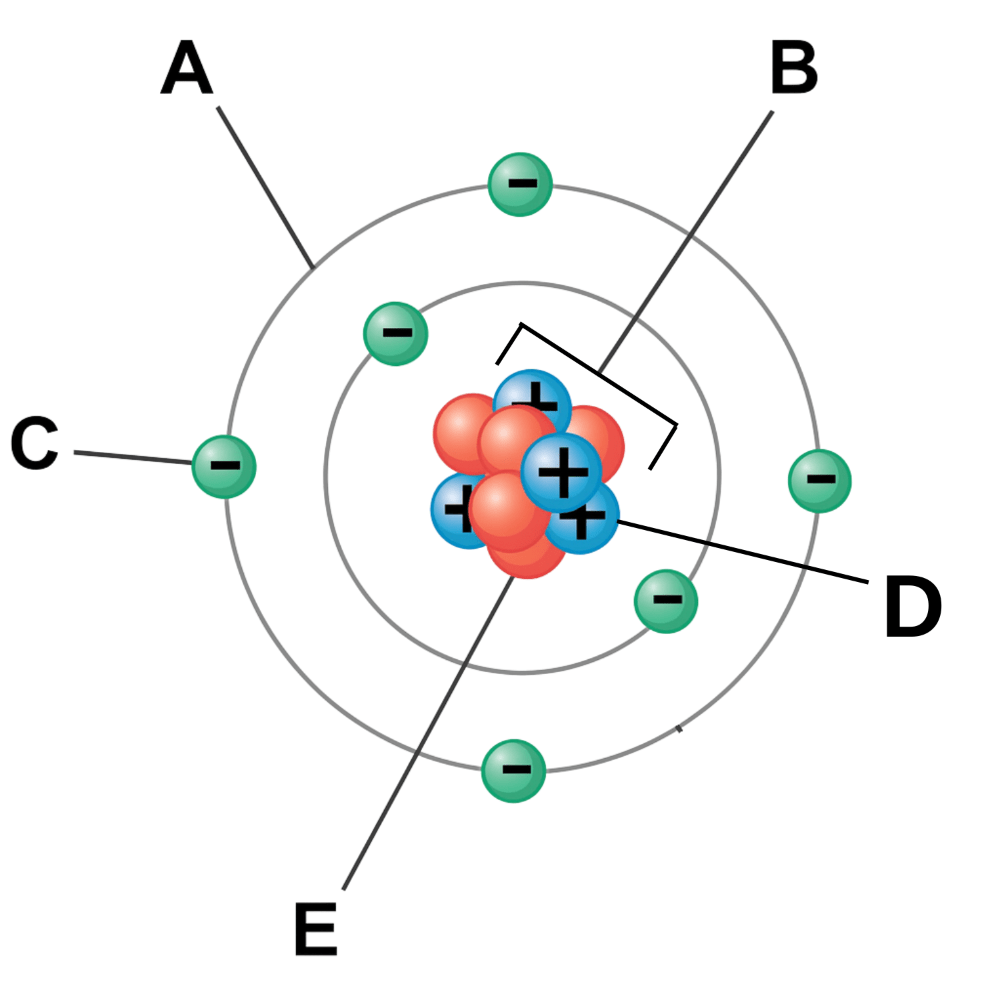 Which particle has a negative charge? (Labeled C)
Electron
300
Which layer contains the ozone layer?
Stratosphere
300
Which layer is solid due to extreme pressure?
The inner core
300
Which type of heat transfer happens when hotter, less dense fluids rise and cooler, denser fluids sink?
Convection
400
What do we call changes inside the nucleus that release energy?
Nuclear processes.
400
Which decay type has greater penetration and must be stopped using aluminum?
Beta decay
400
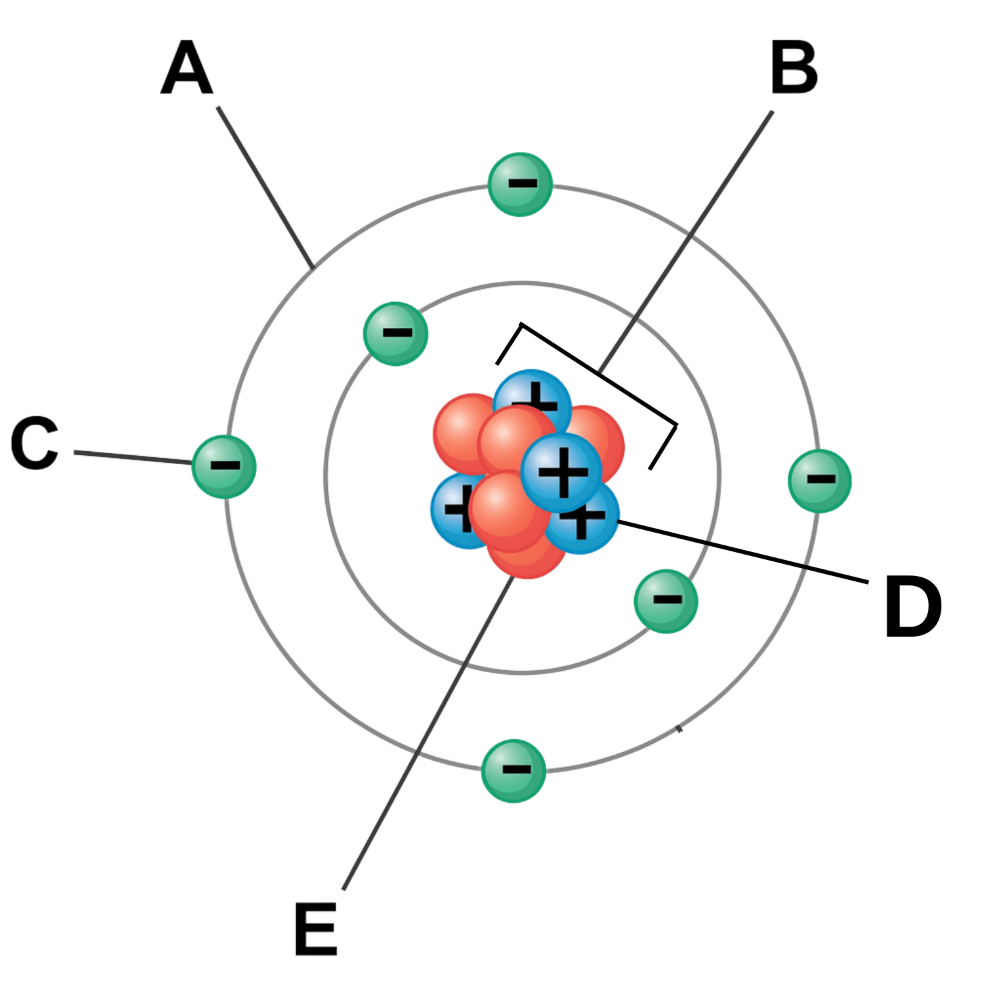 Which particle has no charge? (Labeled E)
Neutron
400
Which is the coldest layer?
Mesosphere
400
What do we call the rigid top layer of Earth (crust + upper mantle)?
Lithosphere.
400
Which type of heat transfer occurs when particles in a solid bump into each other, passing energy along?
Conduction
500
Which nuclear reaction requires extremely high temperatures and pressures to occur?
Nuclear Fusion
500
Which type of decay involves releasing high-energy electromagnetic radiation?
Gamma decay
500
Which particle is much smaller than protons and neutrons?
Electron
500
Which layer fades into space?
Exosphere
500
What is the rigid rock layer above the asthenosphere called?
Lithosphere
500
Materials that allow heat to pass through easily are called what? And what are materials that do not allow heat to pass through called?
Conductors and insulators