A
B
C
D
E
1
The nurse is caring for four patients. Which patient has findings most consistent with dead-space ventilation?
A. A patient with atelectasis after prolonged bed rest following surgery
B. A patient with pulmonary edema and bilateral crackles
C. A patient with pulmonary embolism with a history of deep vein thrombosis
D. A patient with pneumonia who has fluid-filled alveoli
C. A patient with pulmonary embolism with a history of deep vein thrombosis
1
A 72-year old client is admitted to the telemetry unit after reporting fatigue and occasional palpitations for the past 2 days. History of hypertension, takes lisinopril daily. BP: 86/52; HR: 148/min; RR: 20/min; SpO2: 95% on RA.
The ECG shows...
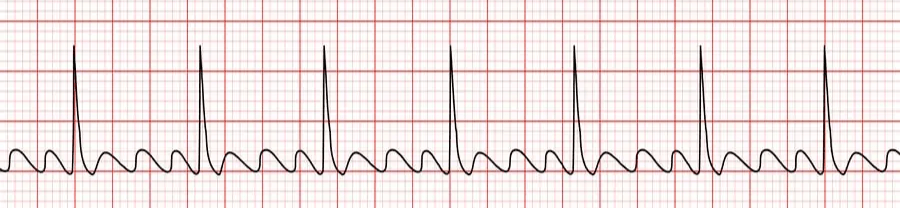
What should the nurse anticipate?
A. Administed an IV anticoagulant to prevent thromboembolism
B. Prepare the client for synchronized cardioversion
C. Administer IV metoprolol to decrease heart rate
D. Encourage client to perform vagal maneuvers
B. Prepare the client for synchronized cardioversion
1
A nurse is providing discharge teaching to a client who has a chest tube connected to a three-chamber drainage system following treatment for a pneumothorax.
Which statement by the client indicates a lack of understanding and requires further teaching?
A. “If I see continuous bubbling in the water-seal chamber, that means the chest tube is working properly to remove air from my chest.”
B. “The suction-control chamber regulates the amount of suction applied to the chest tube drainage system.”
C. “The collection chamber is where fluid and blood draining from my chest are collected.”
D. “The water-seal chamber allows me to see whether air is leaving the pleural space and prevents air from moving back into my chest.”
A. “If I see continuous bubbling in the water-seal chamber, that means the chest tube is working properly to remove air from my chest.”
1
A 32-year old patient is pushed into the ER atop a stretcher, passed out. Upon assessment, nurse notes diaphoretic, cold skin, and cyanosis on the lips and nails. HR: 130, BP: 88/62, SpO2 of 84%, which remained unchanged despite being put on 15 LPM O2 via non-rebreather.
An echocardiogram was performed, and reveal acute right ventricular straining with reduced left ventricular filling. Further diagnostic testing identifies a large obstruction within the pulmonary vasculature.
Which medication + rationale should the nurse anticipate administering?
A. Nitroglycerin; dilates the pulmonary arteries to bypass the obstructing embolus
B. Heparin; promotes rapid thrombolysis to improve pulmonary arterial blood flow
C. Alteplase; breaks down the existing blood clot to restore pulmonary artery blood flow
D. Norepinephrine; vasoconstricts arteries to restore MAP and restore tissue perfusion
C. Alteplase; breaks down the existing blood clot to restore pulmonary artery blood flow
1
A 45-year-old client is sitting in bed watching television when the nurse notices that the cardiac monitor is alarming. The client reports that their heart suddenly started "racing" about 10 minutes ago. The client is A&O x 4. BP: 116/74; HR: 184/min.; RR: 20/min.; SpO2: 97% on RA
The EKG shows...
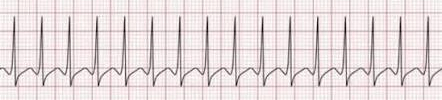
Which intervention should the nurse anticipate first?
A. Administer IV amiodarone to stabilize the rhythm
B. Prepare the client for synchronized cardioversion
C. Instruct the client to perform a vagal maneuver
D. Administer IV adenosine
C. Instruct the client to perform a vagal maneuver
1
A nurse is providing discharge teaching to a client who was recently prescribed lisinopri for hypertension. The nurse reviews common adverse effects the client should monitor for.
Which statement by the client indicates a lack of understanding and requires further teaching?
A. “I should change positions slowly if I feel dizzy after starting this medication.”
B. “If I develop a dry cough, I should stop taking the medication immediately because this is a sign of a serious allergic reaction.”
C. “I should report swelling of my lips, tongue, or throat immediately.”
D. "I should check my blood pressure before I take this medication."
B. “If I develop a dry cough, I should stop taking the medication immediately because this is a sign of a serious allergic reaction.”
1
A client with acute decompensated heart failure is prescribed IV furosemide. The client has bilateral crackles, 2+ lower-extremity edema, and reports increasing shortness of breath. Before administering the medication, the nurse reviews the client's laboratory results:
- Na⁺: 138 mEq/L
- K⁺: 3.7 mEq/L
- Mg²⁺: 1.8 mg/dL
- BP: 104/68 mmHg
- HR: 96/min
Which action should the nurse take first?
A. Administer the furosemide as prescribed because the client's potassium level is within the expected range
B. Hold the furosemide and notify the provider because the client's potassium level being borderline lower range increases the risk for dysrhythmias
C. Administer the furosemide and encourage the client to increase dietary potassium after the medication is given
D. Hold the furosemide because loop diuretics cause potassium retention, which could result in hyperkalemia
A. Administer the furosemide as prescribed because the client's potassium level is within the expected range
1
A nurse is caring for a patient who is exhibiting ventricular tachycardia (VT) on the 3-lead monitor. The patient complains of dizziness and "not feeling good." BP: 94/56. HR: 130. Pulse +1.
The nurse should anticipate which intervention?
A. Administer IV amiodarone to suppress ventricular dysrhythmia
B. Synchronized cardioversion to restore cardiac rhythm
C. Defibrillation to terminate dysrhythmia
D. Administration of IV adenosine to terminate unstable rhythm
B. Synchronized cardioversion to restore cardiac rhythm
1
A client with hypertension and a history of mild intermittent asthma is admitted for evaluation of elevated blood pressure. The client's current medications include an albuterol inhaler as needed. The provider prescribes propranolol. The client reports no wheezing or shortness of breath at this time. SpO2: 98% on room air; RR: 14/min.
Which action by the nurse is most appropriate?
A. Administer propranolol because the client's respiratory assessment and oxygen saturation are currently within normal limits
B. Administer propranolol and instruct the client to use the albuterol inhaler before each dose to prevent bronchospasm
C. Question the prescription because propranolol is non-selective and increases risk for bronchospasm
D. Request that propranolol be changed to metoprolol because metoprolol does not affect bronchial β₂ receptors
C. Question the prescription because propranolol is non-selective and increases risk for bronchospasm
(This is unnecessarily cruel)
1
A client arrives in the emergency department reporting crushing substernal chest pain that began 7 hours ago. The nurse obtains an ECG and draws cardiac biomarkers. The provider suspects an acute myocardial infarction (MI).
Which hypothetical laboratory finding would support that myocardial injury has occurred?
A. Troponin I: 0.034 ng/mL
B. CK-MB: 6 ng/mL
C. BNP: 180 pg/mL
D. Potassium: 4.1 mEq/L
B. CK-MB: 6 ng/mL
1
A nurse is reviewing the causes of shunt-like pulmonary complications with a group of nursing students.
Which client condition would the nurse recognize as most likely to produce a pulmonary shunt?
A. Pulmonary embolism causing obstruction of pulmonary blood flow
B. Severe pneumonia causing alveoli to fill with inflammatory fluid
C. Hyperventilation caused by an anxiety attack
D. Emphysema causing destruction of pulmonary capillary beds
B. Severe pneumonia causing alveoli to fill with inflammatory fluid
1
A 67-year old patient arrives as the ER reporting sudden dyspnea and pleuritic chest pain. History of deep-vein thrombosis and been in a rehab facility following hip surgery. Upon assessment, the nurse notes HR: 126, SpO2: 88% unchanged despite 2 L via nasal cannula. Patient reports being "anxious."
What pathophysiologic process should the nurse recognize as the primary cause of this patient's V/Q mismatch?
A. Fluid is entering the alveoli and increasing pulmonary perfusion
B. Air is reaching alveoli that have lost their pulmonary blood supply
C. Blood is flowing through alveoli that are collapsed and unable to receive adequate air
D. Bronchioles are receiving excessive blood flow due to pulmonary vasodilation
B. Air is reaching alveoli that have lost their pulmonary blood supply
1
A nurse is providing discharge teaching to a client who experienced sinus bradycardia. History of hypertension, and Hashimoto's disease. The client asks about conditions and medications that can contribute to a decreased heart rate.
Which statement by the client indicates a lack of understanding and requires further teaching?
A. “If my vagus nerve is stimulated, my heart rate can decrease because parasympathetic activity slows the SA node.”
B. “If I become hypothermic, my heart rate can decrease because lower body temperature slows metabolic and cardiac activity.”
C. “If I take a beta blocker as prescribed for my high blood pressure, my heart rate may decrease because the medication reduces sympathetic stimulation of the heart.”
D. “If my thyroid hormone levels become high from taking levothyroxine, my heart rate may decrease because my body is trying to compensate for the increased metabolism.”
D. “If my thyroid hormone levels become high from taking levothyroxine, my heart rate may decrease because my body is trying to compensate for the increased metabolism.”
1
A 68-year-old client undergoes cardiac catheterization for chest pain. Several hours later, the client suddenly develops shortness of breath, pleuritic chest pain, tachycardia, anxiety, and an SpO₂ of 86%. Lung sounds are clear.
Which pathophysiologic process is the most likely culprit?
A. Increased hydrostatic pressure causing fluid to move into the alveoli
B. Bronchial smooth muscle constriction causing airway narrowing
C. A blood clot obstructing pulmonary blood flow and impairing gas exchange
D. Coronary artery narrowing causing decreased myocardial oxygen supply
C. A blood clot obstructing pulmonary blood flow and impairing gas exchange
1
A 54-year old patient with severe pneumonia is on mechanical ventilation after developing worsening respiratory failure. Weight: 182 lbs. The patient is sedated and makes occasional spontaneous respiratory efforts. The ventilator is programmed to deliver 16 breaths/min with a preset tidal volume of 15 mL per kg as ordered.
The patient himself initiates an additional breath between two scheduled ventilator breaths.
Which response by the ventilator should the nurse expect?
A. The ventilator provides only enough pressure to initiate the breath and allows the patient to acquire 1240 mL of tidal volume themselves
B. The ventilator provides continuous positive pressure without delivering a tidal volume
C. The ventilator is triggered to deliver an additional breath with a tidal volume of 620 mL
D. The ventilator delivers 1240 mL tidal volume with the patient-triggered breath
D. The ventilator delivers 1240 mL tidal volume with the patient-triggered breath
1
59-year-old client is admitted to the intensive care unit with several days of persistent vomiting and diarrhea. The client has received IV fluids but continues to report generalized weakness and muscle cramps.
The nurse reviews the labs...
- K⁺: 2.6 mEq/L
- Mg²⁺: 1.1 mg/dL
- Na⁺: 139 mEq/L
- Ca²⁺: 9.0 mg/dL
The client then becomes unresponsive, and the nurse is unable to palpate a pulse. The EKG displays...

What pathophysiology would the nurse likely associate with this client's arrhythmia?
A. Decreased extracellular potassium causes prolonged ventricular repolarization and promotes reentrant atrial impulses resulting in "quivering" chambers
B. Decreased potassium and magnesium impair normal myocardial electrical stability, increasing ventricular irritability
C. Decreased sodium causes excessive depolarization of the atrial myocardium, resulting in chaotic, "quivering" ventricular contractions
D. Decreased potassium increases the resting membrane potential, making ventricular myocardial cells less excitable and causing chaotic ventricular contractions
B. Decreased potassium and magnesium impair normal myocardial electrical stability, increasing ventricular irritability
1
A 64-year-old woman presents to the emergency department with nausea, unusual fatigue, and discomfort between her shoulder blades that began 3 hours ago. She reports having “indigestion” earlier and denies crushing chest pain. Vital signs are: BP:148/80; HR: 102/min.; RR: 22/min.; SpO₂ 94% on RA
Which action should the nurse take first?
A. Administer an oral antacid and reassess the client’s symptoms in 30 minutes
B. Obtain a 12-lead ECG and initiate evaluation for acute coronary syndrome
C. Place the client in a supine position and administer oxygen at 2 L/min
D. Obtain a chest x-ray to determine whether the discomfort is gastrointestinal or musculoskeletal
B. Obtain a 12-lead ECG and initiate evaluation for acute coronary syndrome
1
A 70-year old patient with severe ARDS is on ventilator. The nurse notes that their SpO2 has improved after the PEEP was increased from 8 cm H2O to 15 cm H2O.
30 minutes later, the patient's blood pressure decreases to 82/54, heart rate is now 134 bpm, and urine output has decreased. Upon assessment, patient lungs remain clear.
Which pathophysiologic mechanism best explain this change in condition?
A. Increased PEEP increases pulmonary blood flow, causing excessive ventricular filling and subsequent reduction in cardiac output.
B. Increased PEEP causes pulmonary vasodilation, resulting in systemic arterial pooling and decreased blood pressure.
C. Increased PEEP increases alveolar oxygen concentration, causing systemic vasoconstriction and reducing cardiac contractility.
D. Increased PEEP raises intrathoracic pressure, reducing venous return and ventricular preload, which decreases cardiac output.
D. Increased PEEP raises intrathoracic pressure, reducing venous return and ventricular preload, which decreases cardiac output.
1
A 64-year-old client is admitted to the telemetry unit following an episode of fatigue while doing physical therapy. The client has a history of coronary artery disease and hypertension. BP: 126/78; HR: 158/min.; Radial pulses +2 bilaterally; RR: 22/min.; SpO2: 95% on RA. Patient reports denies chest pain or SOB.
On EKG, it shows...
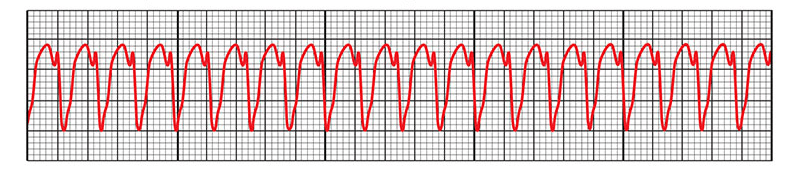
The nurse should anticipate what intervention?
A. Prepare for immediate defibrillation
B. Begin chest compression and activate the code team
C. Administer IV amiodarone as prescribed
D. Prepare the client for synchronized cardioversion
C. Administer IV amiodarone as prescribed
1
A client with suspected coronary artery disease is scheduled for a stress test but is unable to exercise adequately because of severe osteoarthritis. The provider orders Persantine (dipyridamole) with thallium imaging. The nurse explains that the medication is used to simulate the physiologic effects of exercise.
Which mechanism best explains how Persantine helps assess coronary blood flow?
A. It directly increases myocardial contractility and heart rate, increasing oxygen demand and revealing areas of ischemia
B. It causes coronary vasodilation, increasing blood flow through normal coronary arteries so areas supplied by narrowed arteries may receive relatively less blood flow
C. It causes systemic vasoconstriction, increasing afterload and forcing narrowed coronary arteries to increase blood flow
D. It increases oxygen delivery to ischemic myocardium by causing all coronary arteries to constrict equally
B. It causes coronary vasodilation, increasing blood flow through normal coronary arteries so areas supplied by narrowed arteries may receive relatively less blood flow
1
A 27-year-old patient is admitted after a motor vehicle collision with blunt chest trauma. The patient develops sudden dyspnea and sharp unilateral chest pain. The nurse notes asymmetric chest expansion and markedly diminished breath sounds on the affected side.
The patient's SpO₂ remains 86% despite supplemental oxygen.
What pathophysiologic change is primarily responsible for their impaired oxygenation?
A. Air enters the affected alveoli without adequate pulmonary blood flow, creating a ventilation-dominant V/Q mismatch
B. Blood continues flowing through poorly ventilated alveoli, creating a perfusion-dominant V/Q mismatch
C. Increased pulmonary blood flow via compensatory mechanisms overwhelms the unaffected alveoli, producing systemic hypoxemia
D. Blood accumulates within the pleural space, compressing the lung and producing a diffusion defect, reducing cardiac output
B. Blood continues flowing through poorly ventilated alveoli, creating a perfusion-dominant V/Q mismatch
1
A client with acute respiratory failure is being prepared for endotracheal intubation. The provider is at the head of the bed preparing to insert the endotracheal tube. The nurse is assisting with the procedure.
Which action is the nurse's priority during the intubation procedure?
A. Insert the endotracheal tube through the vocal cords and advance it into the trachea
B. Inflate the endotracheal tube cuff after the tube is advanced into the trachea
C. Provide ventilation with a bag-valve-mask and continuously monitor the client's oxygen
D. Advance the endotracheal tube until resistance is felt and then secure the tube to the client's face
C. Provide ventilation with a bag-valve-mask and continuously monitor the client's oxygen
1
A nurse is providing discharge teaching to a client recently diagnosed with cardiomyopathy. The nurse explains that different types of cardiomyopathy affect the heart's ability to pump or fill with blood.
Which statement by the client indicates a lack of understanding and requires further teaching?
A. “With dilated cardiomyopathy, my ventricles become enlarged and stretched, making it harder for my heart to contract effectively.”
B. “With restrictive cardiomyopathy, my heart walls become thicker and stiffer, leaving less room for blood to enter the ventricles.”
C. “With restrictive cardiomyopathy, my heart muscle becomes rigid, making it difficult for the ventricles to relax and fill properly.”
D. “With hypertrophic cardiomyopathy, my heart muscle becomes thicker, which can reduce the amount of blood the ventricles can hold.”
B. “With restrictive cardiomyopathy, my heart walls become thicker and stiffer, leaving less room for blood to enter the ventricles.”
1
A patient with severe atelectasis has a respiratory rate of 28 breaths per minute, and an SpO2 of 87%. The nurse reviews their prescribed interventions.
Which intervention most directly addresses the underlying V/Q problem?
A. Restrict oral fluid to reduce pulmonary vascular resistance
B. Encourage incentive spirometry to reopen collapse alveoli
C. Administer an anticoagulant to dissolve the existing pulmonary embolus
D. Administer a medication that increases systemic vascular resistance
B. Encourage incentive spirometry to reopen collapse alveoli
1
A 72-year-old patient with acute decompensated heart failure is being assessed in the emergency department. The patient is pale, diaphoretic, and reports severe shortness of breath. Assessment findings include:
- HR: 118/min
- BP: 108/66 mmHg
- SpO₂: 88%
- Crackles throughout both lung fields
- 2+ bilateral lower-extremity edema
- Urine output: 15 mL/hr
Which medication should the nurse anticipate administering first based on the patient's current pathophysiology?
A. Lisinopril to decrease afterload and reduce the workload of the failing heart
B. Digoxin to improve heart contractility and improved myocardial oxygen supply
C. Nitroglycerin to reduce preload and decrease pulmonary congestion
D. Furosemide to remove excess fluid and decrease ventricular preload
D. Furosemide to remove excess fluid and decrease ventricular preload