Embryology & Development
Sonographic evaluation
Facial Clefting
Neck Masses
Facial Profile
100
Fusion of which structures form the upper lip?
A. Mandibular prominences
B. Maxillary + medial nasal prominences
C. Lateral nasal prominences
D. Frontonasal + mandibular prominences
B. Maxillary + medial nasal prominences
100
A midsagittal sonographic image of the fetal face is obtained. Which of the following structures should be evaluated in this plane to assess for facial profile abnormalities?
A. Orbits and interocular distance
B. Nasal bone, lips, and chin contour
C. Maxillary width and alveolar ridge
D. Mandibular rami symmetry
B. Nasal bone, lips, and chin contour
100
The most common congenital craniofacial anomaly is:
A. Micrognathia
B. Cleft lip
C. Encephalocele
D. Macroglossia
B. Cleft lip
100
A fetus presents with a multiloculated cystic mass in the posterior neck and associated edema. This finding is most consistent with:
A. Teratoma
B. Hemangioma
C. Cystic hygroma
D. Goiter
C. Cystic hygroma
100
During a routine fetal facial profile evaluation, which structure must be assessed to rule out micrognathia?
A. Nasal bone length
B. Mandibular size and position
C. Orbital diameter
D. Frontal bone contour
B. Mandibular size and position
200
During early embryologic development, the branchial apparatus is composed of all of the following EXCEPT:
A. Arches
B. Pouches
C. Placenta
D. Grooves
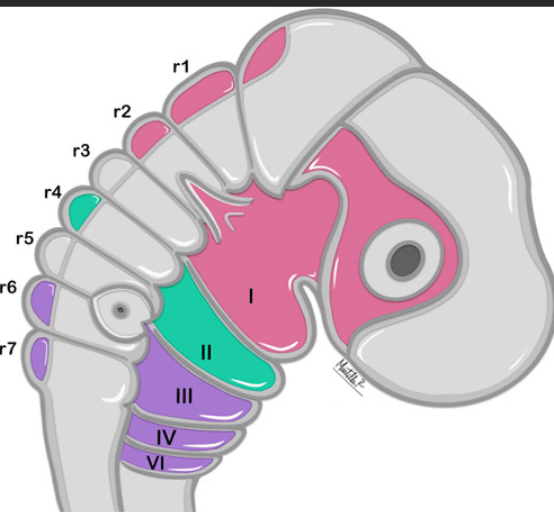
C. Placenta
200
During sonographic evaluation of the fetal orbits, the lenses appear abnormally echogenic rather than anechoic. This finding is most consistent with: 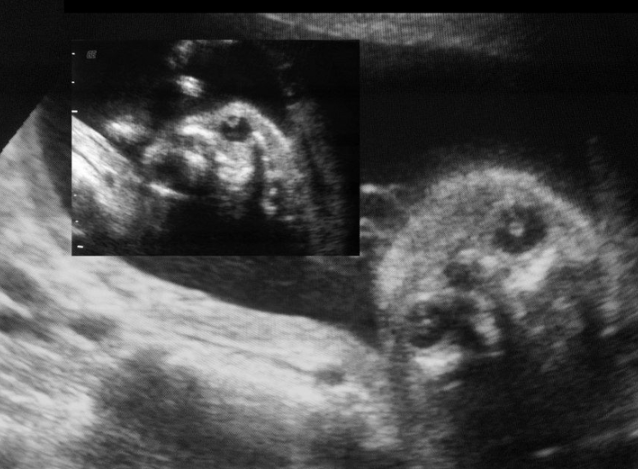
A. Normal lens development
B. Microphthalmia
C. Cataracts
D. Anophthalmia
C. Cataracts
200
A median cleft lip results from failure of fusion of: 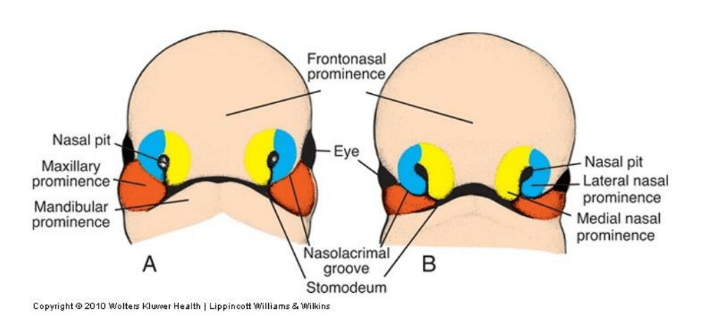
A. Maxillary prominences
B. Lateral nasal prominences
C. Medial nasal prominences
D. Mandibular prominences
C. Medial nasal prominences
200
Cystic hygromas are caused by:
A. Overgrowth of bone
B. Failure of lymphatic system to connect with venous system
C. Neural tube defect
D. Excess thyroid hormone
B. Failure of lymphatic system to connect with venous system
200
This ultrasound finding is most consistent with: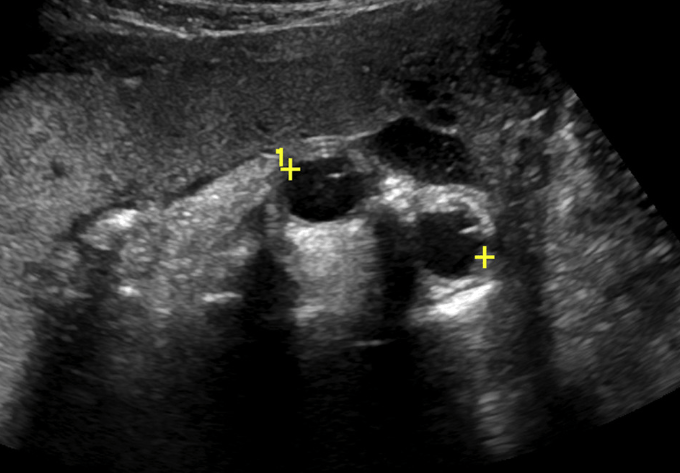
A. Hypotelorism
B. Hypertelorism
C. Cyclopia
D. Microphthalmia
A. Hypotelorism
300
The primitive mouth (stomodeum) is separated from the pharynx by:
A. Buccopharyngeal membrane
B. Amniotic membrane
C. Chorionic plate
D. Neural crest barrier
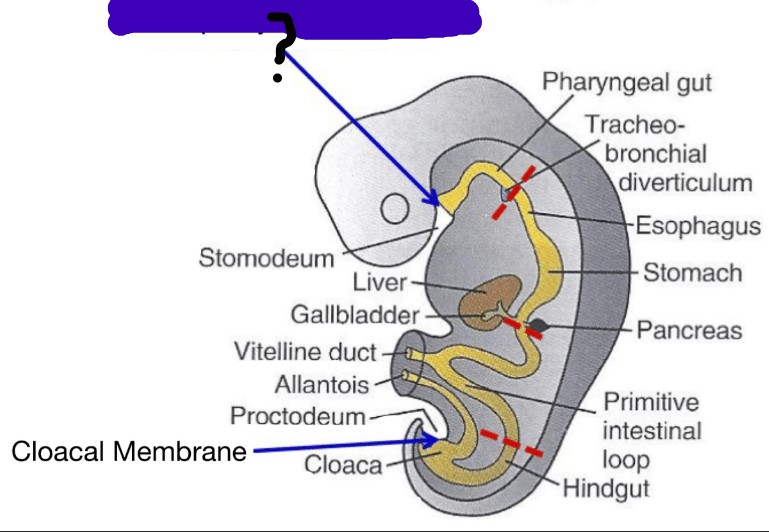
A. Buccopharyngeal membrane
300
According to sonographic evaluation guidelines, which plane is best used to assess the fetal facial profile?
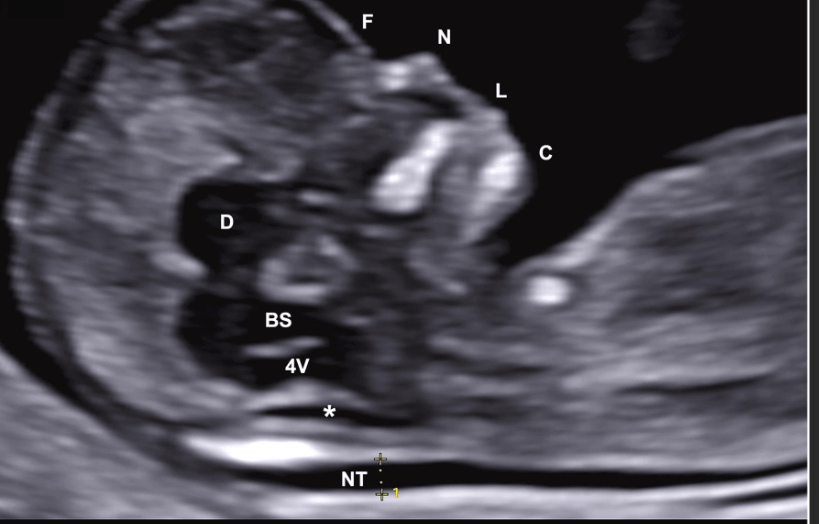
A. Transverse plane
B. Coronal plane
C. Midsagittal plane
D. Oblique plane
C. Midsagittal plane
300
Which imaging plane is best for evaluating cleft lip and palate?
A. Axial
B. Sagittal
C. Coronal
D. Oblique
C. Coronal
300
Which condition is most commonly associated with cystic hygroma?
A. Down syndrome
B. Turner syndrome
C. Marfan syndrome
D. Achondroplasia
B. Turner syndrome
300
Which measurement is obtained from the outermost lateral borders of the orbits?
A. Interocular distance (IOD)
B. Biparietal diameter (BPD)
C. Outer orbital diameter (OOD)
D. Inner canthal distance
C. Outer orbital diameter (OOD)
400
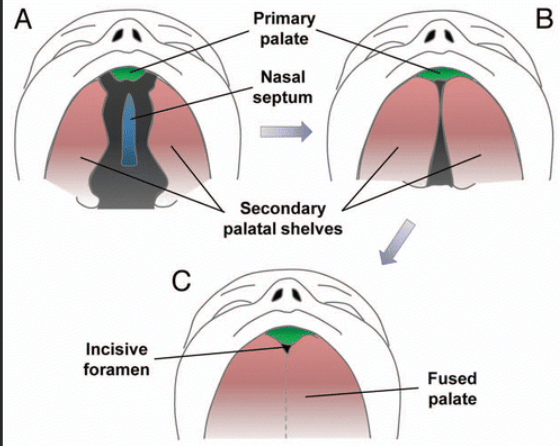
Failure of fusion between which structures would most directly result in a defect of the secondary palate?
A. Mandibular prominences
B. Medial nasal prominences
C. Palatal shelves
D. Frontonasal prominence
C. Palatal shelves
400
A lemon-shaped skull is most commonly associated with:
A. Holoprosencephaly
B. Spina bifida
C. Cleft palate
D. Hydrocephalus
B. Spina bifida
400
An epignathus is best described as: 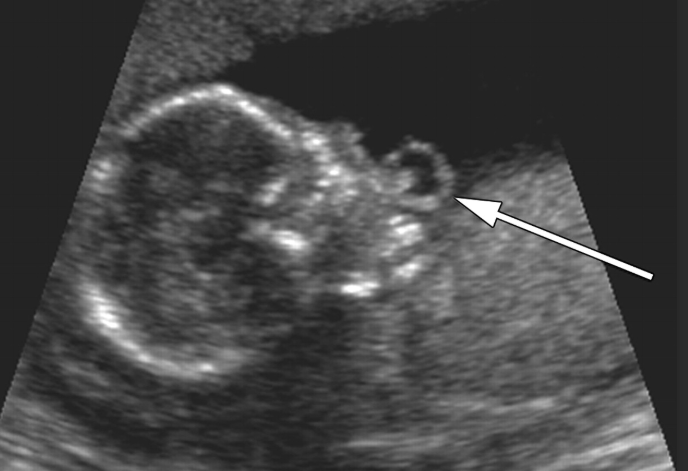
A. A vascular neck tumor
B. A teratoma located in the oropharynx
C. A cystic hygroma of the neck
D. A thyroid enlargement
B. A teratoma located in the oropharynx
400
A fetal goiter is best described as:
A. Cystic neck mass
B. Enlarged thyroid gland
C. Vascular malformation
D. Neural crest defect
B. Enlarged thyroid gland
400
A fetus with decreased distance between the orbits is most likely associated with:
A. Down syndrome
B. Holoprosencephaly
C. Turner syndrome
D. Achondroplasia
B. Holoprosencephaly
500
Which structure forms the upper boundary of the stomodeum?
A. Mandibular prominences
B. Maxillary prominences
C. Frontal nasal prominence
D. Lateral nasal prominences
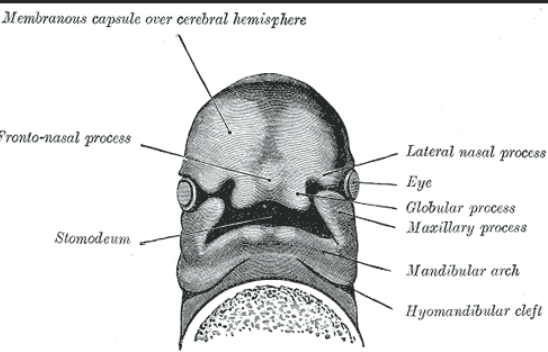
C. Frontal nasal prominence
500
What ultrasound finding is identified in this image?
A. Prominent forehead
B. Micrognathia
C. Wide nasal bridge
D. Enlarged orbits
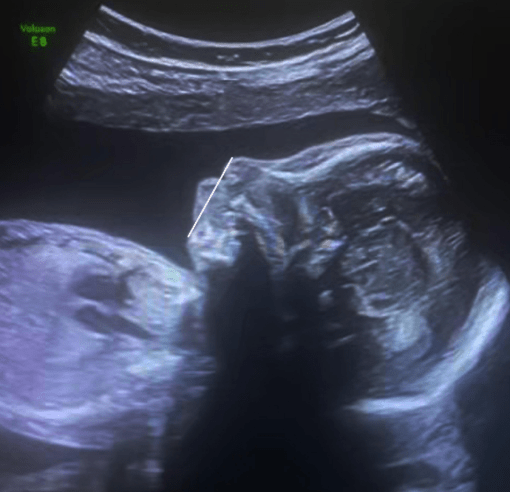
B. Micrognathia
500
Macroglossia is commonly associated with:
A. Turner syndrome
B. Beckwith-Wiedemann syndrome
C. Down syndrome only
D. Achondroplasia
B. Beckwith-Wiedemann syndrome
500
Which imaging modality is considered a useful adjunct to ultrasound for evaluating fetal facial and neck abnormalities?
A. CT scan
B. MRI
C. X-ray
D. PET scan
B. MRI
500
A transverse sonographic image of the fetal orbits is obtained, as shown. The calipers labeled A measurement is best described as:
A. Inner orbital diameter (IOD)
B. Inner canthal distance
C. Outer orbital diameter (OOD)
D. Biparietal diameter (BPD)
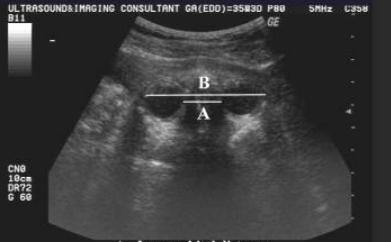
A. Inner orbital diameter (IOD)