party in the front
business in the back
big brain
drugs
random
100
Most common causative organism of Fungal keratitis?
Fusarium
100
Most common cause of vision loss in diabetic retinopathy
macular edema
100
Visual field defect in pituitary adenoma
Bitemporal hemianopia
100
Drugs contraindicated in narrow-angle glaucoma
mydriatics
100
Most common microbial cause of red eye in CL wearers
Pseudomonas
200
This sign indicates stress lines in stretching and thinning in keratoconus
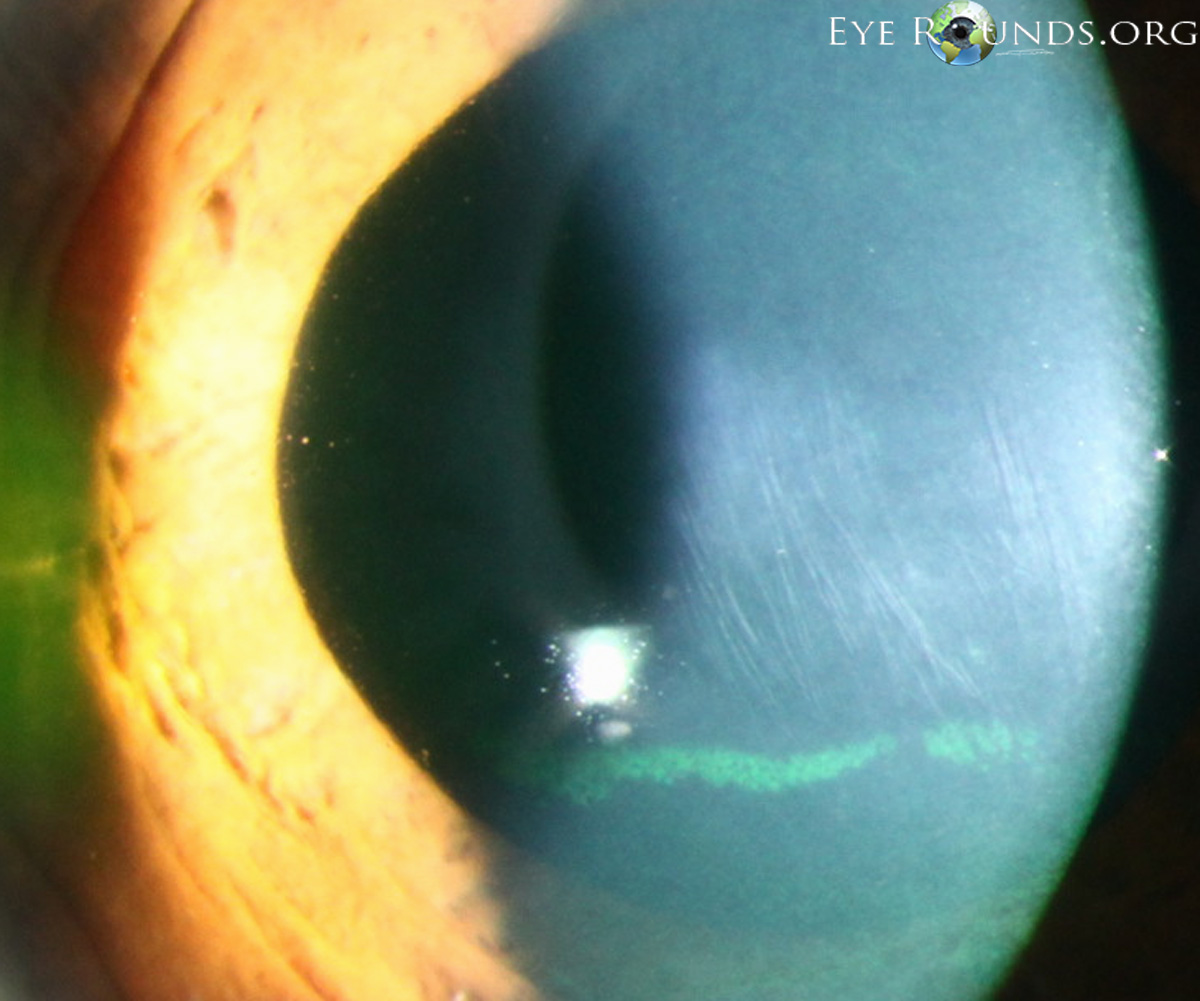
Vogt's striae
200
OCT hallmark of macular hole stage ___→ Full-thickness defect
3
200
Most common cause of internuclear ophthalmoplegia in young adults?
MS
200
Glaucoma medication increasing uveoscleral outflow
Prostaglandin analogs
200
Give the most likely diagnosis:
A 12‑year‑old girl presents with decreased central vision and difficulty reading. Fundus exam reveals yellowish flecks at the macula and posterior pole. OCT shows photoreceptor layer loss.

Stargardt's disease
300
This vertical streak of pigment is a classic sign of what condition?

pigment dispersion syndrome
300
Classic triad of toxoplasmosis retinochoroiditis
Focal retinitis, old pigmented scar, vitreous inflammation (“headlight in the fog”)
300
Cause of monocular transient vision loss (“amaurosis fugax”)
carotid embolus
300
This group of Antibiotics is linked to intracranial hypertension
Tetracyclines
300
Spherical equivalent of -2.00 +1.00 × 180
-1.50 D
400
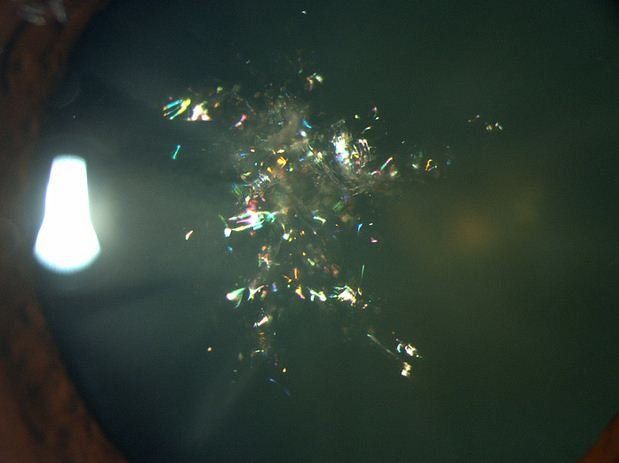
This finding can be idiopathic or commonly associated with this disease
Myotonic dystrophy
400
Retinal finding in shaken baby syndrome
multilayer hemorrhages
400
Pathophysiology of central retinal vein occlusion
_____ formation at lamina cribrosa → venous outflow obstruction → retinal ischemia and hemorrhage
thrombus
400
Mechanism of acetazolamide
Carbonic anhydrase inhibitor
→ decreases aqueous humor production
400
Most common cause of subconjunctival hemorrhage
valsalva
500
Goal of using mitomycin-C in refractive surgery is to reduce?
Inhibits fibroblast proliferation
or reducing corneal haze/scarring
500
What is the primary diagnosis?
A 60‑year‑old man reports sudden, painless vision loss. Fundus exam shows: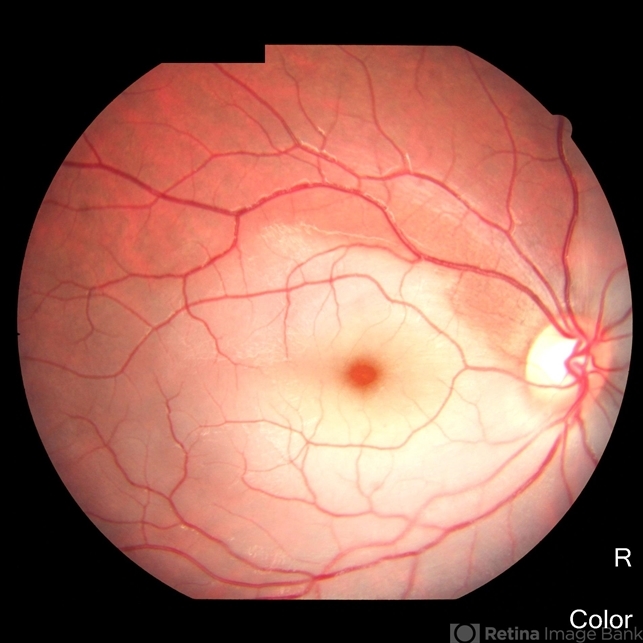
BRAO
cherry‑red spot at the macula and sectoral retinal whitening.
500
A patient presents with vertical diplopia that worsens on downgaze. They compensate with a left head tilt.
Give the complete diagnosis
right CN IV palsy
CN IV (trochlear nerve) innervates the superior oblique muscle, which depresses and intorts the eye.
In a CN IV palsy, the affected eye drifts upward and extorts, causing vertical diplopia.
Patients compensate by tilting their head toward the opposite shoulder of the affected nerve.
500
This Antiarrhythmic drug can cause vortex keratopathy
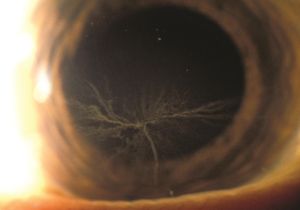
Amiodarone
What other ocular SEs?
500
What condition is the most common cause of corneal transplants in the US?
Fuch's dystrophy
What type of transplant sx?