Density
States of Matter
Elements, Molecules, Compounds
Metric Measurement
Scientific Method
Energy in Chemical Reactions
100
Which sample is most dense?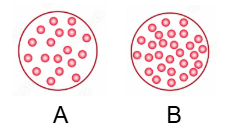
B
100
Which particle diagram represents a liquid?
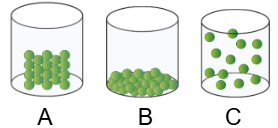
B
100
smallest particle of matter
atom
100
What is the volume of this fluid?
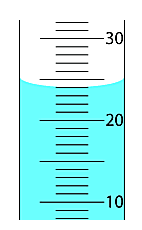
24 mL
100
variable that may be AFFECTED by the independent variable
dependent
100
Energy of motion, including the motion of particles.
kinetic
200
Which sample is most dense?
Carbon - 12 AMU
Cobalt - 59 AMU
Helium - 2 AMU
Magnesium - 25 AMU
Cobalt
200
Which particle diagram represents a gas?
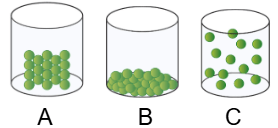
C
200
specific type of atoms OR more than one of the same type of atom
element
200
Read this ruler to significant figures
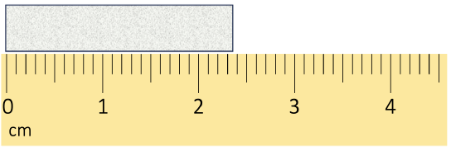
2.33 cm - 2.37cm
200
variables kept the same during an experiment
constant
200
Energy stored in chemical bonds holding atoms together.
chemical potential energy
300
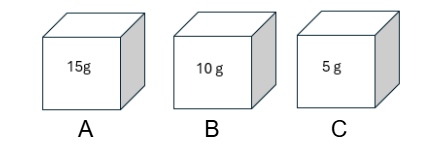 Which cube would be most dense?
A
300
Relative temperature of a solid?
cold
300
two or more atoms bonded together
molecule
300
How many significant figures in this number?
0.7020
4
300
variable changed by the experimenter
independent
300
How does chemical potential energy change when chemical bonds are broken? decrease/increase
decreases
400
Which material is least dense?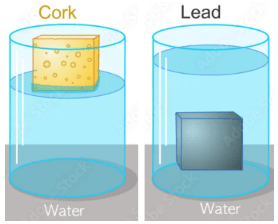
cork
400
relative temperature of a gas
hot/warm
400
different atoms bonded together
compound
400
Round this number to 3 significant figures
12.09
12.1
400
group in an experiment where changes are made
experimental group
400
How does temperature change when energy is absorbed during a chemical reaction? decrease/increase
decreases
500
metric unit for density
g/cm3
500
Shape particles take when they are in the solid form.
fixed shape
500
How many Nitrogens in Fe(NO3)3
3
500
convert 150 milliliters to liters
.150
500
type of experiment that includes one group where NO changes are made
controlled experiment
500
How does energy change when chemical bonds are broken? released/absorbed
released